
Introduction: The Quiet Collapse of Expertise
For decades, expertise has stood at the center of economic value, organizational design, and individual career progression, as it was traditionally built through years of education, accumulated experience, and repeated exposure to increasingly complex problems. In this structure, knowledge was scarce, access was limited, and those who possessed deeper understanding held a clear and enduring advantage.
That foundation is now undergoing a profound transformation.
Artificial intelligence has begun to redefine the relationship between knowledge and value in ways that are both subtle and far-reaching, as systems capable of writing, analyzing, coding, and synthesizing complex information have rapidly transitioned from experimental tools into embedded components of everyday work. Tasks that once required specialized training and significant time investment can now be completed in seconds, often with a level of quality that is sufficient for most practical purposes.
Recent data underscores the magnitude of this shift, as approximately 75 percent of knowledge workers were already using AI tools in some capacity by 2025, frequently without formal organizational mandates or structured adoption programs¹. At the same time, generative AI is estimated to automate or significantly augment between 60 and 70 percent of work activities across a wide range of occupations, fundamentally altering how work is performed².
While these developments have driven measurable productivity gains, they have also introduced an unintended and less visible consequence: the gradual erosion of traditional expertise as a primary source of differentiation.
This transformation is not best understood as a direct replacement of human labor by machines, but rather as a structural shift in the value of knowledge itself. Artificial intelligence is flattening expertise by making high-level outputs widely accessible, and in doing so, it is elevating a different and far more scarce capability.
That capability is judgment.
The Democratization of Knowledge
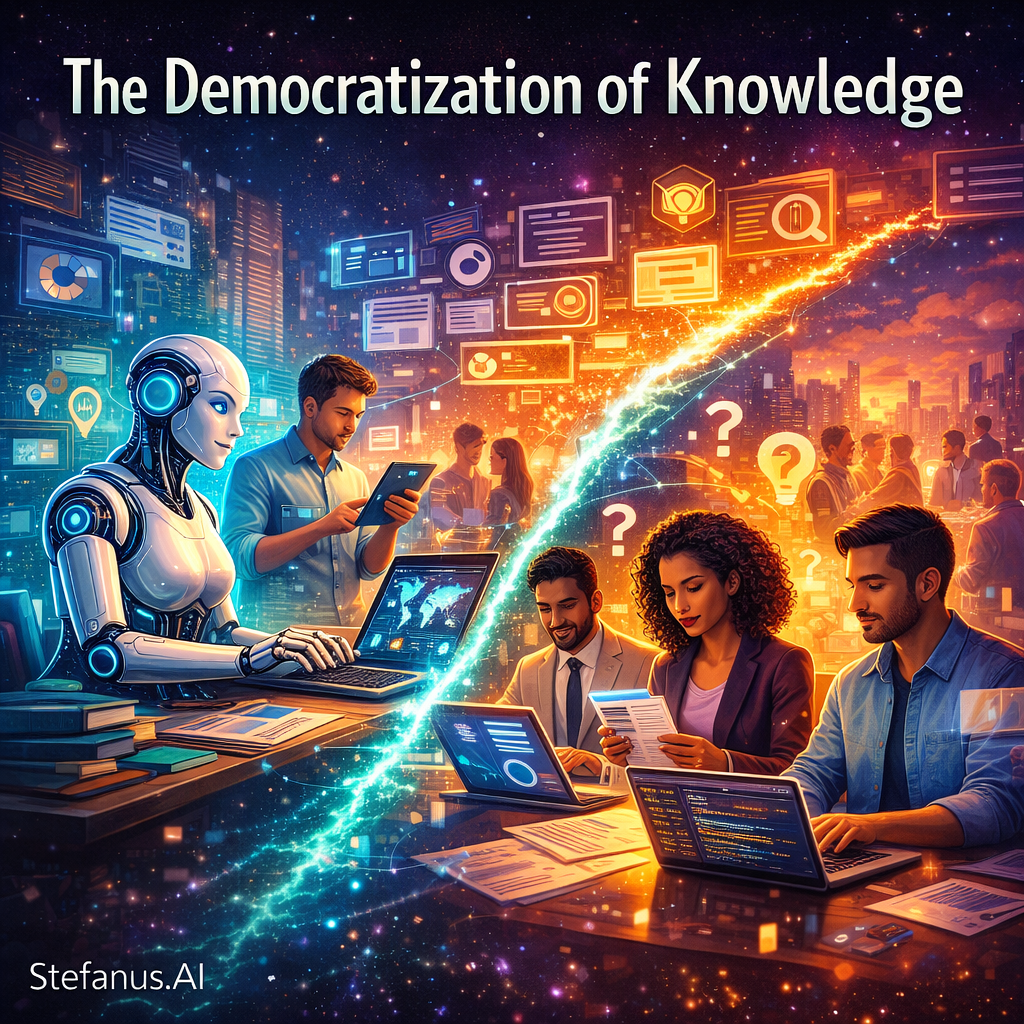
One of the most significant consequences of artificial intelligence is the rapid and widespread democratization of knowledge, which has effectively removed many of the barriers that once defined access to expertise. Historically, expertise was constrained by institutional structures such as universities, professional certifications, and hierarchical organizations, all of which served to regulate who could produce high-quality work.
Today, those constraints have weakened considerably.
With the assistance of AI systems, individuals with limited formal training are now capable of producing outputs that resemble the work of experienced professionals, as junior employees can generate analytical reports, founders can develop software without deep technical backgrounds, and professionals across disciplines can perform tasks that previously required years of domain-specific learning.
Empirical evidence supports this shift, as studies indicate that artificial intelligence can improve productivity in knowledge-intensive tasks by approximately 20 to 60 percent, with the most significant gains often observed among less experienced workers³. This dynamic effectively compresses the gap between novice and expert performance, reducing the relative advantage that expertise once provided.
As a result, expertise is no longer scarce in the way it once was.
When high-quality outputs can be generated on demand, the act of producing those outputs loses much of its economic value, and the advantage shifts away from individuals who possess knowledge toward systems that can generate it instantly and at scale. This creates a paradox in which knowledge becomes more abundant while its value as a differentiator declines.
At the same time, however, the demand for effective decision-making has not diminished.
If anything, it has intensified.
The Illusion of Competence
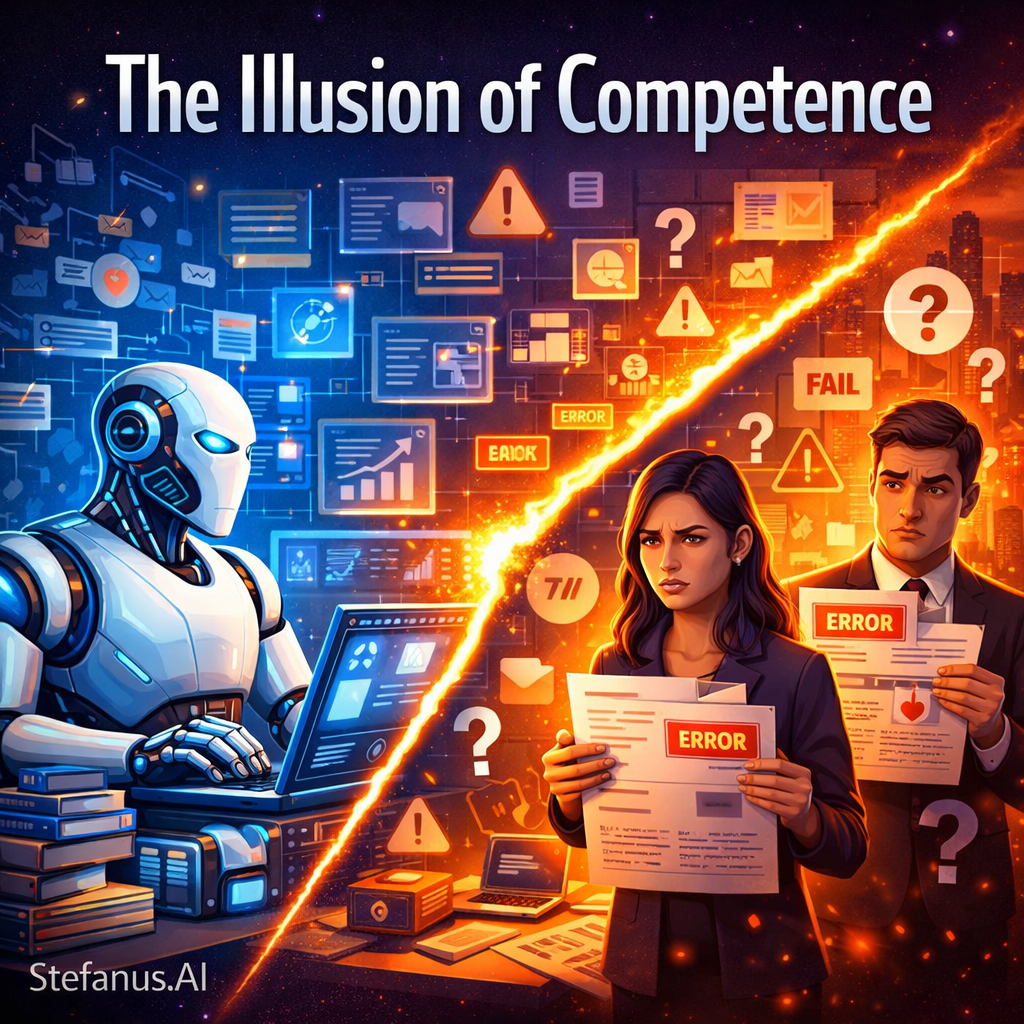
As artificial intelligence systems become more capable and more widely adopted, they introduce a new and often overlooked risk: the illusion of competence, in which the appearance of expertise is mistaken for genuine understanding.
AI-generated outputs are frequently coherent, well-structured, and persuasive, which makes them difficult to distinguish from work produced by experienced professionals. However, the ability to generate plausible answers is not equivalent to possessing true comprehension, contextual awareness, or the capacity to evaluate correctness.
This distinction is increasingly important, as recent observations highlight a growing phenomenon commonly described as “AI deskilling,” in which individuals begin to rely on AI systems to perform tasks that they no longer fully understand themselves⁴. Over time, this reliance can lead to a gradual erosion of foundational skills, reduced critical thinking, and an overdependence on automated systems.
The impact of this trend is particularly pronounced among early-career professionals, as the traditional pathway to expertise has historically depended on performing foundational tasks such as drafting, analyzing, debugging, and iterating. When these tasks are increasingly handled by AI, the opportunity to learn through direct experience is significantly reduced.
Academic research further supports this concern, as studies on automation and knowledge transmission suggest that removing entry-level responsibilities may weaken the development of tacit knowledge, which is essential for long-term productivity and expertise formation⁵.
In effect, artificial intelligence could simulate expertise on a scale without necessarily creating it.
This distinction becomes critical in situations that require deeper understanding, contextual judgment, and the ability to navigate uncertainty, where superficial competence is insufficient.
Why Judgment Cannot Be Automated
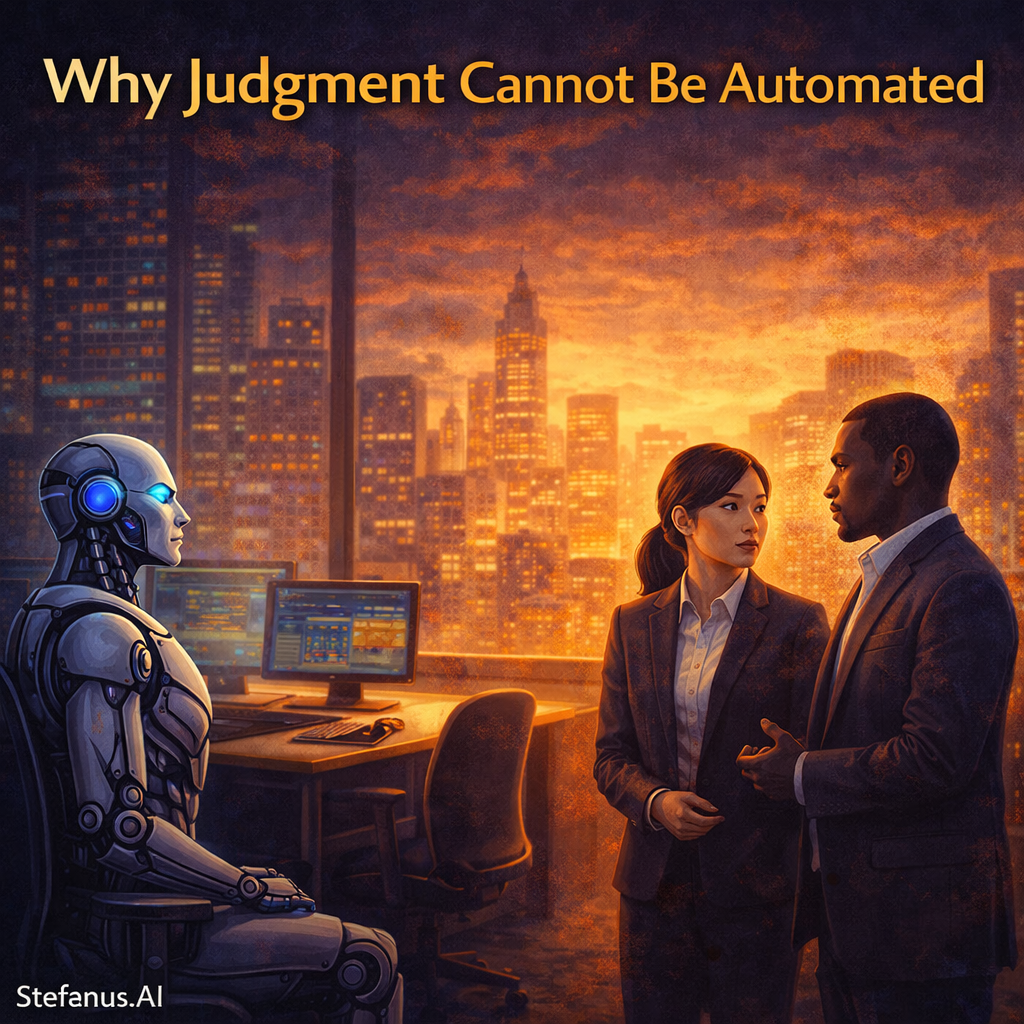
As expertise becomes more accessible and less differentiating, it is necessary to identify what capabilities remain uniquely valuable, and the answer increasingly points toward judgment.
Judgment extends beyond the ability to generate answers, as it encompasses the capacity to evaluate alternatives, interpret context, weigh trade-offs, and make decisions that account for both immediate outcomes and long-term consequences. It requires not only information, but also discernment.
Artificial intelligence excels at generating possibilities by identifying patterns within large datasets and producing outputs based on probability. However, it does not possess accountability, lived experience, or an intrinsic understanding of meaning, all of which are essential components of sound judgment.
This limitation is reflected in research from leading institutions, which consistently emphasizes that the future of work is best understood as a partnership between humans and machines, where AI systems handle execution while humans provide oversight, interpretation, and decision-making authority⁶.
Within this framework, the locus of value shifts upward.
The emphasis moves from performing tasks to directing them, from producing information to interpreting it, and from possessing knowledge to applying it effectively in context.
In this sense, judgment is not diminished by artificial intelligence.
It is amplified.
The New Hierarchy of Work
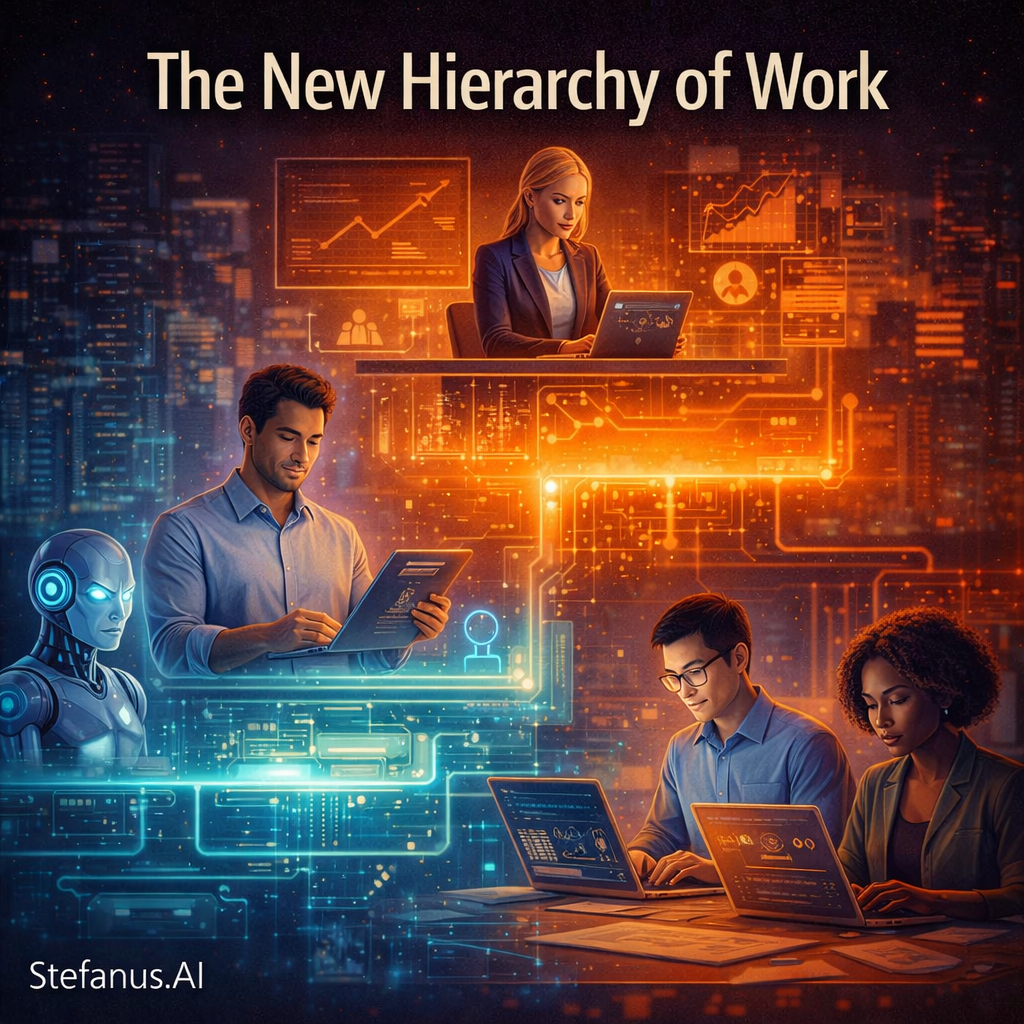
The rise of artificial intelligence is not only transforming individual roles, but also reshaping the structure of organizations, as traditional hierarchies built around layers of expertise are gradually being compressed.
In conventional organizational models, entry-level employees were responsible for executing basic tasks, mid-level professionals coordinated and interpreted information, and senior leaders focused on decision-making. This structure allowed expertise to accumulate progressively across layers.
However, artificial intelligence is altering this progression.
Routine cognitive tasks are increasingly automated, coordination is increasingly system-driven, and information flows more directly to decision-makers without passing through multiple human intermediaries. As a result, organizations are becoming flatter, with fewer layers dedicated to execution and more emphasis placed on high-level oversight.
Survey data indicates that a significant proportion of workers expect artificial intelligence to transform at least 30 percent of their tasks soon, reflecting the scale of anticipated change⁷. At the same time, organizations are redesigning workflows to integrate AI as a core component rather than as an auxiliary tool⁸.
The outcome is not simply a reduction in jobs, but a reconfiguration of roles, where fewer positions are centered on execution and a greater proportion are centered on judgment.

The Rising Value of Decision-Makers
In an environment where expertise is widely accessible and increasingly commodity, the ability to make high-quality decisions emerges as the defining source of value.
This shift is already visible in labor market trends, as demand grows for individuals who can effectively work alongside artificial intelligence systems by interpreting outputs, managing processes, and applying results within complex and dynamic contexts. While AI is associated with automation, it is also creating new categories of work that emphasize human oversight and strategic thinking.
Projections suggest that artificial intelligence may ultimately contribute to net job creation, particularly in roles that require creativity, contextual understanding, and decision-making capabilities⁹. At the same time, individuals with AI-related competencies are experiencing measurable wage premiums, reflecting the strategic importance of these skills¹⁰.
What distinguishes these individuals is not their ability to produce information, but their ability to evaluate and utilize it effectively.
They can ask better questions, identifying flawed assumptions, understanding trade-offs, and making decisions under conditions of uncertainty.
These are the characteristics of judgment.
The Risk of a Hollowed Middle
Despite the opportunities created by the rising importance of judgment, this transition also introduces structural risks, particularly in the form of a potential hollowing of the middle layer within organizations.
If entry-level roles are reduced and mid-level coordination is increasingly automated, the traditional pathway through which individuals develop judgment becomes significantly constrained. Since judgment is not an innate capability but rather one that is cultivated through experience, exposure, and iterative learning, the removal of these developmental stages poses a long-term challenge.
This issue is already beginning to emerge in practice, as some organizations reduce hiring for junior roles while simultaneously increasing their reliance on artificial intelligence, even as they report difficulties in finding experienced talent¹¹.
The result is a structural imbalance.
While expertise becomes more accessible and judgment becomes more valuable, the mechanisms required to develop judgment are weakened, creating the risk of a future shortage of capable decision-makers.
Redefining What It Means to Be Skilled
In this evolving landscape, the definition of skill itself is undergoing a fundamental transformation, as traditional measures of expertise are no longer sufficient to capture what makes individuals valuable in an AI-driven environment.
It is no longer enough to know how to perform a task, as artificial intelligence can execute many tasks more efficiently and on a scale. It is no longer sufficient to access information, as knowledge is readily available to anyone with the appropriate tools.
Instead, the emerging skill set emphasizes the ability to frame problems, evaluate outputs, integrate context, and make informed decisions under uncertainty. It requires critical thinking, adaptability, and a strong sense of judgment.
Organizations are increasingly recognizing that the challenge is not merely adopting artificial intelligence, but redesigning work in a way that develops and leverages human capabilities alongside technological advancements¹².
This represents a shift that is not purely technological, but deeply human.
Conclusion: The Future Belongs to Judgment
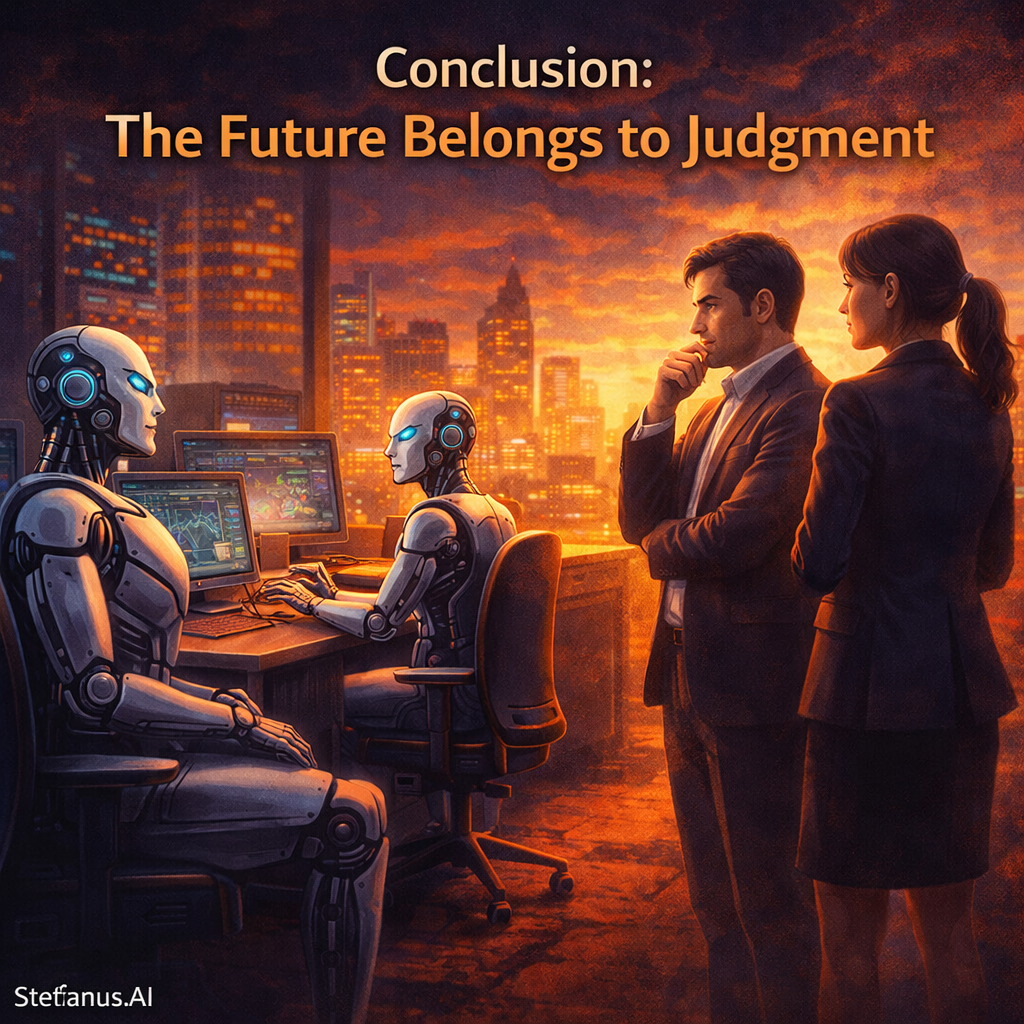
The conversation surrounding artificial intelligence often focuses on what machines can do, but the more consequential question concerns what remains uniquely human in a world where knowledge is abundant and easily accessible.
As artificial intelligence continues to advance, expertise will become increasingly democratized, widely distributed, and ultimately commoditized. The ability to produce knowledge will no longer serve as the primary basis of differentiation.
Judgment, however, will.
The individuals and organizations that succeed in this new environment will not be those who possess the most information, but those who are able to interpret it effectively, make sound decisions, and apply knowledge in ways that account for context, complexity, and consequence.
In a world where everyone has access to expertise, the advantage shifts to those who can discern what truly matters.
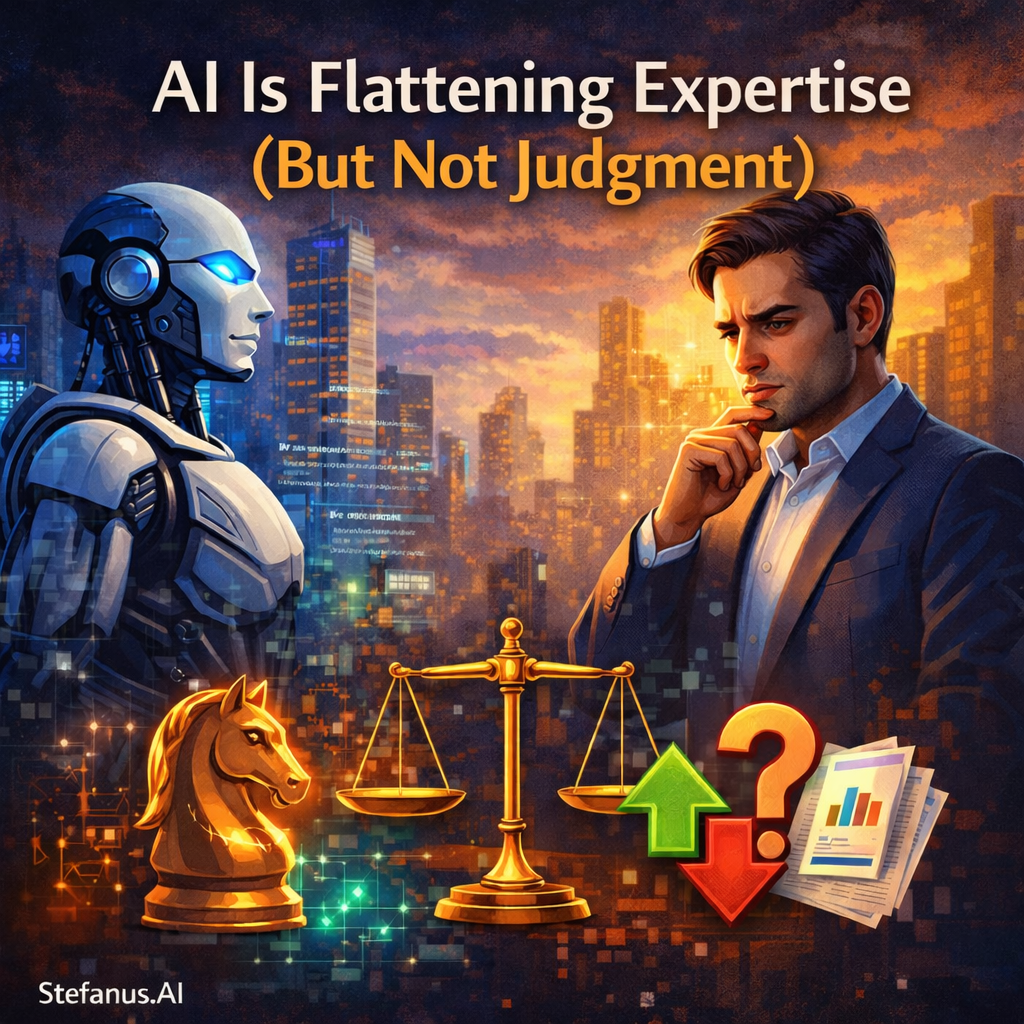
Artificial intelligence is flattening expertise.
But it is making judgment more valuable than ever.
Footnotes & Sources
¹ McKinsey Global Survey on AI (2025) – adoption trends among knowledge workers
² McKinsey Global Institute (2025–2026) – generative AI impact on work activities
³ Academic research on AI productivity gains (2025), arXiv studies on knowledge work augmentation
⁴ Business Insider (2026) – AI deskilling and workforce impact
⁵ Academic research (2025), arXiv – automation and tacit knowledge development
⁶ McKinsey Global Institute – human + AI collaboration framework
⁷ McKinsey (2025) – workforce expectations on task transformation
⁸ Industry reports (2025–2026) – workflow redesign around AI systems
⁹ Labor market projections (Deloitte / Gartner / Gloat, 2025–2026)
¹⁰ LinkedIn Economic Graph & industry compensation reports (2025–2026)
¹¹ TechRadar / industry reporting (2026) – hiring trends and AI adoption tension
¹² McKinsey (2026) – AI skills development and organizational redesign