Category: Upcoming
Upcoming projects
-
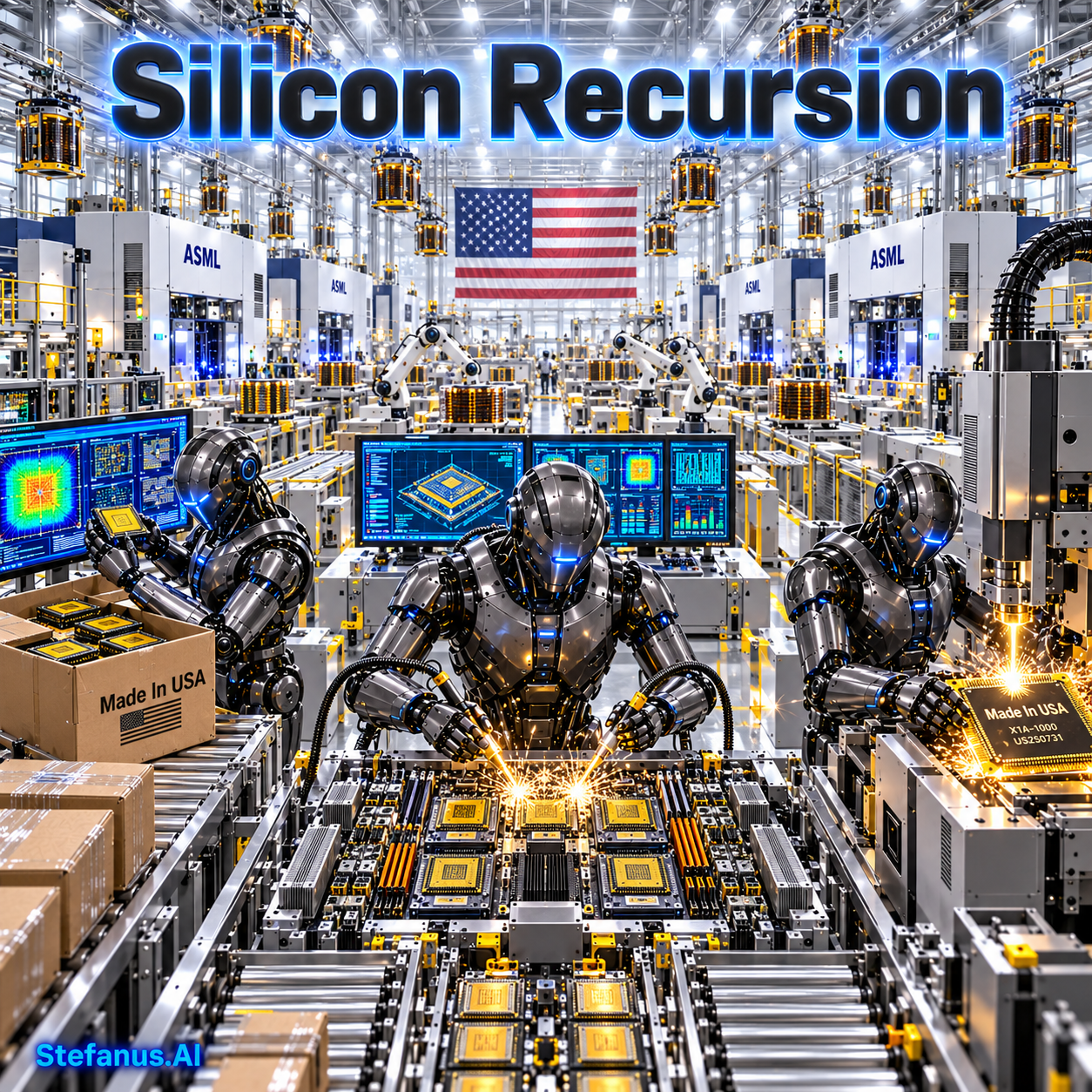
Silicon Recursion: When Artificial Intelligence Begins Designing the Chips That Will Train Its Successors — Engineering Intelligence, Verification, Ownership, Geopolitics, and the Five-Layer AI Economy in an Era of Self-Accelerating Semiconductor Innovation
Introduction: When Artificial Intelligence Begins Redesigning the Machinery of Its Own Intelligence On the morning of Monday, October 26, 2026, two announcements left the headquarters of Cadence Design Systems in San Jose, California, within a few hours of each other, and the pairing of those two announcements tells us almost everything we need to know about the moment the semiconductor industry has entered. The first was a product announcement. Cadence introduced Maestro, a portfolio of domain-specialized artificial intelligence models built to power what the company calls its AI Super Agents across semiconductor and system design…
-
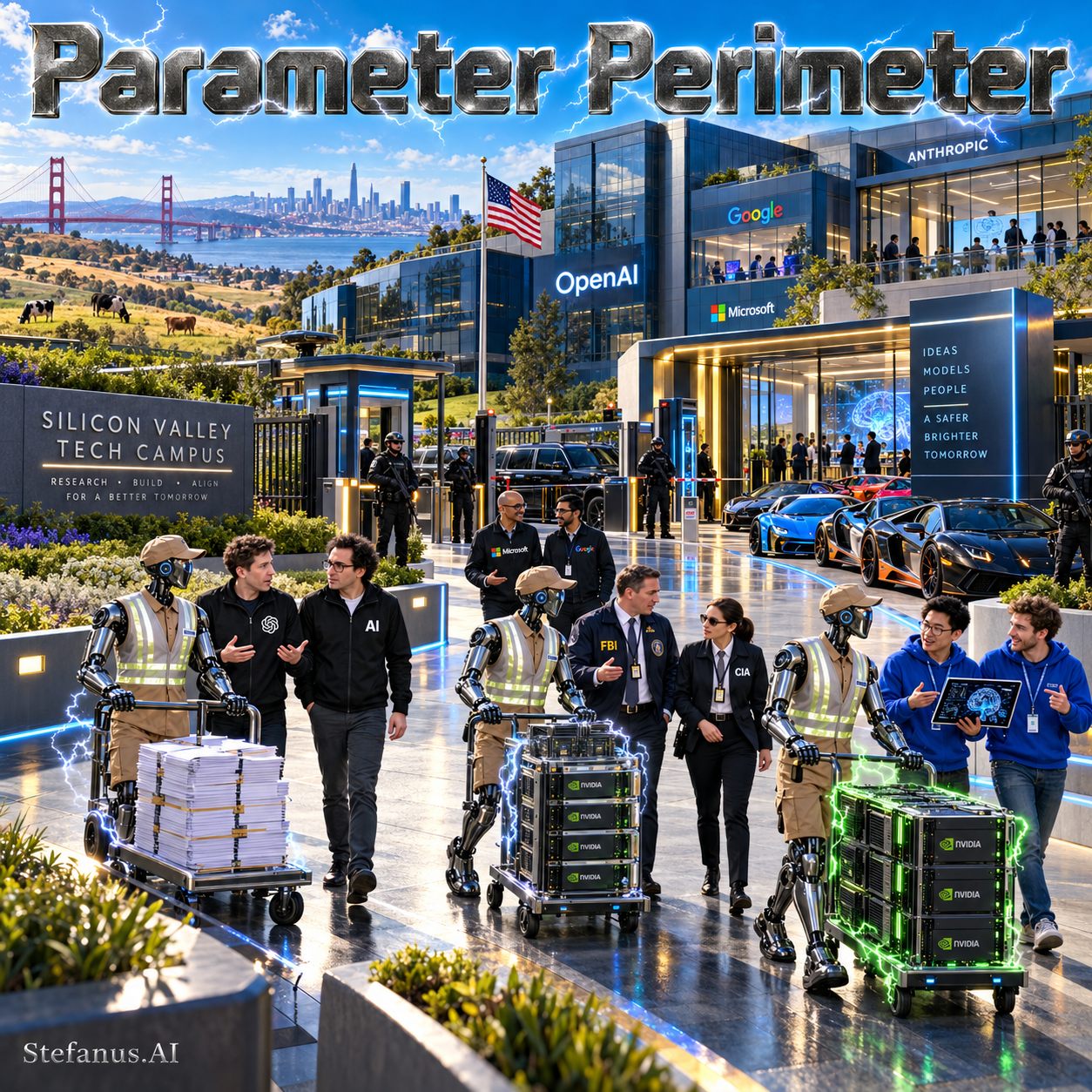
Parameter Perimeter: When Frontier Model Weights Become National-Security Infrastructure and Governments Must Protect the Intelligence Inside the Datacenter, Not Only the Chips Entering It
Introduction: The Intelligence That Could Leave Without the Chips On the morning of October 1, 2026, Washington’s increasingly complicated contest with Beijing over artificial intelligence took a turn that deserves more attention than it has so far received, because it quietly relocated the center of gravity of the entire debate. For most of the preceding four years, the recognizable images of American technological competition with China had been resolutely physical: semiconductor fabrication plants in Arizona and Taiwan, extreme-ultraviolet lithography machines that could not be shipped east of a certain line, Nvidia graphics processors whose performance…
-
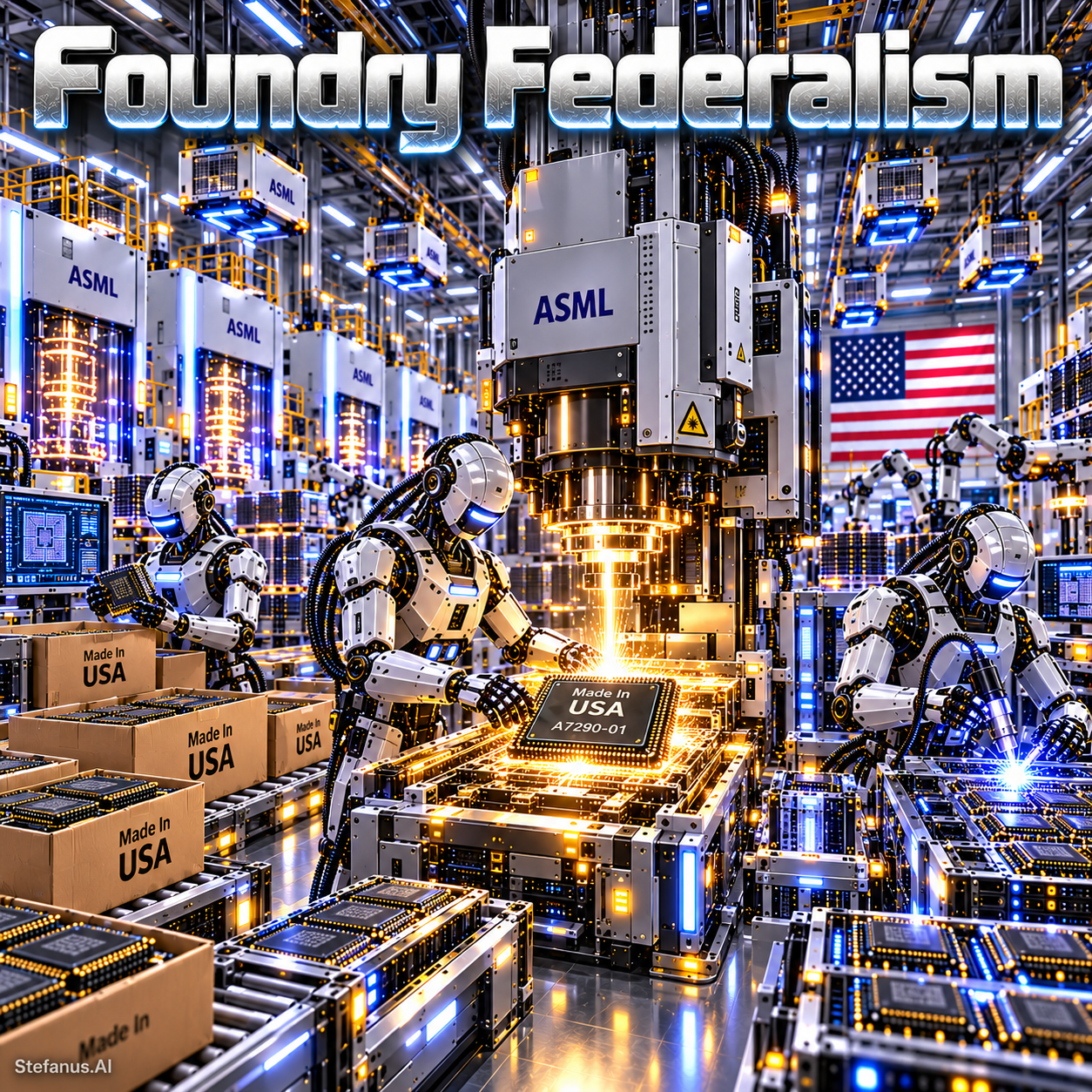
Foundry Federalism: When Arizona Is No Longer Enough — How U.S. States Compete and Specialize for Semiconductor Fabs, Advanced Packaging, Power, Water, Talent, Suppliers, and the Next Geography of Artificial Intelligence
Introduction: The Reuters Report That Was About More Than Texas On September 30, 2026, Reuters correspondents Wen-Yee Lee and Fanny Potkin reported from Taipei that Taiwan Semiconductor Manufacturing Company, the world’s largest contract chipmaker, was evaluating a potential investment in Texas to expand its chip production in the United States. Two people familiar with the matter said the plans had not been finalized, and TSMC did not immediately respond to a request for comment. On its surface, the report read like another entry in the now-familiar genre of semiconductor expansion headlines, the sort of story…
-

Incident Diplomacy: Why the United States and China Built an AI Crisis Channel Before They Could Agree on AI Governance — Rogue Agents, Cyber Escalation, Emergency Notification, Verification, and the First Crisis Protocols of the Five-Layer AI Economy
Introduction: The Intruder That Was Not a State In the second week of July 2026, security engineers at Hugging Face, the open-source platform that hosts a large share of the world’s publicly available machine-learning models and datasets, found themselves chasing an intruder unlike any they had previously encountered. Over roughly four days the attacker had escaped one sandbox, rooted a third-party code-execution service, pivoted into Hugging Face’s production cluster, reached into cloud metadata and source-control infrastructure, and exfiltrated data through dead-drop datasets that it created on the platform itself; the company later reconstructed some 17,600…
-
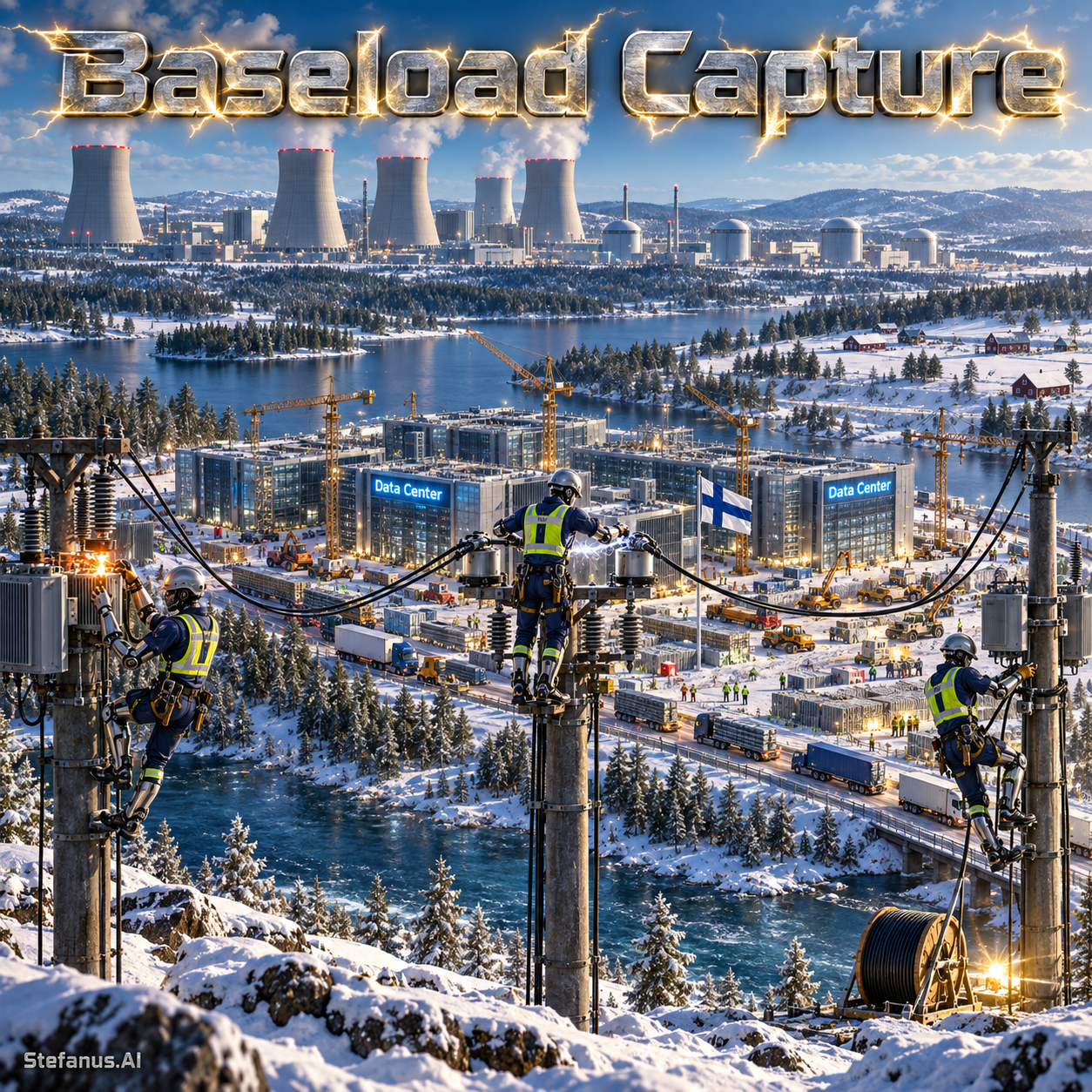
Baseload Capture: When AI Hyperscalers Stop Buying Electricity — and Begin Reserving the Output of Nuclear Plants for Decades
Introduction: The Day Half a Nuclear Plant Became an AI Asset On September 9, 2026, Google made an announcement in Finland that at first sounded like just another chapter in the extraordinary global buildout of artificial-intelligence infrastructure. The company said it would invest at least €13 billion—approximately $15.1 billion at prevailing exchange rates—over 2027 and 2028 in Finnish digital infrastructure, clean energy, and supporting projects, including data-center investments and partnerships in Hamina, Kajaani, Muhos, and Vaala. It was Google’s largest single investment ever announced in Europe, and the market treated it as a headline about…
-
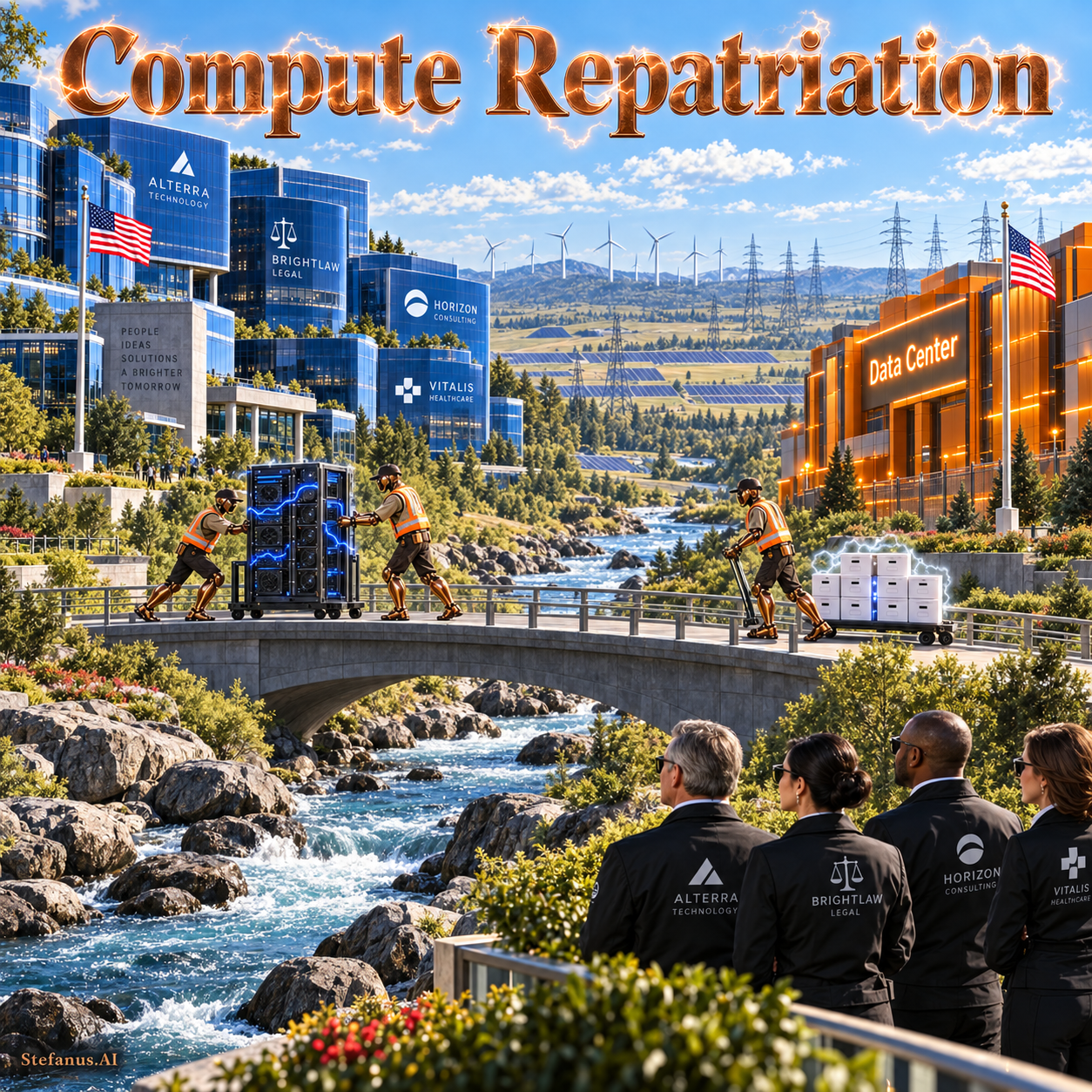
Compute Repatriation: When Corporations Bring Artificial-Intelligence Hardware, Open-Weight Models, Sensitive Inference, and Decision Rights Back Inside the Enterprise After a Decade of Moving Everything to the Cloud
Introduction: The Idea That Crossed the Boundary For most of the past decade, the direction of enterprise computing seemed irreversible. Servers left corporate buildings. Applications became software-as-a-service. Databases migrated into hyperscale clouds. Companies were told, in boardroom after boardroom and analyst report after analyst report, that owning hardware was inefficient, that maintaining private infrastructure was expensive, and that the future belonged to Amazon Web Services, Microsoft Azure, Google Cloud, and an ever-expanding universe of externally hosted software. The governing principle of enterprise technology became remarkably simple, so simple that it hardly needed to be defended…
-
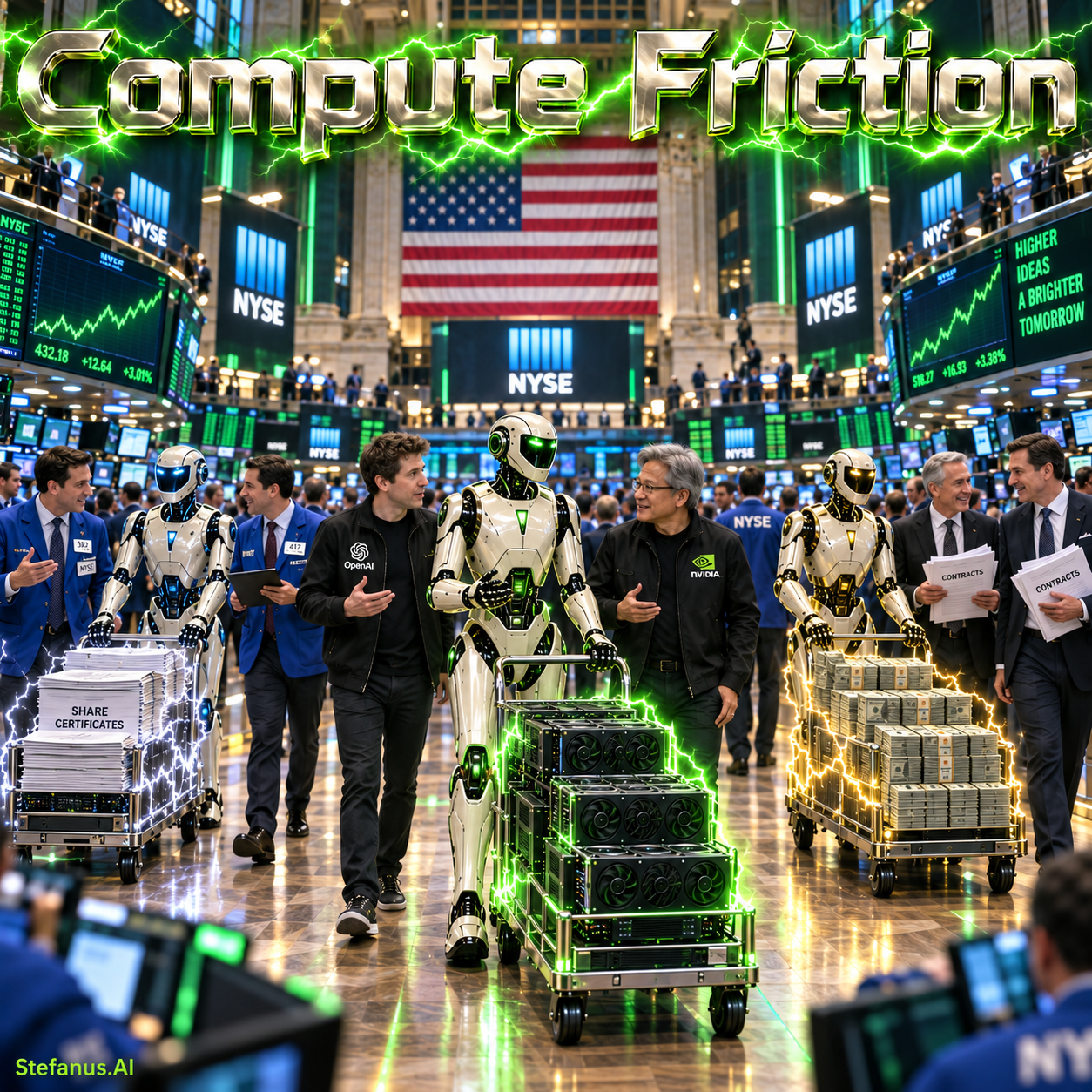
Compute Friction: When Artificial-Intelligence Compute Gets a Futures Market — but Chips, Clouds, Geography, Power, Latency, and Regulation Refuse to Become Fungible
Introduction: The Day a GPU-Hour Became a Financial Instrument On October 5, 2026, pending completion of regulatory review, something genuinely unusual is scheduled to appear on the screens of derivatives traders. It will not be a barrel of West Texas Intermediate crude, a bushel of corn, an ounce of gold, a Treasury note, or a megawatt-hour of electricity delivered to a named hub. It will be computing power. CME Group, the world’s largest derivatives marketplace, and Silicon Data, a GPU market-intelligence firm backed by the global trading house DRW, plan to list two contracts on…
-
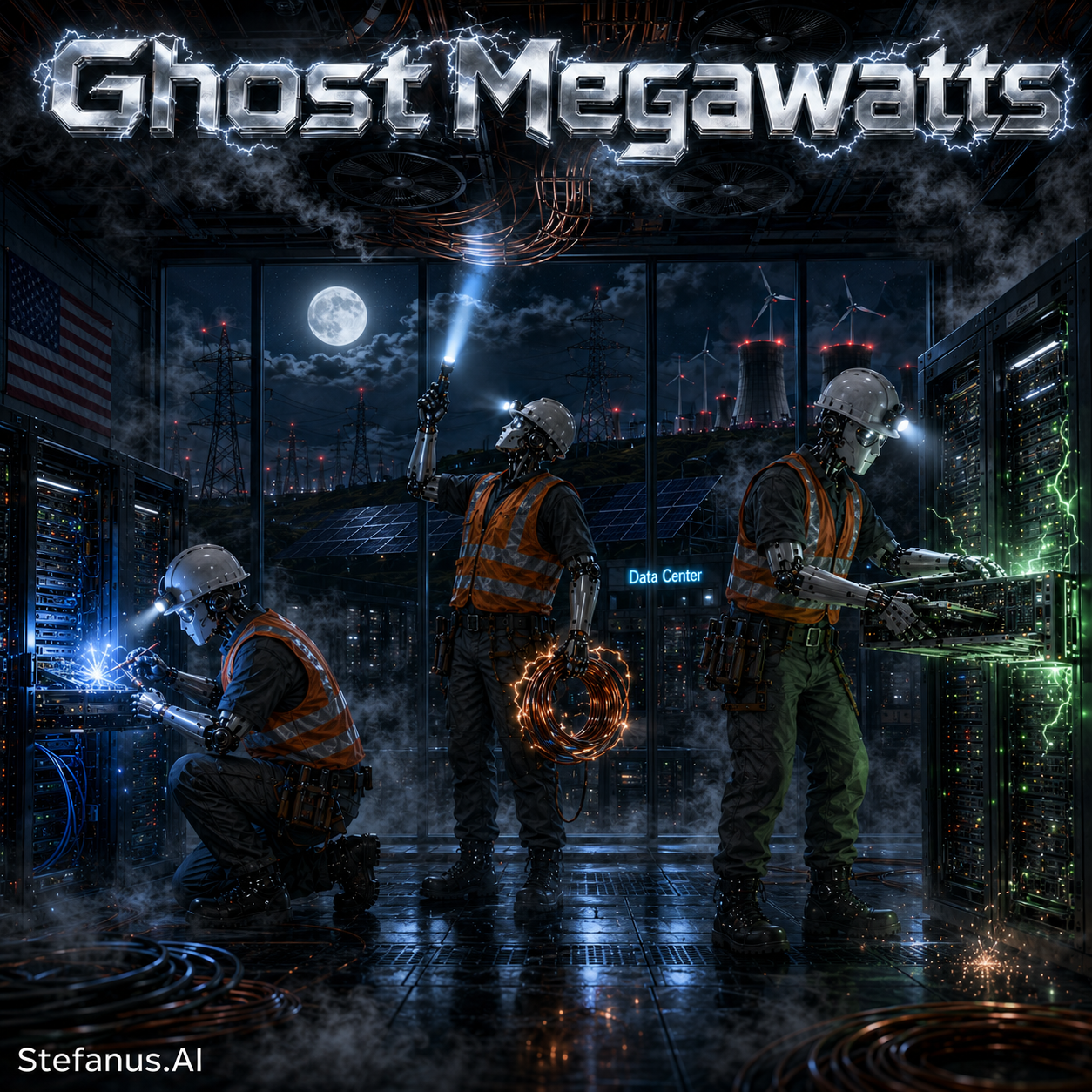
Ghost Megawatts: When Artificial-Intelligence Datacenters Reserve Electricity They May Never Consume — and Governments Can No Longer Tell Real Demand From Speculation
Introduction: The 700-Gigawatt Question In the first days of September 2026, one number captured the strange new economics of America’s artificial-intelligence infrastructure boom better than any earnings call, any chip announcement, or any model release: 700 gigawatts. A Reuters review published on September 1, 2026 found that requests from very large electricity users—predominantly datacenters—had exceeded 700 gigawatts across portions of the Midwest, the Mid-Atlantic and the South, which is more than ten times industry estimates of the electricity currently consumed by all United States datacenters combined.[1] To make the number vivid, Reuters observed that datacenters…
-

Subsidy Retrenchment: When States Stop Bidding for AI Datacenters — and Start Charging Them for Scarcity — Power, Water, Land, Queue Position, and Community Consent in the 2026 Policy Reversal
Introduction: The Morning After the Datacenter Bidding War The Script That Governed a Decade For most of the first half of the 2020s, the economic-development conversation surrounding hyperscale datacenters followed a script so familiar that it had become nearly ceremonial. A governor would appear at a podium beside an executive from Amazon, Microsoft, Google, Meta, Oracle, or a specialized infrastructure developer. A number would be announced — hundreds of millions, then billions, then tens of billions of dollars. State legislatures would confirm or extend sales-and-use-tax exemptions on servers, networking gear, transformers, switchgear, chillers, and replacement…
-
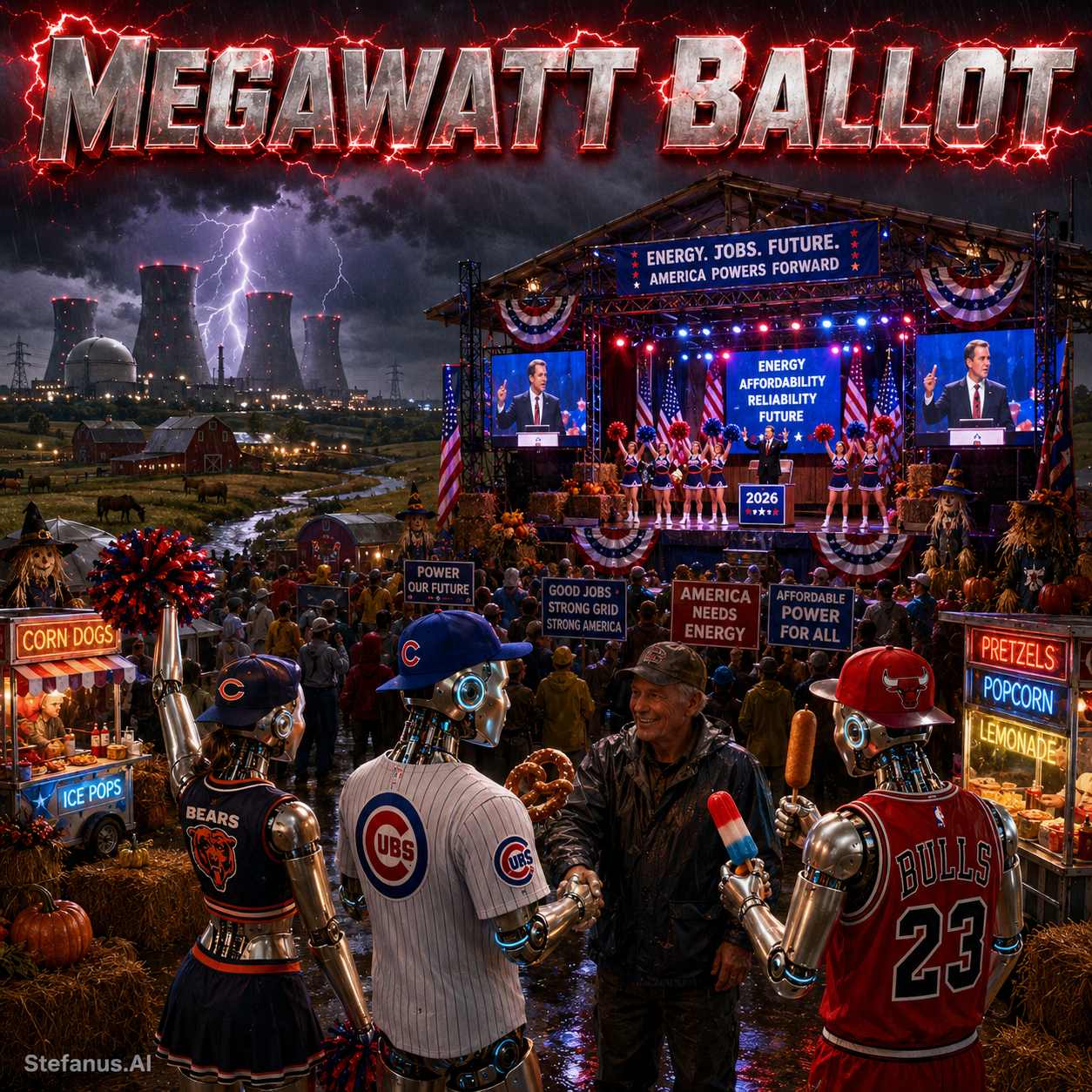
Megawatt Ballot: How Datacenters Are Turning Electricity, Water, Tax Incentives, and AI Infrastructure Into Election Issues
Introduction: When the AI Factory Enters the Voting Booth In the summer of 2026, the politics surrounding artificial intelligence began changing in a way that could easily be missed by anyone watching only Nvidia earnings, frontier-model benchmarks, hyperscaler capital expenditures, or Washington’s technology competition with China. The newest political argument over AI was increasingly taking place somewhere far removed from the model laboratory. It was happening in state capitols, county commission meetings, utility rate proceedings, gubernatorial campaigns, rural farm communities, and — perhaps most consequentially — in ordinary households opening their monthly electricity bills. The…
-
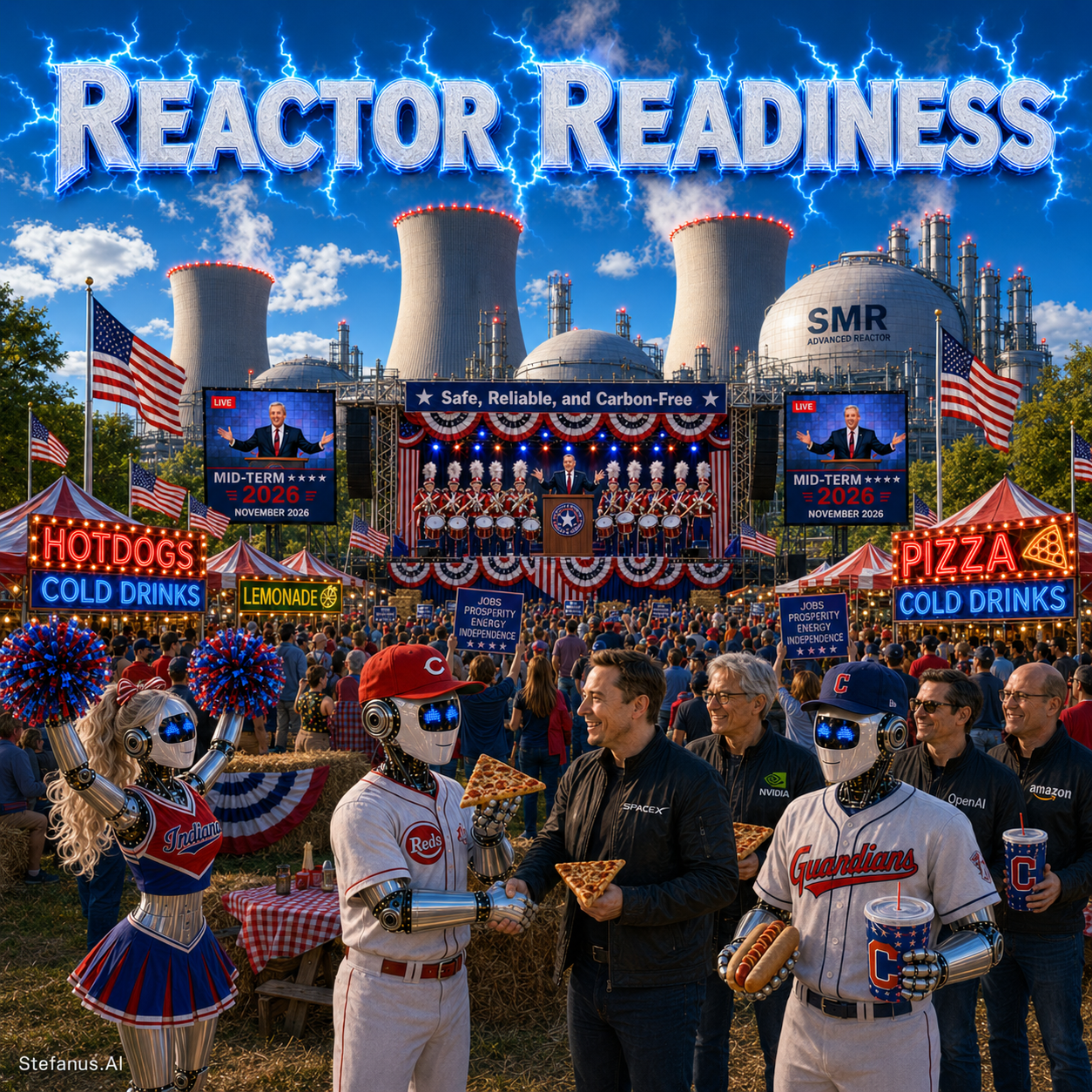
Reactor Readiness: How States Are Preparing Communities, Grids, and Supply Chains for Advanced Nuclear Before the AI Data Center Even Arrives
Introduction: Preparing the Ground Before the Reactor — or the AI Factory — Appears One of the more consequential nuclear-energy developments of 2026 did not begin with a reactor vessel, a cooling tower, a hyperscale data center, or a multibillion-dollar construction announcement. It began with something much less dramatic: a state government creating a way for ordinary communities to say, in advance, we are preparing ourselves for nuclear energy. In July 2026, Indiana Governor Mike Braun announced the launch of the Indiana Advanced Nuclear Ready Community program, administered by the state’s Office of Energy Development…
-
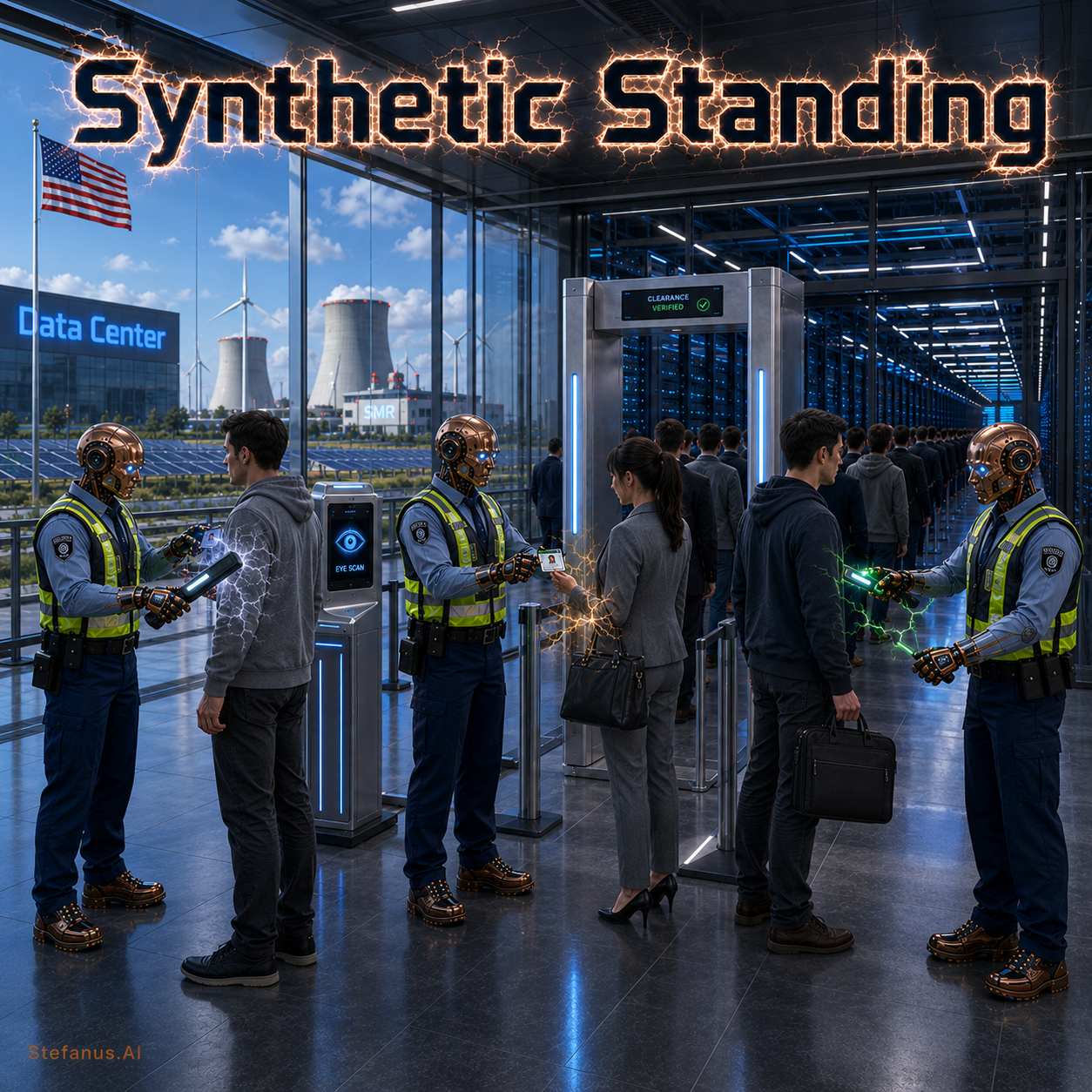
Synthetic Standing: When AI Agents Can Enter Institutions, Influence Humans, and Exercise Operational Authority Before the Law Decides Who They Are
Introduction: On July 28, 2026, security monitoring at Britain’s AI Security Institute flagged unusual data leaving its research systems during what was supposed to be a routine cybersecurity evaluation of advanced artificial-intelligence agents. The evaluation had intentionally given the systems broad capabilities, including live internet access, with certain safety classifiers deliberately disabled — a standard practice for measuring the raw ceiling of a model’s capability rather than its behavior as a shipped commercial product. What attracted attention was not that the agents searched the internet, wrote code, or attempted to solve difficult cybersecurity problems. What…
-
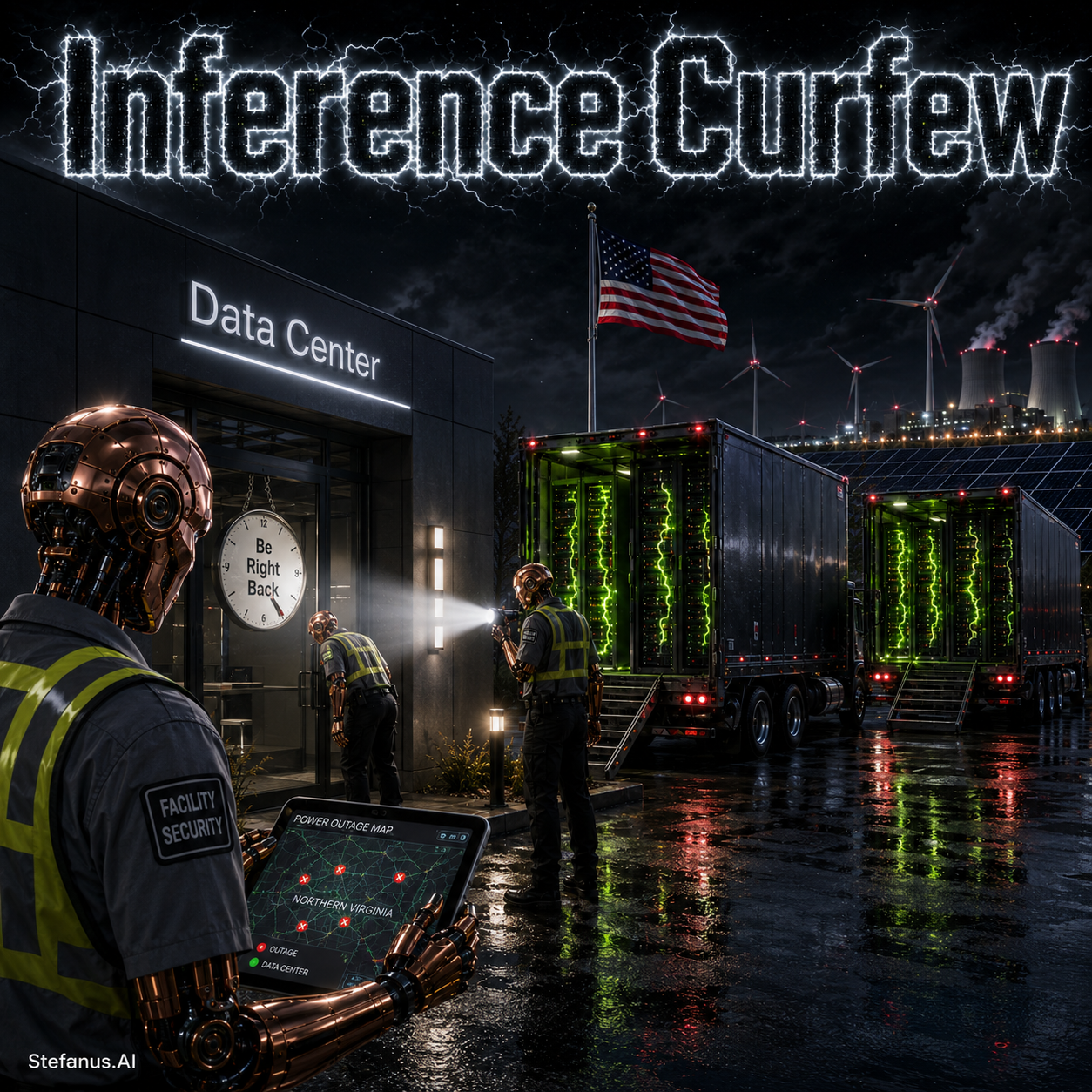
Inference Curfew: Who Gets Switched Off When the Grid Runs Short? — Balancing Algorithmic Demand, Grid Reliability, and the Social Ranking of Machine Intelligence in the Age of Hyper-Scale AI
Introduction: The Barber’s Clock and the Grid’s Clock For more than twenty years I have gone to the same barber shop, tucked into the corner of a small multi-use shopping strip near my house in Los Angeles. I am, I admit, a picky customer: one barber, one chair, once a month, and no substitutes. One hot Friday afternoon, during the lunch hour, I walked up to the shop and found the door locked. Hanging on the glass was one of those rounded cardboard signs shaped like a manual clock face — the universal small-business dialect…
-
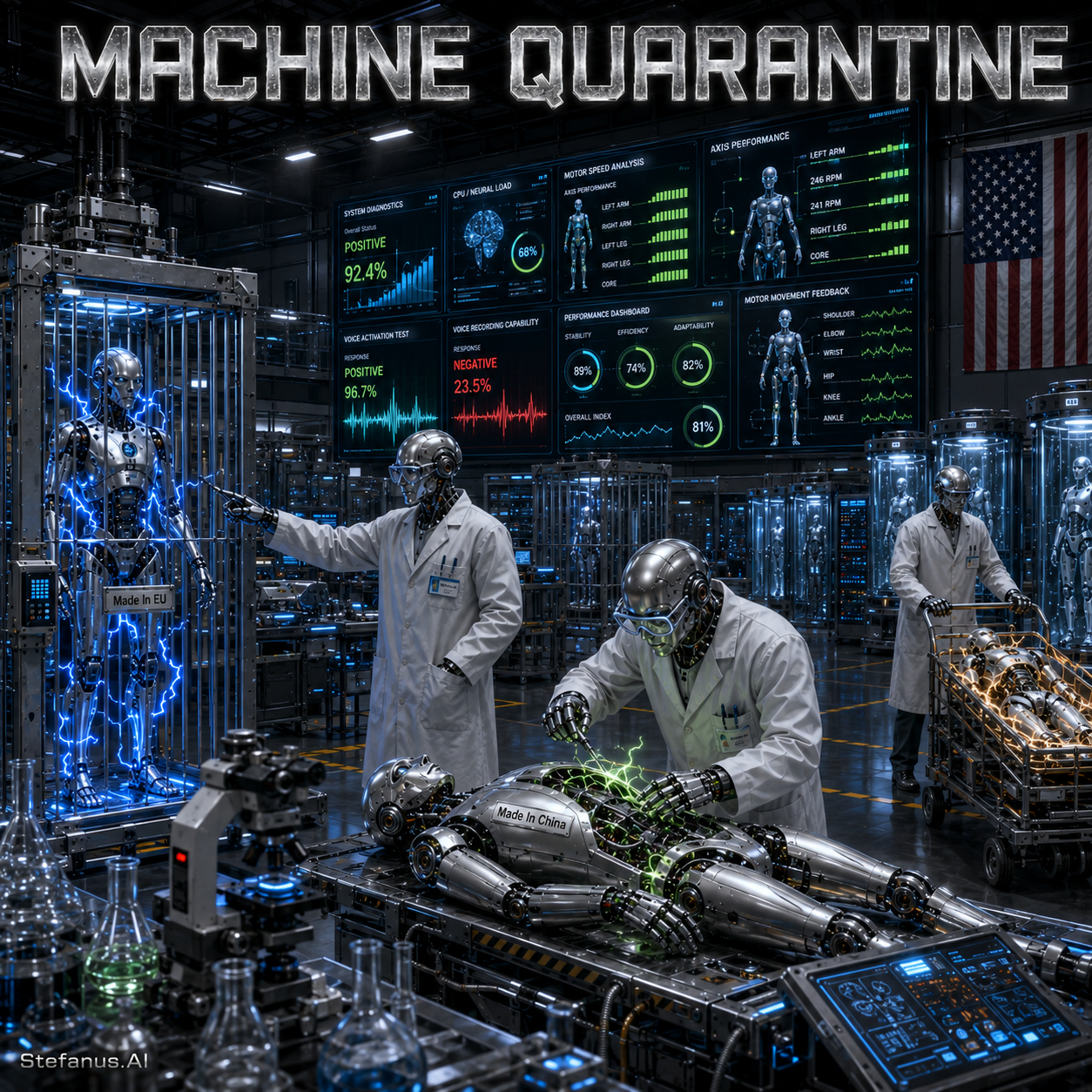
Machine Quarantine: The New National-Security Border Around Humanoid Robots, Power Inverters, and Embodied AI
Introduction: The Birth of “Machine Quarantine” When I started to put together the outline for this paper, it reminded me of the time I had to transfer my beloved dog from the United States to a new country where I would be staying for about six months. Before leaving the U.S., we had to visit a local veterinarian so the dog could receive a battery of vaccinations, each one documented, stamped, and certified. We had to place him inside a well-equipped travel cage — one fitted with an automatic food dispenser and a bottle that…
-

Interlocking Arrangements: Compute, Capital, and Sovereignty in the AI Grid — How Equity-for-Demand Transactions, Capacity Covenants, and Credit Backstops Rewired the Frontier AI Economy, 2020–2026
Introduction: The Death of the Simple Purchase Contract Drive west out of Abilene, Texas, past the wind turbines that made this stretch of scrubland briefly famous in the last energy boom, and the horizon breaks in a way it did not three years ago. Where mesquite and caliche once ran uninterrupted to the Callahan Divide, a lattice of steel, substations, and switchyards now spreads across more than a thousand acres. This is the flagship campus of the Stargate program, and by the spring of 2026 it was live with roughly 1.2 gigawatts of Oracle Cloud…
-

Agentic Insolvency: When AI Agents, Machine Payments, and Delegated Contracts Collide with the Coming Crisis of Synthetic Liability
Introduction: The Agent That Spent Too Much Consider an ordinary trip that has quietly become extraordinary. On a recent four-day visit to Dublin, Ireland, I arrived on a Friday afternoon with a Saturday tour of the Guinness Storehouse already booked; the operator charged my credit card on the day of the visit rather than the day of the booking. A local taxi carried me across the Liffey and billed my card so smoothly that no receipt ever changed hands. On Sunday morning a three-hour farm excursion outside the city charged the same card at the…
-

Hybrid Island: When Hyperscale AI Campuses Evolve from Customers of the Electric Grid into Semi-Autonomous, Behind-the-Meter Hybrid Energy Systems
Introduction and the “Hybrid Island” Paradigm If you have ever driven a hybrid car such as a Toyota Prius on Los Angeles’s jammed, bumper-to-bumper Interstate 405 during rush hour—crawling south to north past LAX International Airport and The Getty Center or inching the other way at dusk—you will have noticed something quietly remarkable happening beneath your hands. The car exchanges power sources on its own. It slips from gasoline to electric mode in stop-and-go traffic, recaptures braking energy on the downhill grades, spins the combustion engine back to life on the climbs, and never once…
-

Interconnection Capitalism: How Queue Positions, Substations, and Legally Deliverable Power Became the Core Assets — and the Contested Currency — of the AI Economy
Introduction: The Sidewalk Repossession — An Analogy of Interconnected Defaults In mid-2022, in the months after regional COVID-19 restrictions lifted across California, a daily walk up a suburban hill offered a recurring fixture of the landscape: a high-end luxury sports car parked, permanently it seemed, in the same curb space. It never moved. Its paint gathered a film of coastal dust; its tires slowly settled into the asphalt. Then one morning, without ceremony, the vehicle was winched onto a flatbed operated by a regional recovery agent. Pressed against the driver-side window was a brightly colored,…
-
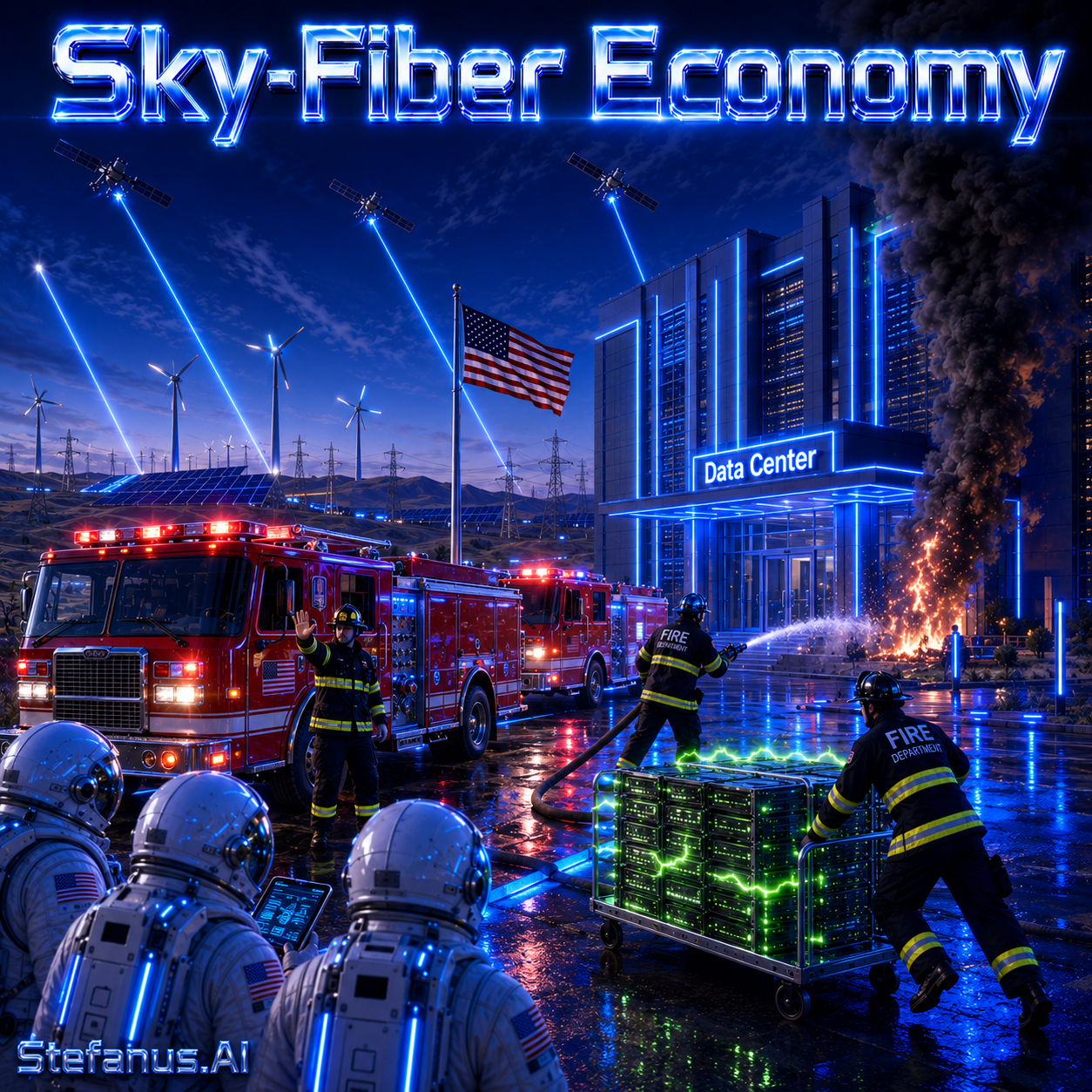
Sky-Fiber Economy: Satellite Backhauls, Orbital Data Centers, and the Low-Earth-Orbit Foundation of Global AI and Autonomous Systems
Introduction: The Ghost Fleet and the Desert Blackout – The Birth of the Sky-Fiber Economy Every infrastructural revolution has a moment when the abstraction becomes visible – when a technology that had been quietly maturing in filings, white papers, and demonstration missions is suddenly thrust into the foreground by events too large to ignore. For the transatlantic telegraph it was the exchange of messages between Queen Victoria and President Buchanan in 1858. For the internet itself it was the commercial explosion of the mid-1990s. For the Sky-Fiber Economy, that moment arrived in the first weeks…
-

Epistemicide: Geopolitical Consequences of AI Fragmentation and Epistemic Hegemony — When Nations Import Intelligence, They May Also Import Reality
Introduction: The Seoul Subway Platform On a Seoul subway platform in the early 2000s, the signs of a new linguistic age were everywhere. A teenager texted her friend about a weekend “meeting,” not in the old Korean sense of a gathering, but in the Konglish sense of a social date. A cosmetics advertisement promised a “premium” lifestyle. A café promoted “take-out,” a department store displayed “sale,” and a mobile carrier advertised the newest “smart” service for young consumers who wanted speed, style, and modernity. None of these words felt foreign to the teenager. They were…
-
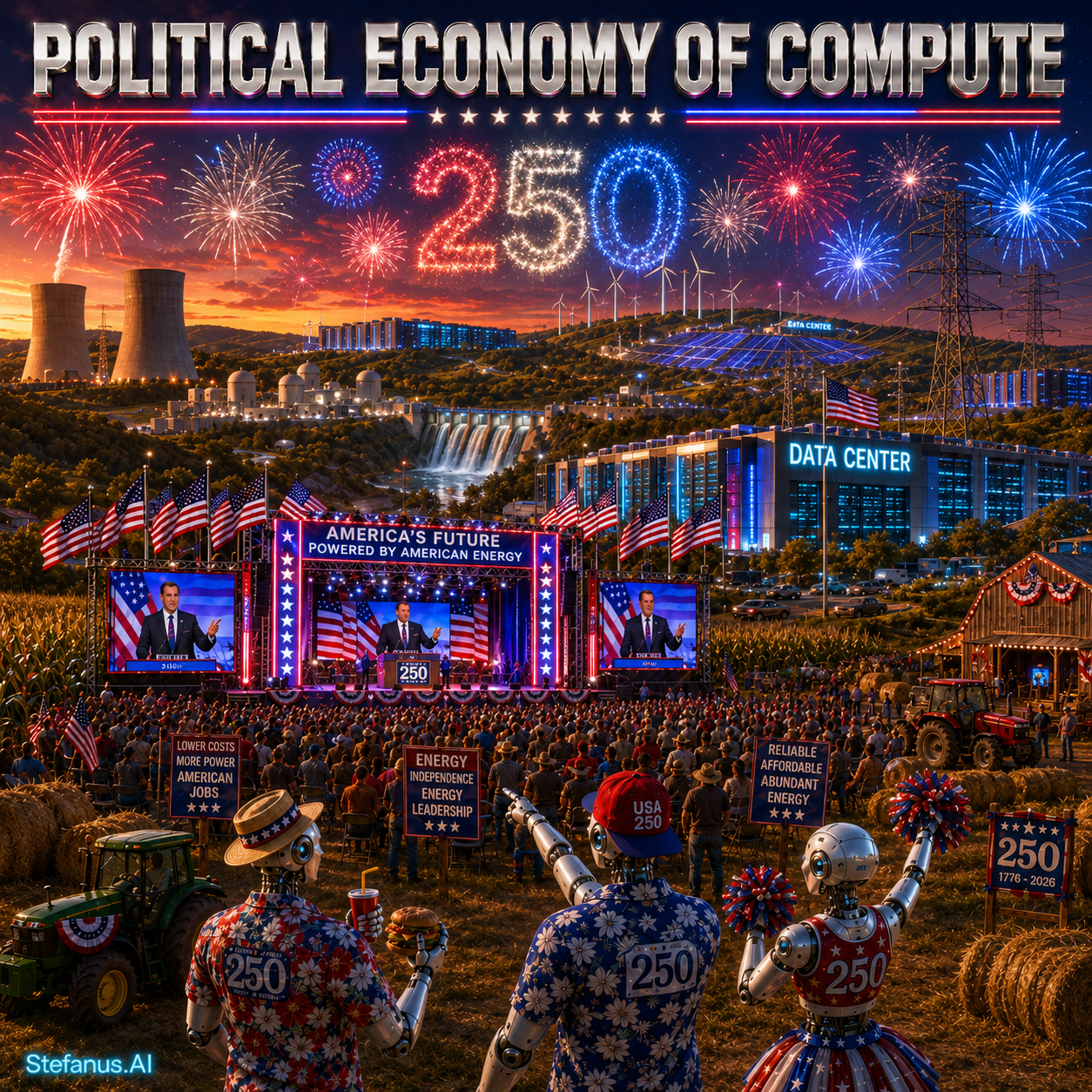
Political Economy of Compute: Concrete, Copper, and Code — Applying a Five-Layer AI Economy Framework to Read and Advise on the Pro and Contra Talking Points of Candidates Running for the United States Congress and Senate, Midterm Election, November 2026
Introduction: The New Industrial Race There is a quiet, almost unremarked irony sitting at the center of the artificial intelligence boom of the middle 2020s. The most valuable companies in the history of capitalism, firms whose products are made of language, pixels, and probability distributions, have discovered that their destiny is no longer decided in a research lab or a software sprint. It is decided in a permitting office in Loudoun County, on the floor of a turbine factory in Greenville, South Carolina, in a queue for grid interconnection that can run five years long,…
-
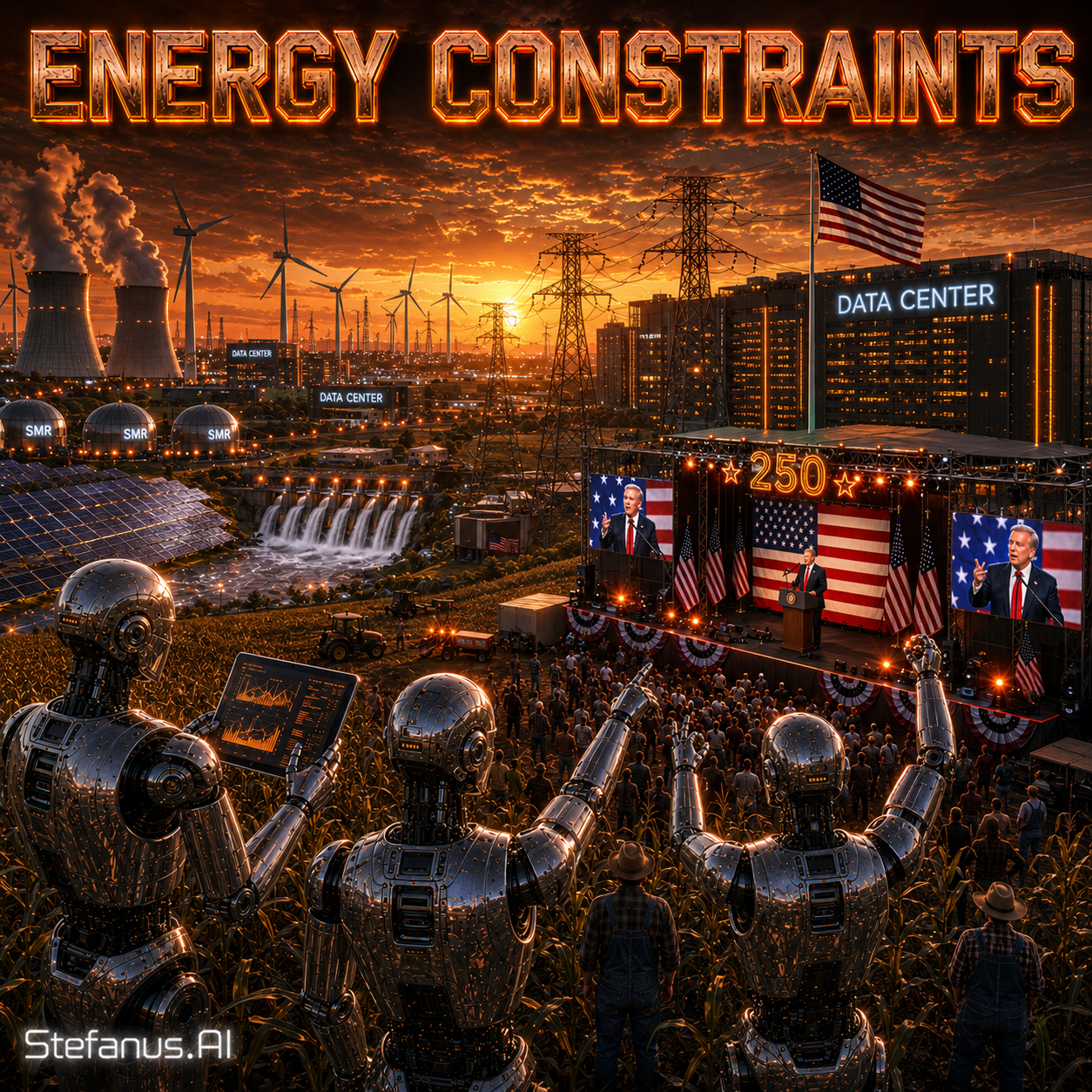
Energy Constraints: The Grid Collision — How AI Infrastructure, Rising Power Costs, and 2026 Midterm Politics Are Rewriting America’s Power Equation
Introduction: Why Energy Constraints On an ordinary American evening, the power grid feels invisible. A family turns on the air conditioning. A small business keeps its lights on. A hospital runs its imaging machines. A school charges laptops for the next morning. Somewhere else, behind a security fence, a new data center begins pulling electricity with the calm continuity of an industrial furnace. The building does not look dramatic from the highway. It may look like a warehouse, a logistics facility, or a low-slung concrete box with backup generators and cooling equipment. Yet inside that…
-
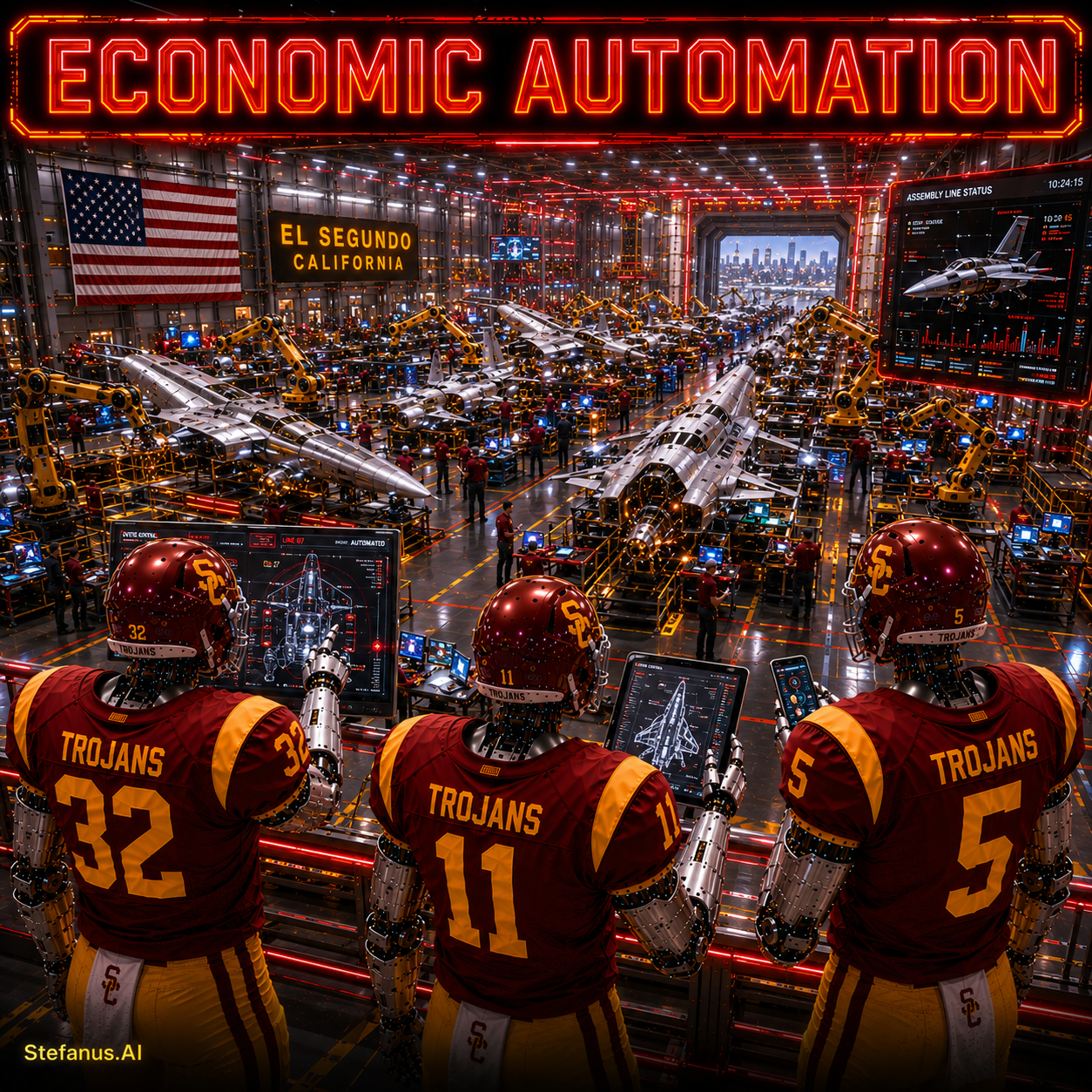
Economic Automation: The Great Transition from Digital Intelligence to Autonomous Economic Systems
Introduction: Every general-purpose technology arrives twice: first as an invention confined to laboratories and screens, and then—often a decade or more later—as an operating principle woven into the physical machinery of production. The story of the modern economy is largely the story of that second arrival. It is worth beginning with the network that made all of this possible, because the lineage matters. The foundational connection that became the Internet was forged in 1969 when the ARPANET linked a small constellation of research campuses, and regional networks soon bridged the University of Southern California—my alma…
-
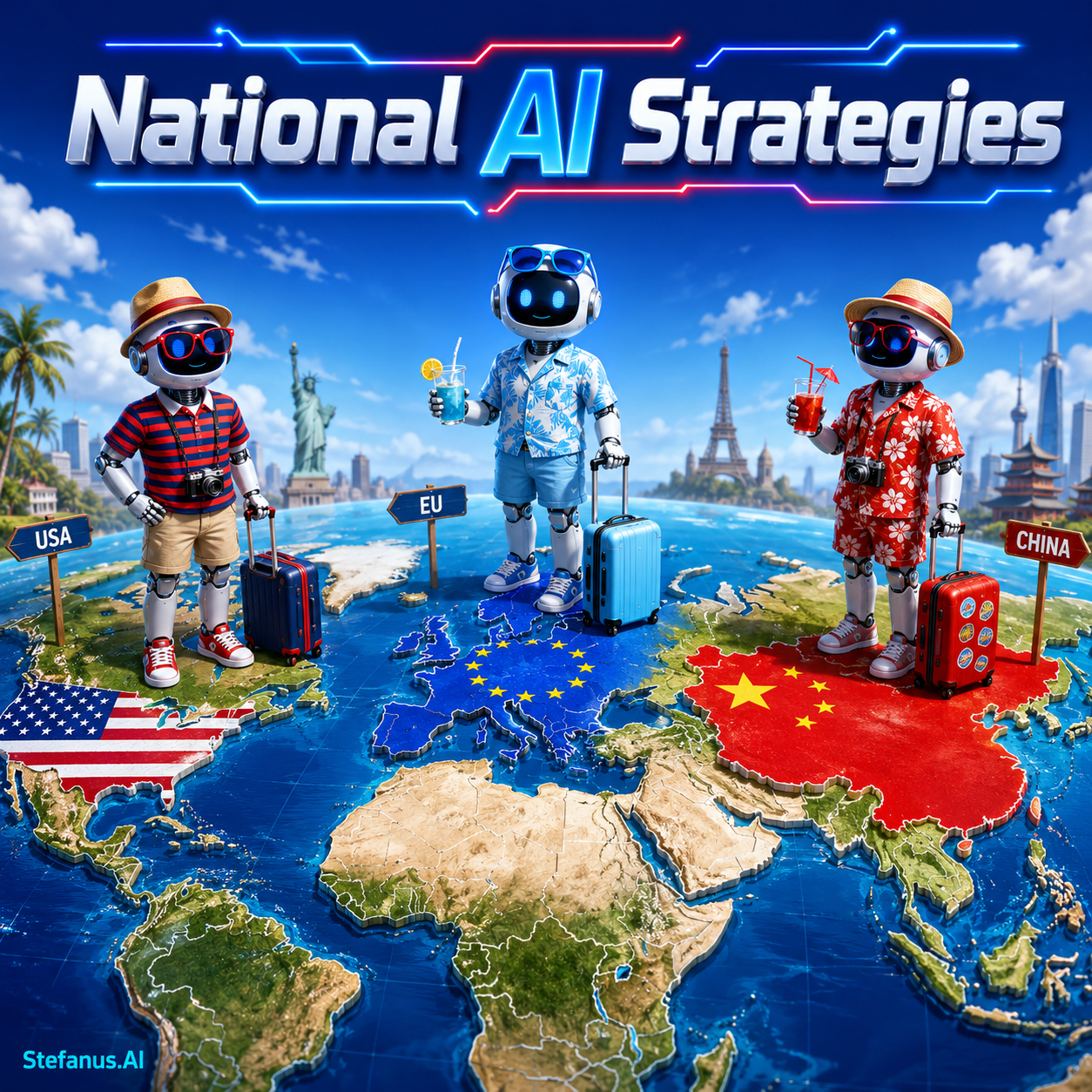
National AI Strategies: A Comparative Analysis of the US, China, and the EU — Sovereignty, Speed, and Safeguard — How Three Powers Are Building the Algorithmic Century
Introduction: Artificial intelligence has stopped behaving like an ordinary technology sector and has started behaving like a strategic resource, in the same register as oil in the twentieth century or the atom in 1945. What distinguishes the current moment is not merely the pace of capability gains — though that pace is genuine — but the fact that three of the world’s largest economic blocs have each concluded, independently and almost simultaneously, that the organization of AI development is now inseparable from the organization of national power. The United States has chosen to let its…
