
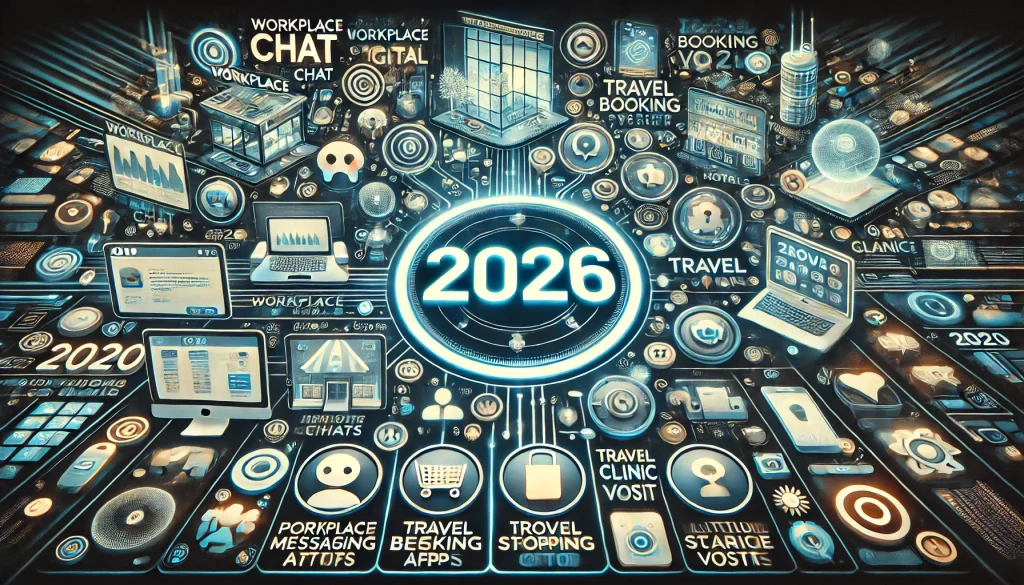
In 2026, intelligence gathering doesn’t look like it used to. It’s no longer only about secret agents, hidden microphones, or dramatic surveillance scenes. Instead, it can happen quietly through the normal tools people use every day—workplace chat, personal messaging, mobile photos, travel bookings, online shopping, smart home cameras, cloud systems, and even clinic visits. The surprising part isn’t that data exists; data has always existed. The surprise is how AI can connect it.
Modern AI doesn’t need one huge secret file to understand someone. It can take tiny, ordinary data points—many of them harmless on their own—and stitch them into a story: who you are, where you’ve been, what you’re doing, what you might do next, and sometimes what you may be trying to avoid—even if you’re not hiding anything at all. This is exactly the focus of the Center for World Intelligence Research (CWIR): understanding how the world becomes more “readable” when AI can analyze and connect information at massive scale.
The term CWIR was coined with the registration of CWIR.COM on November 22, 2001, long before today’s AI boom. In a way, that early timestamp makes the idea feel prophetic: the world was already moving toward the information age, but now we’ve entered the intelligence age. CWIR is not about fear—it’s about awareness—because the biggest privacy risk in 2026 isn’t one giant breach. It’s thousands of tiny leaks that happen naturally through daily life.
There are many additional sources AI can learn from—browser history, search activity, public Wi-Fi and Bluetooth tracking, smart car navigation, fitness and sleep trackers, and more. But in this article, we’ll focus on twelve everyday sources that show how AI can turn modern living into intelligence. None of these systems are automatically “bad.” The point is that when AI combines them, the pieces can form “the whole story.”

1) Slack and WhatsApp: The Modern Confessional
It often starts with what feels most innocent: conversation. Slack has become the living heart of many companies, where people share financial updates, business strategy, customer problems, internal decisions, and future plans—because it feels like “just chat.” That casual tone makes it powerful. Add AI, and suddenly months of messages can be summarized in seconds, key decision-makers can be identified, and patterns can be detected without anyone “spying” the old-fashioned way. WhatsApp feels private, but even encrypted messaging still creates valuable patterns: who you talk to, how often, and in what groups. Add screenshots, backups, and compromised devices, and even “private” conversations can travel farther than intended. The lesson is simple: chat is not just conversation—it’s data.
2) iPhone Photos: A Picture That Can Prove Where You Were
From messages, the trail often moves to images. An iPhone photo might seem harmless, but it can carry time and location metadata. Even without GPS, the image itself may reveal clues—street signs, landmarks, reflections, vehicle plates, and architecture. AI can often identify where a photo was taken just by reading the scene. A casual photo becomes a record of where someone was, when they were there, and what they were near. In the AI era, photos can become more than memories—they can become proof of presence.
3) Transactions and Buying Habits: Lifestyle in Numbers
Once presence is established, behavior becomes easier to map—especially through money. A single purchase means little, but patterns over time reveal lifestyle, income range, stress cycles, health concerns, and daily routines. AI is especially good at spotting shifts: unusual spending, sudden travel purchases, or new habits. Even if someone never posts personal details online, spending patterns can still build a strong profile. In 2026, privacy isn’t only about what you share publicly—it’s also about what your habits quietly reveal.
4) Hotels, Airline Bookings, and Travel: When Movement Looks Like Intention
Movement adds context. Booking a flight, visiting a specific city, or staying in a hotel far from home can be interpreted as intent—business, family, vacation, or something else. AI often tries to categorize it anyway: negotiation, job interview, relocation planning, secrecy, or personal meetings. Even when nothing is wrong, AI can guess—and guesses repeated enough can start to look like truth. This is one major setback of AI: it can confidently build narratives even when it doesn’t know the real reason.
5) ChatGPT and Writing Assistants: When Thoughts Become Records
Now add a modern habit: asking AI itself for help. People use ChatGPT to write proposals, strategies, business plans, and rewritten messages. It’s fast and useful, but prompts reveal something deeper than everyday posts: intent. Asking for something “more persuasive” or building a negotiation plan shows what someone wants, fears, and aims to achieve. Prompts can reveal more than social media because they capture what you’re thinking—not just what you’re doing.
6) Ring, Nest, and Smart Homes: The Accidental Witness
Not all intelligence comes from what people type. Some comes from what devices record automatically. Smart home cameras capture visitors, routines, motion events, and sometimes conversations. AI can label footage, detect faces, and summarize events. These recordings may be exposed through account sharing, weak passwords, misconfigured settings, hacking, or legal requests. Even if your home is safe, the question remains: who can access the record later? In 2026, smart devices aren’t only tools—they’re documentation.

7) Cloud Systems and AWS Multi-Cloud: When Data Connects, Intelligence Accelerates
Records become even more powerful when stored where they can be linked. Governments and large organizations increasingly use cloud systems like AWS and multi-cloud environments. Cloud infrastructure doesn’t just store data—it makes data easier to combine. Once systems connect, AI can link identity records, communication patterns, travel patterns, financial activity, and security logs. Data may be separate “on paper,” but AI is built to join it.
8) Domain Registries, Websites, and Email Records: The Internet’s Back Office
Then there’s the part of the internet most people never see. Domain registries, hosting providers, and email routing systems handle valuable metadata. A domain name can reveal business patterns, new projects, product launches, and organizational connections. E-commerce platforms don’t just sell products—they track clicks, views, purchases, abandoned carts, and timing, creating buyer profiles useful for marketing and analysis. Email leaves trails too: MX records show where email is delivered, and providers may see metadata even when message content is protected. In 2026, infrastructure isn’t just plumbing—it’s a visibility layer.
9) 5G and 6G Networks, Verizon/AT&T, and Starlink: Communication as a Global Sensor
Visibility expands at the network level. Telecom providers route huge volumes of communication and can handle metadata such as device identity, approximate location, and network behavior. As 5G and 6G evolves, more devices will be connected and more data will move faster—creating more signals. Starlink expands global connectivity, especially in remote regions, but also becomes part of the worldwide connectivity map. Where signals exist, patterns exist.
10) Clinics, Hospitals, and Blood Tests: Health Data as a Sensitive Signal
Some of the most personal signals come from the human body. Hospitals store records, laboratories process results, and health systems exchange information for care and billing. Health data can reveal chronic conditions, stress levels, lifestyle changes, medication usage, and more. Privacy rules exist, but health data is still digital and still part of systems requiring storage and access control. In 2026, medical records remain among the most sensitive intelligence signals because they reveal realities people never post online.
11) Social Media + Customer Support: The Public Diary and the Help-Desk Diary
Not all diaries are private. Social media is often treated as low-risk, but over time it becomes a timeline: moods, routines, beliefs, relationships, and location hints. AI can infer stress, political leaning, relationship status, and even whether someone may be preparing to move or change jobs. Then add customer support: people often reveal personal details while asking for help—travel, address changes, billing disputes, client pressure, device setup. Support logs are structured, timestamped, and linked to identity. With AI, these records become a surprisingly complete portrait of real life.
12) Facial Recognition and Biometric Check-Ins: The Camera Becomes the Gatekeeper
Finally, there’s the source that requires no typing at all: your face. Facial recognition is expanding in offices, airports, stadiums, hotels, casinos, retail stores, and government spaces. AI can track entry times, movement paths, repeat visits, and interactions. This fuels biometric check-ins—systems where your face becomes your ID. Supporters say it improves convenience and security. Critics worry it normalizes constant identity verification and makes opting out difficult. CWIR doesn’t ask whether it’s “good” or “bad”—it asks what happens when it becomes normal. When cameras become gatekeepers, every gate becomes a record.

Conclusion: The Start of 2026—Why Awareness Matters Now
The world isn’t only becoming digital. It’s becoming interpretable.
The biggest setback of AI in daily life isn’t that it watches everything. It’s that it can connect everything. Small, ordinary actions—messages, photos, purchases, travel, writing prompts—can be stitched into a profile that feels complete. And sometimes AI tells the wrong story with complete confidence.
That’s the new reality of 2026: your life can be understood not just by what you reveal, but by what machines infer. Convenience becomes visibility. Visibility becomes prediction. And prediction becomes power—whether that power belongs to governments, private companies, or automated systems that run quietly in the background.
But here’s the hopeful part: you don’t need to disappear from the internet to regain control. You only need to become intentional. Think of privacy like health. You don’t protect it with one dramatic move—you protect it with small daily habits. You don’t need fear; you need awareness. You don’t need to panic; you need a plan.
So as the new year begins, the CWIR message is simple and practical:
Live digitally—but don’t live transparently by default. Use the tools. Enjoy the convenience. Let AI help you. Just remember: every tool collects something, every system remembers something, and AI is getting better at connecting it all.
In 2026, the smartest people won’t be the ones who know the most technology. They’ll be the ones who know when not to share—before the story writes itself.