Category: Funding
Funding, venture capital, and joint venture
-

Revenue Denominator: When Artificial Intelligence Companies Count the Same Commercial Activity Differently — How Gross-versus-Net Accounting, Run-Rate Arithmetic, and Cloud Distribution Economics Are Reshaping Frontier-Model Valuations, Hyperscaler Partnerships, and the Capital Expenditure Expectations of the Five-Layer AI Economy, 2026–2030
Introduction: The October 2026 Revenue Confusion That Shook the Artificial Intelligence Economy On Thursday, October 8, 2026, Wall Street confronted a question that would have seemed absurd in any previous technology cycle, and yet one that goes to the heart of how the artificial intelligence economy is currently being measured, financed, and valued: had the revenue of OpenAI, one of the two most closely watched private companies in the world, suddenly fallen by roughly $20 billion, or had investors simply been comparing two different financial measurements of the same underlying business? The Financial Times reported…
-
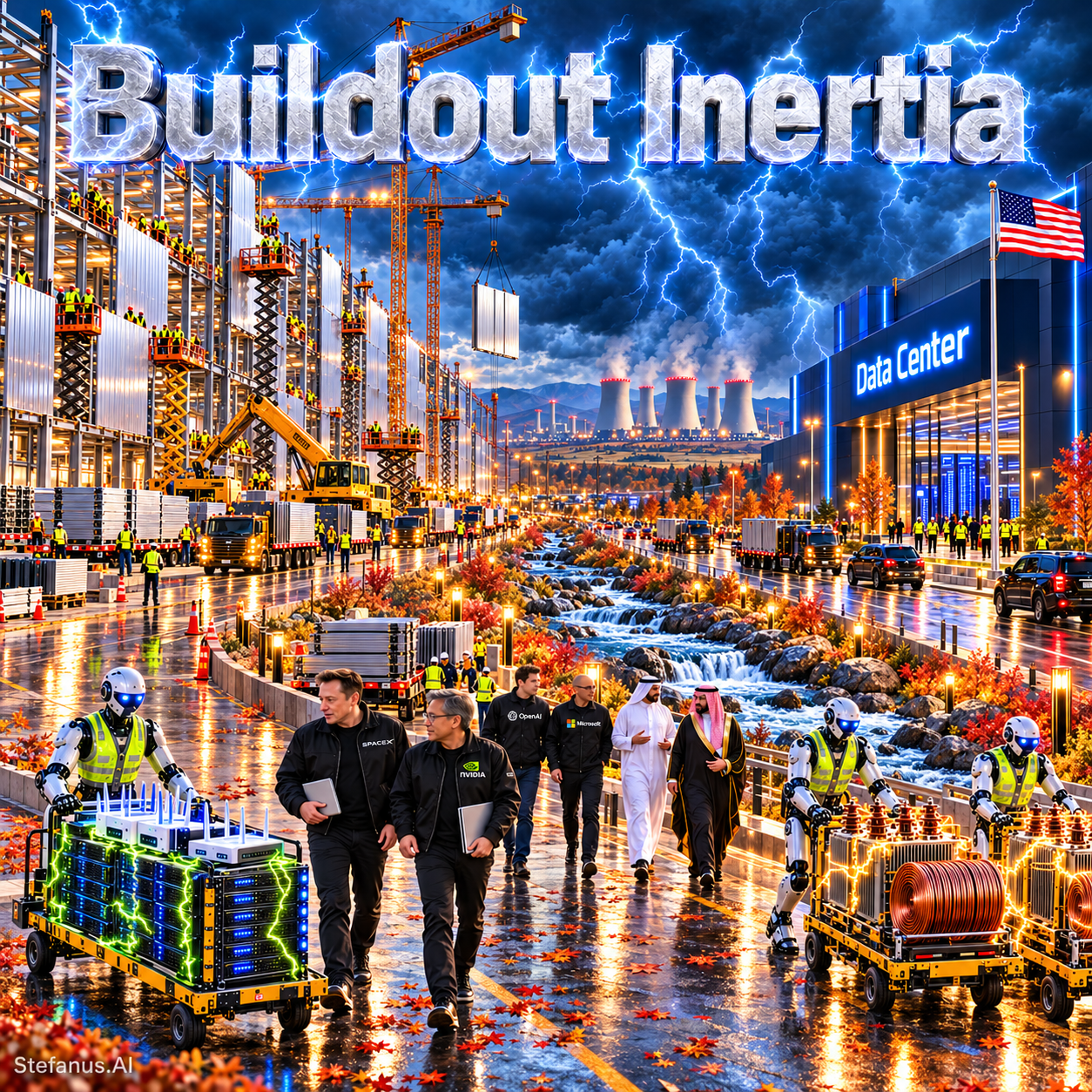
Buildout Inertia: Why America’s AI Datacenter Expansion Keeps Advancing After Utility Bills, Local Opposition, Permitting Politics, and the Midterm Election Turn Against It
Introduction: The Week the Backlash Peaked and the Forecast Did Not Move On October 5, 2026, Goldman Sachs published a research note that read, at first glance, like a contradiction sitting at the center of America’s artificial-intelligence infrastructure boom. Everything in the political environment appeared to be turning against the datacenter. Governors who had spent the preceding three years competing to attract hyperscale campuses were now imposing conditions, pausing permits and ending confidentiality arrangements. County boards that had once voted unanimously for rezonings were facing packed hearings. More than one hundred moratorium proposals were reportedly…
-

Spatial Intelligence Models: When Artificial Intelligence Moves Beyond Text and Learns the Physical World Through Video, 3D Space, Robot Trajectories, Simulation, Digital Twins, and the Economics of Real-World Experience
Introduction: When a Chip Company Bought a Way to Understand the World On September 28, 2026, Advanced Micro Devices announced that it had entered into a definitive agreement to acquire World Labs, the spatial-intelligence company co-founded by Stanford professor and computer-vision pioneer Fei-Fei Li, in an all-stock transaction valued at approximately $8.2 billion and expected to close by the end of 2026, subject to regulatory approval.[1][2] The transaction is the second largest in AMD’s history, and the company said that following the closing Li would join as executive vice president and chief scientist, reporting directly…
-
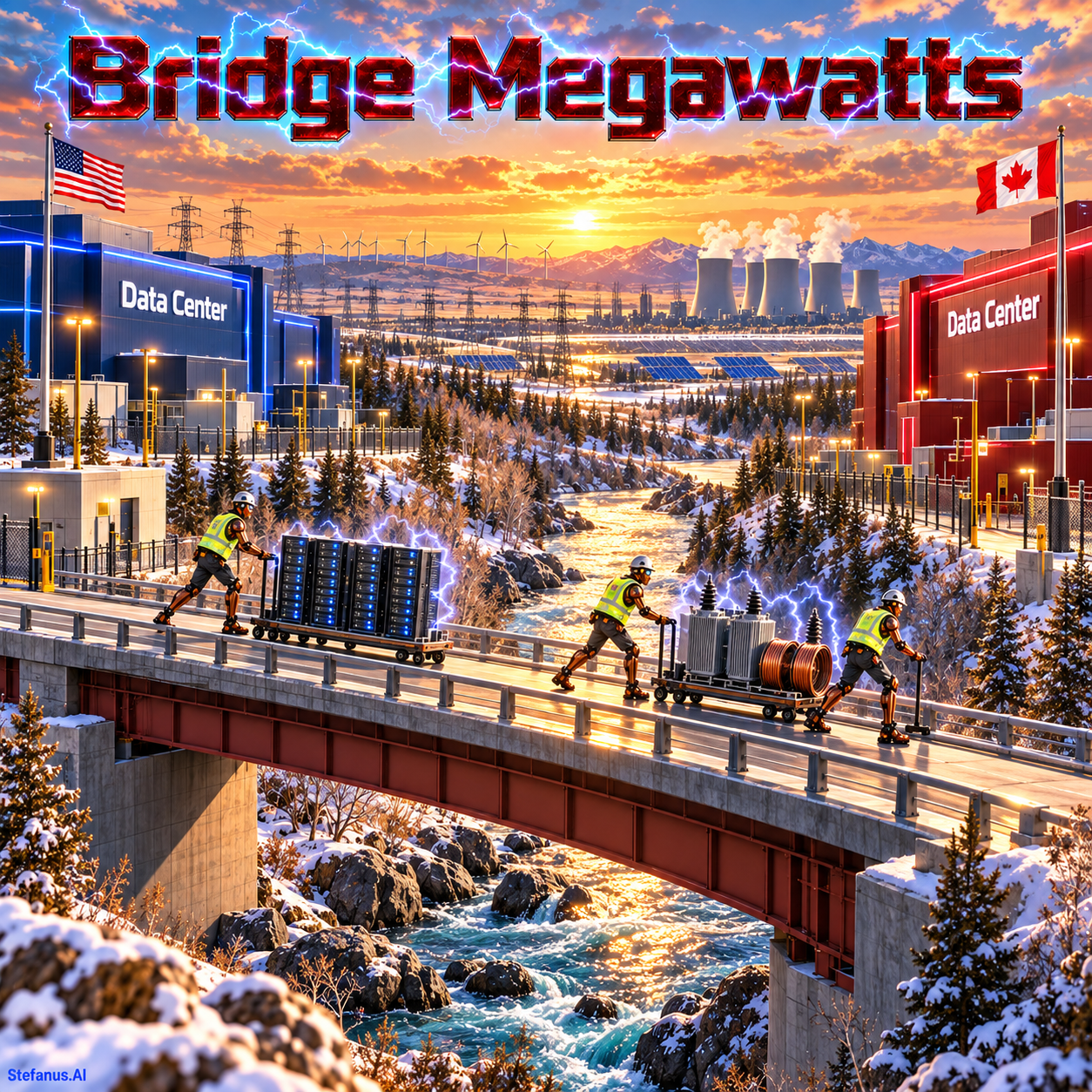
Bridge Megawatts: How Hyperscalers Borrow the Shared Grid While Their Private Power Plants Are Still Being Built — Time, Transitional Tariffs, Load Flexibility, and the Political Economy of the AI Power Gap in the Five-Layer AI Economy, 2026–2030
Introduction: The Megawatts Between Now and 2030 On July 8, 2026, Meta broke ground on something considerably larger than another data center. In Sturgeon County, in Alberta’s Industrial Heartland north-east of Edmonton, the company began building a one-gigawatt, AI-optimized campus that it describes as its first data center in Canada and the thirty-third in its global fleet, representing an investment of more than C$13 billion.[1] Meta expects roughly 3,000 construction workers on site at the peak of development, more than 300 permanent jobs once the facility is operational, and approximately C$60 million of local road…
-
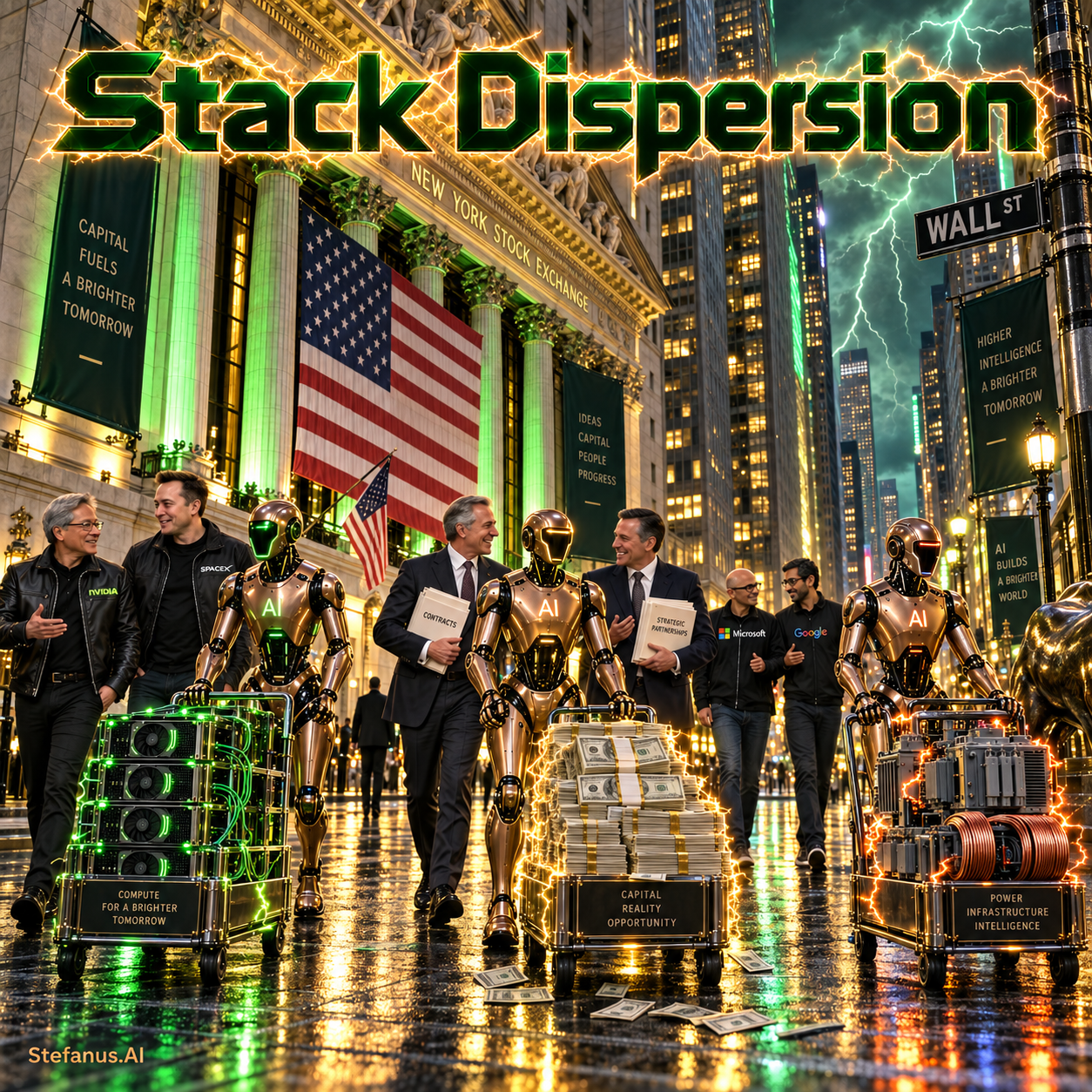
Stack Dispersion: When Investors Stop Treating Artificial Intelligence as One Trade — and Begin Underwriting Capital Intensity, Duration, Utilization, and Obsolescence Across Every Layer of the Five-Layer AI Economy
Introduction: The Week the AI Trade Stopped Being One Trade During the first phase of the artificial-intelligence investment boom, the trade was remarkably easy to describe even when the underlying technology was extraordinarily complicated. The instruction, reduced to its essentials, was this: buy whatever stood close enough to artificial intelligence, because the gravitational field of the technology would eventually pull every adjacent business upward. It did not matter greatly whether the company in question designed semiconductors, poured concrete, refurbished nuclear reactors, manufactured gas turbines, or sold enterprise software with a newly attached copilot; proximity to…
-

Convertible Compute: How Debt, Equity, Warrants, Prepayments, Guarantees, and Capacity Contracts Are Becoming the Financial Architecture of the Artificial-Intelligence Economy
Introduction: On September 17, 2026, two transactions arrived within hours of each other that captured, with unusual clarity, how dramatically the financing of artificial intelligence has changed in only a few years. CoreWeave, one of the companies at the center of the GPU-cloud expansion, announced its intention to raise $3.0 billion through a private offering of convertible senior notes due 2033, with initial purchasers granted an option to buy up to an additional $500 million.[1] The following day, the transaction was priced at an upsized $3.7 billion — a 2.875 percent coupon, a conversion price…
-

Existential Volatility: When Artificial-Intelligence Safety Warnings Become a Tradable Risk Factor Across Chips, Datacenters, Energy, Capital Markets, and the Five-Layer AI Economy
Introduction: The Day AI Safety Became a Market Variable For most of the modern artificial-intelligence boom, arguments about existential AI risk occupied an unusual and, in retrospect, an unsustainable place in the economic landscape. They mattered intellectually, morally, scientifically, and increasingly politically, but they rarely appeared directly in an analyst’s semiconductor revenue model, a utility’s load forecast, a datacenter developer’s financing package, or an investor’s estimate of the future value of a GPU cluster. Researchers debated alignment and interpretability. Philosophers debated whether a superhuman system could ever escape meaningful human control. Governments convened safety summits…
-

Fabric Hegemony: When Nvidia Can Lose the Accelerator — and Still Control the Architecture That Connects the AI Factory
Introduction: The Chip Nvidia Did Not Have to Make On September 10, 2026, a relatively small announcement from Santa Clara offered an unusually revealing glimpse into the next phase of the artificial-intelligence infrastructure race. d-Matrix, an inference-chip startup that has spent the better part of a decade developing an alternative to conventional GPUs, announced a multi-year product-roadmap collaboration with Nvidia under which its next-generation Raptor XPU will be integrated directly into Nvidia’s AI infrastructure through NVLink Fusion, with the first Raptor-equipped MGX racks expected to reach initial availability in the fourth quarter of 2027 and…
-

Latitude Premium: Why Cold Climate, Firm Power, and Political Stability May Make Northern Geographies the Next Winners of the Five-Layer AI Economy
Introduction: Google Goes North On September 9, 2026, Google made an announcement that could eventually be remembered as something considerably larger than another multibillion-dollar artificial-intelligence infrastructure project, because embedded inside the press release was a preview of how the economics of machine intelligence may be reorganized around physical geography during the second half of this decade. Alphabet’s Google said it would invest at least €13 billion — approximately $15.1 billion — in Finland during 2027 and 2028, the company’s largest single investment in Europe and one of the largest industrial commitments in Finnish history. The…
-
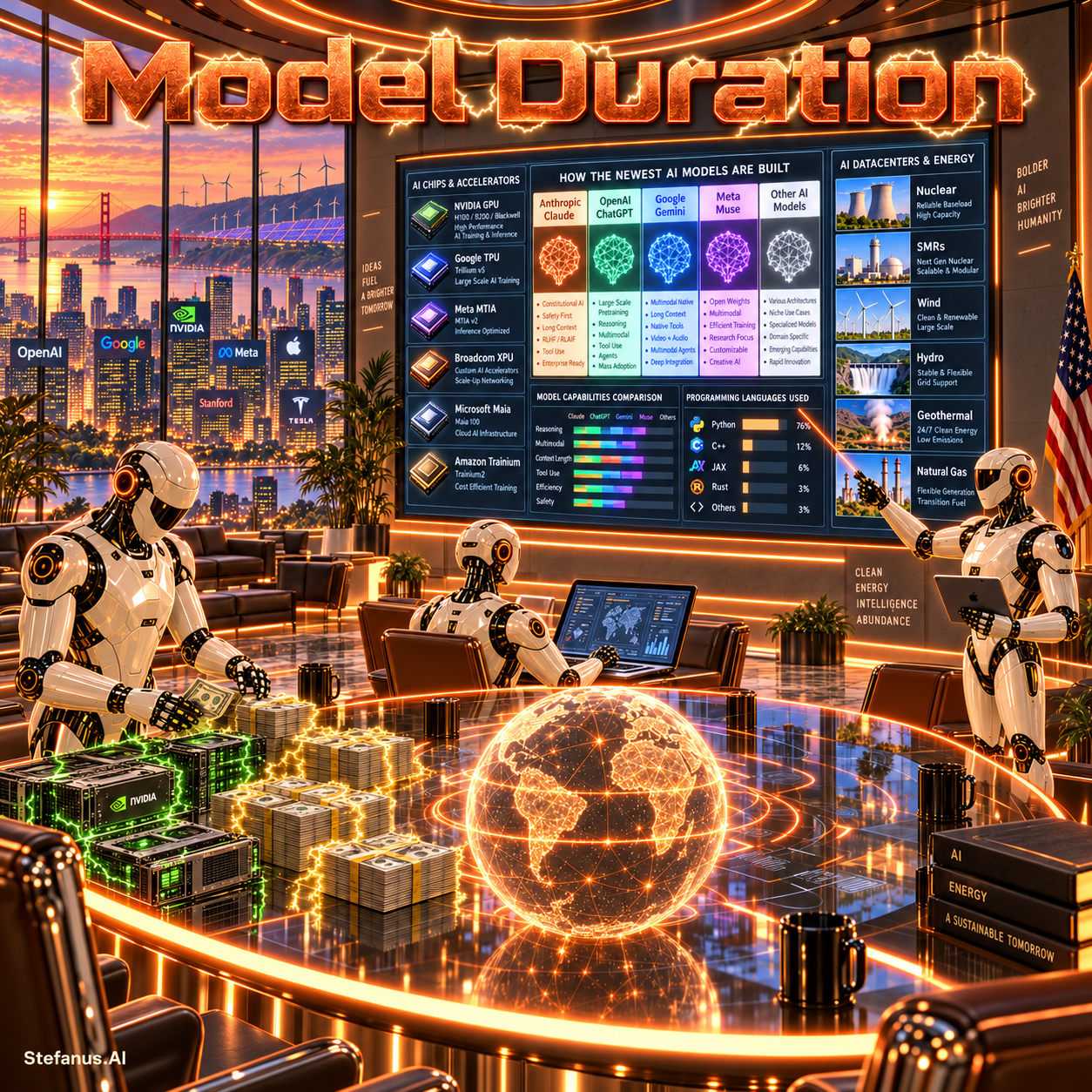
Model Duration: How Public Markets Will Value AI Laboratories Whose Models Age in Months While Their Compute, Datacenter, and Power Obligations Run for Years — Intelligence Depreciation, the Successor Paradox, and the Coming Repricing of the Five-Layer AI Economy
Introduction: The IPO That Will Force Wall Street to Put a Price on Intelligence In the first week of September 2026, the financial press converged on a story that had been building all summer. Anthropic, the San Francisco developer of the Claude family of models, was moving toward one of the most consequential initial public offerings in the history of technology. According to reporting from Reuters and Bloomberg, the company — which confidentially submitted a draft S-1 registration statement to the U.S. Securities and Exchange Commission on June 1, 2026 — plans to release its…
-
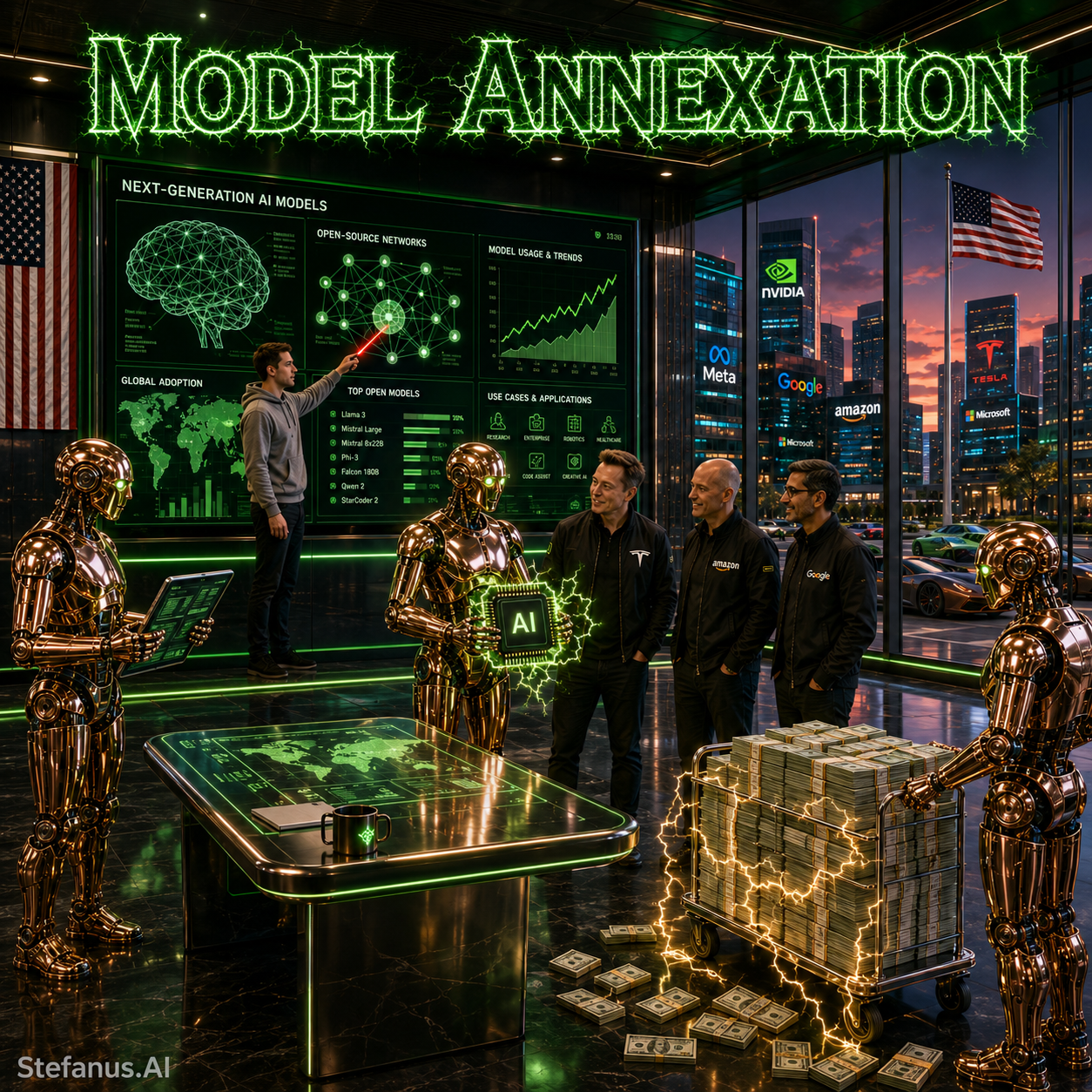
Model Annexation: When the Company That Sells the AI Chips Acquires the Model Ecosystem That Creates Demand for Them — NVIDIA, Hugging Face, and the Coming Era of Cross-Layer Ownership in the Five-Layer AI Economy
Introduction: The Morning the Chip Company Moved Up the Stack On the morning of September 3, 2026, the wire services carried a transaction that, at first glance, could be filed away as merely another enormous number in an artificial-intelligence industry that has become numb to enormous numbers. NVIDIA, the most valuable company in the world and the undisputed supplier of the computational machinery beneath the AI revolution, announced that it had agreed to acquire Hugging Face, the open-model platform used by millions of developers, for approximately $12.93 billion — the second-largest transaction in the chipmaker’s…
-

Launch Elasticity: When the Economics of Orbital AI Compute Depend on Rocket Cadence Instead of Grid Interconnection — Rockets, Satellites, and the New Marginal Cost of Intelligence
Introduction: When the Datacenter Queue Leaves the Ground On August 25, 2026, the future of artificial-intelligence infrastructure acquired an unexpectedly physical address: Pecan Island, Louisiana. At a carefully staged event in Vermilion Parish attended by Louisiana Governor Jeff Landry, senior state officials, business leaders, and a room full of reporters, SpaceX unveiled plans for Starbase Louisiana, a proposed $100 billion complex covering roughly 125,000 acres of coastal wetlands about fifty miles south of Lafayette. The facility would become SpaceX’s fourth United States launch location and its second Starbase campus, joining Boca Chica in Texas and…
-
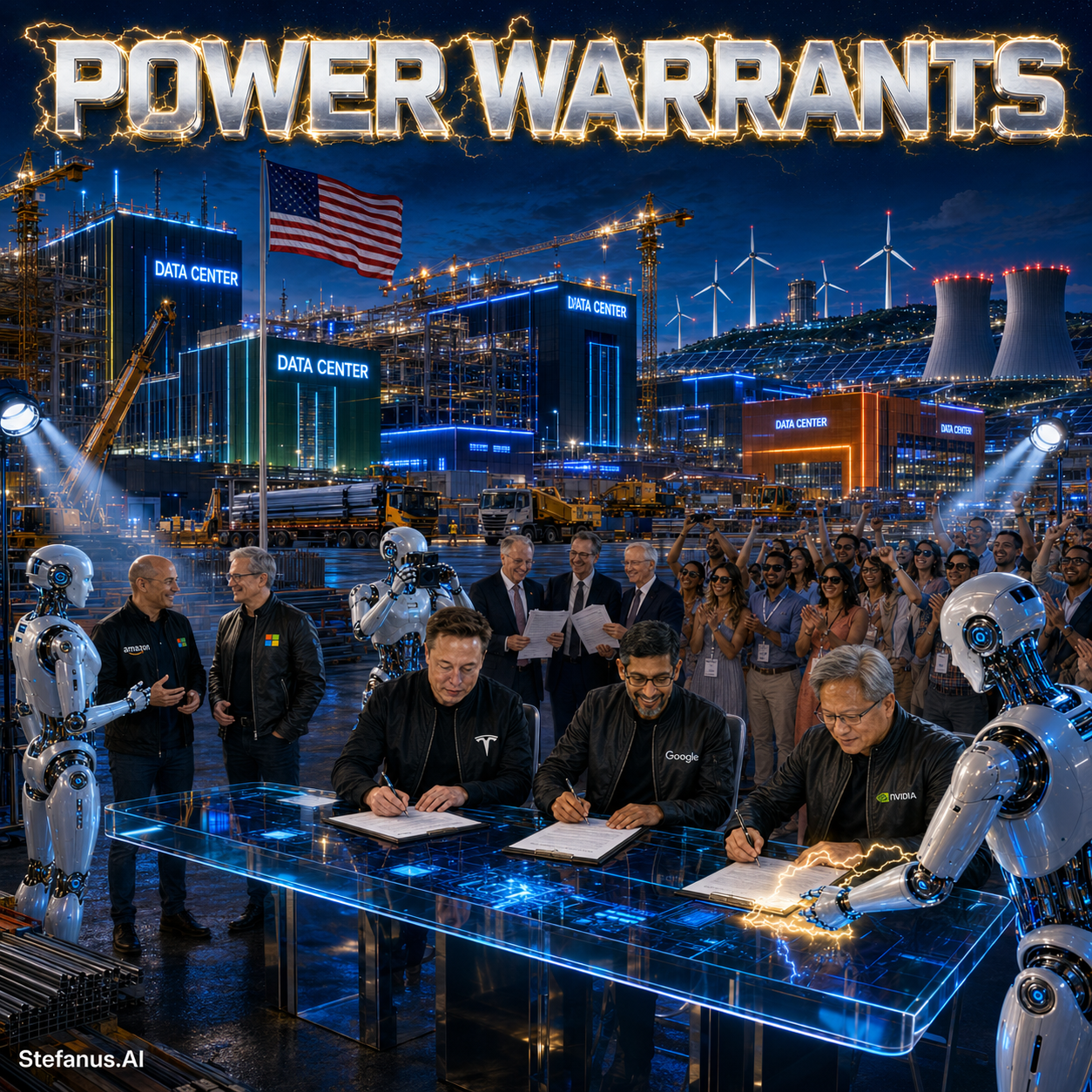
Power Warrants: When Frontier AI Laboratories Stop Merely Buying Electricity — and Gain Financial Upside in the Companies That Build Their Power Infrastructure — A Study of the OpenAI–SB Energy–Nvidia Architecture, the Financialization of Compute, and the Emerging Ownership Structure of the Five-Layer AI Economy
Introduction: When the Electricity Customer Became Something More On the final day of August 2026, an unusual financial detail emerged from the rapidly expanding artificial-intelligence infrastructure economy, and although it arrived in the understated language of a wire-service dispatch, it deserves to be read as a signal of a much deeper structural transformation. Reuters reported, citing the Wall Street Journal and draft initial-public-offering documents reviewed by the newspaper, that OpenAI had been issued warrants in SB Energy—the SoftBank-controlled power and datacenter developer—valued at approximately $5.5 billion. Reuters noted that it could not immediately verify the…
-
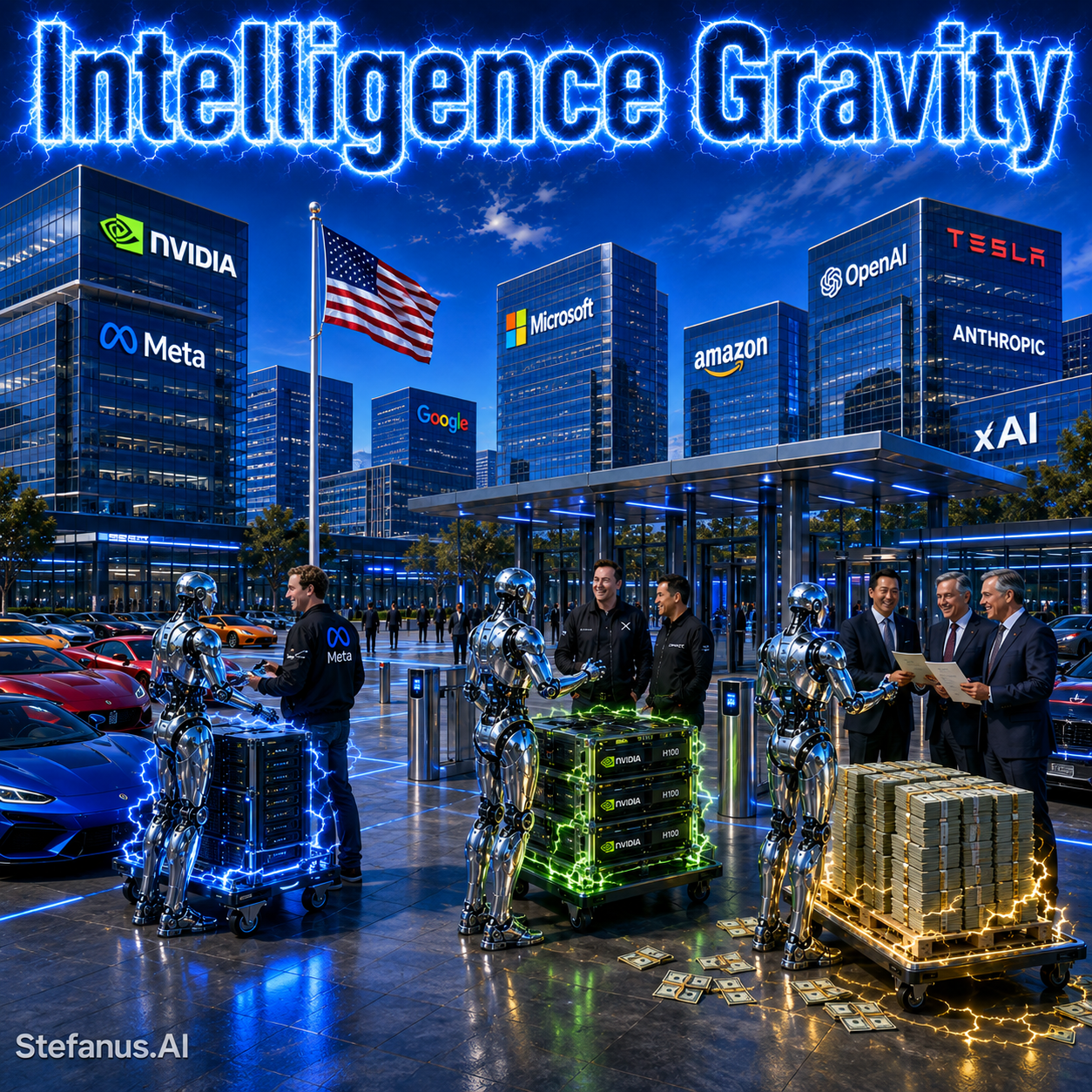
Intelligence Gravity: Why Capital, Compute, Talent, Energy, and Nations Are Beginning to Orbit the New Centers of Artificial Intelligence
Introduction: The Force That Organizes Everything For centuries, gravity has been one of the most fundamental forces in nature. It pulls stars into galaxies, binds planets to the Sun, and shapes the architecture of the physical universe. Gravity is invisible, yet its influence is unmistakable and everywhere. It determines where matter accumulates, how systems organize themselves, and why certain celestial bodies become centers around which everything else must revolve. A cloud of interstellar dust does not decide to become a star; it becomes one because, past a certain threshold of accumulated mass, the physics of…
-

Central Bank of AI: When Nvidia Stops Merely Selling GPUs—and Starts Financing, Guaranteeing, and Stabilizing the Market for Artificial-Intelligence Capacity Across the Five-Layer AI Economy
Introduction: When the Chip Seller Starts Backstopping the System For most of Nvidia’s history, the basic economic relationship between the company and the rest of the world was easy to describe and even easier to model. Nvidia designed increasingly powerful processors; customers bought them; contract manufacturers fabricated them; cloud companies installed them in datacenters that somebody else financed; software developers eventually figured out what to do with the resulting computing power. Revenue moved toward Nvidia whenever customers wanted more chips, while nearly all of the financial risks associated with land, electricity, leases, construction debt and…
-
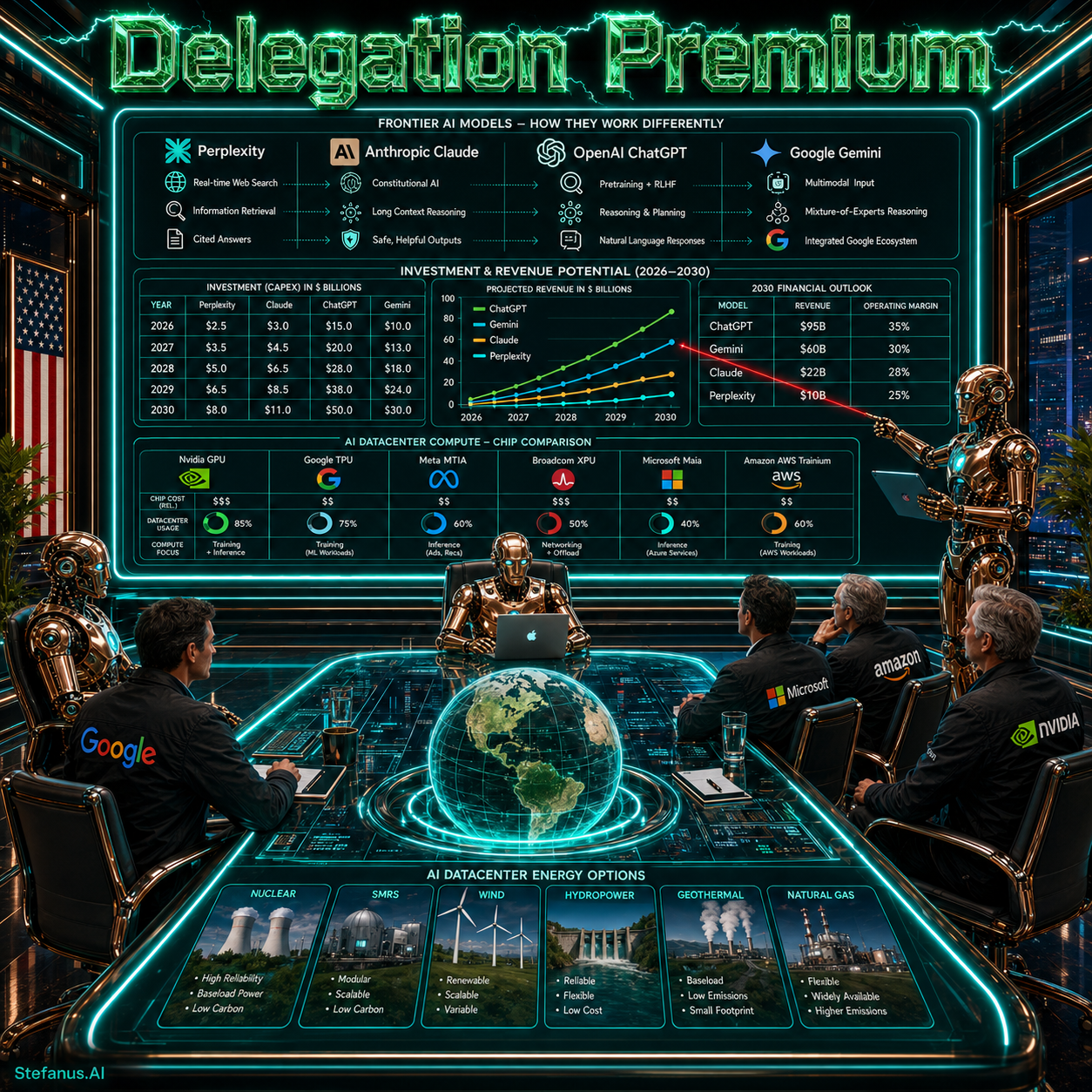
Delegation Premium: Why the AI Economy May Value Systems That Finish Work More Highly Than Models That Merely Answer Questions
Introduction: From the Value of an Answer to the Value of a Finished Job On August 23, 2026, Reuters reported a striking number that at first appeared to be nothing more than another milestone in the extraordinary financial ascent of artificial intelligence startups. Perplexity’s annualized revenue had climbed from less than $250 million at the beginning of 2026 to more than $750 million, and Nvidia — already an investor across several of the company’s earlier financing rounds — was reportedly in discussions to invest again at a valuation exceeding $30 billion, more than fifty percent…
-
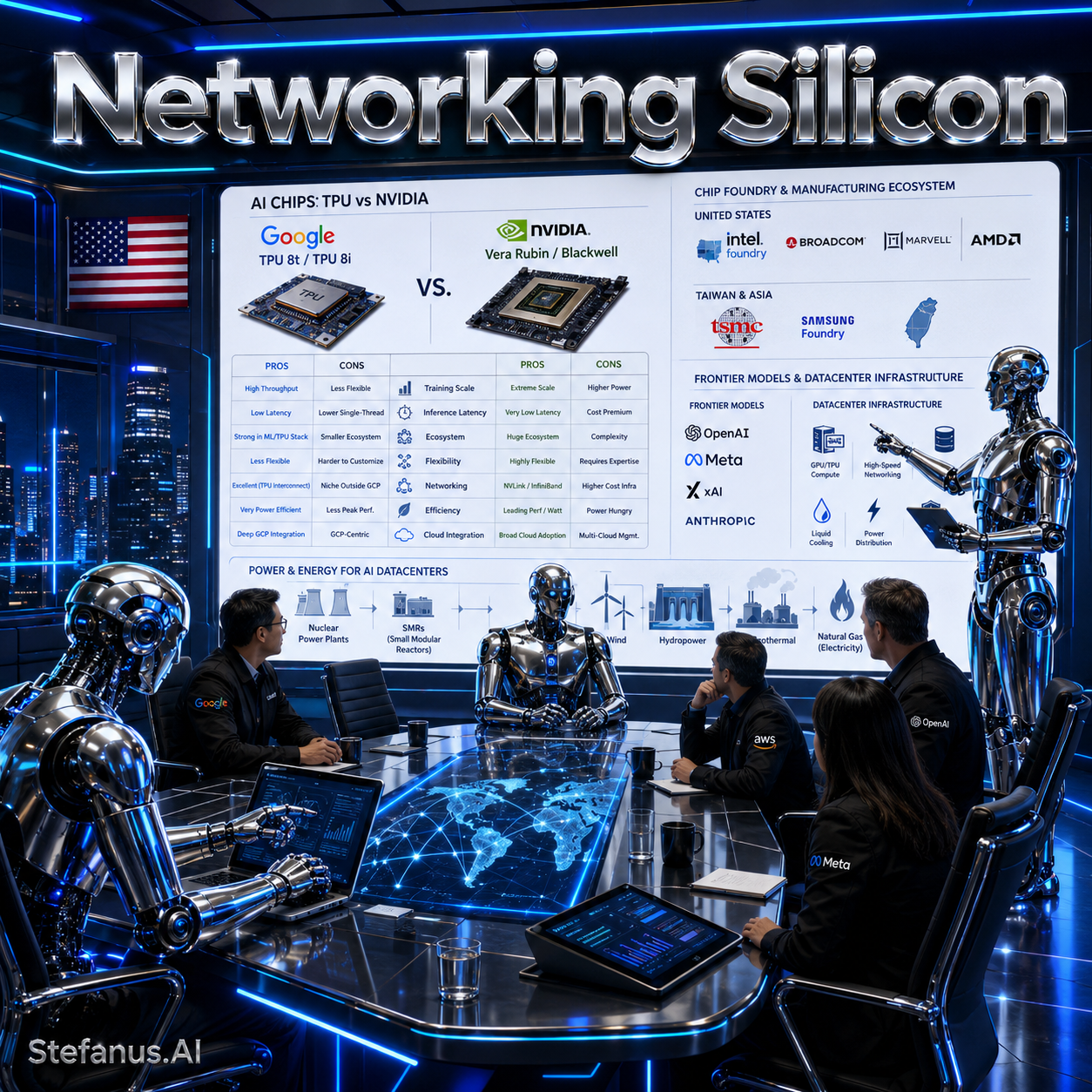
Networking Silicon: When Hyperscalers Buy AI Chips — and Gain the Right to Own the Companies That Build the Infrastructure Around Them
Introduction: When a Chip Order Starts Looking Like an Ownership Agreement On August 19, 2026, an announcement involving Google and Marvell Technology offered one of the most revealing glimpses yet into how the economics of artificial intelligence infrastructure are changing. At first glance, the transaction looked like just another enormous semiconductor supply agreement in an industry that has grown accustomed to extraordinary numbers. Google, the operator of one of the largest computing systems ever constructed, was deepening its relationship with Marvell around custom silicon used across its AI and cloud infrastructure. Marvell, a company whose…
-
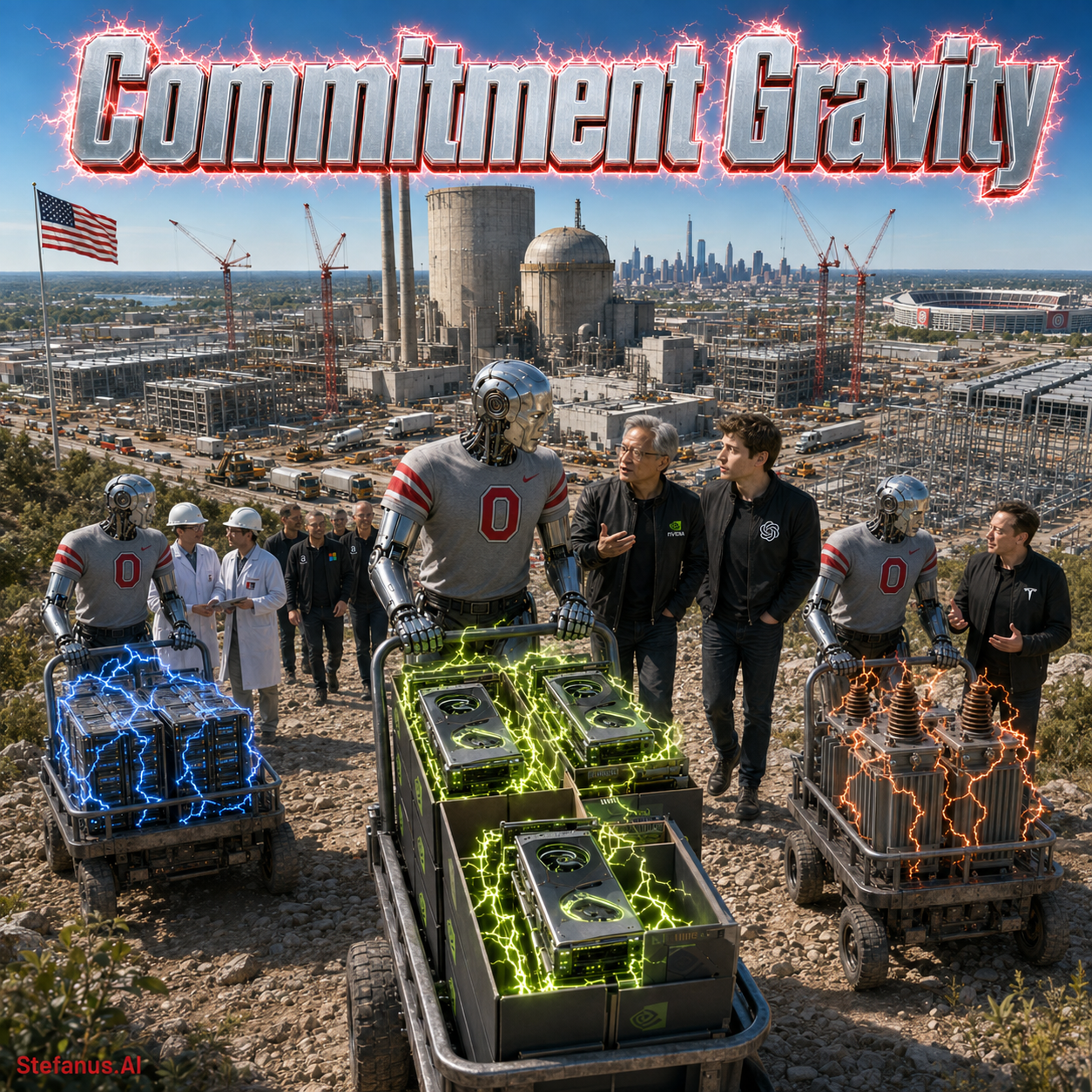
Commitment Gravity: How Trillions of Dollars of AI Promises — Purchase Commitments, Twenty-Year Leases, Credit Guarantees, and Take-or-Pay Power Contracts — Are Pulling the Five-Layer AI Economy Into a Buildout That Becomes Harder to Reverse Every Year
Introduction: The Day the Promises Became the Story On August 17, 2026, the artificial-intelligence economy crossed a threshold that cannot be understood through conventional measures of capital expenditure alone. NVIDIA announced an extraordinary arrangement surrounding the PORTS-Pike Technology Campus in Pike County, Ohio, on the grounds of the decommissioned Portsmouth Gaseous Diffusion Plant — a Cold War-era uranium-enrichment complex now being redeveloped across private and federal land in collaboration with AEP Ohio, the U.S. Department of Energy, and the U.S. Department of Commerce.[2][8] SB Energy, the SoftBank-backed energy and infrastructure developer, will build, own, and…
-

Siting Beta: How Permitting, Power, Water, Noise, Elections, and Community Opposition Are Repricing AI Infrastructure
Introduction: When a Data Center Becomes an Election Issue — The New Political Risk Around AI Infrastructure On July 23, 2026, something happened in Henderson County, Texas, that would have been almost unthinkable two years earlier. A major data-center developer, Diode Ventures, formally withdrew its proposal to build a large, high-density AI facility near Cedar Creek Lake — not because it ran out of capital, not because it could not find a tenant, and not because the chips it planned to install had become obsolete. It withdrew because the project had failed a political test.…
-
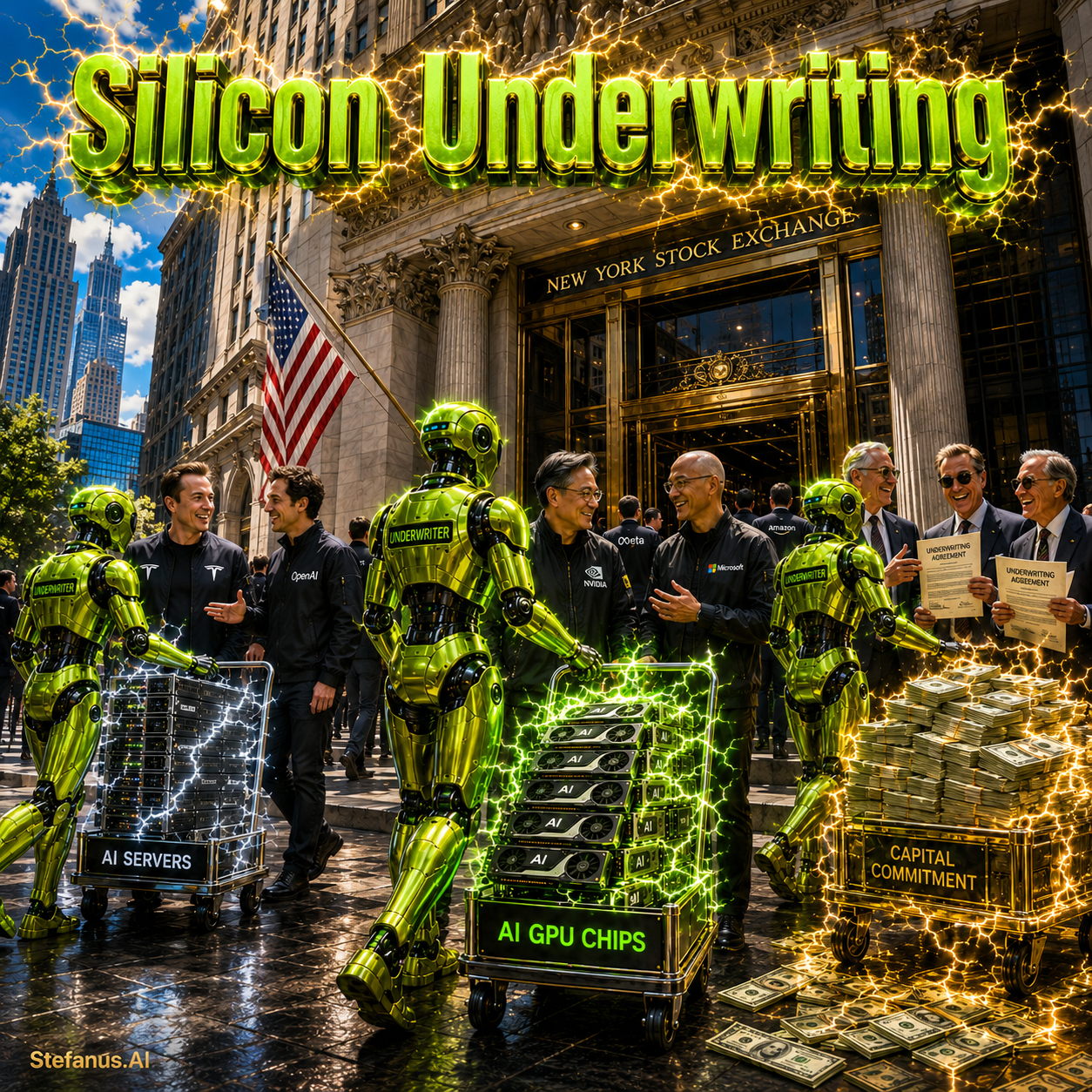
Silicon Underwriting: When the AI Chipmaker Becomes the Investment Banker Behind the Compute Economy
Introduction: When Jensen Walked Into Wall Street There are days on which the financial system quietly changes shape, and only later do historians agree on the date. October 24, 1907, when J.P. Morgan locked the presidents of New York’s trust companies in his library until they pledged a rescue pool, was such a day. August 15, 1971, when the dollar left gold, was another. This paper proposes that August 10, 2026 belongs on that list — not because a crisis erupted, but because a boundary dissolved. On that Monday morning, NVIDIA, the world’s most valuable…
-
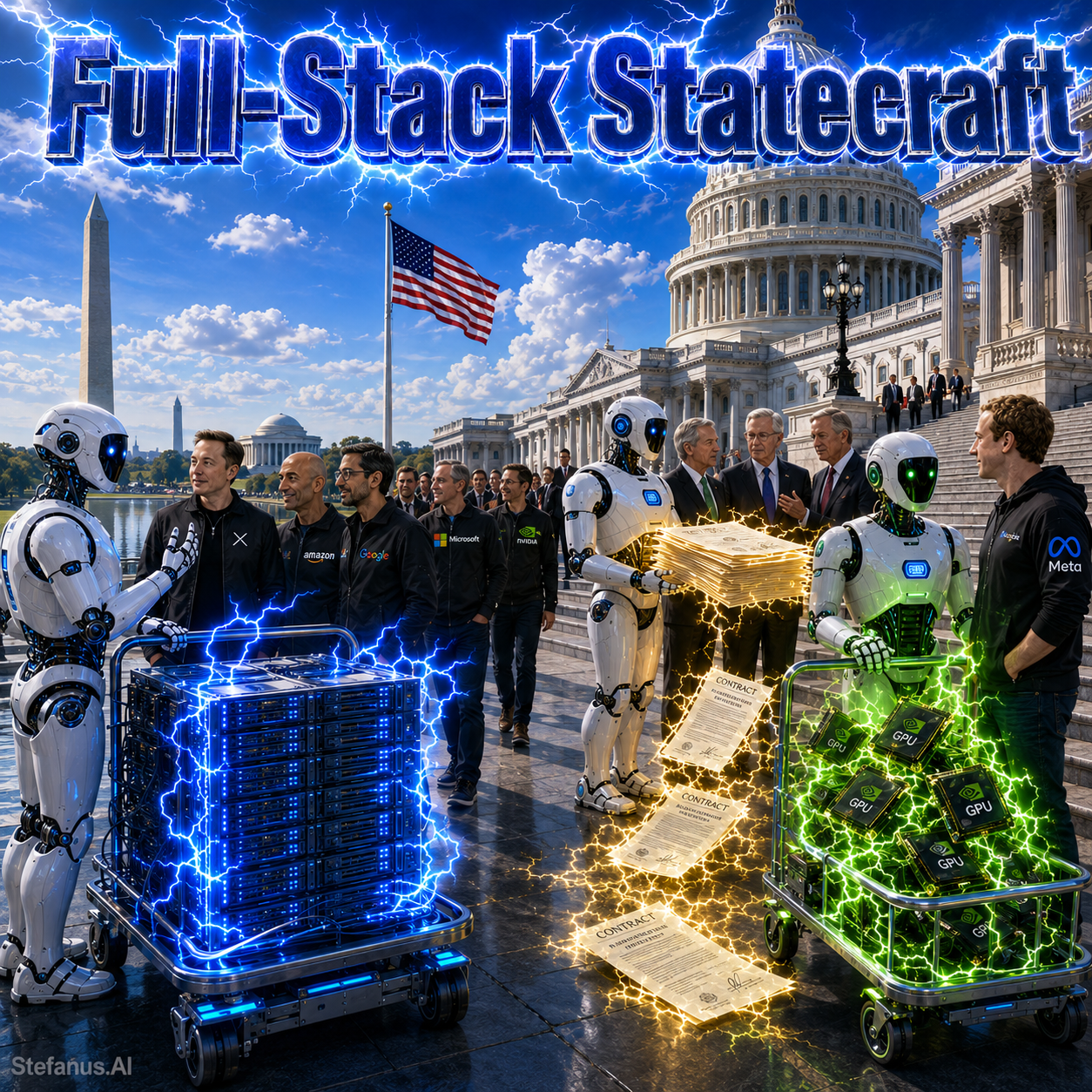
Full-Stack Statecraft: How Washington Is Turning American AI into an Exportable National Infrastructure Package — From Energy, Chips, and Datacenters to Models, Agents, Financing, and Security — and Why the Next Global AI Competition Will Be Fought Through Sovereign Technology Packages
Introduction: The Week the Vocabulary Changed I began thinking about this paper after noticing two developments that, on the surface, had nothing to do with each other. The first was a quiet procurement decision in Southeast Asia. In late 2025, AI Singapore — the city-state’s national artificial-intelligence program — moved its flagship SEA-LION language model off Meta’s Llama family and rebuilt it on Alibaba Cloud’s Qwen architecture, releasing Qwen-SEA-LION-v4 on a Chinese open-weight foundation trained on trillions of tokens and augmented with a hundred billion additional Southeast Asian language tokens.[1] One of the most technologically…
-
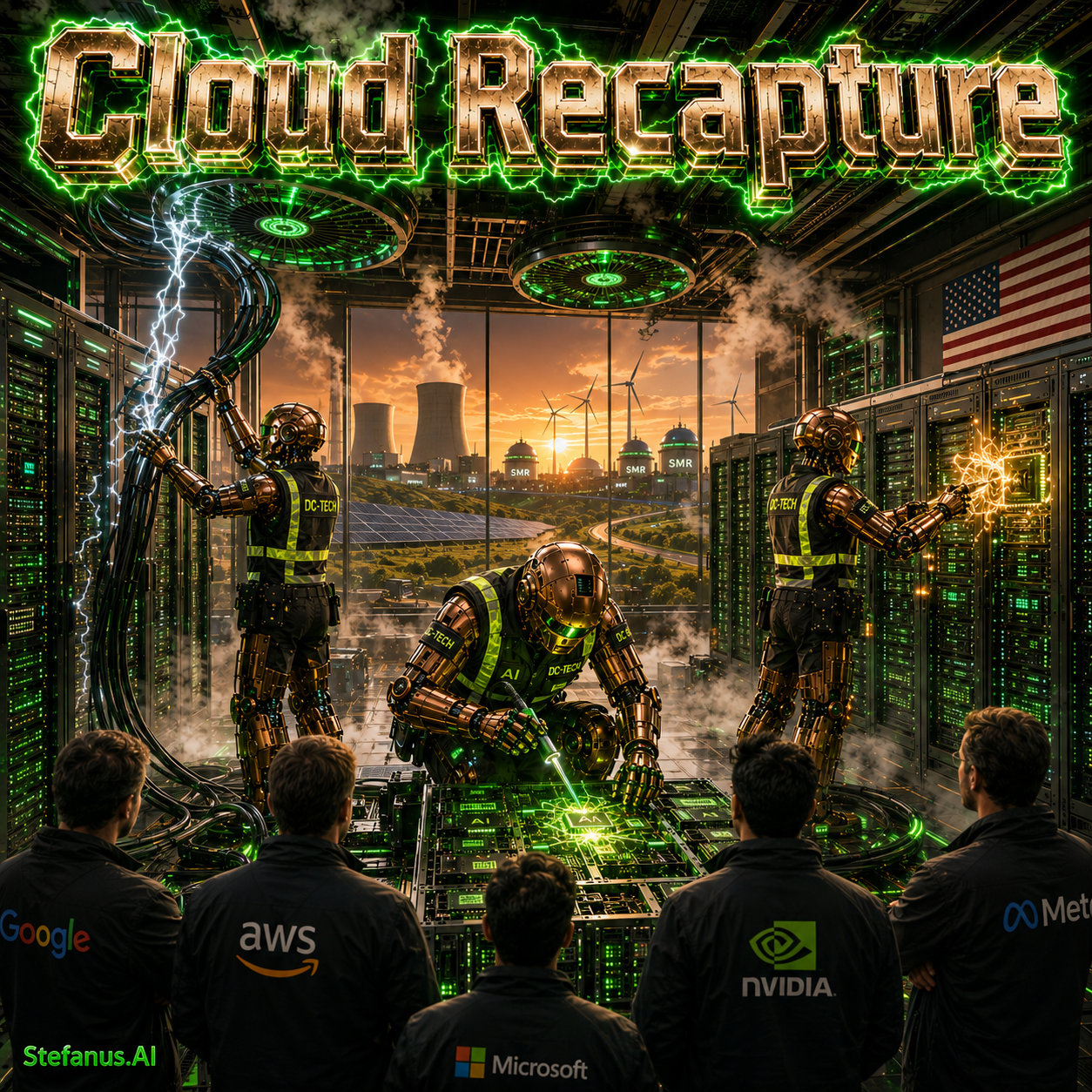
Cloud Recapture: How Strategic AI Investments Return to Their Investors as Chip Sales, Cloud Commitments, Datacenter Revenue, and Collateral Value — The Emerging Financial Architecture of the Five-Layer AI Economy
Introduction: When the Investment Check Comes Back Imagine a dollar leaving a corporate treasury in Seattle. At first, the transaction appears straightforward. The dollar becomes part of a strategic investment in an artificial-intelligence company. It leaves the balance sheet of one corporation and enters another. Lawyers complete the documentation. Bankers calculate the valuation. Financial journalists report the size of the transaction. The receiving company announces that the capital will help expand artificial-intelligence research and bring increasingly capable systems to hundreds of millions of users. But follow the dollar farther. The AI company needs more computing…
-
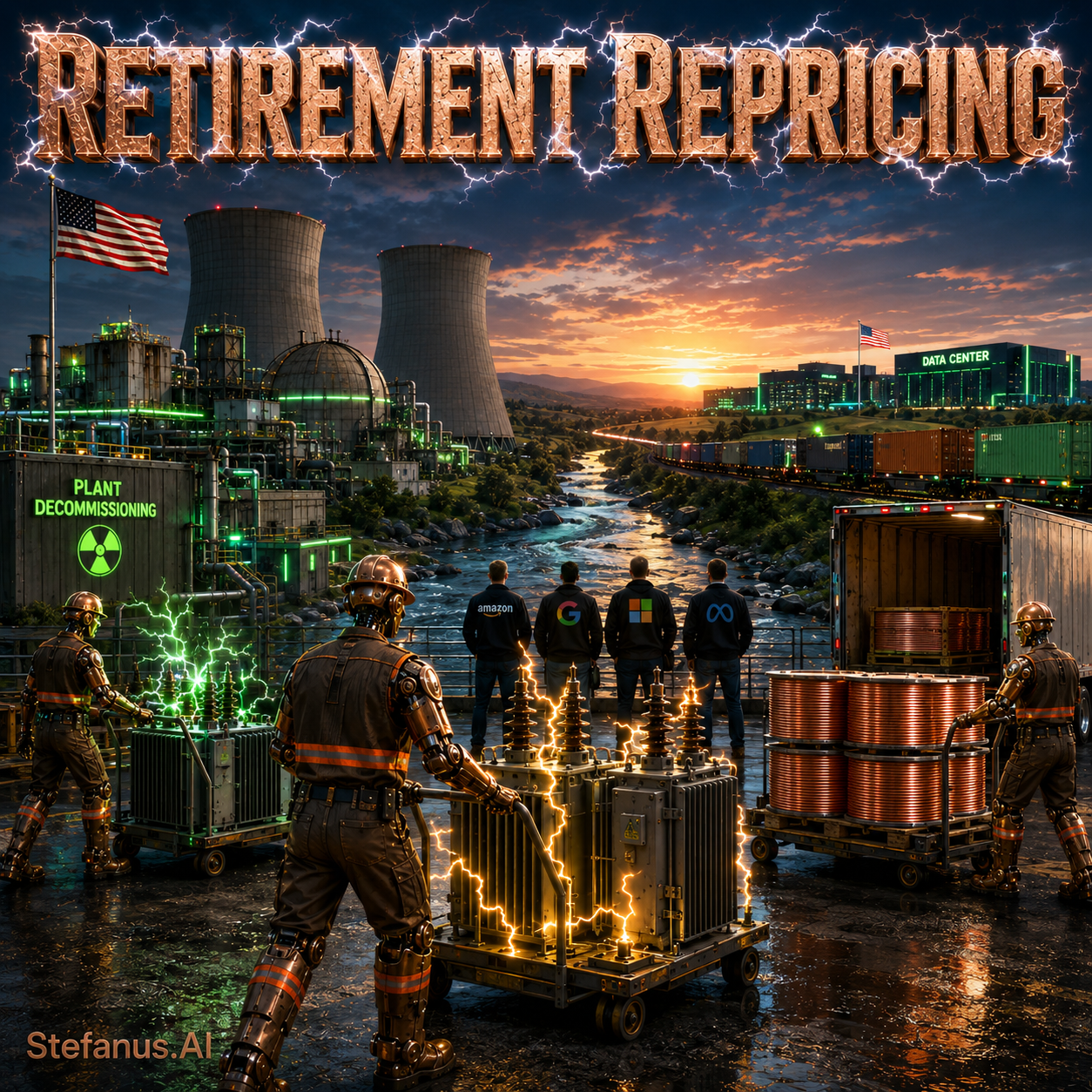
Retirement Repricing: How the AI Electricity Boom Is Turning Power-Plant Closures into Strategic Options — and Old Grid Positions into the Scarcest Asset in the Five-Layer AI Economy
Introduction: When a Retirement Date Stopped Meaning “The End” Picture a power plant in its final season. The scene is familiar to anyone who has followed American electricity over the past two decades, because it has played out hundreds of times. The last scheduled coal train arrives and is quietly logged as the last. The maintenance budget shrinks to the minimum required to limp across the finish line, because no rational chief financial officer spends real money on a machine with a death certificate. Workers begin to drift away — the young ones to gas…
-

Atomic Brownfields: From Uranium Enrichment to Artificial Intelligence — How America’s Retired Nuclear, Cold War, and Federal Energy Sites Are Becoming the Industrial Geography of the Five-Layer AI Economy
Introduction: The Second Life of Paducah The story begins in Paducah, Kentucky, during the final week of July 2026, on a stretch of flat western Kentucky ground that most Americans have never seen and that the federal government has spent seventy years alternately guarding, operating, contaminating, and cleaning. Before Paducah manufactured intelligence, it manufactured isotopes. For six decades, the Paducah Gaseous Diffusion Plant performed one of the most electricity-hungry industrial tasks ever attempted by a government: forcing uranium hexafluoride gas through microscopic barriers, over and over, thousands of times in cascade, until the fissile isotope…
