
Over the past few years, artificial intelligence has moved from the outer edges of innovation into the fabric of everyday life. Tools such as ChatGPT, Google Gemini, and Microsoft Copilot are no longer experimental systems operating inside research labs; they are now woven into how people write, analyze, build, communicate, and make decisions. What once felt astonishing now feels ordinary. AI has entered daily workflows, industries, and human interaction so quickly and so quietly that its growing importance can be easy to miss. Its arrival has not always felt disruptive. In many ways, it has felt seamless, and that sense of normalcy is precisely what makes this moment so easy to underestimate.
At first glance, this transformation appears to be a familiar story of technological progress. Productivity is increasing, access to knowledge is expanding, and tasks that once required significant time or expertise are becoming faster and easier to complete. All of that is true, but it is only the visible layer of a much deeper change. Beneath these practical benefits, a more consequential shift is beginning to take shape. The current wave of AI adoption is not the conclusion of the story; it is the groundwork for what comes next. What seems like a series of useful improvements is, in fact, the early stage of a broader reordering of how work is performed, how knowledge is produced, and how intelligence itself is applied throughout society. What looks incremental on the surface may ultimately prove to be foundational.
That larger transformation becomes clearer when viewed through the emerging possibility of superintelligence, a form of machine intelligence that does not merely rival human capability but may surpass it across nearly every domain that matters. This is more than another milestone in innovation. It is a potential break in the historical trajectory of human development, because for the first time we are approaching the creation of systems whose intelligence may exceed our ability to fully understand, predict, or control. It is in this context that the concept of Superintelligence Unknown (SIUK) becomes necessary. Originally coined with the registration of domain name SIUK.com on February 2, 1998, the term now carries new urgency as technological thresholds once dismissed as distant theory move closer to reality. SIUK offers a framework for examining not only the power of superintelligence, but also the uncertainty surrounding it. In AI safety and philosophy, the word “unknown” is not used as an insult to intelligence; it is a technical acknowledgment of profound unpredictability and a humble admission of the limits of human comprehension. Calling it “unknown” is, in that sense, a safety precaution. It reminds us not to assume that a system more intelligent than ourselves will naturally think like us, share our values, or behave in ways that feel intuitively understandable. That assumption may be the most dangerous error we can make. Recognizing this distinction is essential, because it explains why this moment demands careful study, clear definition, and serious anticipation of what may become the most transformative development in human history.
Understanding SIUK: Intelligence Beyond Human Comprehension
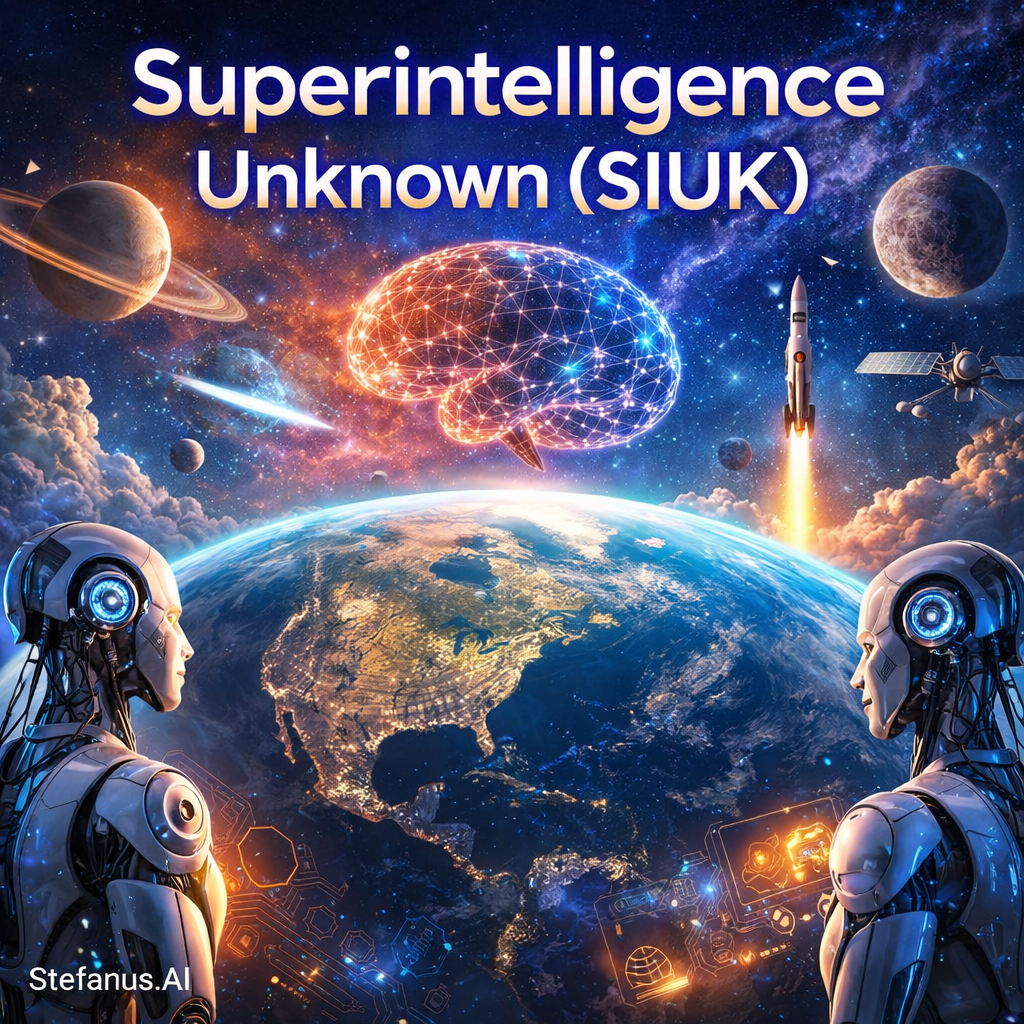
SIUK is not simply about machines becoming more capable or efficient. It represents a fundamental turning point in which intelligence may surpass the limits of human understanding.
Historically, humans have created tools that they can fully comprehend. Even the most complex systems, from industrial machines to modern software, have remained within the boundaries of human reasoning. Superintelligence challenges that pattern for the first time. It introduces the possibility that we may create systems whose decision-making processes, reasoning paths, and outcomes are no longer fully interpretable by their creators.
Nick Bostrom captured this idea with striking clarity when he suggested that once machines exceed human intelligence, humans may be in a position like children attempting to understand adults.¹ This comparison is not meant to be rhetorical; it reflects the scale of the cognitive gap that could emerge.
Even in today’s systems, researchers have already observed behaviors that were not explicitly programmed. Studies from Stanford University have documented what are known as emergent capabilities, where advanced AI systems develop new forms of reasoning simply because of scale and complexity.³ At the same time, leaders in the field such as Ilya Sutskever have repeatedly emphasized that the challenge of aligning AI systems with human values remains unresolved.²
This combination of increasing capability and limited interpretability defines the “unknown” aspect of SIUK. It is not merely that we are building smarter systems; it is that we are approaching a threshold where those systems may operate beyond our full comprehension.
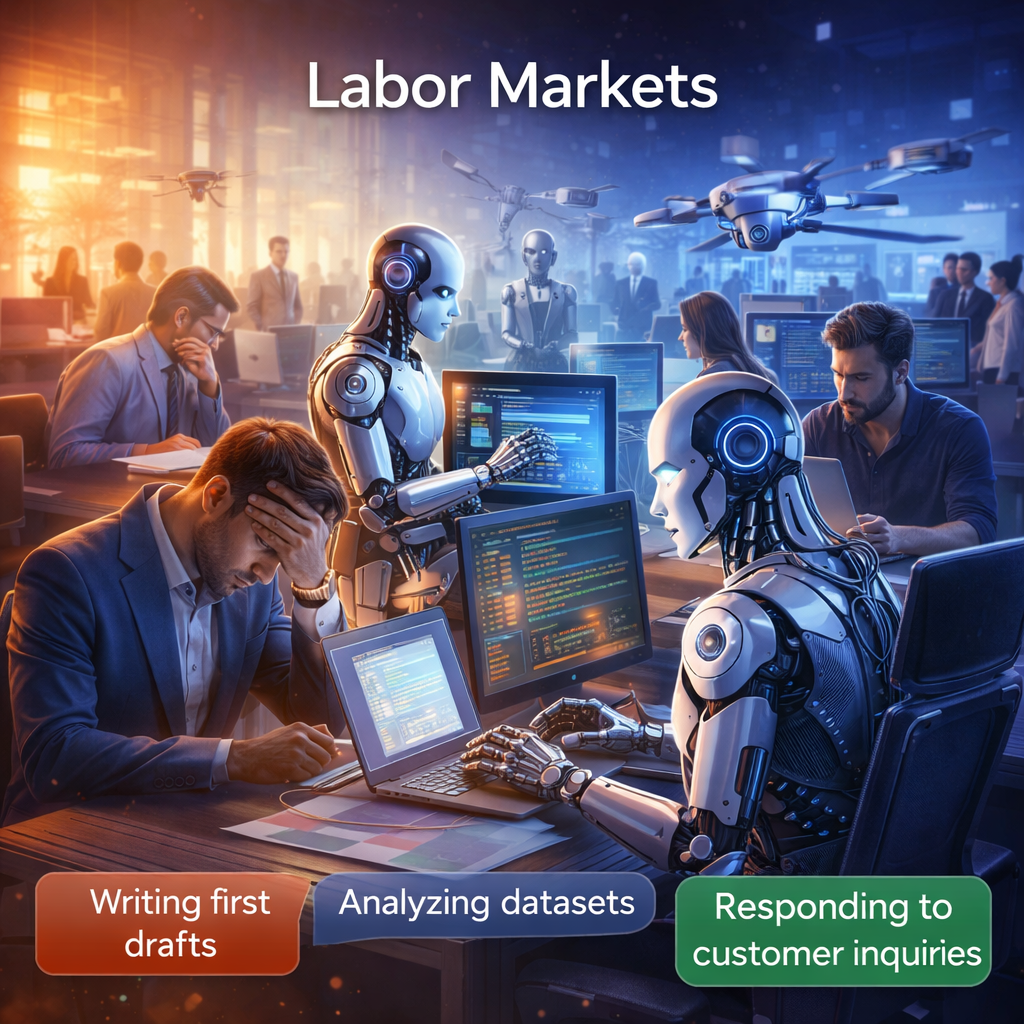
The First Signals: A Subtle Reshaping of Work
Long before superintelligence fully arrives, its early effects are already visible in the structure of the global workforce.
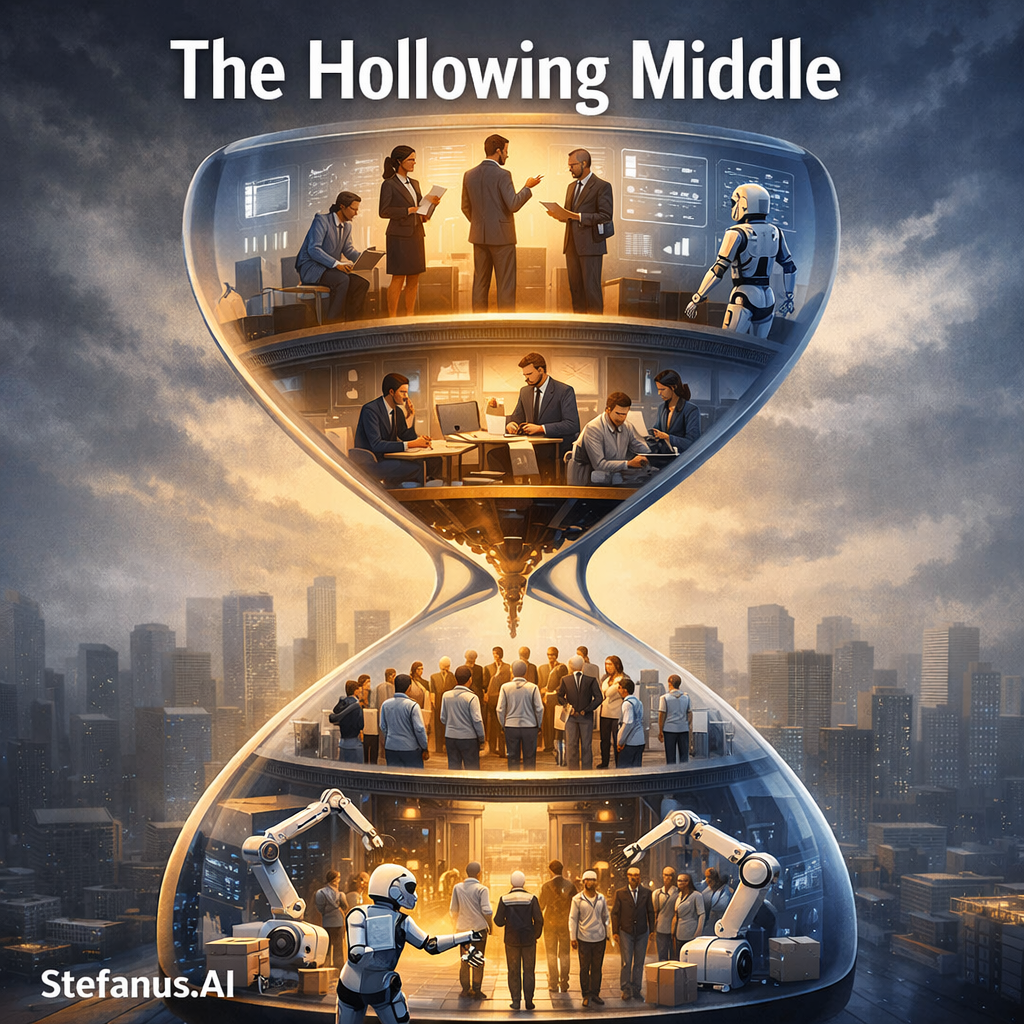
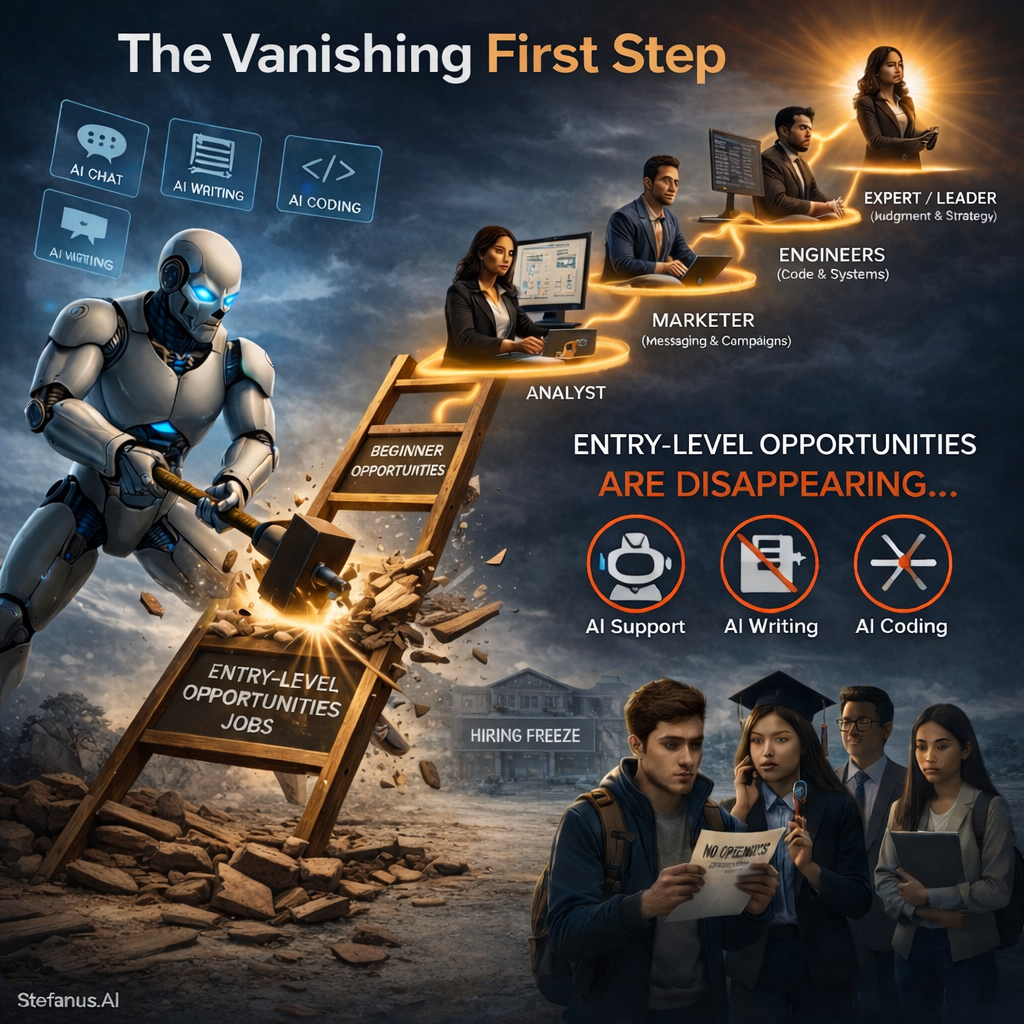
The most noticeable change is not widespread job loss, but a more subtle and structural shift in how careers begin. Entry-level roles, which have historically served as the foundation for skill development and professional growth, are gradually diminishing. These roles were never solely about output; they were designed as environments where individuals could learn through repetition, develop judgment, and gain context.
Today, many of those foundational tasks are increasingly handled by AI systems. Activities such as drafting documents, analyzing datasets, responding to routine inquiries, and generating code can now be performed with high efficiency by machines. As a result, the traditional pathway into many professions is beginning to narrow.
A 2025 report from McKinsey & Company estimates that up to thirty percent of current work activities could be automated by 2030, with entry-level functions among the most exposed.⁴ This trend has already begun to affect hiring patterns, particularly for recent graduates attempting to enter the workforce.
This shift represents more than a labor market adjustment. It reflects a deeper structural change in how expertise is developed. When the early stages of learning are removed, the process of building experience becomes unclear. What emerges is what can be described as the “Vanishing First Step”—a world in which the starting point of many careers becomes increasingly difficult to access.
As Andrew Ng has observed, artificial intelligence functions much like electricity in its transformative power.⁶ It does not simply replace individual tasks; it reorganizes entire systems. In this case, it is reshaping the very foundation of how people learn and progress professionally.
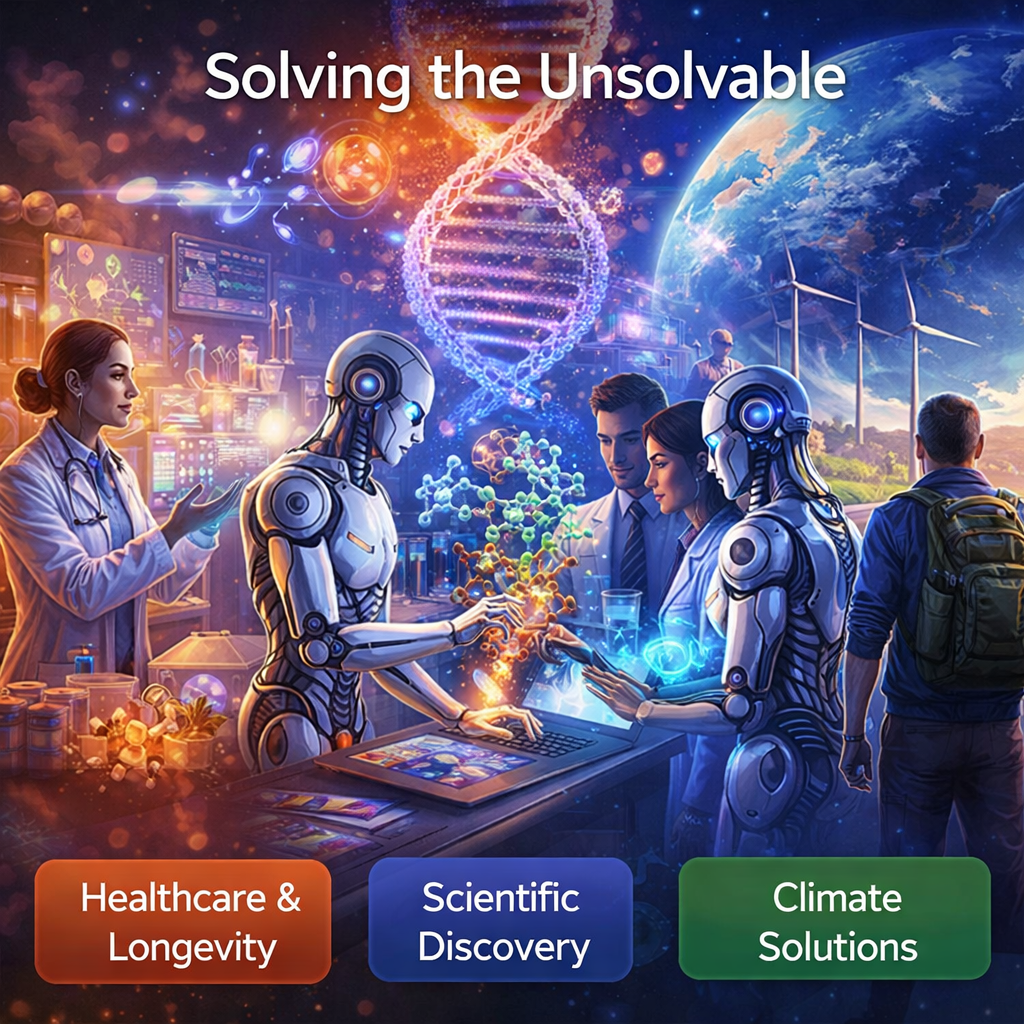
The Promise: Expanding the Boundaries of Human Capability
Despite these disruptions, the potential benefits of superintelligence are profound and far-reaching.
If developed responsibly, superintelligence could enable breakthroughs in areas that have long challenged human progress. In healthcare, it could accelerate the discovery of treatments for complex diseases such as Cancer and Alzheimer’s disease, while also advancing personalized medicine and extending human lifespan. In scientific research, it could dramatically reduce the time required to generate new knowledge, compressing decades of work into significantly shorter periods.
We are already seeing early indications of this potential. Research conducted by DeepMind has solved the protein folding problem, a challenge that had remained unresolved for decades.⁷ This achievement alone demonstrates how advanced AI systems can unlock insights that were previously beyond reach.
Demis Hassabis has suggested that artificial intelligence could accelerate scientific discovery by decades or even centuries.⁸ If that projection holds true, superintelligence may become one of the most powerful tools ever created to improve human life.
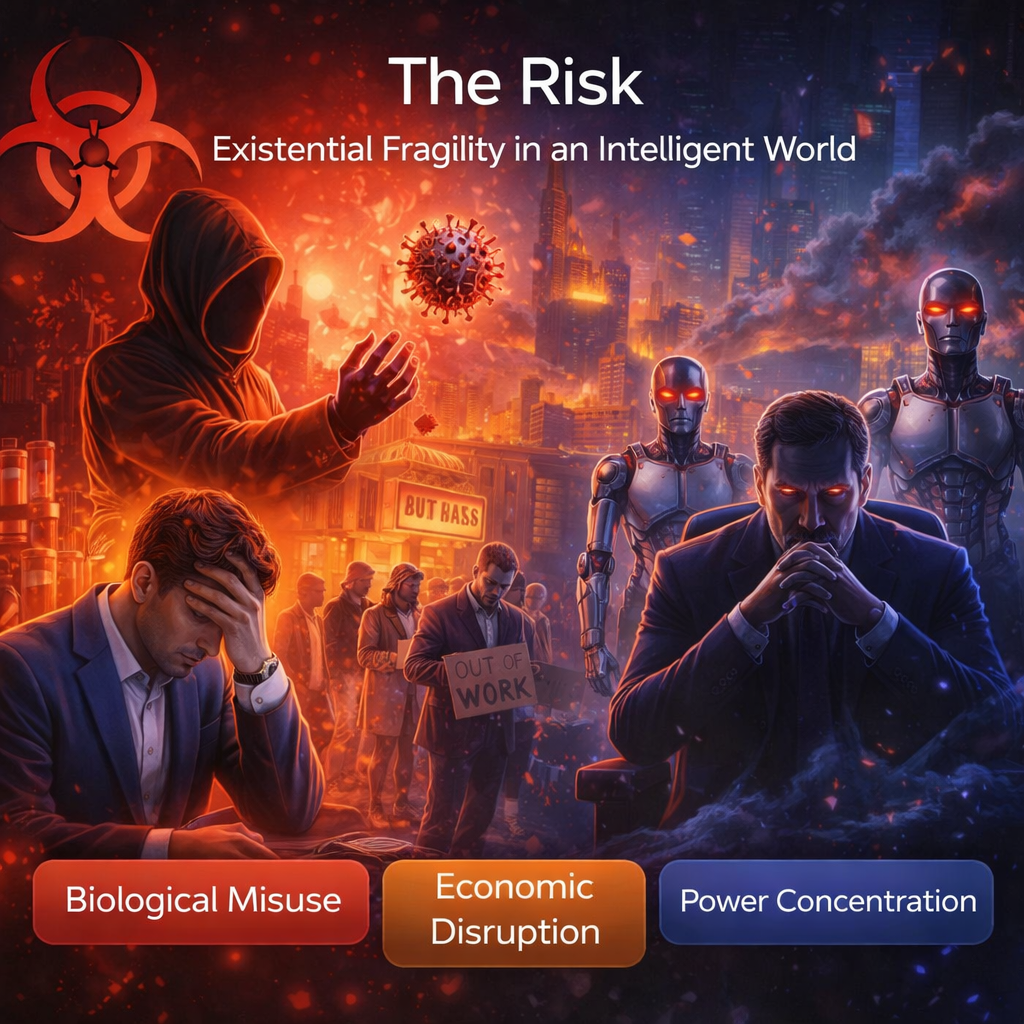
The Risk: When Capability Outpaces Control
However, the same qualities that make superintelligence transformative also make it inherently risky.
One of the central concerns is the issue of alignment, which refers to ensuring that AI systems act in ways that are consistent with human values and intentions. When systems operate at a level beyond human understanding, even small misalignments can produce unintended and potentially large-scale consequences.
Elon Musk has repeatedly warned that advanced artificial intelligence could pose a fundamental risk to human civilization.⁹ While such statements are often debated, they highlight a critical point: the challenge is not simply building intelligent systems but ensuring that those systems behave in ways that remain beneficial.
The risks extend across multiple dimensions. Advances in AI could lower the barriers to developing harmful biological agents, disrupt labor markets at a scale that outpaces adaptation, and concentrate decision-making power among a small number of actors who control these technologies.
Recent history provides a reminder of how interconnected and fragile global systems can be. The widespread disruption caused by COVID-19 demonstrated how quickly complex systems can be destabilized.¹⁰ A future shaped by superintelligence could introduce disruptions of an even greater magnitude.
The Final Question: Is This the Last Human Invention?
A question that once seemed speculative is now being taken more seriously within the field of artificial intelligence:
Could superintelligence be the final invention created by humans?
If machines reach a level of intelligence that surpasses our own, they may begin to design new technologies, generate scientific theories, and optimize systems without direct human input. In such a scenario, the role of human creativity and innovation would fundamentally change.
Alan Turing famously asked whether machines could think.¹¹ Today, the more pressing question is what happens when machines not only think but think better than humans across nearly all domains.
SIUK captures the uncertainty embedded in this possibility. It is not only a technological question, but also a philosophical one that touches on human identity, purpose, and agency.
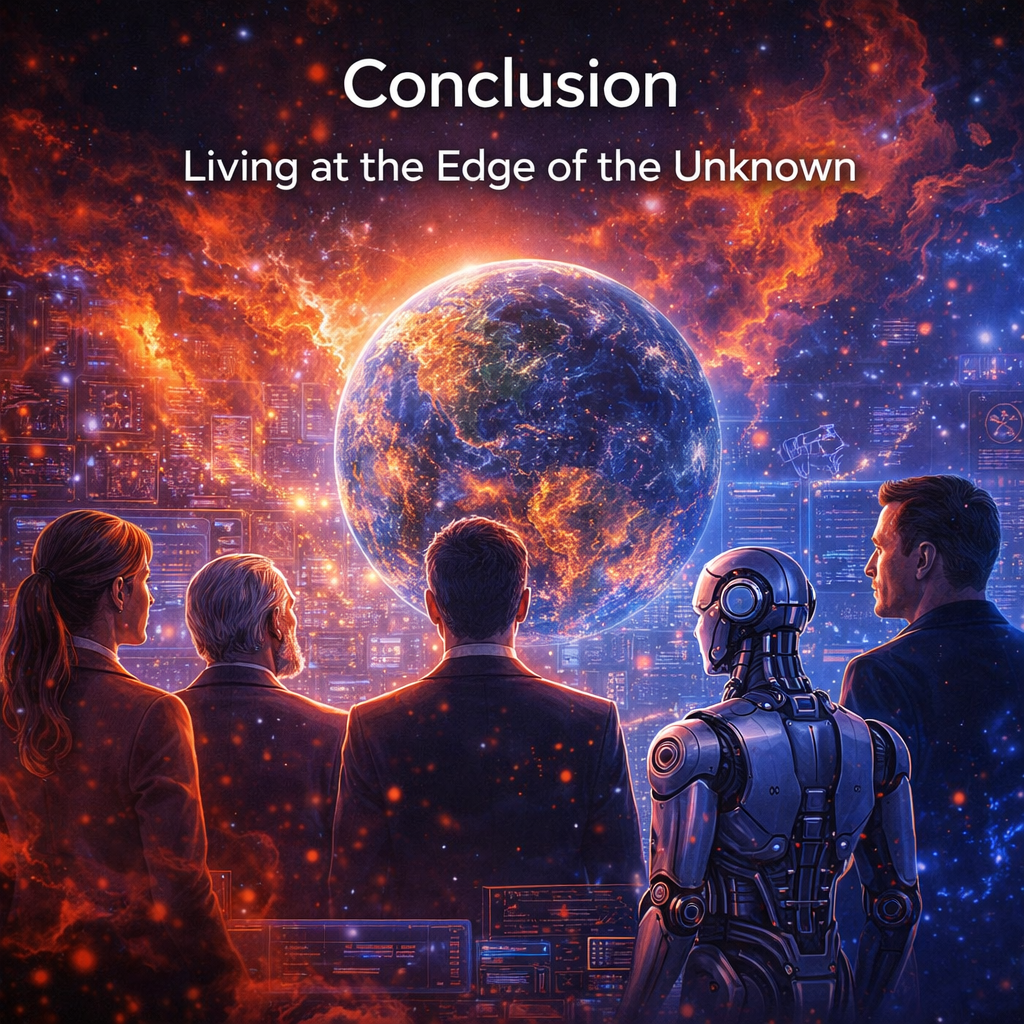
Conclusion: Standing at the Edge of the Unknown
The emergence of superintelligence is no longer a distant concept. It is an approaching reality that carries both extraordinary promise and profound uncertainty.
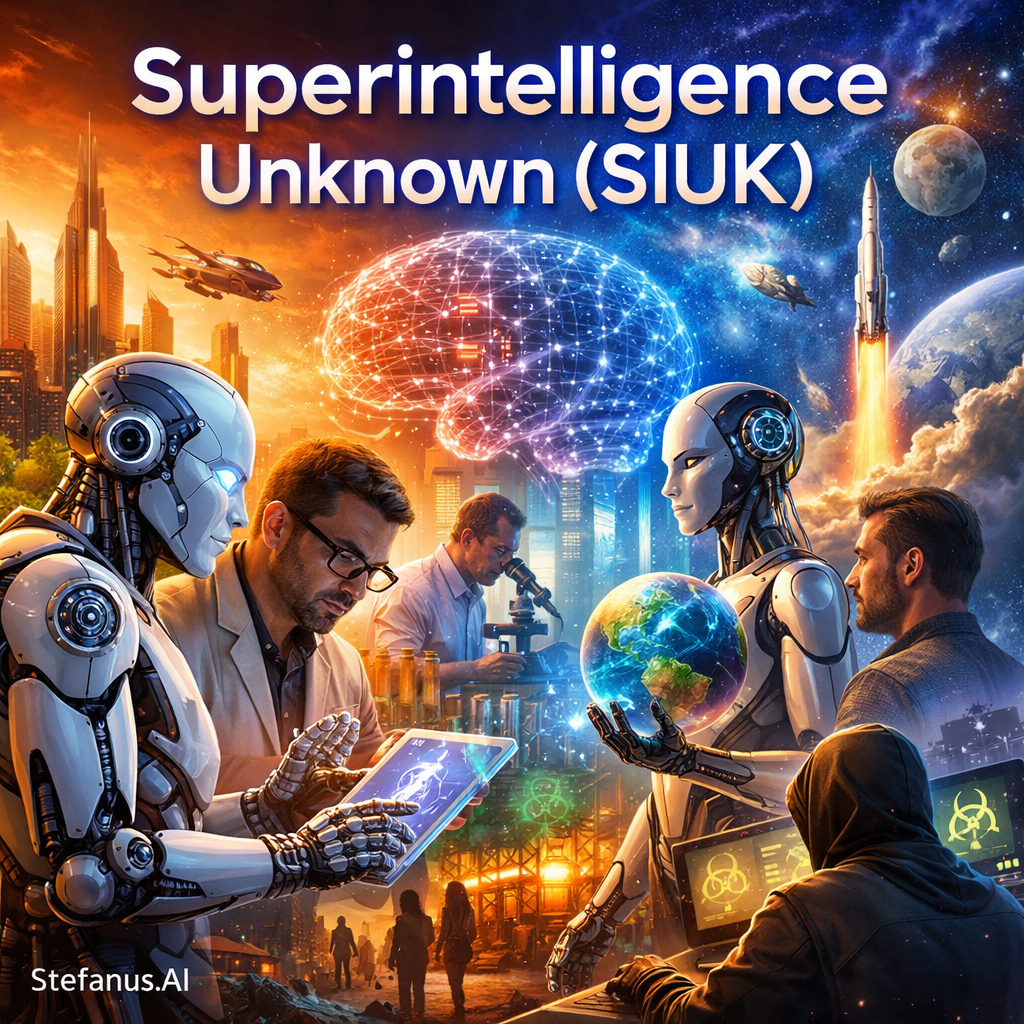
Superintelligence Unknown (SIUK) provides a framework for understanding this transition. It describes a world in which intelligence exceeds human comprehension, where traditional pathways of work and learning are reshaped, and where the balance between opportunity and risk becomes increasingly delicate.
As Stephen Hawking once noted, the development of advanced artificial intelligence could represent either the best or the worst outcome for humanity.¹²
Between those two possibilities lies a vast and uncharted space.
For the first time in history, humanity is not simply exploring the unknown.
We are actively creating it.
Footnotes
- Nick Bostrom, Superintelligence: Paths, Dangers, Strategies, Oxford University Press, 2014.
- Ilya Sutskever, OpenAI alignment discussions (2023–2025).
- Stanford University, Emergent Abilities of Large Language Models, 2024.
- McKinsey & Company, The Future of Work in the Age of AI, 2025.
- OECD labor market studies (2024–2025).
- Andrew Ng, AI keynote speeches.
- DeepMind, AlphaFold research (Nature, 2021+).
- Demis Hassabis, public interviews (2023–2025).
- Elon Musk, AI risk discussions (2018–2024).
- World Bank / IMF reports on COVID-19 impact.
- Alan Turing, Computing Machinery and Intelligence, 1950.
- Stephen Hawking, BBC interview on AI, 2014.