
Long-standing concerns that innovation in space-based communications would be constrained by atmospheric interference, environmental attenuation (such as heavy rainfall), and the perceived impracticality of direct connectivity to consumer devices are rapidly becoming obsolete. Advances in low Earth orbit (LEO) satellite architectures, AI-orchestrated constellation management, and high-power, adaptive antenna systems now enable reliable, high-capacity data transmission directly from space to end-user devices.
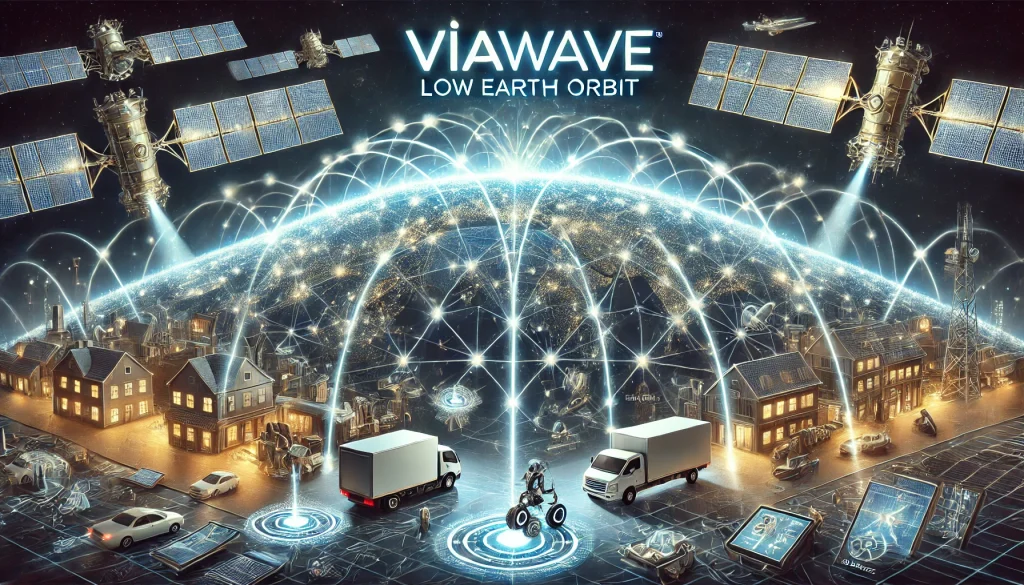
Electromagnetic waves propagating between orbit and terrestrial receivers disperse rapidly over vast distances; however, the proximity of LEO satellites significantly mitigates path loss, enabling efficient bidirectional communication across diverse geographic, territorial, and environmental landscapes. These technological developments allow spaceborne systems to sustain ultra-high-throughput links with consumer devices at unprecedented scale and reliability.
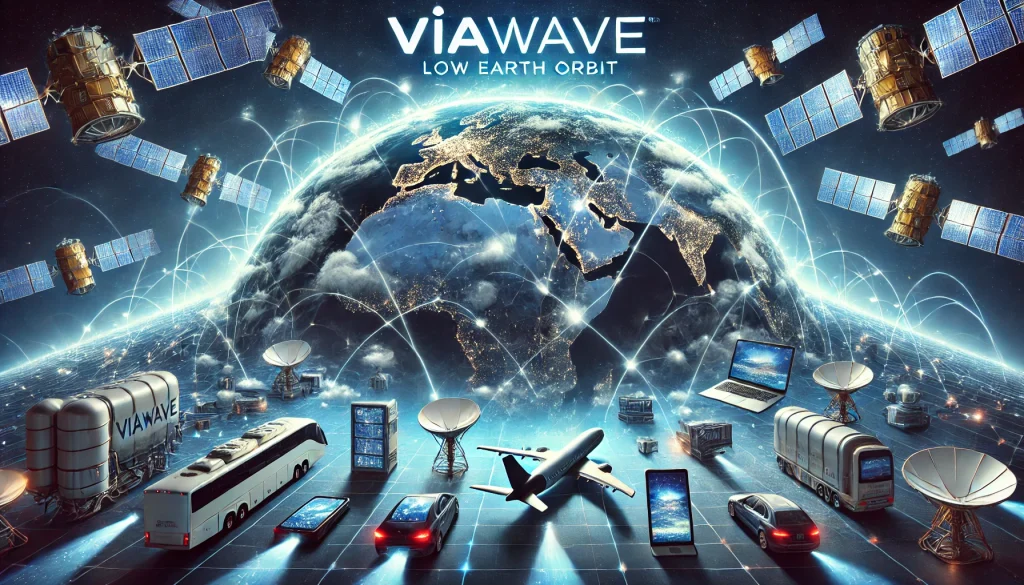
ViaWave represents the convergence of these breakthroughs, defining a next-generation paradigm for ultra-high-speed Direct-to-Device (D2D) connectivity from orbit. Conceived as an integrated space-based access infrastructure, ViaWave envisions seamless global connectivity delivered directly from the sky. The concept was formalized with the registration of the domain name ViaWave.com on May 29, 2002, marking the early articulation of this forward-looking communication architecture.
ViaWave leverages electromagnetic (EM) waves, which can propagate through vacuum and therefore do not require air or a physical medium, unlike sound waves or water waves. This makes EM propagation uniquely suited for space-to-ground and space-to-device communications. In ViaWave, information such as email, video streams, and data packets is encoded into digital signals (binary code), modulated onto electromagnetic carriers, transmitted through the atmosphere, and recovered at the receiver. Because EM waves propagate at approximately the speed of light (about 186,000 miles per second, or ~300,000 km/s), they enable extremely rapid signal transport between low Earth orbit and consumer devices.
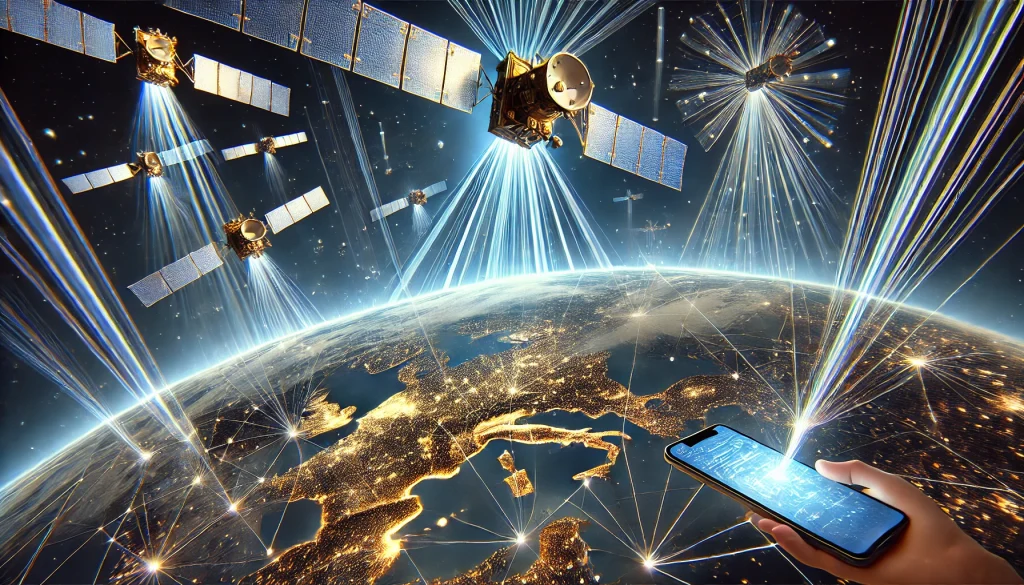
Operating at higher carrier frequencies further enables ultra-high data rates by supporting wider bandwidths, which increases the potential throughput (bits per second). The central engineering challenge is that long-distance propagation causes signal power to disperse (free-space path loss), and atmospheric effects—including rainfall, absorption, and scintillation—can introduce additional attenuation. ViaWave addresses these impairments through AI-orchestrated network control and high-power, beam-steered antenna systems designed to maintain link integrity under dynamic conditions. The system is also engineered to mitigate intermittent disruptions such as solar interference events (e.g., “sun outage” periods that can occur near the spring and fall equinoxes), as well as geographic and environmental variability across different terrains and operating regions.
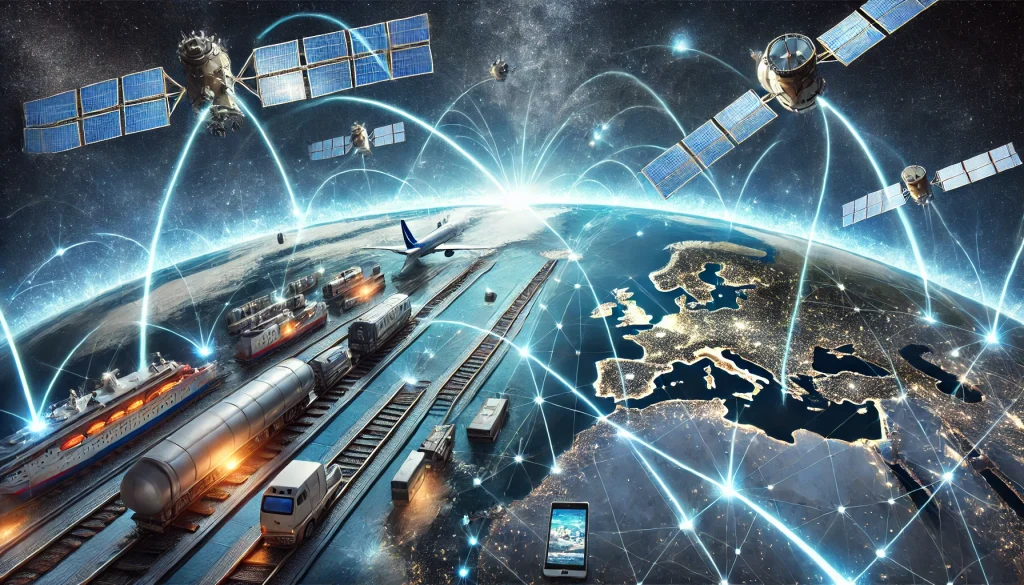
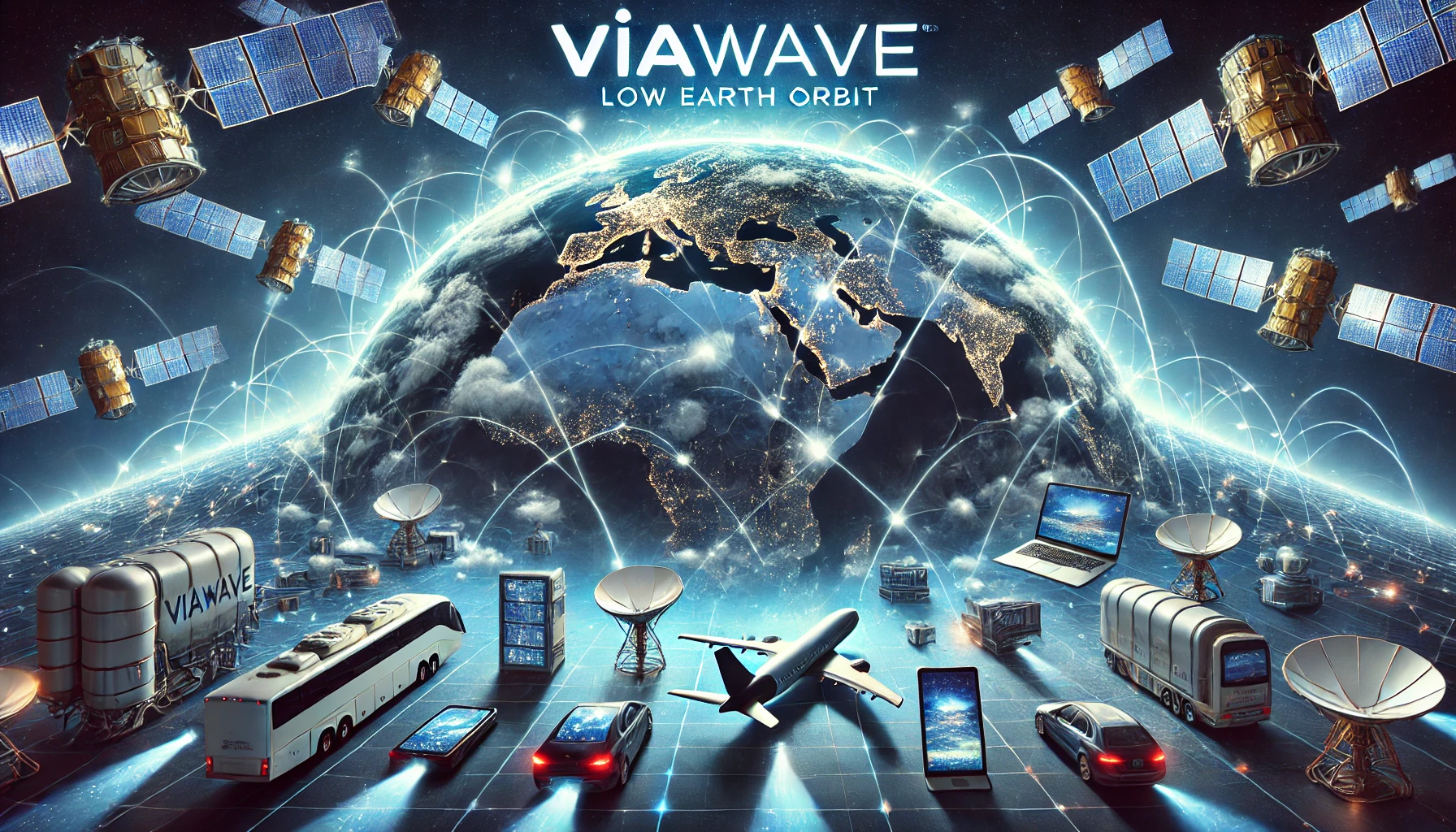
In practical terms, ViaWave enables direct-to-device (D2D) connectivity from orbit to consumer hardware—such as smartphones, laptops, and tablets—through flexible service models (subscription-based or pay-per-use). This capability extends reliable connectivity to mobility-heavy environments including air travel, cruise ships and maritime routes, rail lines, and road travel, reducing dependence on terrestrial infrastructure and minimizing coverage gaps. Collectively, these advances represent a major step toward AI-managed, ultra-high-speed global internet access delivered directly from space.