
The mythology of modern technology is built on a simple premise: that innovation begins small. The canonical stories of Silicon Valley reinforce this belief. Larry Page and Sergey Brin developed early versions of Google within the academic environment of Stanford University. Michael Dell assembled computers in a dormitory at the University of Texas at Austin. Mark Zuckerberg launched Facebook from a student residence hall.
These stories are not merely historical anecdotes—they define the ideological foundation of the American innovation model: low barriers to entry, rapid iteration, and meritocratic scaling.
That model is now structurally broken.
Artificial intelligence, particularly at the frontier level, has transformed innovation from a software problem into an infrastructure problem. The requirements for building competitive AI systems now include:
- Advanced semiconductor access (GPUs, accelerators)
- Hyperscale data centers
- Continuous access to vast datasets
- Gigawatt-scale energy supply
- Global network connectivity
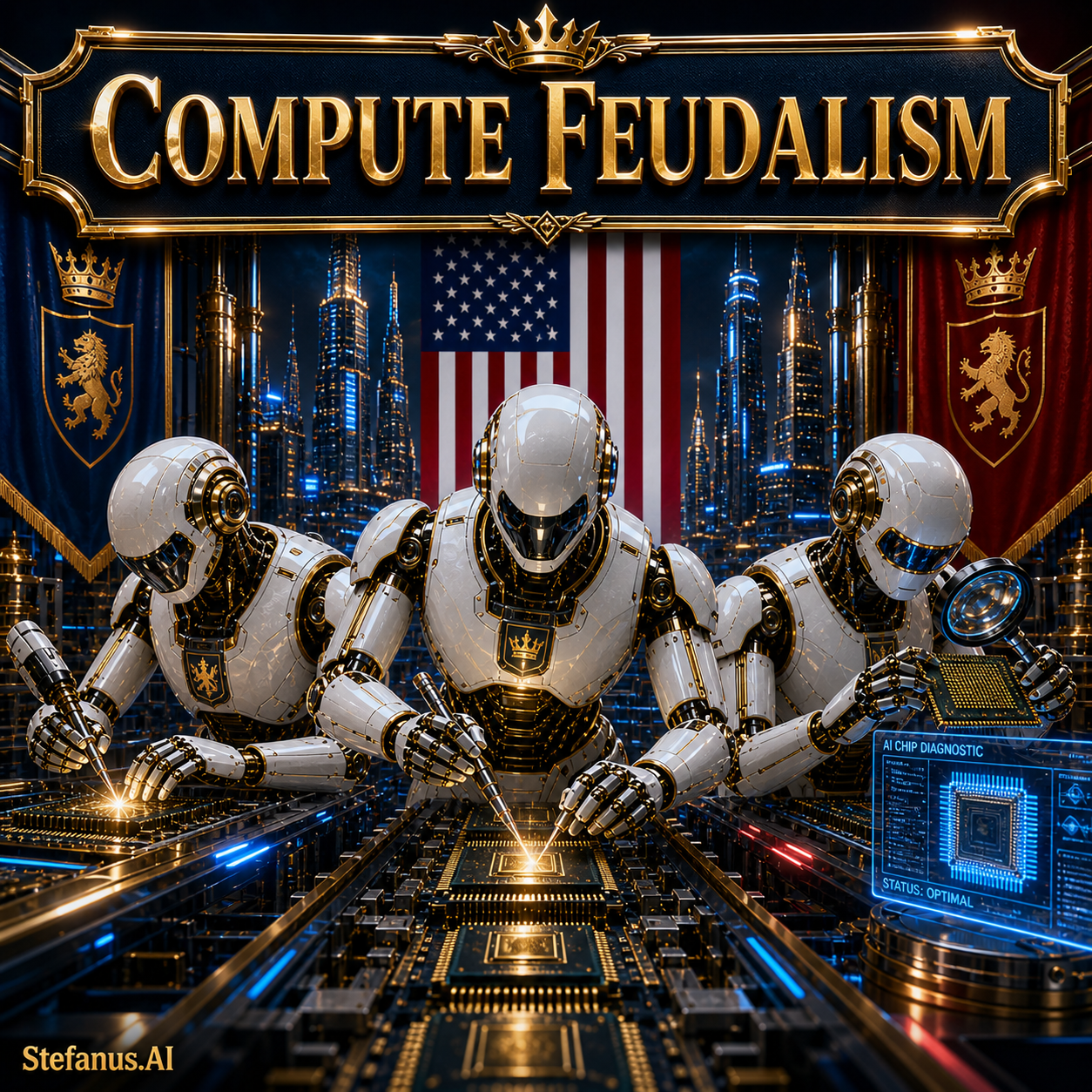
This transformation introduces a new organizing framework: Compute Feudalism.
“A fief was a central element of feudal society, defining relationships of power, dependence, and control over productive land.”¹
In the contemporary AI economy, the “land” is no longer physical territory—it is compute infrastructure. Access to this infrastructure is mediated by a small number of dominant entities, whose control over chips, data centers, and energy creates a hierarchical system reminiscent of feudal structures.
This paper advances a central thesis:
Artificial intelligence is evolving into a feudal system of compute, where infrastructure owners act as “lords,” and startups, researchers, and smaller firms operate as dependent “vassals.”

Section 1: Lords of the Infrastructure
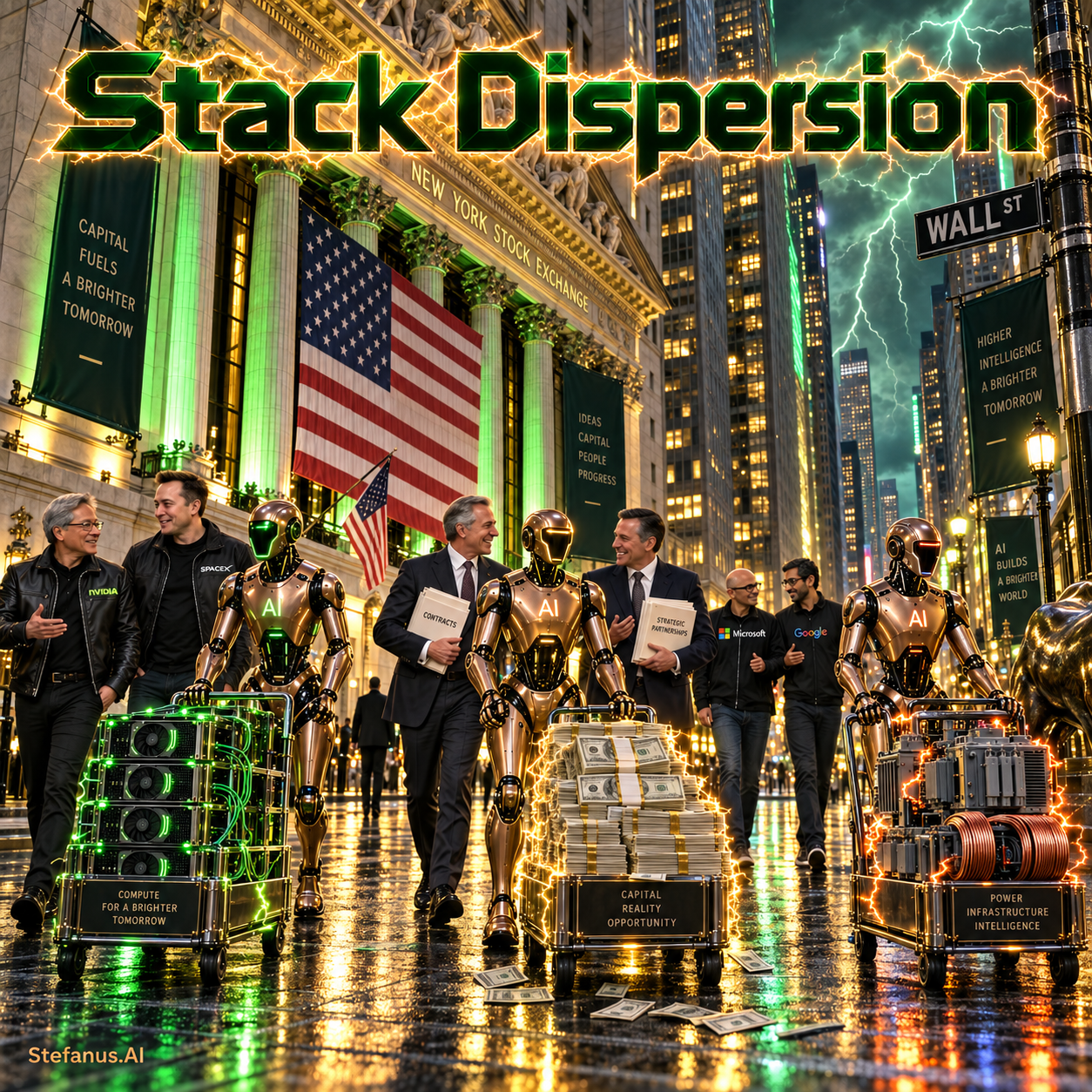
1.1 The Chip Sovereign: NVIDIA and the Control of Computation
NVIDIA has emerged as the foundational gatekeeper of modern AI. Its GPUs power the vast majority of large-scale machine learning systems globally.
According to industry estimates, NVIDIA commands dominant market share in AI accelerators, driven by both hardware superiority and its proprietary CUDA ecosystem.²
The significance of CUDA cannot be overstated—it represents a software lock-in mechanism layered on top of hardware dominance, effectively binding developers to NVIDIA’s ecosystem.
As economist Daron Acemoglu explains:
“Technological dominance often persists not because of initial advantage, but because of the ecosystem built around it.”³
This dynamic transforms NVIDIA from a supplier into something more powerful: a sovereign over the means of computation.
1.2 The Cloud Sovereigns: Hyperscalers as Territorial Lords
The second layer of control lies with cloud infrastructure providers:
- Microsoft (Azure)
- Amazon Web Services
- Google (Cloud + TPU)
These firms own and operate hyperscale data centers that serve as the physical substrate of AI systems.
According to International Monetary Fund research:
“Digital infrastructure has become a core determinant of economic power.”⁴
Cloud providers do not merely host applications—they mediate access to intelligence itself:
- Pricing determines accessibility
- Allocation determines scale
- Partnerships determine competitive viability
For example, Microsoft’s deep integration with OpenAI creates a vertically integrated system where infrastructure, model development, and deployment are tightly coupled.
1.3 Platform Sovereigns: Control of Demand and Distribution
Platforms such as Meta and Google operate at the distribution layer.
They control:
- Social networks
- Search engines
- Advertising ecosystems
- User data at global scale
This gives them a critical advantage: they shape not only supply (AI models) but also demand for intelligence services.
As Shoshana Zuboff notes:
“Surveillance capitalism unilaterally claims human experience as free raw material.”⁵
In the AI era, this “raw material” becomes training data—further consolidating power.
1.4 Orbital Sovereigns: The Expansion Beyond Earth
The emergence of satellite networks introduces a new dimension.
SpaceX has deployed thousands of Starlink satellites, enabling global connectivity independent of terrestrial infrastructure.
This represents a shift toward orbital infrastructure sovereignty.
As geopolitical scholar Joseph Nye explains:
“Power in the modern world includes control over networks, not just territory.”⁶
Orbital networks extend this logic beyond Earth, creating the possibility of space-based compute and data routing dominance.
1.5 Founder-Lords: Concentration of Strategic Authority
Unlike previous industrial systems, AI infrastructure is heavily influenced by individual leaders:
- Elon Musk
- Sam Altman
- Jensen Huang
- Mark Zuckerberg
Their decisions influence:
- Capital allocation
- Infrastructure expansion
- Model deployment strategies
This creates a system where global technological direction is partially shaped by a small number of actors.

Section 2: Energy, Nuclear Revival, and the Industrialization of AI
2.1 AI as an Energy System
Artificial intelligence is often framed as a computational revolution. In reality, it is equally an energy revolution.
The International Energy Agency states:
“Electricity demand from data centres, AI and cryptocurrencies could double by 2026.”⁷
This growth is unprecedented in the history of digital infrastructure.
According to Pew Research Center:
“Data centers are projected to account for a growing share of electricity demand, potentially straining existing power grids.”⁸
2.2 The Return of Nuclear Power
The scale of AI energy demand has revived interest in nuclear energy.
Projects include:
- Restarting decommissioned plants
- Extending life of existing facilities
- Investing in Small Modular Reactors (SMRs)
Energy historian Vaclav Smil writes:
“Modern civilization is fundamentally dependent on large-scale, reliable energy flows.”⁹
AI intensifies this dependency.
2.3 State-Level Energy Politics
AI infrastructure is reshaping state policy across the United States.
States are increasingly competing to attract data centers by offering:
- Tax incentives
- Energy access
- Regulatory flexibility
This creates a new political dynamic: governors as infrastructure brokers.
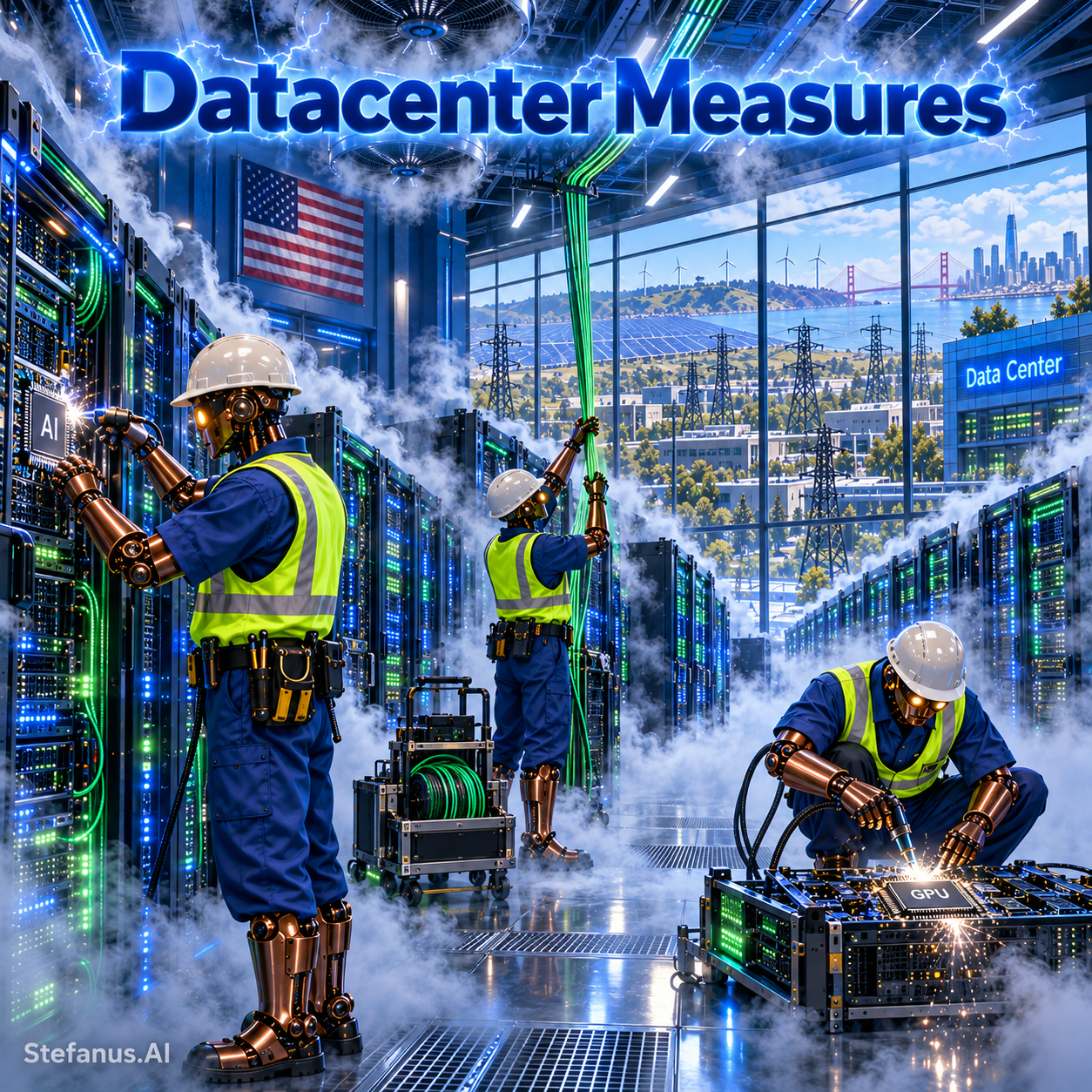
2.4 Data Centers as Industrial Infrastructure
Modern AI data centers resemble heavy industry:
- Power consumption comparable to large cities
- Long construction timelines
- Integration with regional grids
From the World Bank:
“Infrastructure investment is a primary driver of long-term economic growth.”¹⁰
AI infrastructure fits squarely into this category.
2.5 The Convergence Thesis
The key insight of this section:
AI is no longer a digital system layered on top of the economy—it is becoming part of the physical infrastructure of the economy itself.

Section 3: Why Sovereignty Is Structurally Impossible for Startups
The defining illusion of the AI era is that startups are simply “behind” and will eventually catch up.
This assumption is incorrect.
Startups are not lagging—they are structurally constrained.
3.1 Capital as a Barrier to Existence
Unlike the early internet era, AI infrastructure requires enormous upfront capital investment.
Modern frontier AI systems demand:
- Tens of thousands of GPUs
- Hyperscale data center facilities
- Long-term energy procurement contracts
- Advanced cooling and networking systems
The International Monetary Fund notes:
“Large upfront investments in infrastructure create natural barriers to entry and reinforce market concentration.”¹¹
This is not merely a cost problem—it is a system design problem.
3.2 The Scarcity of Compute
Compute is not infinitely available.
It is rationed.
Access to cutting-edge GPUs is often prioritized for:
- Strategic partners
- Large cloud customers
- Internal projects of hyperscalers
As Erik Brynjolfsson explains:
“General-purpose technologies often lead to temporary concentration before their benefits diffuse.”¹²
AI, however, may not follow this pattern due to infrastructure intensity.
3.3 Energy as the Ultimate Constraint
Even if startups could acquire chips and capital, they face a deeper constraint: energy.
Grid interconnection delays can take years.
Power availability is increasingly limited in key regions.
From research affiliated with Massachusetts Institute of Technology:
“Electricity availability is becoming a binding constraint on AI deployment.”¹³
This transforms energy into a gatekeeping resource.
3.4 The Dependency Loop
Startups today follow a predictable lifecycle:
- Build using APIs (OpenAI, cloud services)
- Scale using hyperscaler infrastructure
- Optimize costs within those systems
- Remain permanently dependent
This creates what can be described as a dependency equilibrium.
They cannot leave the system because:
- Infrastructure costs are prohibitive
- Switching costs are high
- Supply chains are controlled
3.5 Structural Conclusion
The result is clear:
Startups are not independent actors—they are tenants within infrastructure controlled by others.
This is the defining characteristic of Compute Feudalism.

Section 4: Survival Strategies in a Feudal System
If sovereignty is unattainable, survival requires adaptation.
The question is no longer:
“How do startups compete?”
But:
“How do startups operate within a system they do not control?”
4.1 Alignment Over Independence
The most successful startups do not attempt to replicate infrastructure.
They align with it.
This includes:
- Building natively on a specific cloud (Azure, AWS, Google Cloud)
- Leveraging ecosystem advantages
- Forming strategic partnerships
As Andrew Ng notes:
“AI is the new electricity… but its distribution is uneven.”¹⁴
Startups must position themselves within that uneven distribution.
4.2 Public Compute as a Counterbalance
Governments have historically intervened in infrastructure markets:
- Railroads
- Highways
- Telecommunications
AI may require similar intervention.
Potential solutions:
- National AI compute clusters
- University-access GPU programs
- Public-private infrastructure partnerships
The World Bank emphasizes:
“Public investment in infrastructure can reduce inequality and unlock innovation.”¹⁵
4.3 Talent as the Last Open Frontier
Unlike compute, talent remains relatively unconstrained.
Human capital becomes the key differentiator.
Policies that matter:
- STEM education expansion
- Immigration pathways for high-skill workers
- Research funding
As Claudia Goldin argues:
“Human capital is the most powerful engine of economic growth.”¹⁶
4.4 Open Source as Partial Resistance
Open-source AI introduces an alternative pathway.
Models such as Meta’s LLaMA provide:
- Access to weights
- Customization flexibility
- Reduced dependency on APIs
However, open-source does not eliminate infrastructure dependency.
Training and deployment still require:
- GPUs
- Data centers
- Energy
Thus, open source is not liberation—it is partial decentralization.
4.5 Ethical Responsibility of the Lords
A defining question emerges:
Do infrastructure owners reinforce or soften the system?
Leaders such as:
- Sam Altman
- Jensen Huang
- Elon Musk
control not just companies—but the architecture of access.
From University of Oxford research:
“The governance of AI will shape its societal impact as much as the technology itself.”¹⁷

Conclusion: The End of the Garage Era
Why “Compute Feudalism”?
Because the defining resource of the AI age—compute—is:
- Scarce
- Controlled
- Hierarchically distributed
Like land in medieval systems.
Implications for AI Growth
The shift is profound:
- Innovation moves from open → permissioned
- Power concentrates in infrastructure owners
- Progress depends on access, not just ideas
Implications for the American Dream
The traditional narrative:
- Start with nothing
- Build independently
- Scale globally
The new reality:
- Access infrastructure
- Operate within constraints
- Scale conditionally
The dream is not gone.
But it has changed form.
Final Reflection
Artificial intelligence was once imagined as the most democratizing force in history.
Instead, it is becoming one of the most centralized systems ever created.
The question is no longer:
Who can build intelligence?
The question is now:
Who controls the infrastructure that allows intelligence to exist?

Footnotes
1. Marc Bloch, Feudal Society, Routledge
https://www.routledge.com/Feudal-Society/Bloch/p/book/9780415738682
2. NVIDIA Annual Report
https://www.nvidia.com/en-us/about-nvidia/investor-relations/
3. Daron Acemoglu, MIT
https://economics.mit.edu/people/faculty/daron-acemoglu
4. International Monetary Fund – Digital Infrastructure
https://www.imf.org/en/Publications/fandd/issues/2023/03/digital-infrastructure
5. Shoshana Zuboff, Harvard Business School
https://www.hbs.edu/faculty/Pages/profile.aspx?facId=4136
6. Joseph Nye, Harvard University
https://www.hks.harvard.edu/faculty/joseph-s-nye
7. International Energy Agency Report
https://www.iea.org/reports/electricity-2024
8. Pew Research Center – Data Centers
https://www.pewresearch.org
9. Vaclav Smil, Energy and Civilization
https://vaclavsmil.com
10. World Bank Infrastructure Report
https://www.worldbank.org/en/topic/infrastructure
11. International Monetary Fund – Market Concentration
https://www.imf.org/en/Publications
12. Erik Brynjolfsson, Stanford University
https://digitaleconomy.stanford.edu
13. MIT Energy & AI Research
https://energy.mit.edu
14. Andrew Ng, Stanford
https://www.andrewng.org
15. World Bank Infrastructure Policy
https://www.worldbank.org/en/topic/infrastructure
16. Claudia Goldin, Harvard University
https://scholar.harvard.edu/goldin
17. Oxford AI Governance
https://www.oxford-aiethics.ox.ac.uk

Comments
[…] https://stefanus.ai/compute-feudalism-lords-of-infrastructure-and-the-new-hierarchy-of-artificial-in… […]