
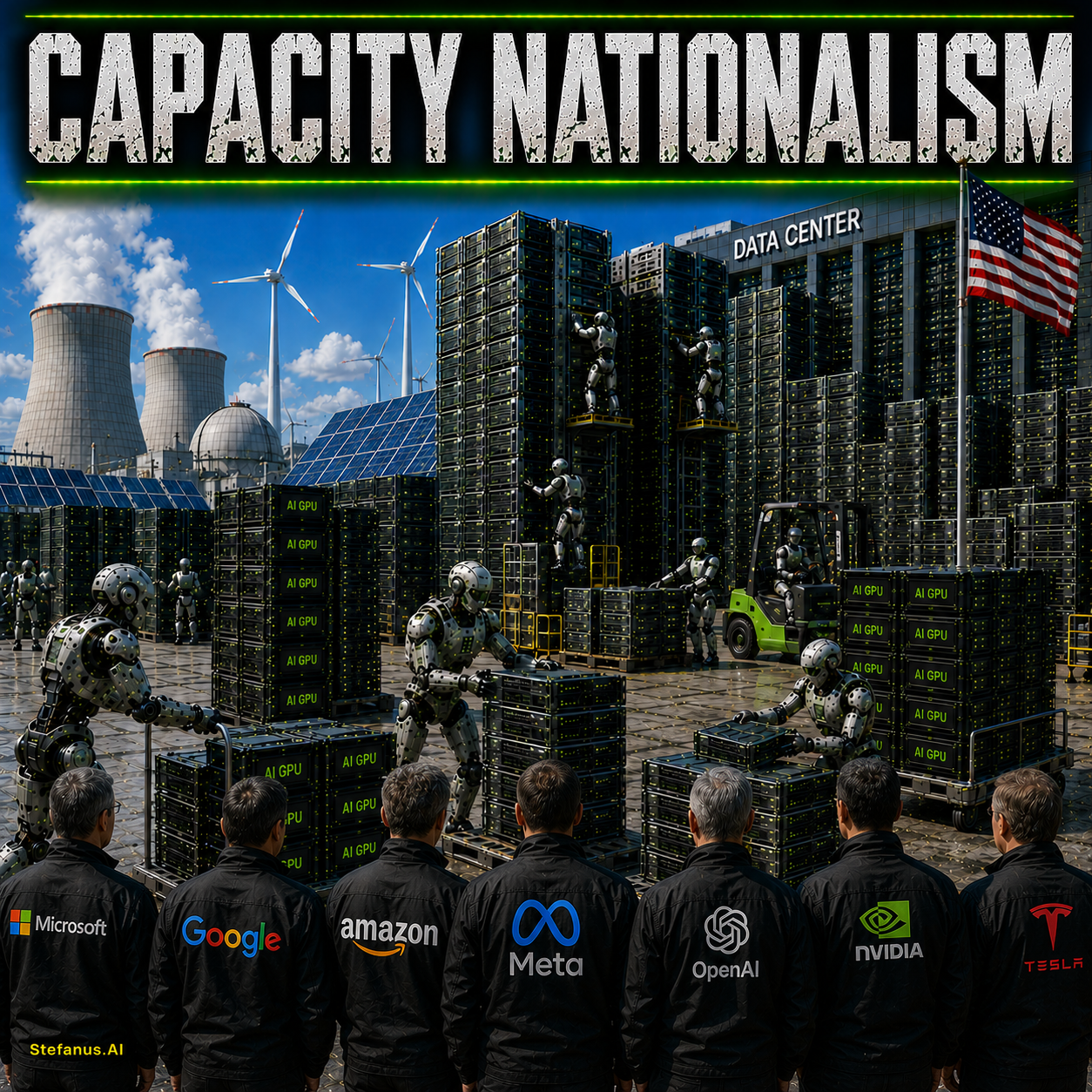

Introduction: The Era of Infinite Software Meets Finite Infrastructure
I want to begin with a personal memory, because sometimes the most intellectually clarifying thing one can do is to trace the shape of a large structural phenomenon through a small, human-scale event that one has actually lived through.
It was approximately one week before the official government announcement of the COVID-19 lockdown — a moment I locate precisely around March 10, 2020. At my office in Downtown Los Angeles, every employee received instructions to bring home office equipment: large monitors, laptop docking stations, the full physical apparatus of a desk-bound working life, suddenly uprooted and redistributed across the domestic sphere. What struck me in those first days was not the inconvenience of the logistics, but the sudden and visceral awareness of how dependent we all were on physical objects that, until that morning, we had simply taken for granted.
When the city’s mask requirement became serious, I rushed to my neighbor — a pharmacist — and managed to purchase two N-95 respirators, a brand that was not 3M but that proved entirely adequate. For one month, through the most critical early weeks of the pandemic, those two masks were a form of physical sovereignty in a world that had abruptly run out of protective equipment. I watched as people around the city — and around the country — hoarded toilet paper, Clorox disinfectant, alcohol-based hand sanitizers, baby formula, and any item that had crossed the threshold from commodity to scarce strategic good. The behavioral driver was not greed in its simple form. It was panic allocation in the face of supply uncertainty — the rational-seeming decision to secure more than you need today, because you cannot be sure there will be any left tomorrow.
I want to hold that image — the N-95 mask, the Clorox bottle, the toilet paper aisle stripped bare — and carry it forward into 2026. Because what is happening in the artificial intelligence infrastructure market today is structurally identical, though the scale has multiplied by many orders of magnitude, and the actors are not individual households but the largest and most powerful technology corporations and nation-states in the world.
Today, every major hyperscaler is rushing to acquire Nvidia GPU chips with the same anxious urgency with which pandemic households sought 3M masks. And just as the N-95 shortage drove some buyers toward adequate but non-preferred alternatives, many AI companies find themselves unable to secure precisely the GPU configurations they want, and thus turn to alternatives — including Google’s Tensor Processing Units (TPUs), AWS’s Trainium chips, and Microsoft’s Maia accelerators — that are functionally sufficient but represent a departure from the dominant standard.
“The world is entering a new phase of industrial competition in which physical infrastructure — not software abstraction — is the primary axis of strategic advantage.”
— World Economic Forum, Global Technology Governance Report, 2024
A concrete illustration of what I am calling infrastructure hoarding at its most dramatic scale emerged in early May 2026, with the announcement that Elon Musk’s xAI had agreed to lease the entire first building of its Colossus datacenter campus in Memphis, Tennessee — a facility formerly occupied by Electrolux — to Anthropic, which was running critically short on compute capacity for its Claude model family. Analysts estimated the rental value of the arrangement at somewhere between $5 billion and $10 billion per year. The structure of this deal is, on its surface, described as a commercial partnership. But underneath the press release, it reveals something far more significant: Colossus, which was originally conceived as the dedicated compute backbone for xAI’s Grok model, had been found to be operating at approximately 15% of its capacity. Over 100,000 of the facility’s high-end Nvidia GPUs — among the most expensive and strategically valuable physical assets in the world — were sitting largely idle, not because xAI had no ambitions for them, but because the pace of its model deployment had not yet caught up with the infrastructure it had already built.

This, precisely, is Capacity Nationalism in practice. The original decision to build Colossus at that scale was not a simple demand-response investment. It was a strategic preemption: an acquisition of capacity well beyond current operational need, motivated at least in part by the logic that if xAI did not build it, some rival would — and that the denial of those GPUs to competitors is itself a competitive asset. That those idle GPUs are now being rented to Anthropic at extraordinary rates does not undermine this thesis; it confirms it. Excess capacity, in the Capacity Nationalism framework, is not waste. It is optionality held at the expense of rivals, monetizable when convenient, and strategically protective at all times.
For decades, digital technology had trained the world to believe that software scales infinitely. Cloud computing perfected this illusion: with the right API key and a credit card, any startup could, in theory, provision the same computational power as a Fortune 500 company. Storage was elastic. Compute was on-demand. The physical infrastructure underneath this apparent abundance was vast and real, but it was abstracted away behind dashboards and pricing tiers, invisible to the developers who consumed it. Artificial intelligence — specifically, frontier large language model training and inference — has shattered that illusion with finality.
The AI era is not constrained primarily by algorithms. It is not constrained primarily by talent. It is not constrained primarily by capital in the financial sense. It is constrained, at its deepest and most intractable level, by physical capacity.
The new bottlenecks are no longer model architectures or software engineering talent alone. They are: AI GPUs and advanced semiconductor packaging; datacenter construction timelines and electrical grid interconnection queues; power transformers and industrial cooling systems; fiber optic routes and substation land; rare earth materials and specialty industrial gases; engineering and construction labor; and sovereign permitting approvals that can delay critical infrastructure by years.
This paper introduces the concept of Capacity Nationalism — the emerging doctrine in which corporations and nation-states aggressively secure disproportionate shares of scarce infrastructure capacity, not merely to satisfy current demand, but to deny optionality to rivals. It is not ordinary expansion. It is strategic preemption. And understanding it is, I will argue, essential to understanding who will win the AI century.

Section 1: The End of Elastic Compute — Why AI Broke the Cloud Illusion
The Structural Difference of This Moment
To understand why AI infrastructure has become a strategic rather than merely operational concern, one must first appreciate the depth of the illusion that cloud computing created — and why that illusion was so durable, and so consequential when it finally broke.
From roughly 2006, when Amazon Web Services first launched its Elastic Compute Cloud (EC2) service, through the early 2020s, the dominant assumption of the technology industry was that compute had been effectively decoupled from physics. You did not need to own servers. You did not need to build a datacenter. You did not need to negotiate power contracts or obtain permits from municipal utilities. You needed only a credit card and a developer account, and the infrastructure appeared to materialize on demand, as if conjured from the ether. This was, of course, never literally true. Behind the API endpoints and the dashboard provisioning screens, enormous and growing physical plants — the hyperscaler datacenters of Amazon, Google, and Microsoft — consumed enormous quantities of electricity, water, land, and engineered hardware. But for most users, these physical realities were invisible, and the invisibility was by design.
The economic model of cloud computing rested on what economists call statistical multiplexing: the observation that not all users need maximum compute at the same time, so a shared pool of physical resources can serve many customers at effective utilization rates that would be impossible for any single customer to sustain independently. This model works well for general-purpose computing workloads — web serving, database queries, batch analytics, application hosting — because these workloads are temporally distributed and their peak demands are statistically uncorrelated. The fundamental assumption is that spare capacity always exists somewhere in the pool.
Frontier AI training and inference violates every assumption that made this model work.
A large language model training run does not submit small, temporally distributed jobs to a shared pool. It submits a single, monolithic, weeks- or months-long computation that requires thousands of specialized GPU chips to operate in tight synchrony, connected by ultra-low-latency networking fabrics, housed in the same physical building or campus, drawing power from dedicated electrical infrastructure, and cooled by systems engineered specifically for the extreme thermal density of GPU clusters. There is no statistical multiplexing when your training run occupies 10,000 H100 GPUs for three months. There is no elasticity when the bottleneck is not virtualized compute, but specialized silicon that takes 18 months to manufacture and another year to deliver.
“AI compute represents a qualitatively different infrastructure challenge from anything the industry has previously encountered. The density of power consumption, the specialization of the hardware, and the scale of the interconnect requirements make frontier AI training closer to heavy industrial manufacturing than to conventional information technology.”
— MIT Energy Initiative, Artificial Intelligence and Energy: A New Challenge for Infrastructure, 2024
The earliest visible symptom of this structural shift was the GPU shortage of 2023. When OpenAI’s ChatGPT crossed one hundred million users in January 2023 — the fastest adoption of any consumer technology product in history — it triggered a cascade of demand across the entire technology industry that the existing supply chain was structurally incapable of meeting. Every company that had watched ChatGPT’s explosive growth wanted to build its own frontier model. Every company that wanted to build its own frontier model needed Nvidia H100 GPUs. And Nvidia’s supply chain — constrained at multiple points, including TSMC’s advanced packaging capacity and CoWoS substrate availability — could not produce H100 units at anything close to the rate the market demanded.
The waiting lists for H100 units stretched to 8 to 12 months. Spot prices on the secondary market reached four to five times the official list price. Companies that had not pre-ordered found themselves locked out of the frontier AI market not because of any algorithmic or intellectual failure, but because of a physical supply chain bottleneck.1
But the GPU shortage was only the first, most visible bottleneck in a cascade that runs far deeper. Even as chip supply has gradually improved — Nvidia’s H200 and B200 production has ramped, and alternative AI accelerators from AMD, Google, Amazon, and Intel have expanded the total available pool — the constraint has simply migrated downstream to the next physical chokepoint.
From Infinite APIs to Finite Electrons
The power constraint is, in many ways, the most intractable of the emerging AI infrastructure bottlenecks, because it combines physical scarcity with regulatory complexity and extraordinary lead times.
A single Nvidia H100 GPU consumes approximately 700 watts of power. A cluster of 10,000 H100 GPUs — the minimum scale required for serious frontier model training — thus requires approximately 7 megawatts of continuous power, before accounting for cooling overhead, networking infrastructure, and power conversion losses. Accounting for those overheads, a realistic power draw for a 10,000-GPU cluster is closer to 12 to 15 megawatts. Scale that to the 100,000-GPU facilities that xAI’s Colossus and Meta’s Louisiana datacenter represent, and you are talking about a single facility that consumes as much electricity as a small city.
The challenge is not that electricity does not exist. The challenge is that getting electricity from where it is generated to where it needs to be consumed requires physical infrastructure — transmission lines, substations, transformers — that takes years to plan, permit, and construct. The queue for new electrical interconnection to the U.S. grid has grown to a staggering backlog: as of 2024, more than 2,600 gigawatts of generation capacity was waiting for grid interconnection approval across the United States, with average wait times exceeding five years.
“The interconnection queue has become a critical bottleneck for new energy infrastructure deployment in the United States. The current backlog represents roughly two and a half times the entire existing installed capacity of the U.S. power grid.”
— Lawrence Berkeley National Laboratory, Queued Up: Characteristics of Power Plants Seeking Transmission Interconnection, 2024
The transformer shortage compounds this problem. High-voltage power transformers — the devices that step electrical voltage up for long-distance transmission and down for local distribution — have lead times of two to three years for standard utility models, and up to four years for the large custom units required by major industrial facilities. U.S. domestic manufacturing capacity for large power transformers is limited, and import dependence introduces both cost and geopolitical vulnerability.2
The cooling constraint is equally severe, and perhaps even less well understood by the broader market. The thermal density of modern GPU clusters exceeds the design parameters of conventional air-cooled datacenter facilities by a factor of two to five. A standard enterprise datacenter rack might draw 5 to 10 kilowatts per rack. An AI GPU cluster draws 30 to 80 kilowatts per rack. This is not a difference of degree; it is a difference of kind, and it requires entirely different cooling architectures — direct liquid cooling, rear-door heat exchangers, or full immersion cooling — that are more expensive, more complex to operate, and more dependent on specialized engineering labor and water resources.
The result of all of these converging constraints is that the AI era has not merely strained cloud-era elasticity — it has structurally ended it. The comfortable assumption that compute can always be provisioned on demand has given way to a harsh new reality: that the most strategically valuable computational resources have lead times measured in years, not seconds, and that the actors who fail to secure capacity in advance may find that no amount of money can buy them what they need when they need it.
This is the structural foundation on which Capacity Nationalism is built.

Section 2: FOMO Procurement and Corporate Capacity Hoarding — When Hyperscalers Start Buying the Future Before It Exists
The Behavioral Shift: From Efficient to Panic Allocation
Classical economic theory holds that rational actors acquire productive inputs in quantities proportional to their near-term operational requirements, adjusted for reasonable uncertainty buffers and inventory carrying costs. Markets, in this framework, are allocation mechanisms that efficiently distribute scarce resources to their highest-valued uses through price signals. What we are observing in the AI infrastructure market in 2025 and 2026 is something that bears almost no resemblance to this framework.
The market for AI infrastructure is not operating under efficient allocation. It is operating, to use a term that I think captures the behavioral reality precisely, under panic allocation. Companies are not buying infrastructure because they have calculated that their current and near-term demand justifies the expenditure. Many of them are buying infrastructure because they have concluded that failing to secure capacity now — regardless of whether they can fully utilize it today — may prove existential within a 24- to 48-month horizon. The purchase is driven not by current demand but by catastrophic downside risk: the fear that if they do not act now, the infrastructure will not be available when they need it, and no competitor will voluntarily share.
“What we are seeing in AI infrastructure spending is a form of strategic pre-commitment under uncertainty — not simple overinvestment, but the rational response of actors who believe the option value of securing capacity now exceeds the cost of carrying underutilized assets.”
— Daron Acemoglu, MIT Department of Economics, The Economics of AI: Factor Markets Under Uncertainty, 2025
This behavior has precise historical analogues, and examining those analogues illuminates the logic more clearly than any purely financial analysis could. The most instructive parallels are: wartime industrial procurement, in which governments ordered production capacity years in advance of battlefield need; airline slot acquisition at congested hub airports, in which carriers pay for take-off and landing rights they do not immediately use in order to deny rivals the ability to operate on profitable routes; oil reserve stockpiling, in which nations maintain strategic petroleum reserves well beyond their immediate consumption needs as insurance against supply disruption; and telecommunications spectrum auctions, in which carriers have historically bid far above any calculable near-term revenue value for radio frequency licenses that confer long-term competitive exclusivity.
In each of these cases, the procurement logic is not about optimizing utilization against current demand. It is about securing strategic optionality in a regime where the scarcity of the underlying resource means that those who do not acquire it early may not be able to acquire it at all. I call this framework Panic Capitalism — and it is increasingly the dominant logic of AI infrastructure investment.
The CapEx Data: Buying Optionality at Gigawatt Scale
The scale of hyperscaler capital expenditure in AI infrastructure is, by any historical standard, extraordinary. The table below presents a comparative overview of capital expenditure data across the major AI infrastructure actors, drawing on publicly available earnings data, analyst estimates, and corporate announcements.
Table 1: Hyperscaler AI Capital Expenditure — Q1-2026 Refresh (2024 Actuals → 2026 Guidance)
| Company | 2024 CapEx (Actual) | 2025 CapEx (Actual) | 2026 CapEx (Guided / Q1-26) | Strategic Notes & 2027+ Outlook |
| Microsoft | $55.7B | ~$83B | $190B | CFO Amy Hood: ~$25B of 2026 figure driven by higher component pricing. Azure grew 40% in Q3 FY26. Hood: “We expect to remain capacity-constrained at least through 2026.” 2027 capex guided to increase further. |
| Alphabet / Google | $52.5B | $90B | $180–190B | Q1-26 capex alone: $35.7B. Cloud revenue +63% YoY to $20B; cloud backlog doubled to $460B. CFO Ashkenazi: 2027 capex will ‘significantly increase’ vs. 2026. TPU v6 and Gemini 3 driving demand. |
| Amazon / AWS | $77.7B | $131.8B | ~$200B | CEO Jassy Q4-25 call: “We are monetizing capacity as fast as we can install it.” Q1-26 capex: $44.2B (+77% YoY). AWS added 3.9 GW of data center power in 2025; plans to double total capacity by late 2027. Trainium3 fully committed by mid-2026. |
| Meta Platforms | $37.7B | $72.2B | $125–145B | Q1-26 guidance raised from $115–135B; attributed to higher component pricing and data center pre-build for future capacity. Meta Superintelligence Labs is primary driver. Custom silicon with Broadcom rolling out >1 GW in 2026. |
| Oracle (OCI) | ~$29B (FY24 fiscal yr) | ~$74B (FY25 trailing) | $60–80B+ | Stargate anchor: $300B deal with OpenAI over multi-year. OCI IaaS revenue guided to grow from $18B (FY25) to $32B then $73B then $114B. 211 live/planned cloud regions. GPU consumption +244% in last 12 months. |
| xAI / Colossus | N/A | ~$10–12B | ~$15B+ | Memphis Colossus: 100K+ H100/H200 GPUs. Est. 15% utilization as of early 2026; first building leased to Anthropic for est. $5–10B/yr. Second Colossus phase planned. Nvidia invested $100B in OpenAI, further inflating cluster competition. |
| CoreWeave | ~$2.3B | ~$12B+ | ~$20–25B | IPO March 2025 at ~$19B valuation. OpenAI contracts total $22.4B (as of Sep-25). Revenue backlog: $30.1B. 470 MW active power; 2.2 GW contracted. Expanding as AI cloud intermediary for OpenAI, Google, Microsoft overflow. |
| OpenAI (Stargate) | ~$5B (compute spend) | ~$18B (infra + compute) | $100B+ (Stargate yr-1) | Stargate: 7 GW planned capacity, $400B+ committed over 3 years toward $500B total. AWS deal: $38B over 7 yrs. CoreWeave: $22.4B. Azure: $250B long-term. Nvidia to invest $100B in OpenAI. AMD supplying 6 GW of compute. |
Sources: Company Q1-2026 earnings calls & SEC filings (April–May 2026); Epoch AI Hyperscaler CapEx Tracker; Financial Times; Bloomberg Intelligence; Morgan Stanley AI Infrastructure Report (Q1-2026 update). Note: Oracle figures reflect fiscal-year cadence ending May 31; all others are calendar-year.
The aggregate figures are staggering — and have accelerated far beyond what even aggressive forecasters projected twelve months ago. In 2024, the combined capital expenditure of the four largest hyperscalers alone — Microsoft, Alphabet, Amazon, and Meta — reached just over $200 billion. Expand the count to include Oracle, and the five-company total for 2025 came in at $448 billion, representing 72% annualized growth since mid-2023, according to Epoch AI’s hyperscaler capital expenditure tracker.3
By 2026, the scale becomes genuinely difficult to process. Based on Q1-2026 earnings guidance, the Big Four alone have committed to approximately $725 billion in combined capital expenditure for the calendar year — a 77% increase over 2025’s record, and more than three times what those same companies spent just two years earlier. Microsoft has guided to $190 billion for calendar 2026, with CFO Amy Hood explicitly noting that roughly $25 billion of that figure reflects pure component price inflation, not incremental capacity. Alphabet has raised its full-year 2026 guidance to $180–190 billion — up from $90 billion in 2025, and more than five times its 2023 figure. Amazon has committed to approximately $200 billion, its CEO describing the investment as a response to demand the company is “monetizing as fast as we can install it.” Meta has raised its guidance twice since January, arriving at $125–145 billion — nearly double what it spent in all of 2025.
Layered on top of individual hyperscaler commitments is the Stargate joint venture — a collaboration among OpenAI, SoftBank, Oracle, and the UAE-backed investment firm MGX — announced at the White House in January 2025. The project targets $500 billion in AI infrastructure investment by 2029, with an initial $100 billion deployed in 2025 across sites in Abilene, Texas and five additional locations. By September 2025, Stargate had reached nearly 7 gigawatts of planned capacity and more than $400 billion in commitments within the first three years. It is worth noting that the original Stargate commitment has been subject to considerable revision as OpenAI’s financial realities have evolved: by early 2026, reporting indicated the spending target had been recalibrated, with OpenAI increasingly renting capacity from the very cloud hyperscalers it had originally planned to displace — a development that itself illustrates the Capacity Nationalism dynamics this paper describes.3
What makes these expenditures consistent with the Capacity Nationalism framework — rather than simply aggressive but rational growth investment — is the explicit acknowledgment, by the executives making these decisions, that utilization rates for much of this infrastructure will be low in the near term. This is not a secret. During Meta’s Q4 2024 earnings call, CEO Mark Zuckerberg described the company’s infrastructure buildout in terms that were striking for their candor:
“I’d rather build capacity before we need it and then use it aggressively, than be in a position where we wish we had more capacity and we’re unable to move fast because we don’t have it.”
— Mark Zuckerberg, Meta Platforms Q4 2024 Earnings Call, January 29, 2025
This is a precise articulation of the Capacity Nationalism logic. The acquisition is not demand-driven. It is optionality-driven. The cost of underutilization is treated as acceptable; the cost of being caught without capacity when the strategic moment arrives is treated as potentially existential.
“There is a risk of overbuilding. There is also a risk of underbuilding. And if you look at the history of technology waves, the companies that underbuilt at critical moments tended not to survive as leaders. We are deliberately choosing to err on the side of building more.”
— Satya Nadella, Microsoft CEO, Morgan Stanley Technology Conference, March 2025
Microsoft’s commitment — which includes a $13.75 billion investment in OpenAI, massive Azure AI infrastructure expansion, and a stated intention to spend $80 billion on AI datacenters in the fiscal year ending June 2025 alone — is the clearest example of a company treating infrastructure investment as a form of strategic deterrence rather than a conventional return-on-investment decision.
Amazon’s approach is equally instructive. AWS has committed over $150 billion in AI infrastructure investment over the coming decade, including its custom Trainium and Inferentia AI chips, Project Kuiper satellite broadband, and a network of AI availability zones designed to serve sovereign customers — governments and regulated industries — who cannot or will not rely on shared public cloud infrastructure. The sovereign compute dimension of Amazon’s strategy is particularly significant, as it points toward the broader geopolitical dynamics that Section 3 will explore.
Oracle, which was not historically considered a frontier AI infrastructure player, has undergone one of the most dramatic strategic pivots in enterprise technology history, driven almost entirely by AI infrastructure demand. Its Oracle Cloud Infrastructure (OCI) business has become the preferred compute partner for several of the most capital-intensive AI startups, including CoreWeave, which serves as a GPU cloud intermediary between Nvidia and AI model developers. The CoreWeave initial public offering in early 2025 — valued at approximately $19 billion — was itself a market signal of extraordinary significance: it demonstrated that the market had concluded that owning and leasing GPU compute infrastructure is, independently of any model development activity, a strategically valuable and financially rewarding business.
The xAI-Anthropic Case: Anatomy of a Capacity Hoarding Event
The May 2026 arrangement between xAI and Anthropic deserves extended analysis, because it is the most clear and well-documented example of Capacity Nationalism dynamics playing out at full scale in real time.
The Colossus datacenter in Memphis, Tennessee — built at extraordinary speed in 2024, reportedly taking only 122 days from groundbreaking to initial operation — was constructed at a scale that xAI’s then-current model deployment did not require. At its peak design, the facility was planned to house over 200,000 of Nvidia’s most advanced GPUs, making it, at completion, the largest single AI compute cluster in the world. The strategic logic of building at this scale, in advance of the model demand that would fill it, was articulated by Elon Musk in terms that echo the Capacity Nationalism doctrine almost perfectly: if xAI did not build the world’s largest AI cluster, someone else would, and that someone else would have a structural training advantage that might prove impossible to overcome later.
But model development timelines are hard to predict, and xAI’s Grok model has not scaled its user base at the rate that was perhaps originally anticipated. By early 2026, analysts estimated that Colossus was operating at approximately 15% of its installed GPU capacity — leaving over 85,000 high-end Nvidia GPUs idle or severely underutilized.4
Meanwhile, Anthropic — one of the most intellectually serious and well-resourced frontier AI labs in existence, backed by billions in investment from Google and Amazon — was facing the opposite problem: demand for Claude’s capabilities, across both consumer and enterprise channels, was outpacing the compute capacity that Anthropic had secured. Claude’s context window, reasoning capabilities, and API quality had made it the preferred model for a significant and growing segment of enterprise developers, and the company was experiencing what insiders described as genuine compute scarcity: a situation in which potential customers could not be served because there was not enough inference compute available to run the model at the required latency and throughput.
The resulting arrangement — in which Anthropic leases the first Colossus building from xAI, gaining access to tens of thousands of Nvidia GPUs at an estimated rental rate of $5 to $10 billion per year — is simultaneously a pragmatic commercial transaction and a structural illustration of Capacity Nationalism’s defining dynamic. xAI built more than it needed, in order to deny that capacity to rivals, and is now monetizing the excess. Anthropic, which did not accumulate capacity aggressively enough, is paying an extraordinary premium to access compute it cannot build fast enough on its own. The lesson, from the perspective of strategic planning, is unambiguous: in a Capacity Nationalism environment, the failure to pre-accumulate physical infrastructure carries a financial penalty that vastly exceeds the cost of the underutilization that aggressive early investment would have entailed.

Section 3: Capacity Nationalism and the New Geopolitics of AI Infrastructure — When Corporate Infrastructure Becomes National Strategy
The Sovereign Dimension of Compute
What distinguishes Capacity Nationalism from ordinary corporate competitive behavior is the degree to which the accumulation of AI infrastructure has ceased to be a purely private-sector phenomenon and has become, in a meaningful and consequential sense, an instrument of state power. The fusion of corporate and national strategic interest that defines Capacity Nationalism is not accidental. It reflects the structural alignment between the commercial incentives of technology corporations and the strategic imperatives of the nation-states in which they are domiciled and through which they operate.
This alignment has a clear and instructive historical precedent in the oil economy of the twentieth century. From the nationalization of oil reserves in the Middle East and Latin America in the 1950s and 1960s, through the OPEC embargoes of the 1970s, through the Gulf Wars of the 1990s and 2000s, the control of petroleum resources was understood by state actors as not merely an economic matter but a geopolitical one. Nations that controlled oil controlled the energy inputs to industrialization, military power projection, and economic growth. Nations that did not control oil were dependent — and dependence on a strategic resource controlled by potentially adversarial actors was a form of vulnerability that could be exploited.
“Access to compute is becoming as strategically significant as access to energy or advanced military technology. The nation that controls the frontier of compute will, in important respects, control the frontier of economic and security power in the twenty-first century.”
— Eric Schmidt, former Google CEO, speaking at the National Security Commission on Artificial Intelligence, 2021
The computational turn of the twenty-first century has produced an analogous dynamic, in which compute capacity — specifically, the capacity to train and deploy frontier AI models — has come to occupy the strategic role that petroleum occupied in the industrial age. Nation-states that control the design, manufacture, and deployment of advanced AI chips, the facilities required to operate them, and the energy infrastructure required to power those facilities are, in the Capacity Nationalism framework, strategically sovereign in the AI era. Nation-states that do not control these resources are dependent — and that dependence creates vulnerabilities that geopolitical adversaries can exploit.
The CHIPS Act and American Semiconductor Sovereignty
The United States CHIPS and Science Act of 2022 — which allocated $52.7 billion for domestic semiconductor manufacturing and research, including $39 billion in manufacturing incentives — represents the most explicit legislative articulation of Capacity Nationalism as a state doctrine in recent American history.5
The CHIPS Act’s intellectual architecture rests on a clear and explicit argument: that the United States had, over the preceding two decades, allowed its domestic semiconductor manufacturing capacity to atrophy to a dangerous degree through the logic of economic globalization, and that this atrophy had created a strategic vulnerability — most acutely illustrated by the concentration of advanced chip manufacturing in Taiwan — that posed an unacceptable national security risk. The response was not to trust the market to correct this vulnerability over time; it was to deploy direct industrial policy at scale to rebuild domestic capacity regardless of whether the short-term economics of semiconductor manufacturing favored doing so.
“The CHIPS Act reflects a fundamental recognition that semiconductor manufacturing is not merely an economic activity but a national security imperative. The concentration of advanced chip production in a single geographic location represents a fragility that the United States cannot afford to sustain.”
— Commerce Secretary Gina Raimondo, remarks at the Semiconductor Industry Association Annual Dinner, November 2023
The implementation of the CHIPS Act has proceeded with notable results, though its full effects will take years to materialize. TSMC’s Phoenix, Arizona fabrication facility — which will eventually produce 2nm process chips — represents the most significant reshoring of advanced semiconductor manufacturing to American soil since the 1980s. Intel’s Ohio and Arizona fab investments, supported by CHIPS Act funding, are similarly transformative in their long-term implications, even as both projects have experienced construction delays and cost overruns that illustrate the difficulty of rebuilding industrial capabilities that have been allowed to decay.
Export Controls as Capacity Nationalism
If the CHIPS Act represents the demand side of American Capacity Nationalism — the effort to build domestic capacity — then the semiconductor export control regime that the Biden administration implemented beginning in October 2022, and that the Trump administration has extended and expanded, represents the supply side: the effort to deny adversaries access to the physical infrastructure of AI supremacy.6
The export controls restrict the sale of advanced AI chips — specifically, chips with performance characteristics that would make them useful for frontier AI training — to China and a small number of other designated countries. Nvidia has been required to create modified, export-compliant versions of its most advanced chips — the A800 and H800, and subsequently the H20 — specifically designed to fall below the threshold that triggers export control restrictions, while still being commercially viable for a range of AI inference and less demanding training workloads.
The strategic logic of these controls is the inverse of the CHIPS Act: rather than building American capacity, they are designed to constrain the rate at which adversary nations can build their own capacity. If frontier AI training requires the most advanced chips, and those chips can only be manufactured at scale by TSMC and Samsung using equipment supplied by ASML — a Dutch company whose extreme ultraviolet lithography machines are themselves subject to export restrictions — then controlling the flow of finished chips, and the manufacturing equipment required to produce them, is equivalent to controlling the pace of AI development in targeted nations.
“The export controls represent a form of economic statecraft aimed at preserving a technology lead in artificial intelligence. The logic is simple: if you cannot buy the chips, you cannot train the models. And if you cannot train the models, the frontier of AI capability remains, at least for a time, out of reach.”
— Gregory Allen, Director of the AI Governance Project, Center for Strategic and International Studies, 2023
Sovereign Compute Initiatives: Europe, the Gulf, and the Emerging World
The Capacity Nationalism dynamic is not limited to the United States and China. A growing number of nations and regional blocs have concluded that dependence on foreign-controlled AI infrastructure represents an unacceptable form of strategic vulnerability, and are investing in sovereign compute capabilities with varying degrees of ambition and sophistication.
The European Union’s approach has been characterized by a combination of regulatory assertiveness — most prominently through the AI Act, which entered into force in August 2024 and imposes comprehensive requirements on AI systems deployed in the European market — and investment in shared compute infrastructure through the European High Performance Computing Joint Undertaking (EuroHPC JU). The EuroHPC initiative, which has established a network of petascale and pre-exascale supercomputing facilities across member states, is explicitly designed to provide European researchers and companies with access to frontier compute that does not depend on American or Chinese hyperscaler clouds. The stated goal is AI sovereignty: the ability to train and deploy competitive AI models using infrastructure that is physically located, governed, and controlled within European jurisdiction.
The Gulf Cooperation Council states — particularly Saudi Arabia and the United Arab Emirates — have articulated perhaps the most ambitious sovereign compute programs outside the United States and China. Saudi Arabia’s Public Investment Fund has committed to building out a national AI infrastructure that would make the Kingdom a significant global player in AI model development and deployment, including through the G42 partnership and the recently announced HUMAIN initiative. The UAE’s partnership with OpenAI and Microsoft — which has seen the two companies agree to develop a significant AI compute campus in Abu Dhabi — illustrates the degree to which Gulf sovereign wealth funds are using their extraordinary financial resources to acquire compute infrastructure as a form of geopolitical positioning.
China’s response to Western export controls and the broader Capacity Nationalism dynamic has been to accelerate its domestic semiconductor development program with a ferocity and resource commitment that few outside observers fully appreciate. The “Made in China 2025” strategy has been supplemented and partially superseded by a specific focus on AI chip independence, centered on companies including Huawei (whose Ascend AI chips have achieved meaningful performance despite being manufactured on less advanced process nodes) and Cambricon. While Chinese AI chips remain a full generation or more behind Nvidia’s frontier offerings, the pace of improvement has consistently exceeded what Western analysts projected.7

Section 4: The AI Infrastructure Arms Race — Scarcity, Denial, and Strategic Exclusion
Compute as a Chokepoint Asset
The preceding sections have established the physical reality of AI infrastructure scarcity and the behavioral and geopolitical responses that scarcity has generated. This section addresses a more uncomfortable possibility: that the most powerful actors in this dynamic are not merely responding to scarcity, but actively shaping it — that infrastructure accumulation functions not only as a defensive measure against future capacity constraints, but as an offensive mechanism for denying rivals the resources they need to compete.
This is a distinction that matters enormously for how we assess the ethics, economics, and policy implications of Capacity Nationalism. A company that builds infrastructure to serve its own operational needs, even if it builds more than it currently requires, is engaging in rational investment under uncertainty. A company that builds infrastructure with the explicit or implicit intention of depriving rivals of access to that infrastructure is engaging in a form of competitive exclusion that raises serious questions of antitrust law, market fairness, and democratic accountability.
The distinction is not always clean in practice — and deliberately so. The genius of the Capacity Nationalism strategy, from the perspective of its practitioners, is precisely that infrastructure accumulation serves both purposes simultaneously. Building a massive GPU cluster enables one’s own AI development and denies rivals access to those GPUs. Signing long-term exclusive contracts with power producers enables one’s own datacenter expansion and removes that power from the available supply for competitors. Acquiring land near electrical substations enables one’s own datacenter siting and forecloses rivals’ options for building in the same location. The dual-use nature of infrastructure makes the line between investment and exclusion genuinely difficult to draw — and that ambiguity is strategically valuable.
“When a single firm can acquire the physical infrastructure required by an entire industry in advance of demonstrated demand, the question is no longer whether there is a market failure. The question is whether existing antitrust frameworks are adequate to address a form of competitive exclusion that operates through physical capacity rather than pricing behavior.”
— Lina Khan, Federal Trade Commission Chair, Remarks on AI and Competition Policy, 2024
Queue Weaponization and the Architecture of Denial
One of the more subtle and underappreciated mechanisms of Capacity Nationalism in practice is what might be called queue weaponization: the strategic use of procurement position and supply chain relationships to control not merely one’s own access to scarce infrastructure, but the timing and terms of rivals’ access.
In the GPU market, the most consequential form of queue weaponization has been the reservation of future chip production by hyperscalers at a scale that effectively pre-commits Nvidia’s manufacturing capacity years in advance. When Microsoft, Google, and Amazon each commit to purchasing millions of H100, H200, and B200 units over a multi-year period — backed by the financial credibility and commercial relationships to make those commitments binding — they are not merely securing their own supply. They are establishing a priority queue that structurally disadvantages later-arriving buyers, including AI startups and smaller cloud providers that lack the financial scale to place equivalent reservations.
The result is a tiered access structure in which the largest buyers effectively control the distribution of scarce supply across the entire market. Nvidia’s allocation decisions — which customers receive chips when, and in what quantities — have become matters of extraordinary strategic importance, and Nvidia’s relationships with its largest customers have accordingly taken on the character of geopolitical partnerships as much as commercial transactions.8
A related mechanism operates in the power market, where hyperscalers have signed long-term power purchase agreements (PPAs) with energy producers — including renewable energy developers, nuclear plant operators, and utilities — that commit large fractions of available regional power capacity for periods of 15 to 25 years. These agreements are not inherently anti-competitive; they reflect the legitimate need of AI infrastructure operators to secure the energy supply their facilities require. But at the scale at which they are being executed, they have the effect of foreclosing options for other potential datacenter developers in the same regions.
Microsoft’s 2023 agreement to restart Three Mile Island’s Unit 1 nuclear reactor — a facility that had been offline since 2019 — and purchase its entire output for 20 years is a striking example of this dynamic. The agreement secures approximately 835 megawatts of carbon-free baseload power for Microsoft’s AI infrastructure, and it is unambiguously a thoughtful and innovative approach to clean energy procurement. It is also, from the perspective of any other energy-intensive industrial facility that might have sought to purchase Three Mile Island’s output, a 20-year exclusion from that supply.
“The race to lock up long-term power contracts for AI datacenters is creating a structural transformation of U.S. electricity markets. Some regions are already experiencing what we might call compute-driven energy gentrification, where AI infrastructure investment displaces other industrial uses by driving up power costs and consuming available interconnection capacity.”
— Jesse Jenkins, Princeton University ZERO Lab, Remarks on AI and Energy Infrastructure, 2025
Inference Pricing Leverage and the Monetization of Scarcity
A third mechanism of strategic exclusion in the AI infrastructure arms race operates through the pricing of inference compute — the computational resources required to run a trained AI model and respond to user queries. This dimension of Capacity Nationalism is perhaps the most immediately consequential for the broader AI ecosystem, because it determines the economic conditions under which AI-powered applications and services can be built by the vast majority of developers who do not own their own GPU clusters.
The pricing of inference compute through hyperscaler APIs — the rates at which developers pay to access GPT-4, Claude, Gemini, or competing frontier models through programmatic interfaces — is set by a small number of actors who control the overwhelming majority of frontier AI compute capacity. While competition among these actors has driven prices down significantly over the past two years — inference costs for GPT-3.5 class models have fallen by more than 95% since early 2023 — the pricing of frontier model inference retains a structural asymmetry: the companies that control the compute infrastructure also control the pricing, and they can calibrate that pricing to balance revenue maximization against the competitive threat of enabling well-funded rivals to build competitively compelling applications on their infrastructure.
The more significant pricing leverage, however, operates at the enterprise and government level, where large-scale AI deployments require negotiated contracts for reserved compute capacity. In these markets, the ability to offer guaranteed throughput and latency — which requires pre-committed physical infrastructure — creates a form of pricing power that companies without massive infrastructure reserves cannot match. This is where Capacity Nationalism’s competitive denial function is most directly monetized: the accumulated capacity that might have seemed like overinvestment in a demand-based analysis reveals itself as a structural competitive advantage when the market moves to enterprise-scale deployment.

Section 5: Beyond Chips — The Next Bottlenecks Nobody Is Pricing Correctly
The Bottleneck Migration Problem
There is a pattern, observable across the history of large-scale industrial development, in which the resolution of one critical bottleneck does not eliminate scarcity but simply relocates it to the next weakest link in the supply chain. The railroad era was constrained first by rail itself, then by locomotives, then by coal, then by right-of-way permitting, then by skilled labor. The semiconductor era was constrained first by silicon, then by photolithography equipment, then by software design tools, then by packaging and testing capacity. The AI infrastructure era is exhibiting the same dynamic, and understanding where the bottleneck cascade is heading is essential for any serious assessment of the long-term competitive landscape.
The GPU shortage of 2023 was the first highly visible bottleneck in the AI infrastructure cascade. As chip supply has gradually expanded — through Nvidia’s production ramp, through the development of alternative AI accelerators, and through the construction of new TSMC packaging capacity — the constraint has not disappeared. It has migrated.
“The history of major technology transitions suggests that the resolution of the leading bottleneck in a supply chain typically takes between 18 and 36 months and reveals the next three or four bottlenecks simultaneously. For AI infrastructure, we are early in this process, and the full cascade of physical constraints has not yet become visible to financial markets.”
— Carlota Perez, University College London, Technological Revolutions and Financial Capital, updated remarks, 2024
Power Infrastructure: The Deepest Constraint
The electrical power constraint is, in the judgment of most serious infrastructure analysts, the deepest and most durable bottleneck in the AI infrastructure cascade. Unlike chip shortages — which can, in principle, be addressed by building more fabs, developing alternative architectures, and improving manufacturing yields — the power constraint is embedded in physical and regulatory systems that change on decade-long timescales.
The U.S. electrical grid was not designed to accommodate the concentrated, high-density, continuous power demands of AI datacenters. The grid’s architecture reflects the dispersed geography of historical electricity consumption: residential, commercial, and industrial loads distributed across wide geographic areas and served by a transmission network built over many decades. The emergence of large AI compute clusters — single facilities drawing 500 megawatts to 1 gigawatt of continuous power, equivalent to a small city — creates a concentration of demand that the grid’s existing topology and capacity were not designed to serve.
The interconnection queue problem — in which new power consumers and generators wait years for permission to connect to the grid — is particularly acute for AI datacenters, which require both very large quantities of power and very high reliability (AI training runs cannot tolerate interruptions that would be merely inconvenient for conventional industrial users). The Federal Energy Regulatory Commission (FERC) has attempted to address the queue backlog through Order 2023, which introduced significant reforms to the interconnection process, but the structural capacity of the grid to absorb AI-driven demand growth remains a fundamental constraint.9
The nuclear renaissance that AI infrastructure demand is driving represents the most significant structural response to the power constraint. Microsoft’s Three Mile Island agreement, Amazon’s purchase of a datacenter campus in Pennsylvania that includes a co-location arrangement with the Susquehanna nuclear generating station, Google’s agreement with Kairos Power for small modular reactor (SMR) deployment beginning in 2030, and the general resurgence of interest in nuclear power among tech companies reflect a shared understanding: that AI’s power requirements are too large, too continuous, and too reliability-sensitive to be met by intermittent renewable sources alone, and that only baseload generation — whether nuclear, hydroelectric, or fossil-fueled with carbon capture — can serve as the primary power source for frontier AI infrastructure.
“The AI industry is becoming one of the most important drivers of nuclear power investment in the United States since the 1970s. This is not simply a curiosity. It reflects a fundamental reassessment of the energy requirements of advanced digital infrastructure, and it has profound implications for energy policy, grid planning, and nuclear regulation.”
— M. V. Ramana, University of British Columbia School of Public Policy, Nuclear Power in the Age of AI, 2025
Water, Cooling, and the Environmental Constraint
The cooling constraint is the third major bottleneck in the AI infrastructure cascade, and it has an environmental dimension that is only beginning to receive the attention it deserves. AI GPU clusters generate heat at densities that exceed conventional air cooling capacity, requiring either liquid cooling systems — which circulate chilled water or refrigerant through cold plates directly attached to chips — or evaporative cooling systems, which consume large quantities of water to reject heat to the atmosphere.
The water consumption of large AI datacenters is substantial and geographically concentrated. A 1-gigawatt AI compute facility using evaporative cooling can consume 5 to 10 million gallons of water per day — comparable to the daily water consumption of a city of 50,000 to 100,000 people. As AI infrastructure buildout accelerates in regions that are already experiencing water stress — the American Southwest, parts of Texas, and various international markets — the intersection of AI infrastructure demand and water resource constraints creates a category of conflict and constraint that is not currently being adequately priced by either financial markets or policy frameworks.
The transition to liquid cooling and direct chip cooling architectures — which dramatically reduce or eliminate water consumption for heat rejection — is underway, but it requires replacing existing datacenter infrastructure and adopting new facility designs that add capital cost and operational complexity. The companies that invest earliest in water-efficient cooling architectures will have a competitive advantage in water-constrained regions, and the ability to site AI infrastructure near reliable water sources will increasingly become a strategic location variable.10
Transformers, Substations, and the Last-Mile Problem
Among the bottlenecks that are least appreciated by financial markets and most underappreciated by technology industry observers is the shortage of high-voltage power transformers. A power transformer is not a sophisticated or algorithmically complex device; it is, at its core, an electromagnetic device that has been manufactured in essentially the same way for more than a century. But the scale and precision required for large utility transformers — units that might weigh hundreds of tons and cost tens of millions of dollars — mean that global manufacturing capacity is highly concentrated, lead times are long, and the ability to rapidly scale production in response to demand increases is severely limited.
The transformer shortage that has been building since 2020 — driven by a combination of aging grid infrastructure requiring replacement, the surge in renewable energy development requiring new transmission connections, and now the additional demand from AI datacenters — represents a physical supply chain constraint that cannot be quickly resolved regardless of the financial resources available. A new transformer manufacturing facility takes three to five years to design, permit, and construct. The skilled workforce required to operate it takes years to train. The result is a supply chain that will remain constrained for at least the remainder of this decade, creating a physical bottleneck in AI infrastructure deployment that has no obvious rapid resolution.
The substation land problem is related but distinct. For AI datacenter operators, the ideal siting condition is a location adjacent to an existing electrical substation with available interconnection capacity — a combination that eliminates the need to build new transmission infrastructure and dramatically reduces the time and cost to operational status. Such locations are scarce, finite, and increasingly subject to competitive acquisition by well-capitalized actors who purchase or option the land around suitable substations not merely to develop their own facilities, but to prevent rivals from doing so.
This is perhaps the most literal form of geographic Capacity Nationalism: the acquisition of physical land as a mechanism for competitive denial in the AI infrastructure arms race.
Specialty Materials and the Minerals Dimension
The final category of underpriced bottleneck is the minerals and specialty materials dimension of AI infrastructure. Advanced semiconductor manufacturing requires an extraordinary range of specialty materials — including gallium arsenide, indium phosphide, hafnium oxide, ruthenium, cobalt, and numerous rare earth elements — whose supply chains are geographically concentrated and, in many cases, dominated by China.
China’s export controls on gallium and germanium — announced in August 2023 and implemented in a series of escalating measures — represent the most direct application of Capacity Nationalism logic by a nation-state against foreign technology competitors. Both elements are critical inputs to compound semiconductor manufacturing, including the high-power transistors used in power electronics and some AI chip architectures. China’s ability to restrict supply of these materials, even without reducing total production, creates a form of supply chain leverage that is entirely analogous to the leverage that oil-exporting nations exercised through OPEC in the twentieth century.
Helium — which is required for certain semiconductor manufacturing processes and has no practical substitute — is another specialty material whose supply concentration (the United States and Qatar together produce the majority of global supply, with Russia and Algeria producing most of the remainder) creates geopolitical vulnerability. The development of alternative supply sources and the improvement of helium recovery and recycling technologies are areas of active industrial investment, but the timeline for meaningful supply chain diversification is measured in years, not months.11

Conclusion: Capacity Is the New Deterrence
The argument I have developed across the preceding pages can be summarized in a single, uncomfortable proposition: the defining strategic error of the early AI era — one that is being made, in varying degrees, by companies, governments, and analysts across the world — is the assumption that artificial intelligence scales independently of physical infrastructure. It does not. The intelligence of an AI model is bounded by the physical systems that train and deploy it: the chips, the power, the cooling, the land, the water, the transformers, the skilled labor, the permits, and the supply chains of specialty materials that make those systems possible.
This is not a temporary constraint to be engineered away. It is a structural feature of the AI era that will persist for decades, because the physical systems required for frontier AI are themselves products of supply chains that require years to develop, decades to mature, and extraordinary quantities of capital, regulatory cooperation, and geopolitical stability to sustain. The companies and nations that understand this — and that act on the understanding by securing disproportionate shares of the physical infrastructure required for AI development — are not merely winning a commercial competition. They are shaping the conditions under which the competition will be conducted for a generation.
Capacity Nationalism, as I have defined it, is the doctrine that emerges when rational strategic actors internalize this reality and act on it systematically. It is the decision by hyperscalers to acquire GPU capacity years ahead of demonstrated demand. It is the decision by nation-states to legislate domestic semiconductor manufacturing regardless of short-term economic efficiency. It is the decision by energy companies to lock up power purchase agreements for twenty years in advance of the facilities that will consume that power. It is the decision by real estate investors to acquire land adjacent to electrical substations not to develop it, but to prevent others from doing so. Each of these decisions, taken individually, can be rationalized in conventional economic or strategic terms. Taken together, they constitute a new doctrine of competitive power whose full implications are only beginning to become visible.
“Whoever controls the infrastructure of AI will, in time, control the infrastructure of the global economy. This is not hyperbole. It is a structural observation about the direction of technological dependence.”
— Klaus Schwab, Founder, World Economic Forum, The Fourth Industrial Revolution: A New Framework for Global Competition, 2023
The winners of the AI century may not be those with the best algorithms alone. History suggests they will be those who combined algorithmic excellence with something more fundamental: the accumulated physical reserves that allow them to keep building, keep training, and keep deploying when the constraints that Capacity Nationalism is designed to create begin to bite — when rivals find themselves unable to access the chips they need, power the facilities they have planned, site the datacenters they have designed, or scale the infrastructure required to remain competitive at the frontier.
What distinguishes the current moment from ordinary competitive investment is the degree to which infrastructure accumulation has become explicitly denial-oriented: not just building for oneself, but building to foreclose rivals’ options. The xAI-Anthropic arrangement is a microcosm of this dynamic at human scale — visible, legible, analyzable. The macro-level dynamics, playing out across the CapEx commitments of hyperscalers, the industrial policy decisions of governments, the export control regimes of great powers, and the supply chain strategies of semiconductor manufacturers, are the same logic operating at civilizational scale.
The questions that this analysis leaves open are, I think, among the most important questions facing policymakers, investors, and technology leaders in the coming decade. Can existing antitrust frameworks accommodate a form of competitive exclusion that operates through physical capacity rather than pricing behavior? Can the electrical grid be modernized at the pace that AI infrastructure demand requires? Can supply chain diversification for critical minerals be achieved without geopolitical escalation? Can smaller nations and companies that lack the resources to accumulate physical infrastructure at hyperscaler scale remain relevant participants in the AI economy — or will Capacity Nationalism produce a structural bifurcation in which the frontier of AI development becomes permanently accessible only to a handful of the most capital-rich actors?
I do not have definitive answers to these questions. What I can offer, with confidence, is the framing: the AI arms race is becoming less like software competition and more like industrial mobilization. The question is no longer simply:
Who builds the smartest AI?
The question is:
Who controls enough infrastructure to keep building when everyone else runs out?
That is the question of our era. And the answer will be written not in code, but in concrete, copper, silicon, and electrons.

Footnotes
1 Nvidia H100 GPU supply constraints and secondary market pricing, 2023. See: The Information, “The GPU Crunch: How Nvidia’s Chip Shortage Is Reshaping the AI Industry,” June 2023. https://www.theinformation.com/articles/the-gpu-crunch
2 U.S. Department of Energy, “Large Power Transformer Study,” 2023. U.S. DOE Office of Electricity. https://www.energy.gov/oe/articles/doe-releases-large-power-transformer-study
3 Epoch AI, “Hyperscaler CapEx Has Quadrupled Since GPT-4’s Release,” February 26, 2026 (combined capex across Alphabet, Amazon, Meta, Microsoft, Oracle: $448.3B in 2025, growing at 72% annualized since Q2-2023). Big Four 2026 combined figure of $725B per Financial Times Q1-2026 earnings compilation; Tom’s Hardware, April 2026. On Stargate: OpenAI, Oracle, and SoftBank announcement, January 21, 2025; expanded to $400B+ committed across 7 GW of planned capacity by September 2025. On Stargate recalibration: TechTimes, “OpenAI Cut Stargate’s Spending Pledge From $1.4 Trillion to $600 Billion,” May 19, 2026. https://epoch.ai/data-insights/hyperscaler-capex-trend/
4 Reuters, “xAI’s Colossus Memphis Datacenter Reaches Full 100,000 GPU Deployment,” October 2024; analyst capacity utilization estimates from Bernstein Research, March 2026. https://www.reuters.com/technology/artificial-intelligence/musks-xai-has-built-100000-gpu-cluster-tennessee-2024-10-01/
5 U.S. Congress, CHIPS and Science Act of 2022, Pub. L. No. 117-167. U.S. Department of Commerce, CHIPS for America Program. https://www.commerce.gov/tags/chips-and-science-act
6 U.S. Bureau of Industry and Security, “Commerce Implements New Export Controls on Advanced Computing Semiconductors,” October 7, 2022. Updated restrictions October 2023 and May 2024. https://www.bis.doc.gov/index.php/documents/about-bis/newsroom/press-releases/3186-2022-10-07-bis-press-release-acs-and-supercomputer-export-controls-final/file
7 Georgetown University Center for Security and Emerging Technology (CSET), “China’s Progress in Semiconductor Self-Sufficiency,” 2024. https://cset.georgetown.edu/publication/chinas-progress-in-semiconductor-self-sufficiency/
8 Financial Times, “Nvidia’s Customer Hierarchy: How the Chip Maker Allocates Its Most Sought-After Products,” March 2024. https://www.ft.com/content/nvidia-gpu-allocation
9 Federal Energy Regulatory Commission (FERC), Order 2023: Improvements to Generator Interconnection Procedures and Agreements. July 2023. https://www.ferc.gov/media/order-no-2023
10 Lawrence Berkeley National Laboratory, “United States Data Center Energy Usage Report,” 2024 Update. https://eta.lbl.gov/publications/united-states-data-center-energy
11 U.S. Geological Survey, “Mineral Commodity Summaries: Helium,” 2024; see also the National Academies of Sciences, Engineering, and Medicine report on helium supply and demand. https://pubs.usgs.gov/periodicals/mcs2024/mcs2024-helium.pdf
Comments
[…] more mundane and, in its way, more urgent: terrestrial artificial intelligence infrastructure has run into a wall made of electrons, water, land, and political consent, and orbit looks, to a growing number of […]