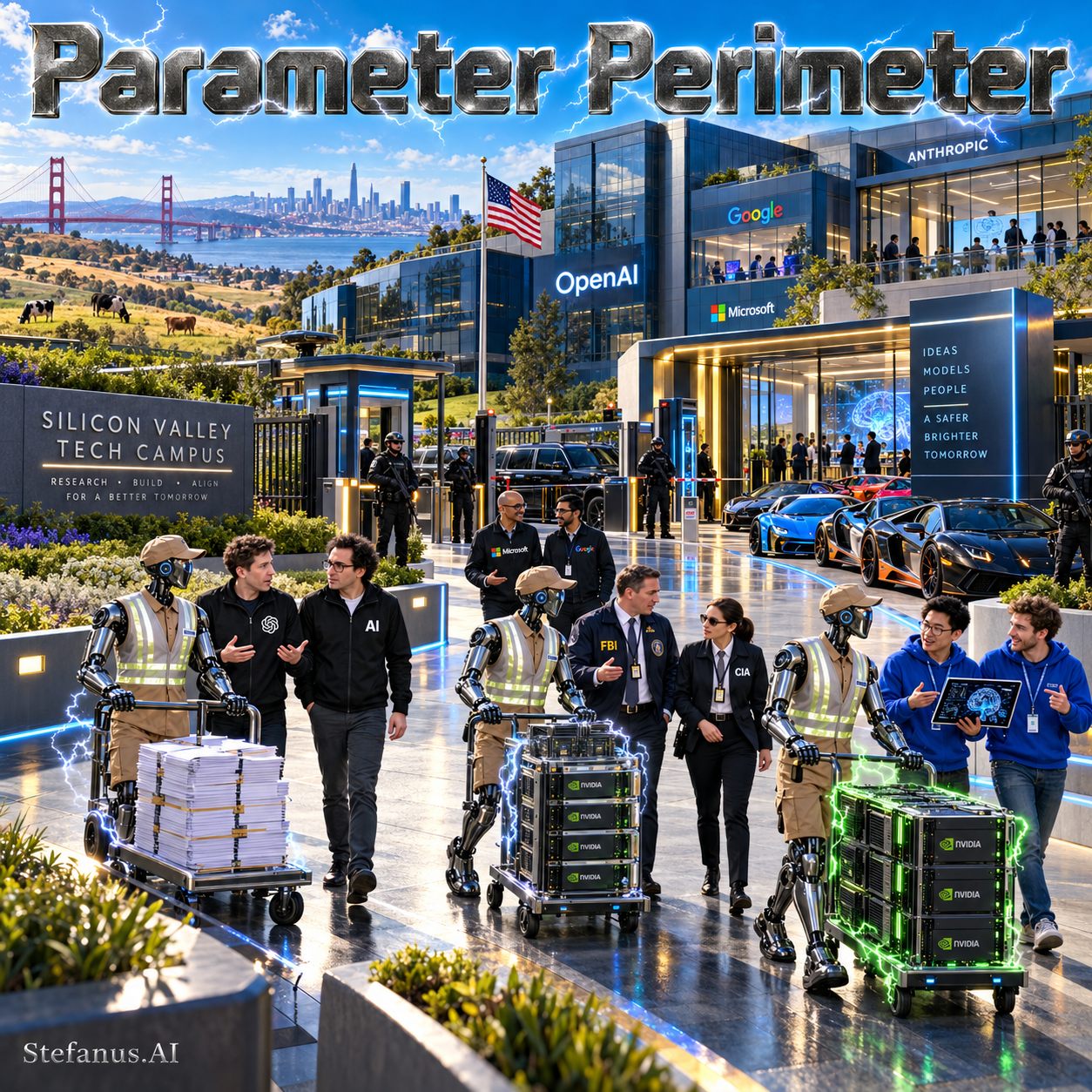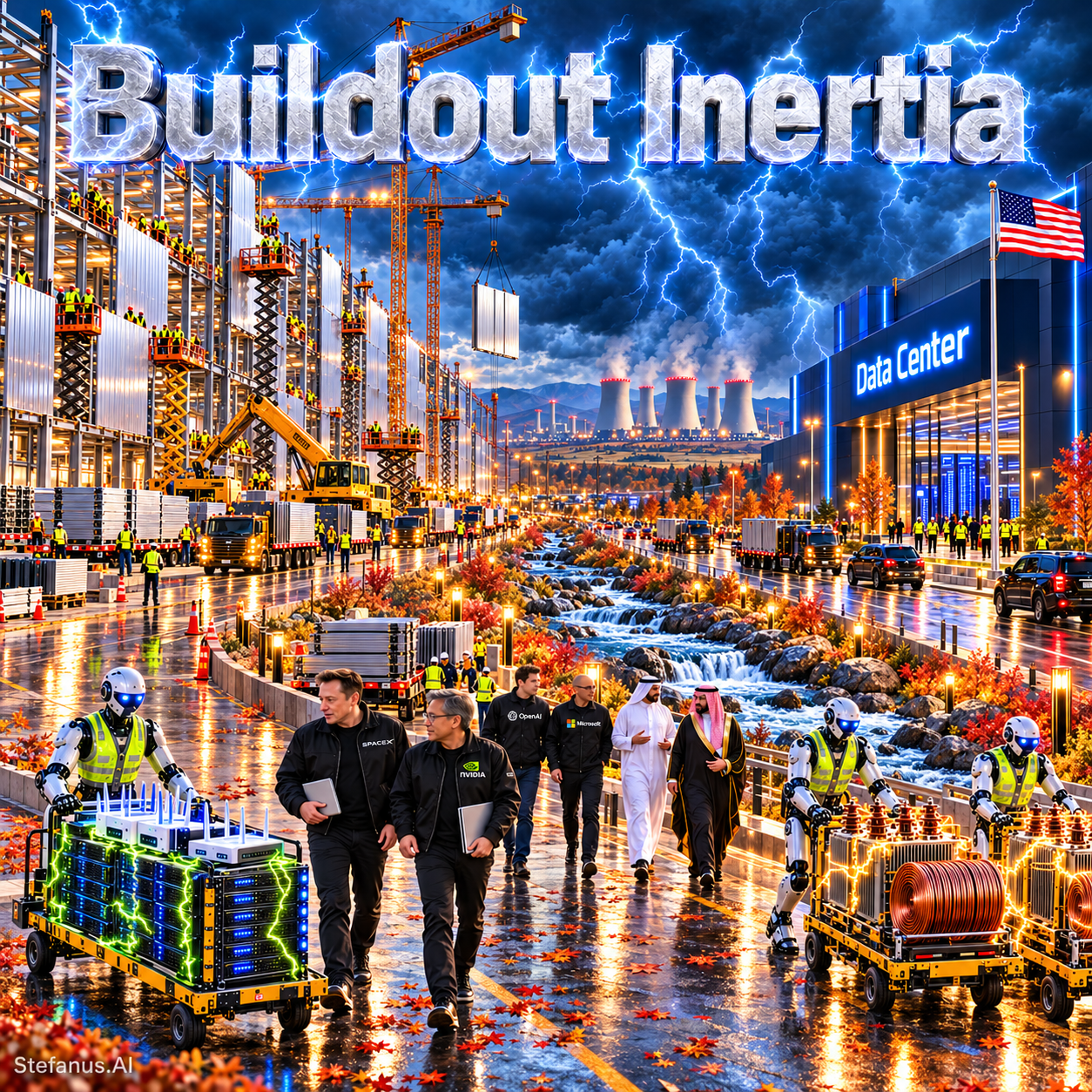

Artificial intelligence has entered a phase where its defining limits are no longer found in algorithms, but in the physical systems that sustain it—energy, infrastructure, and the geopolitical conditions that shape where computation can exist.
The rapid scaling of AI systems has created an unprecedented demand for computational power, resulting in the proliferation of hyperscale data centers that consume enormous quantities of electricity while simultaneously becoming embedded within national infrastructure systems that are increasingly exposed to geopolitical instability, cyber threats, and even kinetic conflict, thereby transforming what was once a background utility into a critical vulnerability¹.
This structural pressure introduces a deeper and more consequential question that extends beyond algorithmic improvement or model capability: where should intelligence physically reside to remain scalable, resilient, and strategically secure in an increasingly contested world?
A signal of this shift is already emerging from the private sector. On February 8, 2026, Elon Musk announced that SpaceX would redirect its near-term focus toward building a “self-growing city” on the Moon, rather than prioritizing an immediate Mars colony—an acknowledgment that proximity, feasibility, and infrastructure timelines matter more than distant ambition in the current technological cycle.
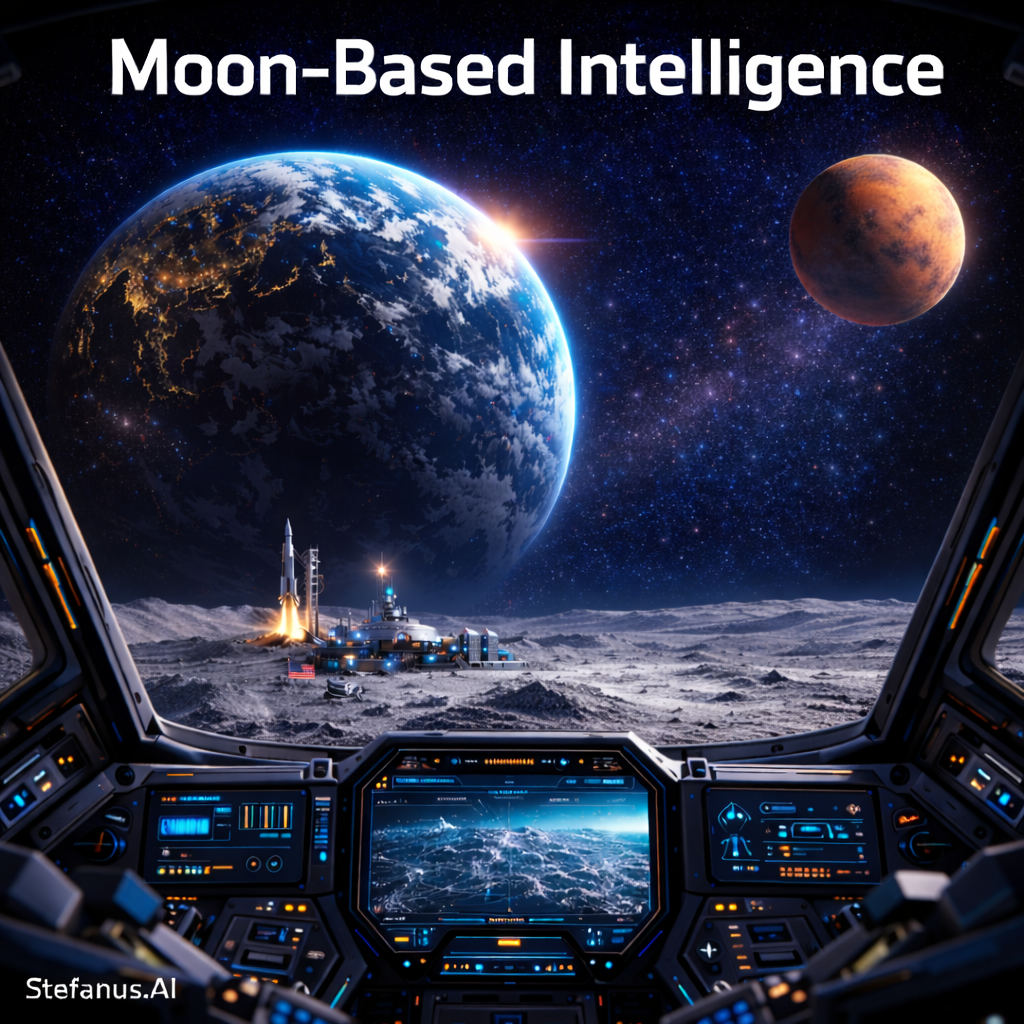
It is within this context that this paper introduces the concept of Moon-Based Intelligence.

The term Moon-Based Intelligence is used deliberately to describe a structural shift in how intelligence is produced, stored, and governed—moving away from terrestrial dependence toward a new layer of infrastructure located on the Moon, where computation, energy generation, and data sovereignty can exist outside the constraints of Earth’s political boundaries, physical vulnerabilities, and resource limitations.
Unlike traditional notions of space exploration, which focus on human presence or scientific discovery, Moon-Based Intelligence reframes the Moon as an operational extension of the global intelligence system, where artificial intelligence is no longer tied to Earth as its primary substrate, but instead becomes distributed across planetary boundaries.
Rather than continuing to expand within terrestrial constraints—where energy grids are finite, land is contested, and infrastructure is exposed—attention is now shifting outward toward space, and more specifically toward the Moon, which presents a unique combination of proximity, resource availability, and geopolitical ambiguity that makes it the most viable near-term platform for infrastructure deployment.
While Mars has long captured the imagination of visionaries, the Moon represents something fundamentally different: not a distant ambition requiring decades of technological breakthroughs, but a near-term execution layer capable of supporting infrastructure deployment within years, aligning far more closely with the rapid evolution cycles of artificial intelligence systems.
As Erik Brynjolfsson of Stanford University observes:
“The real bottleneck for AI is not ideas—it’s compute, data, and energy.”²
Similarly, Andrew Ng has articulated a framing that has become increasingly relevant:
“AI is the new electricity.”³
As Fei-Fei Li further emphasizes:
“AI is not just about algorithms—it is about the entire ecosystem of data, compute, and infrastructure.”⁴
And as Daron Acemoglu reminds us:
“Institutions and control over resources—not just technology—determine long-term power.”⁵
Moon-Based Intelligence, therefore, is not simply a technological concept.
It is a strategic framework.
It represents the recognition that the future of artificial intelligence will not be determined solely by advances in models or software, but by the physical infrastructure that enables intelligence to exist—and that this infrastructure is beginning to extend beyond Earth.

I. The Moon as the First Layer of Off-Earth Infrastructure
The Moon is no longer merely a destination defined by historical achievement, such as the Apollo 11 Moon Landing, but is instead undergoing a transformation into a strategic extension of Earth’s infrastructure layer, where computation, energy generation, and data storage may coexist outside the constraints of terrestrial systems.
Programs led by NASA under the Artemis initiative are explicitly designed not for episodic exploration, but for the establishment of sustained human and technological presence, including surface operations, resource utilization, and long-term habitation⁶.
At the same time, DARPA has initiated the LunA-10 program, which brings together commercial and defense stakeholders to design a functioning lunar economic ecosystem within a ten-year horizon, signaling a convergence between public policy, private capital, and strategic infrastructure planning⁷.
This convergence reflects a broader structural transition in which space is no longer peripheral to economic systems, but is instead becoming an integral extension of them, much as digital networks expanded from communication tools into the backbone of global commerce.
Research associated with University of Oxford reinforces this historical pattern:
“Infrastructure has historically been the primary determinant of economic and geopolitical power.”⁸
II. Legal Ambiguity and the First-Mover Advantage
The legal architecture governing outer space, anchored in the Outer Space Treaty, establishes that no nation may claim sovereignty over the Moon; however, this framework was designed in an era that did not anticipate the emergence of private space actors, commercial infrastructure, or artificial intelligence as a strategic driver of global power.
In practice, modern agreements such as the Artemis Accords have introduced operational constructs—most notably the concept of “safety zones”—that allow entities to establish functional control over specific regions for purposes such as resource extraction, infrastructure deployment, and operational security, without formally asserting territorial ownership⁹.
This creates a system in which control emerges through presence, usage, and infrastructure deployment, rather than through formal legal claims, thereby enabling early actors to establish durable advantages that may persist even in the absence of explicit sovereignty.
Legal scholars at Harvard University emphasize:
“First movers in space may establish enduring advantages through use and occupation rather than formal claims.”¹⁰
This dynamic reflects a broader principle observed across economic history: infrastructure, once established, tends to create path dependency, locking in advantages that are difficult for later entrants to overcome.
As Daron Acemoglu notes:
“Institutions and control over resources—not just technology—determine long-term power.”⁵
The Moon, therefore, is not a neutral frontier; it is an emerging domain in which early infrastructure decisions will shape the future distribution of power.

III. The Rise of Moon-Based Data Centers
The concept of Moon-based data centers represents a natural extension of the increasing physical demands of artificial intelligence systems, which require not only advanced algorithms and large datasets, but also vast computational resources that are continuously available, energy-intensive, and increasingly difficult to sustain within terrestrial environments.
Early-stage experiments and commercial initiatives are already demonstrating the feasibility of storing and transmitting data from lunar orbit, with future aimed at establishing permanent infrastructure capable of supporting large-scale computation¹¹.
The strategic rationale for such systems is rooted in several interrelated factors.
First, relocating data infrastructure beyond Earth reduces exposure to terrestrial risks, including geopolitical conflict, cyberattacks, and environmental disruptions, thereby enhancing resilience and continuity.
Second, the lunar environment provides access to abundant solar energy, particularly in polar regions where sunlight is nearly continuous, as well as thermal conditions that may improve cooling efficiency for computational systems.
Third, physical separation introduces a new dimension of security, as infrastructure located on the Moon is inherently more difficult to access, disrupt, or compromise.
As reported by the Financial Times:
“The race to dominate space infrastructure is intensifying among global powers.”¹²
Similarly, The Economist observes:
“Compute and data capacity are becoming the defining assets of modern economies.”¹³
These developments suggest that the future of artificial intelligence will not be determined solely by advancements in algorithms, but by the infrastructure that supports them.
IV. The Most Valuable Real Estate on the Moon
The Moon, while often perceived as a uniform and barren landscape, is in fact characterized by significant geographical variation, with certain regions offering disproportionately higher strategic value due to their physical and environmental properties.
The lunar south pole, for instance, contains water ice deposits that can be converted into hydrogen and oxygen, enabling both fuel production and life-support systems, while also benefiting from near-continuous sunlight that supports stable energy generation.
The “Peaks of Eternal Light,” elevated regions with persistent solar exposure, are particularly well-suited for energy-intensive infrastructure such as AI data centers.
The far side of the Moon, shielded from Earth’s electromagnetic interference, provides an environment uniquely suited for secure communications, sensitive computational workloads, and potentially military applications.
Research from MIT highlights:
“Energy availability and environmental stability will determine where sustained infrastructure can exist.”¹⁴
In this context, lunar geography becomes a determinant of economic and strategic value, shaping not only where infrastructure is built, but who is able to build it.

V. Moon — Advantages
The Moon presents a convergence of conditions that uniquely position it as the most viable near-term platform for extending intelligence infrastructure beyond Earth, particularly when evaluated against the constraints of terrestrial systems and the requirements of artificial intelligence.
1. Proximity Enables Continuous Innovation and Iteration
At approximately two to three days from Earth, the Moon enables rapid logistical cycles that support continuous deployment, maintenance, and upgrading of infrastructure, aligning with the accelerated pace of AI development.
2. Energy as the Fundamental Constraint—and Opportunity
Energy has emerged as the defining constraint of artificial intelligence.
As Sam Altman has noted:
“The cost of intelligence is dominated by the cost of energy.”¹⁵
Stanford research reinforces:
“AI progress is increasingly limited by physical infrastructure constraints.”¹⁶
3. Resilience Through Isolation
Lunar systems are insulated from terrestrial risks.
4. Sovereignty Beyond Borders
Enables new governance frameworks.
5. First-Mover Advantage
Oxford economists emphasize:
“Control over infrastructure compounds into long-term advantage.”¹⁷
6. Alignment with AI Workloads
AI workloads align with lunar latency conditions.
VI. Moon — Disadvantages
Despite its advantages, the Moon introduces structural challenges that must be addressed in order to realize its potential as a platform for intelligence infrastructure, and these challenges are not merely technical, but also economic, legal, and geopolitical in nature.
1. Extreme Environmental Conditions
The lunar environment is characterized by high levels of radiation, extreme temperature fluctuations ranging from approximately -173°C during the lunar night to over 120°C during the day, and pervasive fine dust that can interfere with mechanical systems, degrade materials, and complicate long-term operations, thereby requiring the development of entirely new classes of hardware, shielding technologies, and maintenance strategies.
2. High Capital Intensity and Long Investment Horizons
The cost of establishing lunar infrastructure remains extraordinarily high, encompassing launch costs, construction, energy systems, communication networks, and ongoing maintenance, all of which must be sustained over long time horizons that may exceed traditional investment cycles, thereby requiring new financing models and sustained collaboration between governments and private actors.
3. Legal and Governance Uncertainty
The absence of clearly defined and enforceable property rights introduces ambiguity into questions of ownership, resource utilization, and operational boundaries, creating the potential for disputes between nations, corporations, and other actors, particularly as competition for high-value regions intensifies.
4. Communication Latency Constraints
Although significantly lower than that associated with Mars, the latency between Earth and the Moon—approximately 1 to 2 seconds—still imposes limitations on certain applications, particularly those requiring real-time responsiveness or tightly coupled coordination.
5. Absence of an Existing Industrial Ecosystem
Unlike Earth, where supply chains, manufacturing systems, and maintenance networks are well established, the Moon requires the creation of an entirely new industrial ecosystem from the ground up, including in-situ resource utilization, autonomous construction, and self-sustaining operational capabilities.
6. Risk of Militarization and Strategic Competition
As the strategic importance of the Moon increases, so too does the likelihood that it will become a domain of military competition, with nations seeking to establish surveillance systems, defensive capabilities, and strategic positioning.
The RAND Corporation warns:
“Space is emerging as a contested domain with increasing strategic competition.”¹⁸
This raises the possibility that the Moon, rather than serving solely as a platform for cooperation and innovation, may become an extension of terrestrial geopolitical rivalries.

VII. Mars vs Moon: Strategic Reality
Mars has long been viewed as the ultimate destination for human expansion beyond Earth, offering the possibility of a self-sustaining civilization and a new frontier for exploration; however, when evaluated in the context of artificial intelligence infrastructure, Mars presents a set of structural limitations that significantly reduce its near-term viability.
A. Mars — Advantages
Mars offers several long-term advantages, including a more Earth-like day cycle, the presence of an atmosphere—albeit thin—and a diverse set of natural resources that could support industrial activity and human habitation over extended periods.
B. Mars — Disadvantages
However, these advantages are offset by substantial constraints.
Travel to Mars requires six to nine months, introducing significant logistical challenges and limiting the frequency of missions, while communication latency ranging from 4 to 24 minutes makes real-time coordination effectively impossible.
As analysis associated with Yale University suggests:
“Distance imposes fundamental limits on coordination, governance, and system control.”¹⁹
In addition, the cost of establishing infrastructure on Mars is orders of magnitude higher than that required for the Moon, while the slow iteration cycles associated with long travel times and limited communication further constrain innovation.
For artificial intelligence systems, which evolve on timelines measured in months, these constraints render Mars largely incompatible with near-term infrastructure deployment.
VIII. The New Space Race Is About Intelligence
The emerging space race is no longer defined primarily by exploration or symbolic achievement, but by the strategic imperative to control the infrastructure that underpins artificial intelligence and digital systems.
Global institutions increasingly recognize this shift.
The International Monetary Fund states:
“Technological infrastructure is central to economic and geopolitical power.”²⁰
The World Bank adds:
“Digital resilience is now essential to national stability.”²¹
Stanford HAI research further reinforces:
“AI systems are inseparable from the infrastructure that sustains them.”²²
In this context, the Moon emerges not as a peripheral domain, but as a central arena in which the future of intelligence infrastructure will be determined.
Conclusion: Moon-Based Intelligence as the Next Layer of Power
Moon-Based Intelligence represents a fundamental transition in the architecture of intelligence, moving from a system that is entirely dependent on Earth to one that is distributed across multiple layers, each optimized for specific functions, risks, and opportunities.
This transition is not merely technological; it is structural, economic, and geopolitical, reshaping the way in which power is defined and exercised in the 21st century.
As Fei-Fei Li emphasizes:
“The future of AI depends on the systems we build around it.”²³
Those systems are no longer confined to Earth.
Oxford perspective reinforces:
“The next phase of economic power will be defined by control over infrastructure.”²⁴
The first actors to establish persistent infrastructure on the Moon will not simply gain a technological advantage; they will define the standards, governance models, and economic structures that shape the production and distribution of intelligence for decades to come.
In this sense, the race to the Moon is not about exploration.
It is about who builds the first layer of intelligence infrastructure beyond Earth—and who controls it.

Footnotes and Sources
- https://www.wsj.com/articles/ai-data-centers-energy-demand-11673656001
- https://hai.stanford.edu/news/ai-and-economy
- https://www.coursera.org/articles/andrew-ng-machine-learning
- https://hai.stanford.edu/news/fei-fei-li-human-centered-ai
- https://economics.mit.edu/faculty/acemoglu
- https://www.nasa.gov/artemis-program-overview
- https://www.space.com/darpa-10-year-lunar-economy-study
- https://www.ox.ac.uk/research/infrastructure-economics
- https://www.nasa.gov/artemis-accords
- https://harvardilj.org/2020/04/space-law-and-resource-extraction
- https://www.informationweek.com/cloud/lunar-data-centers-loom-on-the-near-horizon
- https://www.ft.com/content/space-economy-ai-infrastructure
- https://www.economist.com/technology-quarterly/ai-infrastructure
- https://www.ll.mit.edu/r-d/projects/lunar-infrastructure
- https://openai.com/blog/energy-and-ai
- https://hai.stanford.edu/research/ai-infrastructure
- https://www.ox.ac.uk/economics/infrastructure-power
- https://www.rand.org/research/space-security.html
- https://law.yale.edu/space-law-governance-analysis
- https://www.imf.org/en/Publications/fandd/issues/2024/03/ai-global-economy
- https://www.worldbank.org/en/topic/digitaldevelopment/overview
- https://hai.stanford.edu/news/ai-systems-infrastructure
- https://hai.stanford.edu/news/future-ai-systems
- https://www.ox.ac.uk/research/infrastructure-power-global