
Category: Funding
Funding, venture capital, and joint venture
-

Governor Capitalism: America’s AI Future is Increasingly Being Shaped by Governors, While Washington’s Federal Involvement Advances Cautiously
Introduction: From Garage Dormitories to Gigawatt Corridors — and the Trillion-Dollar Threshold Not all fifty states in the United States enjoyed the early advantages of high-technology development during the nascent years of the Internet and dotcom boom in the 1990s. While that revolution took root, I was a graduate student at the University of Southern California, working toward my doctorate degree and immersing myself in a rich body of literature about what scholars at the time were calling “clusters” — dense geographic concentrations of interconnected companies, suppliers, research institutions, and universities that together generated a…
-

Star-Studded AI: When Hollywood’s A-List Becomes the Distribution Layer for Artificial Intelligence
Introduction: Why “Star-Studded AI”? Artificial intelligence has spent the past several years moving through predictable institutional corridors. First came the researchers, who debated architectures, scaling laws, transformer efficiencies, alignment frameworks, and compute bottlenecks. Then came the hyperscalers — Microsoft, Google, Amazon, Meta — who transformed AI from laboratory theory into industrial infrastructure by committing tens of billions of dollars to chips, datacenters, networking equipment, and energy procurement. Then came regulators, unions, economists, and policy analysts, each attempting to define the legal and social boundaries of systems whose capabilities appeared to advance faster than governance mechanisms…
-

New Cloud: When Compute Became the New Oil — The Rise of Specialized GPU Infrastructure and the Dawn of the AI Economy
Introduction On May 8, 2026, the hosts of the All-In Podcast explored a concept they informally called “Elon Web Services” (EWS) — a hypothetical infrastructure paradigm arising from Elon Musk’s vertically integrated ecosystem of compute, energy, and space assets. The conversation captured, with unusual precision, a structural transformation that has been quietly unfolding across the global technology sector: the realization that artificial intelligence infrastructure is no longer a backend utility, but the defining layer of economic power, geopolitical leverage, and competitive advantage in the twenty-first century. That same week, on May 6, 2026, the hypothesis…
-
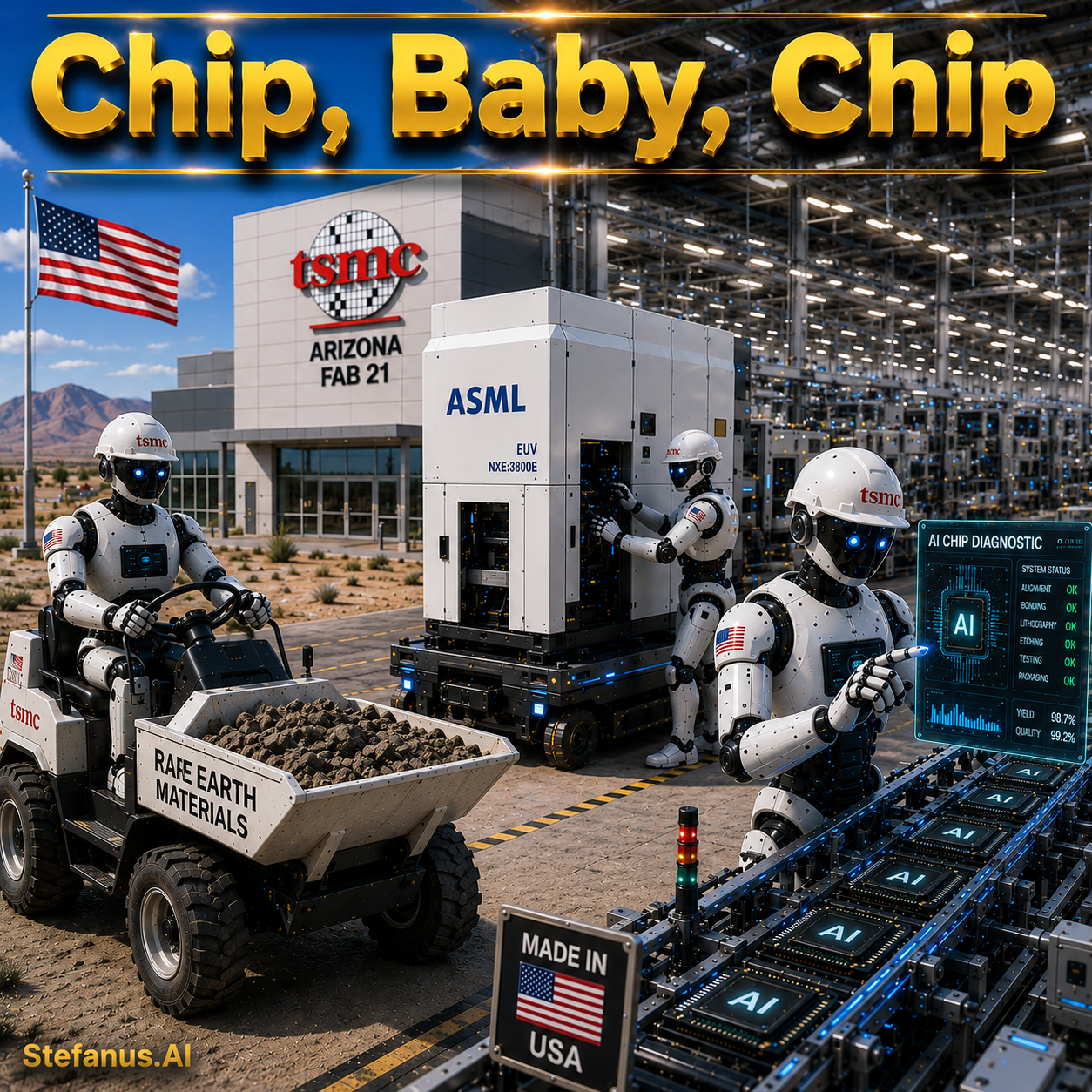
Chip, Baby, Chip: The Relentless Race to Reindustrialize AI Semiconductor Power in the United States
Introduction: From “Drill, Baby, Drill” to “Chip, Baby, Chip” Every industrial age eventually produces its own slogan. The oil age produced the language of extraction, the factory age produced the language of production, the internet age produced the language of scale, and the artificial intelligence age is now producing the language of compute. In the 2024 United States presidential campaign cycle, one of the most recognizable political slogans to return to public life was the old energy phrase “drill, baby, drill,” a phrase built around the idea that national power could be expanded by accelerating…
-
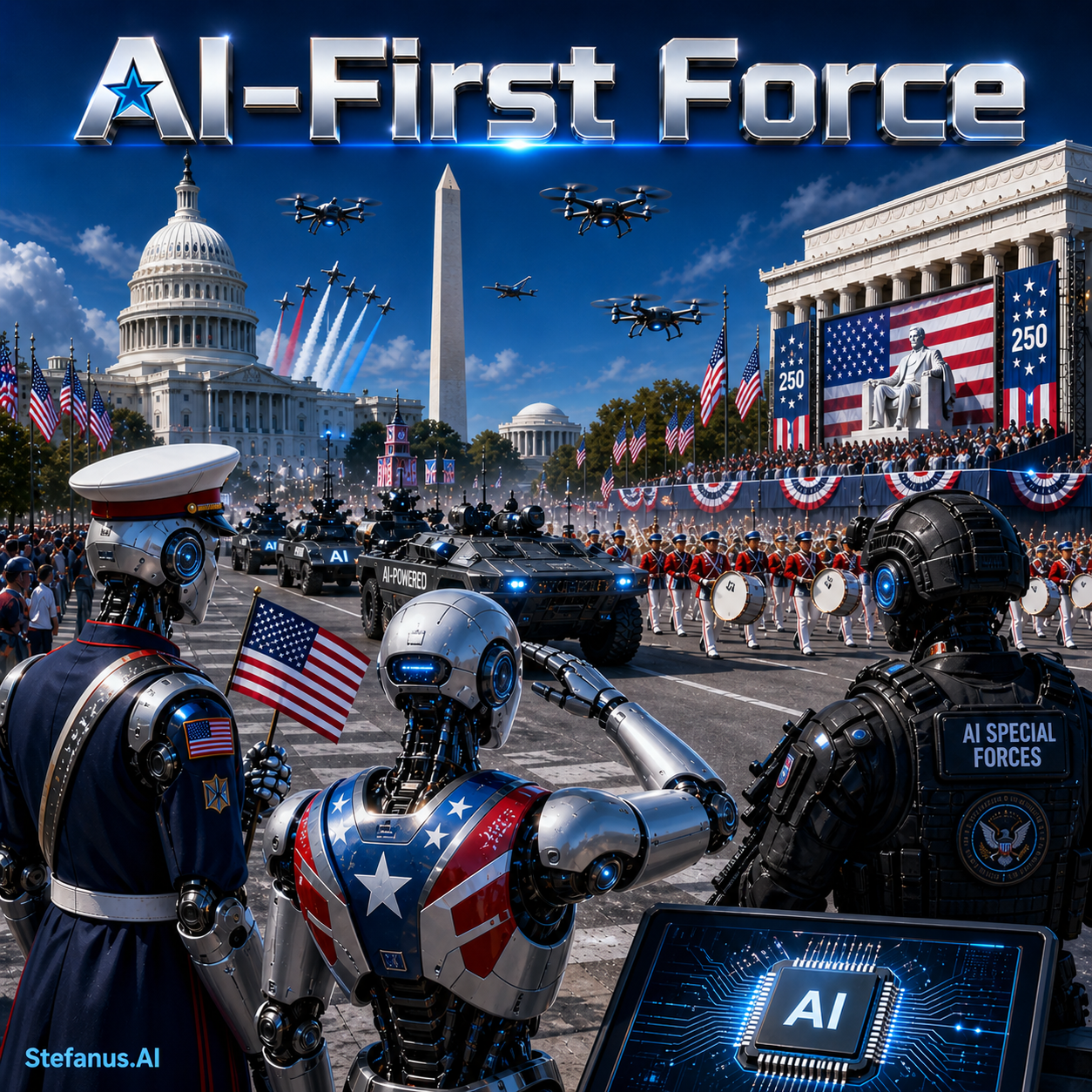
AI-First Force: From Space Force to Decision Force — How Artificial Intelligence Is Removing Bureaucratic Bottlenecks and Accelerating the Integration of AI into U.S. Military Power
Not until 2019 did the United States create a new branch of the armed forces. The United States Space Force was established on December 20, 2019,¹ becoming the first new branch of the armed services since the National Security Act of 1947. That founding moment was not simply an administrative reorganization. It was an institutional declaration that warfare had evolved in a direction that existing structures could no longer contain. Space — once a passive environment above the battlefield — had become a contested military domain in its own right. “The U.S. Space Force was…
-

Intelligence Dominance: How U.S. Hyperscale Tech Firms Are Rewiring National Security Through Classified AI Systems — Reshaping Warfighting, Decision-Making, and the Escalation Dynamics of U.S.–China Geopolitics
For most of modern history, the strength of a nation’s military was measured in firepower, troop size, and industrial capacity. Victory depended on logistics, weapons manufacturing, and the ability to sustain prolonged conflict. The twentieth century—from World War II through the Cold War—cemented this paradigm, where dominance was defined by nuclear arsenals, air superiority, and mechanized warfare. But in the early decades of the twenty-first century, a profound transformation is underway. War is no longer decided solely by physical force—it is increasingly determined by the speed, accuracy, and scale of intelligence. Artificial intelligence has begun…
-
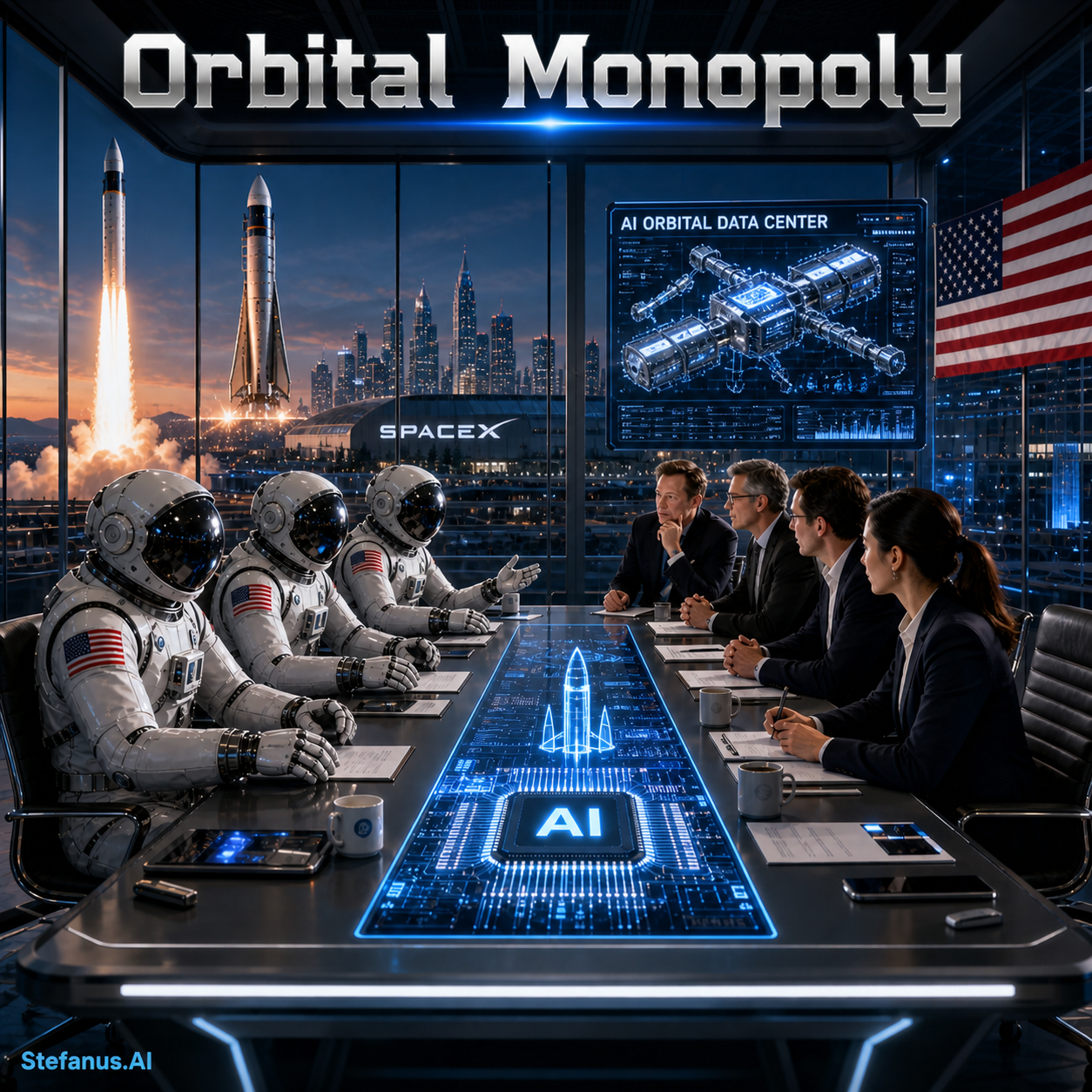
Orbital Monopoly: First-Mover Advantage, Space-Based Intelligence, and the Race to Control AI Beyond Earth
When I was attending graduate school at the University of Southern California in Los Angeles, one of the most durable business lessons I encountered was the theory of First-Mover Advantage. The idea was simple enough for every business student to remember, but deep enough to shape how companies, investors, and governments think about strategic timing: the first serious entrant into a new market can define the category, capture scarce resources, build customer loyalty, and create barriers that make later competition more expensive. In its simplest form, First-Mover Advantage means that the first company to occupy…
-

Agentic Capitalism: The Race to a Trillion-Line Economy of Autonomous Actors
Consider a simple, everyday interaction with CVS Pharmacy. You receive a notification that your prescription has been filled, accompanied by options to pick it up in-store, pay online, or request delivery within a defined time window. Beneath this seemingly routine experience lies a coordinated system that verifies insurance eligibility, manages inventory, processes transactions, and schedules fulfillment across multiple operational layers. This is a basic form of delegation, where software systems execute predefined tasks on behalf of a user within structured constraints. Now extend this model beyond rule-based automation into a system capable of reasoning, adaptation,…
-
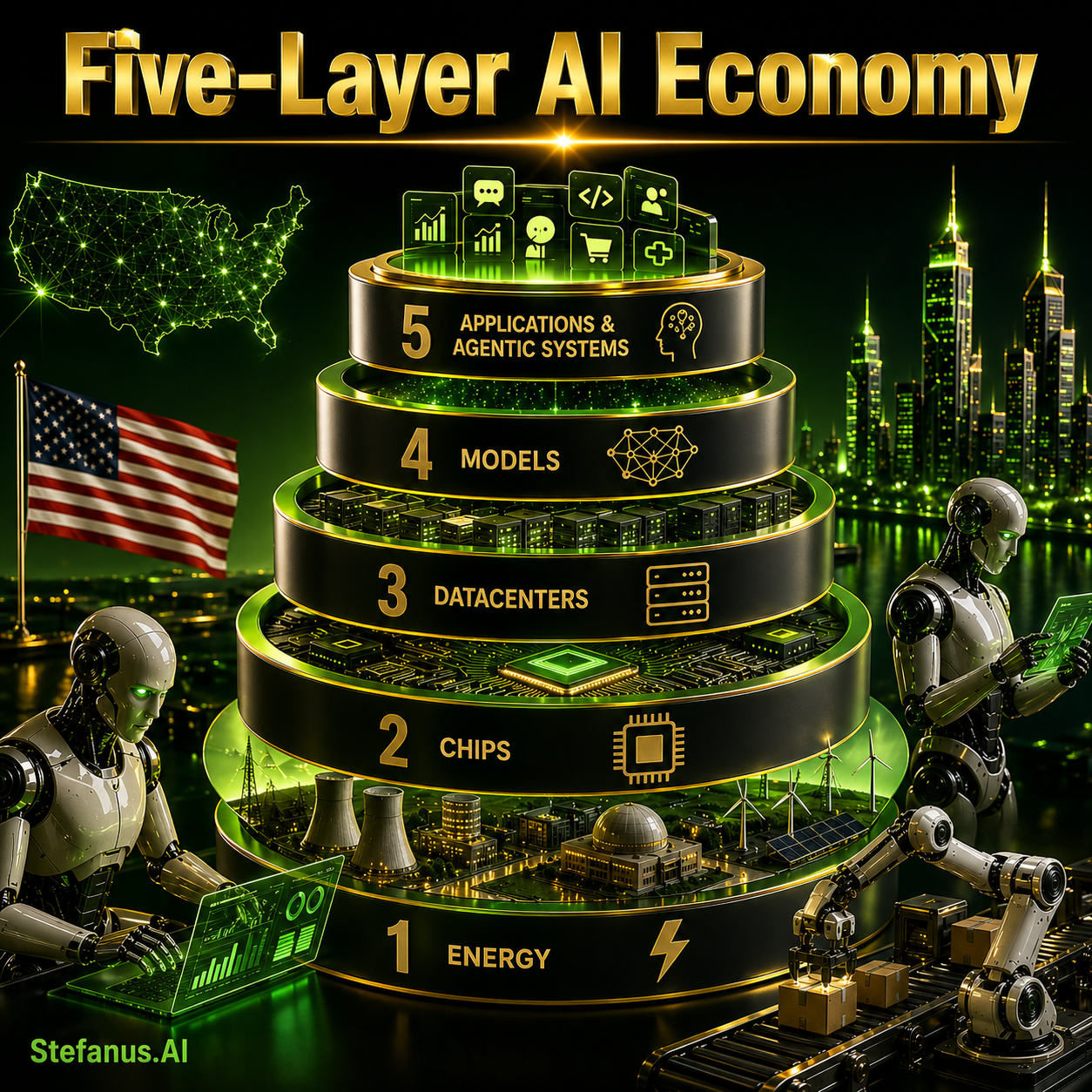
Five-Layer AI Economy: What Is It? Who Are the Key Players? — Mapping Power, Influence, and Value Across the Full Stack of Intelligence
On April 16, 2026, at Stanford Graduate School of Business, Jensen Huang described artificial intelligence as a “five-layer cake”—a conceptual model spanning energy, chips, datacenters, models, and applications. This same framing appeared earlier at the World Economic Forum Annual Meeting, where the idea of AI as infrastructure—not software—was repeatedly emphasized. “AI is not just software. It is infrastructure.”¹ This paper takes that conceptual statement and expands it into a fully articulated economic framework: the Five-Layer AI Economy. This is not a metaphor. It is a structural model. Artificial intelligence today is not a single market,…
-

Tera Corridor: Building America’s Compute Sovereignty in Texas’ Trillion-Dollar AI Capital Wars, One Terafab at a Time
While outlining this paper, I was reminded of my time in graduate school at University of Southern California in Los Angeles, where one of the foundational readings centered on classical economic theory: the enduring principle that “location, location, location” defines industrial organization. From Alfred Weber’s early 20th-century work on industrial location to modern urban economics, firms have historically clustered around natural resources, labor pools, and transportation networks.¹ Cement plants formed near limestone deposits. Steel industries emerged beside coal and iron. Manufacturing followed railroads, ports, and waterways. Geography was destiny because production was bound to matter.…
-

TeraEconomics: From TeraWave to Terafabs—The Semiotics of Scale in the Trillionaire Age
For nearly two decades, the technology industry has been obsessed with a single archetype: the billionaire founder. Wealth was the metric, valuation the scoreboard, and scale the silent assumption. But by 2026, this narrative is collapsing under its own weight. The emergence of trillion-dollar firms such as Apple Inc., Microsoft, and NVIDIA has fundamentally altered the ceiling of ambition. A billion is no longer aspirational—it is baseline. What replaces it is not merely a new number, but a new language. The word “TERA”—denoting one trillion—has begun to seep into naming conventions of next-generation infrastructure. This…
-
Terafab Economics: From Gigafactories to Terafactories—The Rise of Trillion-Dollar AI Manufacturing Zones
The frontier of industrial power is no longer defined by production capacity alone—it is defined by the scale at which computation can be manufactured, integrated, and deployed. What began as a revolution in software has evolved into a contest over physical infrastructure, energy systems, and fabrication dominance. This paper introduces a new term: Terafab Economics. Terafab Economics describes the emergence of trillion-dollar, vertically integrated AI manufacturing zones capable of producing computation at terawatt-scale energy and tera-level processing output, where fabrication, energy, and deployment converge into a single industrial system.¹ Over a decade ago, Elon Musk…
-
Distributed Leviathan: How AI is Redistributing Sovereignty from Governments to Networks, Corporations, and Infrastructure Systems
The structure of power is undergoing a transformation that is both subtle and profound. For centuries, political authority has been organized around the sovereign state—centralized, territorially bound, and ultimately responsible for governance. That model assumed governments controlled the systems that mattered most: communication, intelligence, infrastructure, defense, and economic coordination. That assumption no longer holds. This paper introduces the term Distributed Leviathan. The concept of Leviathan, drawn by Thomas Hobbes, describes a singular sovereign authority: one state, one center of control, one ultimate source of decision-making. In simple terms, it represents centralized power. But the AI…
-
Infrastructure Primacy: America Has the Capital, Land, and Talent—Where Infrastructure Is Built Determines Power
The center of technological competition is no longer defined solely by innovation, nor by the sophistication of algorithms or models. Instead, power is increasingly determined by something more physical, more capital-intensive, and more geographically constrained: infrastructure. The decisive question is no longer who invents, but who builds—and where those systems are built. This paper adopts the term Infrastructure Primacy to describe this shift. The phrase reflects a structural transformation in global power dynamics: the primacy of infrastructure over invention. In earlier eras, technological leadership could be achieved through intellectual breakthroughs alone. Today, breakthroughs must be…
-
Compute Mercantilism: AI Dominance, Strategic Infrastructure, and the New Economics of Power in a Post-Gold World
Global power has always been tied to what nations accumulate and control. In earlier eras, this meant land, gold, and industrial output. In the 20th century, it shifted toward oil and energy systems. In the 21st century, a new axis is emerging: compute capacity—the ability to generate intelligence at scale. This paper adopts the term compute mercantilism to describe this transformation. Classical mercantilism was defined by the accumulation of gold reserves and the pursuit of trade surpluses to strengthen national power. Today, a similar logic is reappearing—but instead of gold, nations are accumulating: The analogy…
-
Welcome to the Frontier of Gigawatt Infrastructure: AI Companies Are Becoming Energy Companies as Data Centers Build Their Own Power Systems
Artificial intelligence is entering a phase where its defining constraint is no longer intelligence—it is power. For more than a decade, the narrative around AI has focused on models, data, and compute. But beneath that layer lies a more fundamental reality: every unit of intelligence requires continuous electricity. As AI systems scale, they no longer behave like software—they behave like industrial systems, consuming energy at unprecedented levels. This paper defines the current moment as the era of Gigawatt Infrastructure. The term is chosen deliberately for three reasons: According to the International Energy Agency (IEA): “Global…
-
Orbital Resilience: Transmission Risk, Sovereignty Gaps, and the Fragility of Intelligence Beyond Earth
The center of technological competition is no longer confined to software—it is shifting toward the infrastructure that enables intelligence at scale. What matters now is not only how systems are designed, but where they operate. As computation expands beyond terrestrial data centers into satellites and orbital platforms, physical location becomes a strategic variable, transforming infrastructure itself into a primary source of power. Yet this shift introduces a new and largely underestimated domain of vulnerability. Orbital infrastructure is often framed as a solution to terrestrial risk—offering insulation from conflict, geographic redundancy, and truly global reach. But…
-

Moon-Based Intelligence: From Mars to the Moon and the Race to Build the First Layer of Intelligence Infrastructure Beyond Earth
Artificial intelligence has entered a phase where its defining limits are no longer found in algorithms, but in the physical systems that sustain it—energy, infrastructure, and the geopolitical conditions that shape where computation can exist. The rapid scaling of AI systems has created an unprecedented demand for computational power, resulting in the proliferation of hyperscale data centers that consume enormous quantities of electricity while simultaneously becoming embedded within national infrastructure systems that are increasingly exposed to geopolitical instability, cyber threats, and even kinetic conflict, thereby transforming what was once a background utility into a critical…
-
The Grid Is the New Constitution of AI Power: Energy Infrastructure, Nuclear Systems, and the Limits of Intelligence
For decades, digital power has been understood as a function of software, data, and networks. The dominant assumption was that intelligence scaled through code: better models, more data, faster chips. Infrastructure mattered, but it remained secondary—an enabling layer rather than a determining one. That assumption is no longer sufficient. Artificial intelligence has entered a phase in which computation is no longer abstract, but materially grounded in energy systems, industrial supply chains, and physical infrastructure. Training and operating advanced AI systems now require vast quantities of electricity, cooling, land, and capital, transforming intelligence into a form…
-

The Monopoly of Intelligence: How America Is Engineering the Future of AI Power
For most of modern history, global power has been defined by control over physical resources and financial systems—land, sea routes, energy, and currency. Empires rose by securing trade routes, industrial capacity, and monetary dominance, shaping the economic and political order of their time. In the early 21st century, however, a different kind of resource began to emerge as the foundation of power: intelligence itself—not human intelligence alone, but machine-generated intelligence produced at industrial scale. Artificial intelligence is no longer merely a technological innovation or a sector within the economy; it is becoming the infrastructure through…
-

PrintMobile: Precision Mobile Printing Reinvented with Advanced AI Technology for Wood, Brick, Banners, and More
In many neighborhoods, once a year someone knocks on your door offering to paint your house number on the street curb. The painter usually creates a white rectangle about one foot wide and half a foot tall, then paints your house number in black, about 6 inches high. The cost is usually around $25. The process is simple but manual: the painter arranges number stencils, aligns them carefully, and spray-paints the curb. This traditional method has worked for decades, but it has not changed much. It still depends on physical number blocks, manual alignment, and…
-
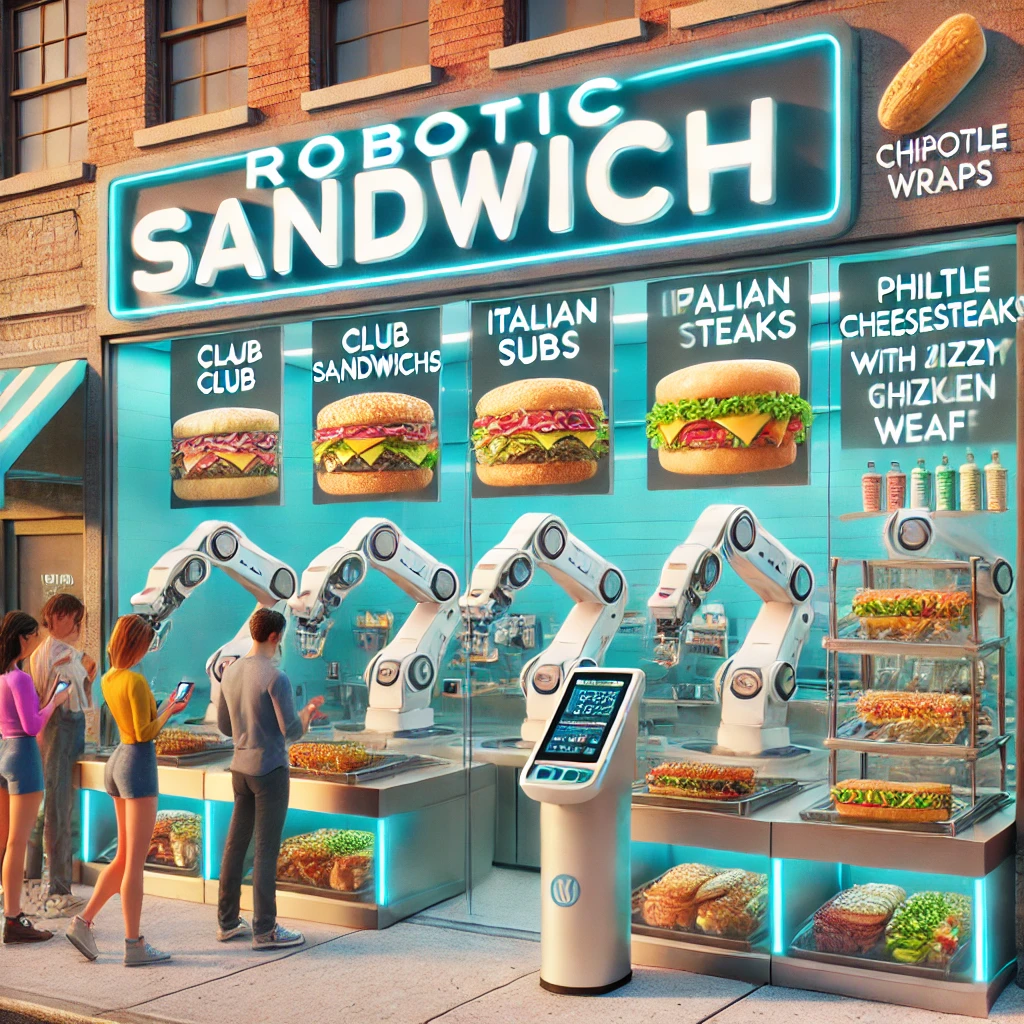
Robotic Sandwich: When AI Takes the Counter as Robots Craft Perfect Subs, Wraps, and Cheesesteaks On Demand—Fast, Fresh, and Customized Every Time
For decades, ordering a sandwich at places like Subway or Jersey Mike’s has been a familiar ritual. Customers step up to the counter, choose their bread, point to toppings, and watch a sandwich come together by hand. It’s a routine so ingrained in daily life that it feels timeless. Yet, beneath this simplicity, a quiet transformation is underway. Advances in artificial intelligence, robotics, and automation are reshaping even this everyday experience, opening the door to a new kind of sandwich shop. This vision is captured in the idea known as the Robotic Sandwich, a term…
-

SatMobile: An AI-Powered Hybrid Network Integrating Multi-Orbit Satellite Arrays with Earth-Based Mobile Infrastructure
Not every region on Earth has access to reliable cellular service. Terrain, mountains, and remote landscapes often block or weaken signals, leaving large areas without coverage. Travelers on cruise ships face similar challenges—cell service is typically unavailable unless they purchase expensive satellite connectivity packages. Even popular national parks, remote campsites, and outdoor adventure areas frequently fall into dead zones where mobile phones simply cannot connect. To address these gaps, SatMobile introduces a next-generation AI-driven network that merges hybrid satellite orbits with terrestrial cellular towers. Interestingly, the name SatMobile was envisioned long before this technology became…
-

RepairLive: The Future of On-Demand Robotic Repairs for Homes and Offices, From Computers to Coffee Machines, Fixed Instantly Online or On-Site
When something breaks at home—a water heater, washing machine, or office computer—the first step has always been the same: call a repairman and wait. Sometimes that wait lasts hours, other times days. In urgent cases, like a malfunctioning laptop or tablet needed for work, the delay can be devastating. Too often, frustrated owners simply give up, toss the broken device, and buy a replacement. But now, a groundbreaking solution has arrived. RepairLive introduces a new era of intelligent, robotic repair crews equipped with AI-driven sensors that know exactly how machines fail—and how to fix them.…
