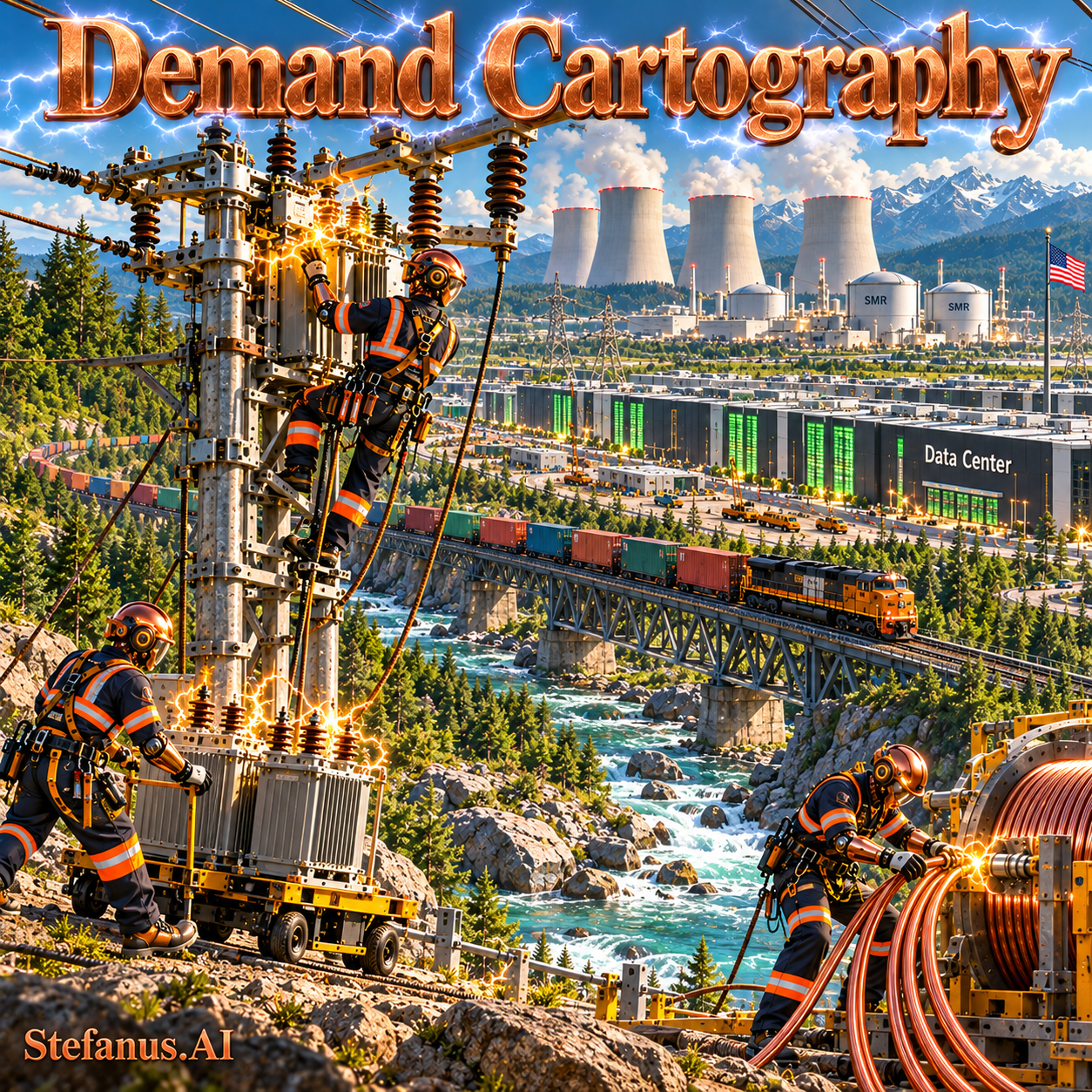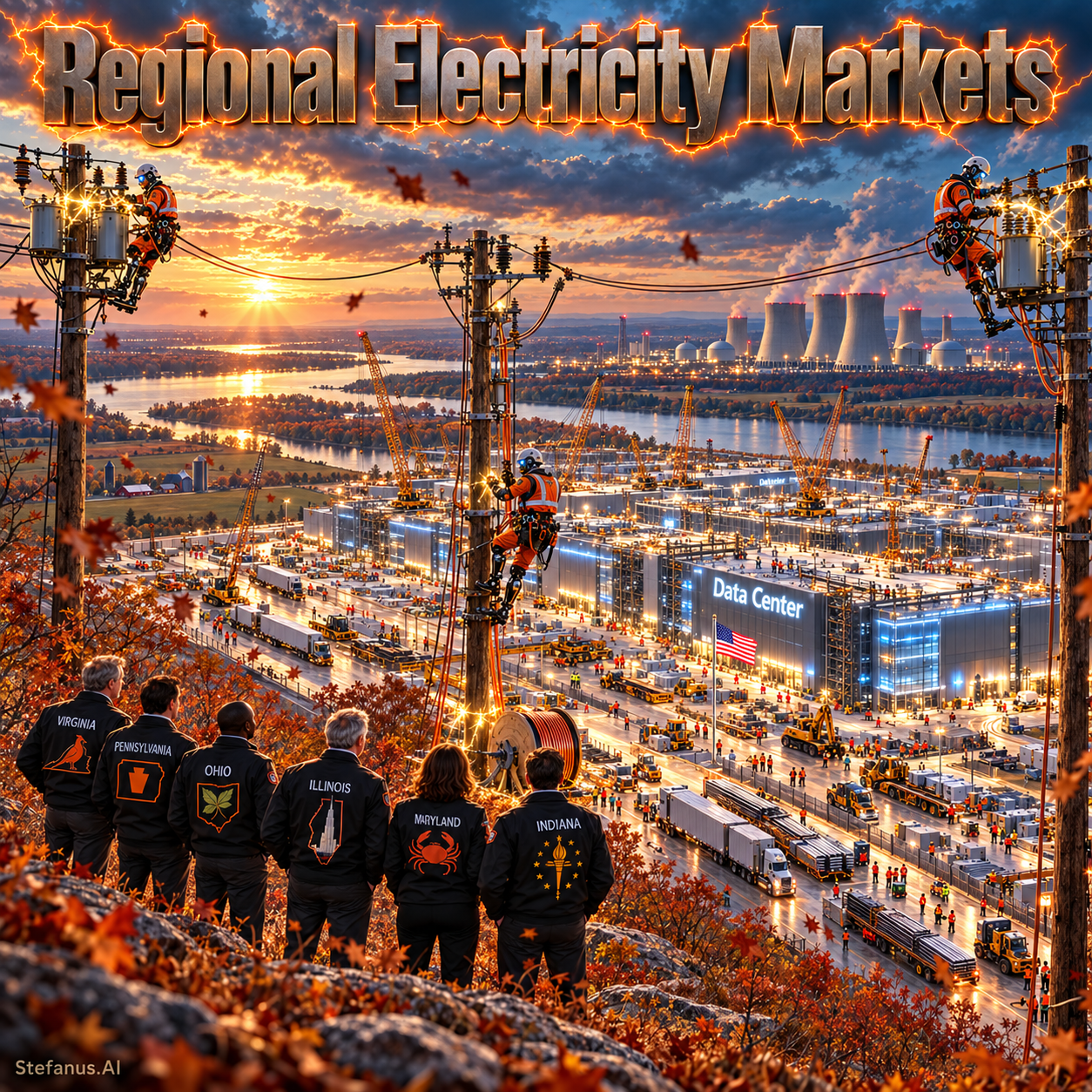


Introduction: From Natural Geography to Synthetic Geography
Before artificial intelligence, geography was organized around natural advantages. Saint Louis rose because the Mississippi River made trade, transport, settlement, and westward expansion not merely possible but historically inevitable. The river was the economic artery of the American interior, and every city that sat along it prospered precisely because geography — the shape of the land, the flow of the water, the contour of the valley — gave it a structural advantage that no amount of human capital or political ambition alone could replicate. Railroads later reorganized America again, connecting the East Coast to the West Coast and giving rise to new centers of industrial gravity. Los Angeles grew to become a global metropolis not because of any single natural feature, but because of the accumulation of infrastructure, population, cultural invention, entertainment, and aerospace that transformed a semi-arid basin into one of the great cities of the twentieth century.
Artificial intelligence changes this ancient logic. The new geography is not only about rivers, ports, railroads, highways, or airports. It is increasingly about substations and transmission corridors, about fiber routes buried beneath the earth, about GPU clusters assembled in vast warehouses in secondary American cities, about cooling water drawn from rivers and aquifers whose names most citizens do not know, about nuclear reactors being restarted after years of dormancy, and about the political permission structures that determine whether any of this physical infrastructure can be approved, financed, built, and operated at scale. Geography is no longer solely inherited from nature. It is now engineered by computation.
This is what I call Synthetic Geography.
Synthetic Geography is the artificial reconstruction of economic geography around the physical needs of intelligence. AI appears digital. Its products are software — language models, image generators, autonomous agents, reasoning systems. But its foundations are as deeply physical as any railroad or steel mill that ever defined a regional economy. AI requires energy in quantities that strain regional power grids. It requires chips fabricated at atomic scale in facilities costing tens of billions of dollars. It requires land — hundreds, then thousands, then tens of thousands of acres — for the campuses, cooling systems, and transmission infrastructure that the AI economy demands. It requires water, cooling, transformers, fiber, capital, permitting, and political coordination at every level of government. In the AI era, the most important places are not necessarily the most beautiful, the most populated, or the most culturally famous. They are the places where intelligence can be powered, cooled, connected, financed, and governed.
The International Energy Agency documented that global data center electricity consumption reached approximately 415 terawatt-hours in 2024, representing roughly 1.5 percent of world electricity use. [1] That figure grew 17 percent in 2025 alone, and AI-focused data centers grew even faster — surging 50 percent in a single year. [2] By 2026, the energy consumption of data centers is projected to approach 1,050 TWh annually, which, if data centers were a country, would make them the fifth largest energy consumer on earth, falling between Japan and Russia. [3] The pipeline of SMR nuclear projects conditionally committed to data center power has grown from 25 gigawatts at the end of 2024 to 45 gigawatts by mid-2026. [2] These are not software metrics. These are the metrics of industrial civilization.
Stanford University’s 2026 AI Index documented that the United States now hosts 5,427 data centers — more than ten times any other country. [4] Harvard economist Jason Furman calculated that AI infrastructure investment accounted for 92 percent of all U.S. GDP growth in the first half of 2025. [5] The capital expenditure of just four hyperscalers — Microsoft, Alphabet, Amazon, and Meta — is now tracking $725 billion for 2026, up 77 percent from the previous year’s record of $410 billion. [6] At the World Economic Forum Annual Meeting in Davos in January 2026, Jensen Huang, founder and CEO of Nvidia, put the matter directly:
“AI is infrastructure. Every country should treat AI like electricity or roads. You should have AI as part of your infrastructure.” — Jensen Huang, Founder and CEO of NVIDIA, World Economic Forum, Davos, 2026 [7]
The central argument of this paper is simple, though its implications reach into every corner of economic policy, regional development, and national strategy: AI does not eliminate geography. AI creates a new geography. And that new geography — synthetic, engineered, deliberate — will determine which states, which regions, and which nations rise or fall in the century of intelligence.

Section 1: What Is Synthetic Geography?
Synthetic Geography is the new spatial order created when artificial intelligence begins to reorganize land, energy, capital, infrastructure, and political power around its own physical requirements. It is called synthetic not because it is false or artificial in any pejorative sense, but because it is constructed — deliberately, expensively, and at unprecedented scale — by the decisions of firms, governments, and engineers who are collectively choosing where to place the physical foundations of machine intelligence.
Traditional economic geography asked a set of questions rooted in nature and early industrialization: Where are the rivers? Where are the ports? Where are the railroad junctions? Where are the coal seams and iron ore deposits? Where are the workers, and how many of them are there? These questions shaped the industrial map of the nineteenth and twentieth centuries, determining the rise of Pittsburgh and Detroit, of Chicago and Houston, of London and Rotterdam.
Synthetic Geography asks a fundamentally different set of questions — questions that would have seemed entirely alien to any economic geographer of the nineteenth or even the twentieth century: Where is the electricity, and can it be delivered at gigawatt scale with reliability? Where are the substations capable of stepping down high-voltage transmission to the power densities required by modern GPU clusters? Where are the fiber routes with the bandwidth and latency characteristics that AI inference at scale demands? Where is the cooling water — rivers, aquifers, evaporative resources — that allows high-density compute to operate continuously without thermal failure? Where are the GPU clusters themselves, and who owns the land on which they sit? And perhaps most critically: where are the governors, the utility commissions, the state legislatures, and the local communities willing to grant the permits, approve the interconnections, and accept the transformations that the AI economy demands?
1.1 Geography Before AI
Geography before AI was shaped by the intersection of natural endowment and industrial infrastructure. The Mississippi River did not choose to flow through Saint Louis; it simply did, and Saint Louis grew because geography made it inevitable. The Appalachian coalfields did not choose to underlie Pennsylvania and West Virginia; they simply existed, and the steel economy of Pittsburgh emerged because the iron and the fuel were close enough to each other and to water transport to make heavy industry viable. Silicon Valley grew through a different logic — the proximity of Stanford University, the gravitational pull of venture capital, the legacy of defense research, the culture of risk-taking and founder mythology — but it was still geography in the sense that the specific physical and institutional characteristics of a particular place created conditions that could not easily be replicated elsewhere.
1.2 Geography After AI: The Five-Layer AI Economy
Geography after AI is shaped by what I call the Five-Layer AI Economy. Each layer has its own geography, its own set of physical requirements, and its own map of winners and losers. The five layers are:
Layer One: Energy: The base layer. Without electricity at gigawatt scale and with high reliability, there are no GPU clusters, and without GPU clusters, there are no frontier models.
Layer Two: Chips: The fabrication layer. Advanced AI chips require semiconductor fabs operating at 3nm, 2nm, and increasingly sub-2nm process nodes — capabilities concentrated today in Taiwan, South Korea, Japan, the Netherlands, and now increasingly Arizona.
Layer Three: Data Centers: The compute infrastructure layer. The visible architecture of Synthetic Geography, where land, power, cooling, and fiber converge into the physical factories of intelligence.
Layer Four: Models: The intelligence layer. Foundation models trained on GPU clusters at staggering energy cost, producing the reasoning and generative capabilities that define the AI era.
Layer Five: Applications and Agentic Systems: The deployment layer. Chatbots, copilots, autonomous agents, robotics systems, and every AI product that reaches the consumer or the enterprise — all dependent on every layer beneath them.
The foundational layer is energy. This is the first and most important rule of Synthetic Geography. Every other layer — chips, data centers, models, applications — depends on the availability of electricity at the scale, reliability, and cost structure that AI computation demands. Where energy is available, the rest of the AI economy can be built. Where energy is constrained, the AI economy cannot grow regardless of how much capital is available.
1.3 The Geography of Intelligence
The Geography of Intelligence is the map of where machine intelligence can actually be produced, deployed, and scaled. It is not merely the location of AI companies — those headquarters in San Francisco and Seattle and Mountain View tell us relatively little about where AI capacity actually resides. It is the location of AI capacity itself: the substations that gate the flow of industrial electricity into data centers; the transmission lines that carry power from generation sites to compute sites; the fiber that connects training clusters to inference nodes and inference nodes to users; the GPU clusters where chips are assembled into the raw computational power that trains and runs frontier models; the cooling water that keeps all of this running without catastrophic thermal failure; and the political permission structures that determine whether any given geography can participate in the AI economy at all.

Section 2: Synthetic Geography and the Five-Layer AI Economy
Synthetic Geography fits directly and necessarily into the Five-Layer AI Economy because each layer carries geographic requirements that are as concrete and as immovable as any geographic requirement of the industrial era. A steel mill requires coal and iron ore and water. A GPU cluster requires electricity and cooling and fiber and land. The AI economy, despite its apparent weightlessness, is anchored to specific places by the same logic of physical necessity that anchored the industrial economies of the nineteenth and twentieth centuries.
2.1 Layer One: Energy — The Base Layer of Intelligence
Energy is the base layer of the AI economy, and it is the most important determinant of Synthetic Geography. The AI economy is not software floating in an abstract cloud. It is electricity converted into intelligence, at a scale that demands we reconsider fundamental assumptions about how economic geography is organized.
The IEA’s April 2026 report Key Questions on Energy and AI found that global data center electricity consumption grew 17 percent in 2025, with AI-focused data centers growing even faster, surging 50 percent in a single year. [2] Electricity consumption from data centers is set to double by 2030, and power use from AI-focused facilities is projected to triple. [2] The EPRI projects that U.S. data centers could consume between 9 and 17 percent of national electricity by 2030. [8] The Brookings Institution, updating its analysis in April 2026, documented that global data center electricity consumption had been growing at a compound annual growth rate of 12 percent since 2017 — more than four times faster than total global electricity consumption. [3]
These numbers have direct geographic consequences. The five large technology companies — Microsoft, Alphabet, Amazon, Meta, and Apple — exceeded $400 billion in combined capital expenditure in 2025, and that figure is set to increase by a further 75 percent in 2026. [2] According to first-quarter 2026 earnings compiled by the Financial Times, the combined capital expenditure of Google, Amazon, Microsoft, and Meta is projected at $725 billion for the year — up 77 percent from the previous record of $410 billion. [6] As Brent Thill, analyst at Jefferies, told the Financial Times: [6]
“The AI economy is healthy. The bear thesis is garbage.” — Brent Thill, Analyst, Jefferies — Financial Times, April 2026 [6]
This capital is not accumulating in the abstract. It is flowing into specific places with specific geographic characteristics: substations, transmission capacity, land, water, and political permission. The geography of energy determines, more than any other single factor, the geography of AI.
2.2 Layer Two: Chips — The Fabrication Geography
The chip layer creates a geography of its own, and that geography is one of the most concentrated and strategically fraught in the entire AI economy. The fabrication of advanced AI chips at 3nm, 2nm, and sub-2nm process nodes requires semiconductor fabs that cost $20 to $30 billion each to build, take five to seven years to construct, require armies of specialized engineers and technicians, and depend on equipment supply chains of extraordinary complexity — including extreme ultraviolet lithography machines manufactured by ASML of the Netherlands that represent decades of cumulative technological development.
Taiwan Semiconductor Manufacturing Company, TSMC, is the foundational institution of this geography. The Stanford AI Index 2026 documented that nearly every leading AI chip installed in U.S. data center facilities is fabricated by a single Taiwanese foundry, leaving the global AI hardware supply chain heavily dependent on one company and one geography. [4] This concentration is now being addressed through TSMC’s $165 billion expansion in Arizona, announced in March 2025. As TSMC Chairman and CEO Dr. C.C. Wei stated at the time of the announcement:[9]
“AI is reshaping our daily lives and semiconductor technology is the foundation for new capabilities and applications. With the success of our first fab in Arizona, along with needed government support and strong customer partnerships, we intend to expand our U.S. semiconductor manufacturing investment by an additional $100 billion, bringing our total planned investment to $165 billion.” — Dr. C.C. Wei, Chairman and CEO, TSMC — March 2025 [9]
TSMC’s Arizona campus — Fab 21, spanning more than 1,100 acres in North Phoenix — entered volume production in late 2024 using 4nm process technology. [10] The second fab, targeted for 3nm production, is under accelerated construction. The third fab, which broke ground in April 2025, will introduce 2nm and A16 process technologies. [10] The Supply Chain Digital noted in April 2026 that this expansion could represent a fundamental shift in semiconductor supply chain geography, moving advanced production closer to major U.S. customers and reducing dependence on Asian manufacturing hubs. [11] TSMC’s Q1 2026 net revenue reached $35.67 billion, up 35.1 percent year over year, reflecting the extraordinary demand from AI chip customers. [11]
The chip geography extends beyond TSMC. Nvidia’s Q1 FY2027 results, reported on May 20, 2026, revealed total revenue of $81.6 billion — up 85 percent year over year — with data center revenue of $75.2 billion, up 92 percent. [12] Data center revenue now represents approximately 92 percent of Nvidia’s total revenue. [12] The company’s CEO Jensen Huang described Blackwell GPU sales as “off the charts” with cloud GPUs sold out. [12] These numbers represent not merely a company’s financial performance but the degree to which global AI capacity is concentrated in specific supply chains, specific manufacturing sites, and specific geographies.
2.3 Layer Three: Data Centers — The Industrial Cities of Intelligence
Data centers are the visible architecture of Synthetic Geography — the physical factories where electricity and chips are combined to produce machine intelligence at scale. They are not buildings in any ordinary sense. A modern hyperscale AI data center campus covers hundreds of acres, consumes hundreds of megawatts of electricity, requires millions of gallons of cooling water annually, demands fiber connections with bandwidth specifications that would have seemed fantastical a decade ago, and generates economic activity — in construction, in energy supply, in jobs, in tax revenue — that rivals the economic footprint of traditional industrial facilities.
The Stanford AI Index 2026 documented that AI data center power capacity has climbed to 29.6 gigawatts in the United States — roughly comparable to the peak electricity demand of the entire state of New York. [4] Power infrastructure construction starts in the United States surpassed $36 billion for the first time on record in 2025, and are forecast to grow a further 31.6 percent in 2026 specifically to keep pace with data center energy demands. [13] Virginia, Texas, Indiana, Ohio, Oregon, Iowa, Arizona, Nevada, and Michigan are becoming more important as AI infrastructure states not because of cultural prestige or workforce density in the traditional sense, but because they can offer the right combinations of land, power access, tax treatment, fiber connectivity, water availability, and political support.
2.4 Layer Four: Models — The Geography of Intelligence Production
Models appear abstract — they are patterns of mathematical weights distributed across billions of parameters, trained through gradient descent on datasets of incomprehensible scale. But they are geographically dependent in ways that are often underappreciated. The training of a single frontier model requires compute clusters consuming hundreds of megawatts of electricity over weeks or months. The Stanford AI Index 2026 documented that training xAI’s Grok 4 alone produced more than 72,000 metric tons of CO₂ equivalent, while the annual inferred water usage of GPT-4o may exceed the drinking water needs of 12 million people. [4] The model layer is therefore not floating free of geography. It is constrained, at every point, by the data center layer below it — and the data center layer is constrained, at every point, by the energy and chip layers below that.
2.5 Layer Five: Applications and Agentic Systems — The Visible Surface of a Physical Economy
Applications are the most visible part of the AI economy — the chatbots, the copilots, the autonomous agents, the robotic systems, the image generators, the code assistants that hundreds of millions of people use every day. But every AI application is the visible surface of a deeply physical supply chain. Behind every inference request is a GPU drawing kilowatts of electricity somewhere in a data center that required billions of dollars to build and tens of millions of dollars per year to operate. The Five-Layer AI Economy is unified by the physical geography that underlies every layer, and applications are meaningful in this analysis precisely because they generate the revenue and the user demand that justify the physical investment in every layer beneath them.
Harvard economist Jason Furman captured the macroeconomic weight of this reality with striking directness. In a September 2025 post on X.com, Furman calculated that investment in information-processing equipment and software constituted only 4 percent of total U.S. GDP in the first half of 2025, yet accounted for 92 percent of GDP growth over that period. Excluding data centers and technology investment, U.S. GDP growth would have been just 0.1 percent on an annualized basis. [5]
“Investment in information processing equipment and software is 4% of GDP. But it was responsible for 92% of GDP growth in the first half of this year. GDP excluding these categories grew at a 0.1% annual rate in H1.” — Jason Furman, Professor of Economics, Harvard University — September 2025 [5]

Section 3: Key Players in Synthetic Geography
The players who matter most in Synthetic Geography are not, primarily, the AI software companies that attract the largest share of public attention. They are the utilities, the grid operators, the transformer manufacturers, the substation engineers, the fiber network operators, the chip fabricators, the nuclear energy companies, the cooling systems specialists, and the political actors — governors, legislators, utility commissioners — who together determine whether the physical foundations of the AI economy can be built in any given place. This section maps those players across the six physical layers of Synthetic Geography.
3.1 Energy Infrastructure — Substations, Transmission, and Grid Operators
Substations are becoming strategic assets of the first order. In the traditional economy, a substation was a piece of unglamorous electrical infrastructure — a transformer yard, a bank of switching equipment, an item on the utility’s asset schedule. In the AI economy, a substation is the gateway through which industrial-scale electricity becomes usable for data center operations. The interconnection queue — the list of projects waiting for a substation connection — has become one of the most important bottlenecks in the entire AI infrastructure buildout. Hyperscalers with essentially unlimited capital cannot instantly create interconnection capacity; they must wait in a queue managed by utilities and regional transmission organizations that were designed for a different era.
Key players in the substation and transmission layer include Siemens Energy, Hitachi Energy, GE Vernova, Schneider Electric, Eaton, ABB, Quanta Services, Burns & McDonnell, Bechtel, and Fluor. The regional transmission organizations — ERCOT in Texas, PJM in the mid-Atlantic and Midwest, MISO in the broader Midwest — are the institutional frameworks within which all interconnection decisions are made. ERCOT, in particular, is facing extraordinary pressure from data center load growth. In June 2026, ERCOT flagged grid risks after some large users failed voltage disturbance tests — a technical signal of the stress that concentrated AI load is placing on regional grid architecture. [14]
NextEra Energy, American Electric Power, Duke Energy, Dominion Energy, Xcel Energy, CenterPoint Energy, and Oncor are the utilities managing the intersection between AI demand and regional grid capacity. Their decisions about where to build transmission, how to sequence interconnection requests, and how to price grid access are among the most consequential decisions being made in the AI economy — even though they are rarely covered in the technology press.
3.2 Chips — Semiconductor Manufacturers and Ecosystem Players
The chip layer of Synthetic Geography is dominated by TSMC, Nvidia, AMD, Broadcom, and Marvell on the logic side, and by SK Hynix, Micron, and Samsung on the memory side. ASML of the Netherlands controls the supply of extreme ultraviolet lithography machines without which advanced node semiconductor manufacturing is impossible. The geographic concentration in this layer is extraordinary: TSMC alone accounts for the fabrication of nearly every advanced AI chip used in the world’s leading data centers. [4]
Global semiconductor capital expenditures are projected to reach $200 billion in 2026, a 20 percent increase over 2025 levels, with TSMC accounting for more than a quarter of that total. [15] The memory sector — HBM (High Bandwidth Memory) in particular — is also a critical bottleneck, with SK Hynix, Micron, and Samsung investing heavily to meet AI accelerator demand. [15] The hyperscalers — Microsoft Azure, AWS, Google Cloud, Meta, and Oracle Cloud — are also important players in this layer through their AI chip procurement decisions, which effectively determine the revenue and production schedules of the entire semiconductor supply chain.
3.3 Data Centers — Hyperscalers and Co-location Operators
The data center layer is dominated by the hyperscalers — Microsoft, Amazon, Google, Meta — whose combined capital expenditures for 2026 represent the largest concentrated infrastructure investment cycle in the history of technology. Microsoft alone set its 2026 capital expenditure at $190 billion, with CFO Amy Hood noting that despite this spending, the company expects to remain capacity-constrained through at least 2026. [6] CoreWeave, Oracle Cloud, and a range of AI-specialized data center operators — QTS, CyrusOne, Compass Datacenters, Equinix, Digital Realty — are also major players in this geography, providing the physical infrastructure on which AI workloads run.
3.4 Fiber — The Nervous System of Synthetic Geography
Fiber is the nervous system of Synthetic Geography. A data center without adequate fiber connectivity is merely an expensive power consumer. Fiber transforms data centers into nodes in a distributed intelligence network — connecting training clusters to inference nodes, inference nodes to edge deployments, and edge deployments to users. The key players in the fiber layer include Lumen, Zayo, AT&T, Verizon, Comcast Business, Cogent, Crown Castle, Equinix, and Cloudflare. The geographic distribution of dense fiber connectivity is a critical factor in determining which data center markets can attract the most demanding AI workloads — those requiring the lowest latency and the highest bandwidth between clusters and between clusters and users.
3.5 Cooling — Water, Thermal Management, and Liquid Cooling
Cooling is no longer a secondary engineering consideration in data center design. It is a primary geographic constraint. Modern AI data centers — particularly those running high-density GPU clusters at the power densities required by Blackwell and its successors — generate heat loads that air cooling cannot efficiently manage. Liquid cooling systems — direct-to-chip cooling, immersion cooling, rear-door heat exchangers — are becoming standard equipment in AI-class data centers. A United Nations University report in June 2026 warned that data center power and water consumption could double by 2030, raising serious questions about water availability in water-stressed regions. [16]
The WEF’s January 2026 report on AI infrastructure noted that air-only cooling consumes more electricity while water-based systems consume less energy but more water, and that direct-to-chip liquid cooling can reduce energy use by 25 to 30 percent compared to conventional methods. [17] Key players in the cooling layer include Vertiv, Johnson Controls, Schneider Electric, Carrier, Trane Technologies, Modine, CoolIT Systems, Submer, and LiquidStack.
3.6 Nuclear Power and SMRs — The Baseload Strategy for the AI Century
The nuclear renaissance emerging in the mid-2020s is inseparable from AI geography. AI requires reliable baseload electricity — not intermittent power whose availability depends on weather, but continuous power that can sustain GPU clusters running at maximum utilization 24 hours a day, 365 days a year. Nuclear power, with its 95-plus percent capacity factor, is uniquely suited to meeting this requirement. The pipeline of conditional offtake agreements between data center operators and small modular reactor projects grew from 25 gigawatts at the end of 2024 to 45 gigawatts by April 2026. [2] Amazon Web Services has committed to deploy 5 gigawatts of SMR capacity by 2039 through a $500 million investment in X-energy and partnerships spanning Washington State and Virginia. [18] Microsoft revived Three Mile Island through a 20-year power purchase agreement for 837 megawatts. [18]
Michigan’s Palisades nuclear plant restart is one of the most symbolically important cases in this geography. Governor Gretchen Whitmer described the restart as making Michigan the first state to reopen a shuttered nuclear plant, supported by $1.52 billion in federal loan guarantees and $300 million in state funding. [19] Holtec International, the plant owner, has signed a strategic agreement with Hyundai Engineering and Construction to build a 10-gigawatt fleet of small modular reactors in North America, with two units planned for the Palisades site itself. [18] Key players in this layer include Holtec, Oklo, NuScale, TerraPower, X-energy, Kairos Power, Constellation Energy, and GE Hitachi Nuclear Energy.

Section 4: State-Level Winners and Complicated Cases in Synthetic Geography
Synthetic Geography creates state-level winners and losers in ways that cut across traditional measures of economic competitiveness. This is not about which state has the best universities or the most prestigious AI research labs, though those things matter at the model and talent layers. This is about which state can actually build the physical foundations of AI at the scale the market requires. The winners in this new geography are states that can deliver electricity at scale, approve projects quickly, provide land and water, and create the political environment in which tens of billions of dollars of physical infrastructure investment can be deployed with confidence.
4.1 Texas: Scale, Speed, and Grid Stress
Texas has emerged as one of the most important AI infrastructure states in America, and also one of the most complicated. The state offers vast land, deregulated energy markets that allow direct power purchase agreements between data center operators and generators, a political culture generally favorable to large-scale industrial development, and a growing ecosystem of data center operators, fiber providers, and energy companies. Tech giants including Google and Meta have poured billions into AI data center facilities across the state.
But Texas also faces significant challenges. ERCOT, the state’s grid operator, is under extraordinary pressure from concentrated AI load. In June 2026, ERCOT flagged grid risks after large users failed voltage disturbance tests — a signal that the grid architecture was not designed for the density and simultaneity of AI load that is now appearing. [14] Texas Senate Bill 6, signed into law in June 2025, established new interconnection standards and cost-allocation requirements for large load customers — a legislative attempt to manage the grid stress that the AI buildout is creating. Water is also a constraint in parts of Texas, particularly in West Texas where both data center development and oil and gas operations compete for limited groundwater. Texas may become one of the largest AI infrastructure hubs in America, but it will do so by wrestling with grid stability and water constraints that are already visible at the current scale of development.
4.2 Virginia: Density, History, and Power Constraints
Northern Virginia remains the data center capital of the United States, and arguably of the world. The region combines extraordinary fiber density — rooted in its position as a primary interconnection point for transatlantic submarine cables and the major backbone networks — with a decades-long history of hyperscale data center development, proximity to federal and defense customers whose AI workloads demand co-located compute, and a mature ecosystem of operators, engineers, and service providers. Loudoun County, Virginia, contains more data center capacity than any other county in the world.
But Virginia is also facing the constraints that attend any geography where success breeds congestion. Power availability is tightening as utility Dominion Energy struggles to keep pace with interconnection requests. Stanford’s AI Index 2026 documented that Virginia accounts for 26 percent of state electricity consumed by data centers — a concentration that is already reshaping the state’s energy policy. [4] Local resistance is growing in communities surrounding major data center campuses, where residents object to the noise, the visual impact, the water consumption, and the electricity cost implications of large-scale compute infrastructure. Virginia will remain a major AI geography, but the question of whether it can continue to grow at its historical pace is genuinely open.
4.3 Indiana: The Emerging Hyperscale Heartland
Indiana is emerging as one of the most important states in the new AI geography, and its rise is a textbook example of Synthetic Geography at work. The state offers large tracts of industrially zoned land at reasonable cost, favorable tax treatment for data center investment, a power grid with capacity to grow, and a political environment that has aggressively recruited hyperscaler investment. Amazon announced an $11 billion AWS data center investment in Indiana — described at the time as the largest planned capital investment in state history. [20] Indiana’s rise as an AI infrastructure state has little to do with its traditional economic characteristics. It has everything to do with its ability to deliver the physical requirements of the AI economy at scale.
4.4 Michigan: The Nuclear Revival and the AI Industrial State
Michigan’s path to AI infrastructure leadership runs through nuclear power, advanced manufacturing heritage, and the symbolic weight of becoming the first state to restart a shuttered nuclear facility. Palisades gives Michigan something that few other states can claim: a demonstrated commitment to reliable, baseload, low-carbon electricity at a scale that data center operators demand. Governor Whitmer’s administration positioned the Palisades restart not merely as an energy decision but as an economic development strategy — an attempt to connect Michigan’s old industrial geography to the new geography of intelligence. [19] Holtec’s plans to add SMR capacity at the Palisades site give Michigan a potential long-term position in the nuclear-plus-compute geography that the AI century demands.
4.5 Arizona: Chips, Heat, and Water Stress
Arizona’s role in Synthetic Geography is primarily defined by TSMC’s $165 billion fab complex in Phoenix — the most significant single investment in U.S. semiconductor manufacturing history. Arizona is therefore part of the chip layer of Synthetic Geography in a way that no other state outside of potentially New York (with GlobalFoundries) can claim. TSMC’s Arizona campus, once fully operational across its planned six fabs, is expected to produce approximately 30 percent of TSMC’s 2nm and more advanced capacity. [10] This concentration of advanced semiconductor manufacturing on American soil is a deliberate act of geographic rebalancing — an attempt to reduce the strategic dependency on Taiwan that the Stanford AI Index 2026 identified as one of the most significant vulnerabilities in the global AI supply chain. [4]
Arizona also faces serious constraints. The state is among the most water-stressed in the American West, and semiconductor fabrication is extraordinarily water-intensive. Helium supply disruptions in early 2026 — helium is essential for semiconductor manufacturing — added another layer of supply chain vulnerability to the Arizona ecosystem. [11] Arizona is both strategic and fragile — a geography that the AI economy demands but that nature has not made easy.
4.6 Pennsylvania: The Hard Arithmetic of Grid Reliability
Pennsylvania presents one of the most honest and uncomfortable illustrations of what Synthetic Geography demands of state policymakers. Governor Josh Shapiro’s administration moved to keep the Keystone and Conemaugh coal plants operating through 2032 to preserve reliable baseload power for the state’s grid, while requiring environmental upgrades. [21] This decision was politically uncomfortable — environmentally contentious, industrially complex, and symbolically at odds with the clean energy narrative that dominates AI company sustainability reporting. But it was analytically honest. AI demand is forcing states to reconsider old power assets not out of nostalgia for the fossil fuel era, but out of recognition that the reliability requirements of AI infrastructure cannot be met by intermittent renewable generation alone. Pennsylvania also hosts Amazon’s nuclear deal at the Susquehanna steam electric station — 960 megawatts of nuclear capacity dedicated to AWS operations — making the state a case study in the full complexity of AI energy geography.
4.7 California: The Imagination vs. Industrialization Divide
California remains the indisputable center of AI talent, frontier research, venture capital, and platform company headquarters. OpenAI, Anthropic, Google DeepMind, Meta AI, and the most important AI startups of the current era are all based in California. The state produces more AI patents, more AI research papers, and more AI investment than any comparable geography on earth. In this sense, California is the geography of AI imagination — the place where frontier models are conceived, funded, and built.
But California is a far more complicated place for large-scale AI physical infrastructure. High electricity prices, stringent environmental review requirements, water stress in the Central Valley and Southern California, expensive land, and a regulatory environment that can add years and hundreds of millions of dollars to major infrastructure projects all make California a difficult state for data center industrialization at hyperscale. And local resistance is not merely a theoretical concern.
On June 5, 2026, voters in Monterey Park, California, approved Measure NDC — a ballot measure permanently prohibiting data centers within city limits — with approximately 86 percent of the vote in favor. [22] The measure passed after months of opposition to a proposed 247,000-square-foot facility backed by an Australian investment firm, planned for a site less than 500 feet from the nearest home. Monterey Park Mayor Elizabeth Yang explained the choice of a voter-approved measure rather than a council ordinance by noting that a ballot measure would be harder to reverse. [22] The Monterey Park vote is the first voter-enacted municipal ban on data center development in the United States, and it signals clearly that local resistance can and will shape AI geography — particularly in California, where the combination of dense residential proximity, high energy costs, environmental consciousness, and political pluralism creates conditions for sustained community opposition to large-scale AI infrastructure.
California may remain the geography of AI imagination indefinitely. But the geography of AI industrialization — the place where the physical factories of intelligence are actually built — is moving elsewhere.

Section 5: Eight Pillars of Synthetic Geography
Synthetic Geography is not merely an empirical observation about where data centers are being built. It is a conceptual framework for understanding how AI reorganizes the spatial structure of economic power. The following eight pillars define the essential logic of Synthetic Geography — the principles that explain why the AI economy creates the geographic pattern it does, and what that pattern means for states, nations, and the global competition for AI leadership.
Pillar 1: Electricity Is the New Location Theory
In the nineteenth and early twentieth centuries, location theory in economics — most famously developed by Alfred Weber — held that industrial firms located themselves to minimize the cost of transport for raw materials and finished goods. Firms located near coal deposits, near river junctions, near railroad terminals. The geography of industry followed the geography of energy and transport in a logic that was essentially deterministic.
AI restores this determinism, but with electricity as the central variable. The first and most important rule of Synthetic Geography is that electricity availability determines location. A data center without power is a building. A GPU cluster without electricity is a pile of silicon. The AI economy locates where electricity is available at scale, with reliability, at acceptable cost, and with the transmission capacity to actually deliver it to the point of consumption. Everything else — land, fiber, labor, tax treatment — is secondary to this fundamental constraint. In the AI era, economic geography follows power geography. The map of AI infrastructure is, at its foundation, a map of electricity.
Pillar 2: Data Centers Are the New Industrial Cities
The industrial city of the nineteenth and twentieth centuries was a geographic concentration of energy, labor, capital, and raw materials organized to produce manufactured goods at scale. Pittsburgh was steel. Detroit was automobiles. Akron was rubber. The industrial city was defined by what it made and by the physical inputs that making required.
The data center of the twenty-first century is an industrial city of a different kind. It is a geographic concentration of electricity, chips, cooling infrastructure, and fiber organized to produce intelligence at scale. A hyperscale AI data center campus consuming 500 megawatts of electricity over 500 acres is as much an industrial city as any steel complex of the twentieth century — with the difference that its product is not steel but compute, not tons of metal but tokens of thought. The economic logic is identical. The geographic requirements are analogous. And the transformative effect on the surrounding regional economy — in jobs, in energy demand, in infrastructure investment, in tax revenue — is comparable.
Pillar 3: Governors Are the New AI Infrastructure Leaders
In the traditional economy, governors competed for investment primarily through tax incentives, workforce development programs, and quality-of-life amenities. In the AI economy, governors compete through their ability to deliver physical infrastructure at speed — through substations approved and built, transmission corridors permitted and constructed, water rights secured, utility agreements negotiated, and nuclear restarts financed.
Governors Whitmer, Abbott, Shapiro, and others are not merely managing state economies in the traditional sense. They are deciding whether their states become AI infrastructure states — places where the physical foundations of the intelligence economy can be built — or whether they become spectators in the most important economic transformation of the century. The WEF Managing Director Cathy Li articulated the global version of this dynamic at Davos in January 2026:[23]
“AI is now central to economic competitiveness, national security, and public service delivery. As countries race to secure access to data, compute, and cloud infrastructure, it is becoming increasingly clear that not all the nations can or should build the AI infrastructure within their own borders.” — Cathy Li, Managing Director, World Economic Forum — Davos, January 2026 [23]
Pillar 4: Cooling and Water Are Strategic Constraints
The AI economy has a water problem that is only beginning to receive the attention it deserves. Every data center that uses evaporative cooling draws water from local supplies — rivers, aquifers, municipal water systems. As data center density increases and rack power densities climb with each successive GPU generation, the cooling water demand per unit of compute increases in parallel. The United Nations University warned in June 2026 that data center power and water consumption could double by 2030. [16]
Water geography is becoming AI geography. Regions with abundant, reliable water supplies — the Great Lakes region, the Pacific Northwest, parts of the mid-Atlantic — have a natural advantage in the AI infrastructure economy that is analogous to the advantage that river access conferred in the industrial era. Regions without reliable water — the American Southwest, parts of the Southern Plains — face a constraint that no amount of capital or political will can easily overcome. The shift to liquid cooling technology — direct-to-chip cooling, immersion cooling — can reduce water consumption significantly, but at substantial capital cost that not all data center operators can absorb in the near term.
Pillar 5: Chips Create Strategic Dependency
The chip layer of Synthetic Geography introduces a structural dependency that distinguishes the AI economy from every previous industrial economy. No previous industry in history has been so dependent on the output of a single company in a single country for its most critical input. The United States hosts more than 5,400 data centers and leads the world in AI investment, AI research, and AI model development — but nearly every advanced chip running in every one of those data centers was fabricated by TSMC in Taiwan. [4]
This concentration is a strategic vulnerability of the first order. The CHIPS and Science Act, passed in 2022, and TSMC’s $165 billion Arizona expansion represent American policymakers’ recognition of this vulnerability and their attempt to reduce it. But semiconductor fabs take five to seven years to build and require supply chains — for equipment, for specialty gases, for ultra-pure water, for specialized talent — that are themselves geographically concentrated. The Stanford AI Index 2026 noted this dependency clearly, and the WEF has documented the growing importance of “AI sovereignty” — the ability of nations to maintain strategic control over their AI infrastructure — as a central concern of governments at every level. [24] Semiconductor geography is not merely an economic question. It is a national security question of the highest order.
Pillar 6: Permitting Becomes Industrial Policy
In the AI era, the speed of permitting — the time from project conception to operational facility — is a form of national and state-level economic competitiveness. A jurisdiction that can permit a 500-megawatt data center campus in 18 months has a structural advantage over a jurisdiction that requires five years of environmental review, utility commission proceedings, local zoning hearings, and appellate litigation before a single shovel enters the ground.
The White House’s data center permitting executive action — Executive Order 14141, treating AI infrastructure as strategic national infrastructure — reflects a federal-level recognition that permitting speed is industrial policy. [25] States that have streamlined their permitting processes for data center development — Texas, Indiana, Ohio — have attracted disproportionate AI infrastructure investment as a result. States with complex, slow, or politically contested permitting environments — California being the most prominent example — have watched investment flow elsewhere, even when other geographic characteristics are favorable.
Pillar 7: Nuclear Power Is the Fulcrum of AI Energy Geography
Nuclear power has emerged as the fulcrum of AI energy geography for a reason that is analytically simple but operationally complex: AI requires 24/7 reliable baseload electricity, and of the commercially available generation technologies, only nuclear and geothermal can deliver it with the capacity factors that frontier AI infrastructure demands. Renewables — wind and solar — are essential components of the AI energy portfolio, and the tech sector accounted for roughly 40 percent of all corporate power purchase agreements for renewables signed in 2025. [2] But solar and wind cannot serve as the sole energy source for clusters that must run continuously regardless of weather conditions.
The IEA documented in April 2026 that the pipeline of conditional offtake agreements between data center operators and SMR nuclear projects had grown from 25 gigawatts at the end of 2024 to 45 gigawatts — a 80 percent increase in a matter of months. [2] This growth reflects a collective judgment by hyperscalers that nuclear is not merely a supplementary energy source but a strategic one — the technology that can provide the continuous, carbon-light, baseload power that AI’s physical requirements demand. States that can deliver nuclear power — whether through restarts of existing facilities like Palisades, long-term operation extensions of existing reactors, or ultimately through new SMR construction — hold a geographic advantage that will compound as AI energy demand grows.
Pillar 8: AI Infrastructure Is National Security Infrastructure
The final and perhaps most consequential pillar of Synthetic Geography is that AI infrastructure has become national security infrastructure in a way that was not true even five years ago. In March 2026, Iranian drones struck Amazon Web Services facilities in the United Arab Emirates and Bahrain, damaging physical infrastructure and disrupting cloud services across the region. For the first time in modern conflict, commercial hyperscale data centers became explicit kinetic targets. The World Economic Forum noted that the strikes exposed a fundamental vulnerability: cloud reliability is engineered to manage component failures and system outages, not to withstand the physical destruction caused by missiles or drone strikes. [26]
The WEF observed that the Middle East, long a laboratory for energy geopolitics, is becoming the proving ground for the new geography of digital power. [26] This militarization of data center infrastructure — the transformation of compute campuses from economic assets into strategic military targets — changes the calculus of AI geography in ways that will shape site selection, redundancy architecture, regulatory requirements, and national security policy for decades. AI infrastructure is no longer merely economic infrastructure. It is the infrastructure of national power.

Section 6: The Synthetic Geography Map — A Strategic Framework
The Synthetic Geography Map is a strategic framework for analyzing where AI infrastructure can be built, where it is being built, and what determines the competitive position of any given geography in the AI economy. The framework organizes the physical requirements of AI infrastructure into six zones. The most powerful AI geographies are those where multiple zones converge — where electricity, chips, compute, fiber, cooling, and political permission are simultaneously available at the scale the market demands.
Zone 1: Energy Zones
Energy Zones are states and regions with abundant, reliable, and scalable power — sufficient grid capacity, transmission infrastructure, and generation diversity to meet the continuous, high-density electricity demands of AI data center campuses. Texas, the mid-Atlantic PJM region, the Southeast under Duke Energy’s territory, and the Pacific Northwest with its hydro resources are among the primary Energy Zones of the current AI buildout. The nuclear-revival states — Michigan, Pennsylvania, South Carolina — are developing a distinct subtype of Energy Zone defined by reliable baseload nuclear capacity.
Zone 2: Chip Zones
Chip Zones are regions with advanced semiconductor fabrication capacity, the supply chains that feed it, and the workforce that operates it. Arizona, with TSMC’s $165 billion fab complex, is the most important emerging Chip Zone in the United States. Oregon (Intel’s fab operations), New York (GlobalFoundries’ Malta fab), and potentially Texas (Samsung’s Taylor fab) are secondary Chip Zones. Taiwan remains the dominant global Chip Zone, with South Korea (Samsung, SK Hynix) and Japan (Sony, TSMC Kumamoto) as major secondary Chip Zones.
Zone 3: Compute Zones
Compute Zones are regions with existing or rapidly growing concentrations of hyperscale data centers, GPU clusters, and cloud computing campuses. Northern Virginia is the preeminent Compute Zone in the world. Central Texas (Austin-Dallas-San Antonio corridor), metropolitan Phoenix, Columbus Ohio, and Indianapolis Indiana are rapidly developing as secondary Compute Zones. These regions attract Compute Zone designation through a combination of energy availability, land, tax treatment, and fiber connectivity.
Zone 4: Fiber Zones
Fiber Zones are regions with dense network interconnection infrastructure, low-latency routes, and cloud exchange points. Northern Virginia and the New York metropolitan area are the densest Fiber Zones in the United States, benefiting from decades of investment in backbone infrastructure, transatlantic cable landing stations, and internet exchange points. Silicon Valley remains a major Fiber Zone. The key insight for AI geography is that compute can sometimes be located away from Fiber Zones if sufficient transmission capacity exists — but the economics of doing so worsen as inference latency requirements tighten.
Zone 5: Cooling Zones
Cooling Zones are regions with water availability, favorable climate for air cooling, and access to advanced liquid-cooling infrastructure and expertise. The Great Lakes region — Michigan, Ohio, Indiana, Wisconsin — offers exceptional cooling geography, with abundant freshwater from the Great Lakes providing both direct cooling resources and a favorable climatic environment. The Pacific Northwest similarly benefits from abundant water and moderate temperatures. The American Southwest — Arizona, Nevada, New Mexico — faces structural cooling challenges that are managed by technology but that impose real costs and real constraints on long-term scalability.
Zone 6: Permission Zones
Permission Zones are the most politically complex category in the Synthetic Geography Map. A Permission Zone is a region where governors, legislatures, utility commissions, local planning authorities, and community stakeholders are aligned in their willingness to approve and support AI infrastructure development at scale. Texas and Indiana are among the strongest Permission Zones in the current environment. California, despite its AI talent density, has become one of the most challenging Permission Zones — as the Monterey Park data center ban, passed with 86 percent of the vote, illustrates with painful clarity. [22] The strongest AI geographies of the next decade will be those where all six zones converge — where energy, chips, compute, fiber, cooling, and permission are simultaneously available, affordable, and politically stable.

Section 7: What Have We Learned?
The analysis developed across the preceding six sections leads to a set of conclusions that are individually intuitive but collectively transformative. They challenge some of the most persistent assumptions about what the AI economy is, where it is located, and what determines competitive advantage within it.
We have learned that AI does not remove the importance of geography — AI makes geography more important. The digital revolution of the 1990s and 2000s was widely understood as the liberation of economic activity from geographic constraint. The internet was supposed to make location irrelevant. In the AI era, the opposite has occurred. The physical requirements of AI infrastructure — energy, cooling, fiber, land, chips — have made geographic specificity more consequential, not less. The difference between a state with accessible grid capacity and one without is not a marginal difference in economic performance. It is the difference between participating in the AI economy and being excluded from it.
We have learned that energy is no longer a background utility — it is the base layer of intelligence. The AI economy has made electricity a strategic resource in a way that it has not been since the early industrial revolution. The competition for grid access, for transmission capacity, for baseload nuclear power, and for renewable energy PPAs is already shaping the competitive landscape among states, and it will increasingly shape the competitive landscape among nations. Harvard’s Jason Furman demonstrated that data center investment accounted for 92 percent of U.S. GDP growth in H1 2025. [5] That extraordinary figure reflects the degree to which the AI economy — and the energy infrastructure that powers it — has become the central organizing principle of American economic growth.
We have learned that governors, utilities, chipmakers, hyperscalers, nuclear companies, fiber providers, and local communities are all part of the same AI infrastructure system. This is the most important institutional insight of Synthetic Geography. The AI economy is not managed by AI companies alone. It is co-produced by a vast coalition of physical infrastructure providers, energy companies, political actors, and local stakeholders whose decisions collectively determine whether and where AI capacity can be built. The failure of any single node in this coalition — a utility that cannot provide power, a governor who will not permit a substation, a community that votes to ban data centers — can halt a billion-dollar project in its tracks.
We have learned that states will not compete only through taxes and quality of life — they will compete through substations, transmission, water, permitting, and compute capacity. The traditional toolkit of state economic development policy — tax incentives, workforce training programs, university partnerships, marketing campaigns — is necessary but insufficient in the AI era. The states that are winning the AI infrastructure competition are winning it through their ability to deliver physical infrastructure at speed and scale: approved substations, permitted transmission corridors, secured water rights, responsive utility commissions, and political leadership willing to make the hard decisions that large-scale infrastructure requires.
We have learned that the AI economy is not only a software economy — it is a physical economy of extraordinary scale and consequence. The IEA projected in April 2026 that the capital expenditure of just five technology companies exceeded $400 billion in 2025 — larger than global investment in oil and natural gas production. [2] This is not software spending. It is physical infrastructure spending — on land, on buildings, on power systems, on cooling infrastructure, on fiber, on transformers, on cooling towers, on nuclear fuel. The AI economy is, in its physical foundations, as industrial as any economy that preceded it. Understanding it requires the analytical tools of industrial geography, not merely the analytical tools of technology analysis.

Conclusion: Why This Paper Is Called Synthetic Geography
This paper is called Synthetic Geography because the AI economy creates a man-made geography of intelligence — a spatial order that is not inherited from nature but constructed, deliberately and expensively, by the decisions of firms, governments, engineers, and communities who are collectively building the physical foundations of machine intelligence.
Saint Louis grew because of the Mississippi River. Los Angeles rose through the accumulation of railroads, ports, aerospace, entertainment, highways, and global culture. Silicon Valley rose through semiconductors, defense research, university proximity, venture capital, and the culture of founder mythology. Each of these geographies was shaped by forces that combined the natural with the institutional, the physical with the social, the structural with the contingent. None of them was inevitable. But each of them, once established, created feedback loops — of capital, of talent, of infrastructure, of network effects — that made them extraordinarily durable.
The next great geography will rise through energy, chips, data centers, models, and applications. It will be organized around substations and transmission corridors rather than rivers and railroads. It will be governed by utility commissions and grid operators rather than harbor masters and railroad commissioners. It will be powered by nuclear reactors and solar farms rather than coal seams and waterwheels. And it will be shaped, at every point, by the political decisions of governors, legislators, utility commissioners, and local communities who collectively determine whether any given place can participate in the geography of intelligence or must watch from the periphery.
Stanford HAI’s James Landay, HAI Co-Director and Professor of Computer Science, observed in his December 2025 predictions for 2026 that AI sovereignty — the ability of nations and regions to maintain strategic control over their AI infrastructure — would gain enormous momentum in the year ahead. [27] He was right. The WEF, the IEA, the White House, and the governments of every major economy are now grappling with the geographic implications of the AI economy — with the question of who controls the physical infrastructure of intelligence, and what that control means for economic power, national security, and democratic governance.
Synthetic Geography is the geography of the AI century. It is not the geography nature gave us. It is the geography that intelligence forces us to build. And the places that understand this — that see the AI economy as a physical economy, that recognize energy and chips and cooling and permitting as strategic variables rather than background conditions, that invest in the unglamorous infrastructure of substations and transformers and transmission lines and nuclear restarts — will be the places that lead.
The Mississippi River did not choose to flow through Saint Louis. But we can choose where to build the next Mississippi.

Footnotes and Endnotes
[1] International Energy Agency (IEA). Energy and AI Report, April 2025. Global data center electricity consumption reached approximately 415 TWh in 2024, representing 1.5% of global electricity use.
[2] International Energy Agency (IEA). Key Questions on Energy and AI, April 2026. Data center electricity use surged 17% in 2025; AI-focused data centers up 50%. SMR pipeline grew from 25 GW to 45 GW. Tech sector capex exceeded $400B in 2025.
[3] Brookings Institution. Global Energy Demands Within the AI Regulatory Landscape, updated April 2026. Data center energy could approach 1,050 TWh by 2026. Growth rate: 12% CAGR since 2017.
[5] Jason Furman, Harvard University. Post on X.com (formerly Twitter), September 27, 2025. AI/data center investment = 4% of GDP but 92% of GDP growth in H1 2025; GDP ex-tech would have been 0.1% annualized.
[6] Financial Times / Multiple Sources. Big Tech Q1 2026 Earnings Reporting. Google, Amazon, Microsoft, Meta combined 2026 capex projected at $725 billion, up 77% from $410B in 2025. Microsoft 2026 capex set at $190B. Quote from Brent Thill, Jefferies.
[7] Jensen Huang, NVIDIA. World Economic Forum Annual Meeting, Davos, January 2026. “AI is infrastructure.” Published on NVIDIA Blog.
[8] EPRI (Electric Power Research Institute). Powering Intelligence 2026. U.S. data centers could consume 9%–17% of national electricity by 2030.
[9] TSMC (Taiwan Semiconductor Manufacturing Company). Press Release: TSMC Intends to Expand Its Investment in the United States to $165 Billion, March 3, 2025. Quote from Dr. C.C. Wei, Chairman and CEO.
[10] Tech-Insider / TSMC. TSMC Arizona GigaFab Cluster analysis, 2026. Fab 21 Phase 1 in volume production; three fabs planned; 30% of 2nm capacity in Arizona once operational.
[11] Supply Chain Digital. TSMC US$165bn US Expansion Reshapes Global Chip Supply, April 2026. TSMC Q1 2026 revenue: $35.67B, up 35.1% YoY. Helium disruptions noted.
[13] ConstructConnect / Stanford AI Index 2026. Power Infrastructure construction starts in U.S. surpassed $36B for first time in 2025; forecast to grow 31.6% in 2026.
[15] Tech-Insider. TSMC Arizona GigaFab and global semiconductor capex analysis, 2026. Global semiconductor capex projected at $200B in 2026, up 20% from 2025.
[16] United Nations University / Reuters. Warning that data center power and water consumption could double by 2030, June 2026.
[17] World Economic Forum. Enhancing AI Digital Infrastructure Within Planetary Boundaries, January 2026. Direct-to-chip liquid cooling reduces energy use by 25–30%.
[18] iRecruit / Introl Blog / Sustainable Tech Partner. SMRs Power AI: $10B Nuclear Data Center Revolution, 2026. Amazon 5 GW SMR commitment via X-energy; Microsoft Three Mile Island 837 MW PPA; Holtec-Hyundai 10 GW SMR agreement.
[19] Governor Gretchen Whitmer / Circle of Blue. Palisades Nuclear Restart. $1.52B federal loan guarantees; $300M Michigan state funding; Holtec International owner. Michigan first state to reopen a shuttered nuclear plant.
[21] Pennsylvania Governor’s Office. Governor Josh Shapiro. Keystone and Conemaugh coal plants consent decree to remain operational through 2032 with environmental upgrades to preserve grid reliability for AI-era demand.
[22] Data Center Knowledge / Washington Post. California City Approves First Voter-Enacted Data Center Ban, June 5, 2026. Monterey Park Measure NDC passed with approximately 86% voter approval. Mayor Elizabeth Yang quote.
[23] Cathy Li, World Economic Forum. Remarks at WEF Annual Meeting, Davos, January 2026. AI sovereignty and digital embassies. Published in WEF and Activist Post, May 2026.
[24] World Economic Forum / Stanford HAI. Rethinking AI Sovereignty: Pathways to Competitiveness through Strategic Investments (WEF/Bain, January 2026); Stanford HAI 2026 AI Index (April 2026).
[25] White House. Executive Order 14141, AI Infrastructure Policy. Treating AI data center development as strategic national infrastructure; streamlined federal permitting.
[26] World Economic Forum. It’s Time to Start Treating AI Infrastructure as Critical Infrastructure, April 2026. Iranian drone strikes on AWS UAE/Bahrain facilities, March 2026. Data centers as kinetic military targets.
[27] James Landay, Stanford HAI. HAI Co-Director and Professor of Computer Science. Stanford AI Expert Predictions for 2026, December 2025. AI sovereignty as a central 2026 trend.