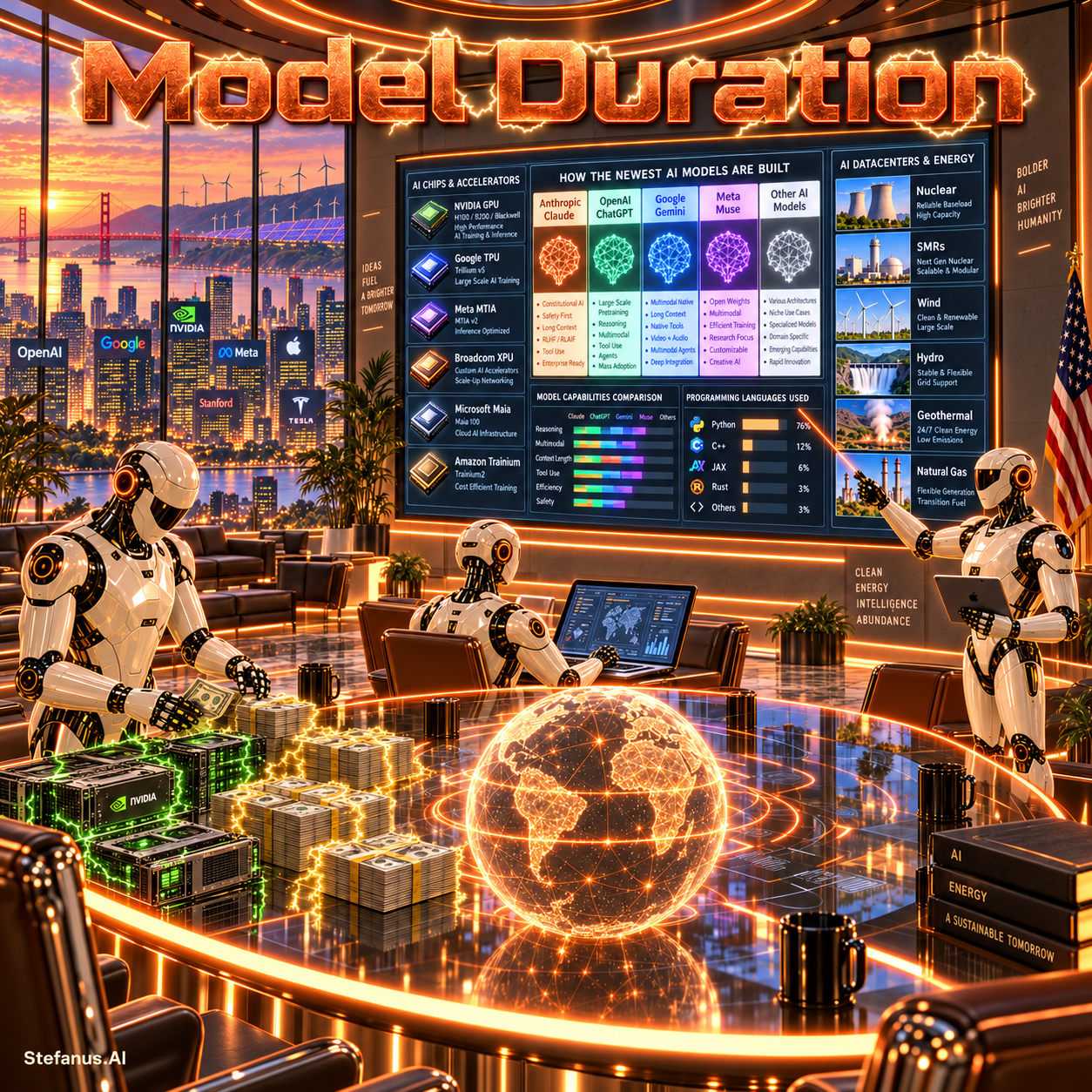

Introduction: The IPO That Will Force Wall Street to Put a Price on Intelligence
In the first week of September 2026, the financial press converged on a story that had been building all summer. Anthropic, the San Francisco developer of the Claude family of models, was moving toward one of the most consequential initial public offerings in the history of technology. According to reporting from Reuters and Bloomberg, the company — which confidentially submitted a draft S-1 registration statement to the U.S. Securities and Exchange Commission on June 1, 2026 — plans to release its prospectus around late September and begin marketing the offering in mid-October, with a possible listing landing only days before the November 2026 U.S. midterm elections [2][3]. Some investors have discussed a valuation approaching $2 trillion, a figure that would more than double the $965 billion post-money valuation Anthropic received in its Series H round in May and would place the offering in the immediate neighborhood of SpaceX, whose own public debut earlier in 2026 established the modern ceiling for what a technology listing can be [2]. At the same time, and not coincidentally, Anthropic has been finalizing a $15 billion revolving credit facility — expanded from an initial target of roughly $10 billion, and six times larger than the $2.5 billion facility it secured only a year earlier — led by Morgan Stanley with Goldman Sachs, JPMorgan Chase, Citigroup, Barclays, and Wells Fargo in prominent roles, the same institutions positioned to lead the IPO itself [9].
The spectacle will naturally invite familiar questions, the kind Wall Street knows how to ask because it has asked them a thousand times before. How quickly is Claude’s revenue growing? The answer, at least on the surface, is astonishing: annualized revenue climbed from roughly $9 billion at the end of 2025 to approximately $14 billion in February 2026, past $47 billion by May, and beyond $65 billion by the end of July — a trajectory without precedent in the history of enterprise software [2][3]. Forbes reported that second-quarter 2026 revenue reached approximately $11.5 billion, more than fourteen times the same quarter a year earlier, and the company reportedly achieved its first quarterly profit in that period [2][4]. What multiple should investors pay? Bankers, according to Reuters, are applying enterprise-value-to-revenue multiples to forecasts extending two full years into the future — an unusually long reach that says as much about the moment as about the company — such that a $2 trillion valuation implies roughly ten times projected 2028 revenue and about thirty-one times the mid-2026 run rate [1][3]. Can Anthropic out-compete OpenAI, Google, Meta, xAI, and the accelerating generation of Chinese frontier laboratories? Will enterprise adoption, coding agents, scientific systems, and autonomous digital workers grow into the $30 trillion total addressable market the company has described to prospective investors? These are important questions. But they may not be the most important ones.
The more difficult question is hidden deeper in Anthropic’s economic architecture, and it becomes visible only when one reads the infrastructure announcements alongside the model announcements and notices that the two sets of documents are keeping time by entirely different clocks.
On August 26, 2026, Bloomberg and CNBC reported that Anthropic had agreed to spend approximately $45 billion over six years renting AI computing capacity from Nscale, a London-based infrastructure company founded only in 2024, at its planned Monarch Compute Campus in Mason County, West Virginia [5][6]. The agreement represents roughly 460 megawatts of capacity — enough electricity to power approximately 345,000 American homes at any given moment — and is expected to run on Nvidia’s Vera Rubin systems, which begin coming online in late 2027 [5][6]. The Monarch campus itself sits on 2,250 acres, can theoretically accommodate more than eight gigawatts of computing capacity, and will generate its own electricity on site through Caterpillar natural-gas generator sets, bypassing the interconnection queues that have become the great bottleneck of the American grid [7]. Microsoft had signed a letter of intent for the very same site in March 2026 and walked away during the summer; Anthropic stepped into the opening, and its contract is now the single largest entry in Nscale’s $51 billion contracted revenue backlog [39]. As Forbes columnist Jon Markman observed, Anthropic has effectively taken anchor tenancy in a power plant that has not yet been built [8].
Nor is Nscale an isolated commitment. Anthropic has simultaneously assembled one of the broadest infrastructure portfolios ever constructed by a private company: an expanded agreement with Amazon providing access to as much as five gigawatts of capacity and committing more than $100 billion to AWS technologies over roughly a decade, spanning Graviton CPUs and the Trainium2 through Trainium4 chip generations [10]; a multi-gigawatt next-generation TPU expansion with Google and Broadcom beginning in 2027, backed by an elaborate financing architecture reported by the Financial Times to approach $200 billion and to enlist Blackstone, Apollo, and Morgan Stanley [11]; a $50 billion American datacenter program with Fluidstack, the young infrastructure firm now valued at $18 billion largely on the strength of building Anthropic’s one-million-TPU rollout [11]; roughly $30 billion of Azure capacity through a partnership with Microsoft and Nvidia; more than 300 megawatts through SpaceX; and a reported $35 billion agreement with Lambda [40]. Reuters has described how the company, once comparatively cautious about enormous long-term infrastructure commitments, changed direction as demand for Claude accelerated beyond every internal forecast.
These are extraordinarily long-lived commitments. Claude models, however, are not.
Consider the cadence of 2026 alone. Anthropic announced Claude Fable 5 and Claude Mythos 5 in June, Sonnet 5 later that same month, Opus 5 in July, and Fable 5.1 and Mythos 5.1 by the first of September — five significant releases inside a single fiscal quarter and a half. That does not mean an older model instantly becomes worthless; models can remain commercially useful for years in specialized applications, embedded deployments, and cost-sensitive workloads. But at the frontier, competitive leadership can migrate with remarkable speed, and sometimes it migrates inside a company’s own product line: the Financial Times reported that Fable 5, Anthropic’s most powerful offering, stalled at roughly 11 percent of corporate AI spending while the cheaper Opus 5 surpassed it within weeks of release — a preview, in miniature, of the commoditization dynamics that will shape the entire industry [12]. A model that defines the state of the art in June may face a cheaper, faster, safer, more capable successor before the leaves change.
That divergence creates what this paper regards as one of the defining financial problems of the emerging AI economy: the productive intelligence may have a duration measured in months, while the infrastructure supporting it carries financial obligations measured in years or decades. The buildings may last thirty years. Power contracts may last twenty. Datacenter leases may last ten. Cloud-capacity agreements may last six. GPUs may remain on corporate depreciation schedules for five or six years even as their frontier economic relevance decays far faster. But the model sitting on top of this entire inverted pyramid — the thing that actually generates the revenue — may lose its technological premium within a single product cycle.
Anthropic’s IPO therefore represents something far larger than a liquidity event for founders and early investors. It may become the moment when public markets are forced to decide, with real money and in real time, how to value an entirely new kind of corporation: a company whose most valuable intellectual product can improve, depreciate, migrate, or be superseded far faster than the capital structure required to produce it. Wall Street already understands bond duration, asset duration, lease duration, and liability duration; an entire apparatus of fixed-income mathematics exists to measure how long-lived claims respond to changing conditions. It may now need to understand something stranger and newer. It may need to understand Model Duration.
Why This Paper Is Called “Model Duration”
The term Model Duration is chosen deliberately, and its justification deserves a full explanation rather than a passing note, because the name itself carries the paper’s central claim. The most important economic problem facing frontier AI laboratories is increasingly a mismatch between the short competitive life of artificial intelligence models and the much longer financial life of the infrastructure required to build and operate them. Claude, GPT, Gemini, Grok, and the frontier systems that have not yet been announced can be superseded within months by new architectures, better post-training, cheaper inference, larger context windows, or more capable agentic scaffolding. Yet the GPUs, datacenters, transmission corridors, power-generation facilities, cloud agreements, and financing arrangements underneath those models routinely require commitments extending six, ten, twenty, or more years into a future that nobody — not the laboratories, not the lenders, not the utilities, and certainly not the analysts — can see with any clarity. Model Duration therefore describes the period during which a frontier model retains sufficient technological, economic, and competitive advantage to justify the long-duration capital assembled beneath it.
The title also deliberately borrows from the language of finance, and the borrowing is more than decorative. Investors already measure duration to understand how the value of long-lived financial assets changes when conditions change: a bond’s duration tells its holder how violently its price will respond to a movement in interest rates, and asset-liability management — the discipline that keeps banks, insurers, and pension funds solvent — is at bottom nothing more than the art of keeping the duration of what you own aligned with the duration of what you owe. Artificial intelligence may require an analogous framework, because the frontier laboratory has quietly become an asset-liability institution without admitting it. Public investors evaluating Anthropic will not merely be purchasing today’s Claude; they will be underwriting Anthropic’s ability to repeatedly replace today’s Claude with tomorrow’s Claude while continuing to monetize hundreds of billions of dollars of previously committed infrastructure. That is why Model Duration fits this paper so precisely: it converts what appears to be a technology race into a problem of asset-liability matching, technological depreciation, infrastructure utilization, capital allocation, and, ultimately, public-market valuation — which is to say, it converts the AI story into a story that financial analysis actually has the tools to interrogate, provided those tools are extended in the ways this paper proposes.

Section 1: The Birth of Model Duration
1.1 From Software Depreciation to Intelligence Depreciation
To understand why Model Duration is a genuinely new problem rather than a rebranding of familiar technology-cycle anxieties, it helps to begin with what traditional software economics looked like, because the contrast is the whole argument. Traditional software did not normally become economically obsolete every few months. Microsoft Office, Oracle databases, SAP enterprise systems, and Adobe’s creative applications historically accumulated value the way rivers accumulate sediment — slowly, through installed bases, file-format compatibility, accumulated data, embedded workflows, administrator expertise, and the profound organizational inertia that scholars of information technology have documented for four decades. A company that deployed an enterprise resource planning system in 2005 was, in many documented cases, still running a descendant of that system in 2025, and the vendor’s pricing power grew rather than shrank with the passage of time. The asset was the relationship, the integration, and the switching cost; the code itself was almost incidental.
Frontier artificial intelligence behaves differently, and the difference is structural rather than temporary. A foundation model competes substantially through measurable capability: performance on reasoning benchmarks, coding evaluations, multimodal tasks, tool use, latency, context length, memory, reliability, and — increasingly decisive — cost per unit of delivered intelligence. Improvements along any of these axes can redirect customers toward a newer generation with a speed that enterprise software vendors of the previous era would have found incomprehensible, because the switching cost of moving from one model API to another is, for many workloads, closer to the cost of changing a configuration file than to the cost of re-platforming a business. The relevant asset is therefore not simply software. It is competitive intelligence at a particular moment in time — a stock of capability whose value is defined relative to every alternative available at that moment, and which can be devalued not by anything its owner does wrong but simply by what a competitor does right.
This creates what this paper defines as intelligence depreciation: the decline in the economic premium that a model can command as superior alternatives become available. Intelligence depreciation is distinct from the physical or accounting depreciation of the hardware on which a model runs, and the distinction matters enormously, because the two are governed by entirely different forces. Hardware depreciates through wear, thermal stress, and the arrival of more efficient silicon; a model’s premium depreciates through the arrival of better minds — including, crucially, better minds built by its own creator. The academic literature has begun to converge on this framing: a 2026 multi-method study of whether artificial intelligence constitutes a financial bubble observed that datacenter assets become bubble-prone precisely “when long-duration capital is committed against short-duration technology assumptions,” and warned that if a facility is financed on the assumption of high GPU utilization for many years while chip generations and inference geography shift quickly, “the asset’s economic life may be shorter than its financing life” [36]. That sentence, written about datacenters, applies with even greater force one layer up the stack, to the models themselves.
1.2 Capability Half-Life: Five Lifetimes, Not One
Model Duration should not be confused with the technical lifetime of a model, and conflating the two is the single most common analytical error in contemporary AI commentary. A model could remain available, functional, and even beloved for five years while losing frontier status after six months, in exactly the way that a 2022-vintage GPU can still multiply matrices flawlessly while having lost every economic contest that matters. Careful analysis therefore requires decomposing the vague notion of a model’s “life” into at least five distinct and separately measurable lifetimes, each of which decays on its own schedule and each of which has different implications for revenue, margins, and infrastructure utilization.
The first is Technical Lifetime — how long the model can continue operating at all, which is limited mainly by the willingness of its owner to keep serving it and maintaining its dependencies. The second is Commercial Lifetime — how long customers continue paying meaningful revenue for it, which can extend years past frontier relevance in embedded, regulated, or cost-optimized deployments. The third is Frontier Lifetime — how long the model remains among the most capable systems available anywhere, which in 2025 and 2026 has compressed, for many capability categories, to a window between two and nine months. The fourth is Premium Lifetime — how long the model’s capabilities justify superior pricing or market share relative to alternatives, which can end even while the model remains technically at the frontier if a near-peer competitor prices aggressively below it. The fifth is Strategic Lifetime — how long the model materially influences the competitive position of its developer, through reputation, benchmark leadership, distribution wins, and the gravitational pull it exerts on talent and enterprise procurement. Together, these five decaying curves compose what this paper calls a model’s effective Capability Half-Life: the characteristic time over which half of the model’s peak economic advantage has dissipated. The Fable 5 episode described in the introduction — a flagship model out-competed within weeks by its own cheaper sibling in the share of corporate spending — is a live demonstration that Premium Lifetime can collapse while Frontier Lifetime remains fully intact [12].
1.3 The Successor Paradox
Frontier laboratories face an unusual corporate paradox, one with very few precedents in industrial history: they must make their own products obsolete, deliberately, repeatedly, and at maximum speed, because the alternative is that someone else will do it for them. Anthropic cannot protect Claude Fable 5 indefinitely if its own researchers are capable of creating Fable 6, because withholding Fable 6 does not preserve Fable 5’s premium — it merely donates that premium to OpenAI or Google. OpenAI cannot maximize the lifetime revenue of one GPT generation if a superior successor is ready in the building. Google cannot harvest Gemini at leisure when three competitors are forcing the replacement schedule from outside. The faster an AI laboratory innovates, therefore, the faster it depreciates its own previous intellectual assets, and its research organization functions simultaneously as its greatest asset and as the most efficient destroyer of its existing book value.
This is the Successor Paradox: the best frontier laboratories survive by repeatedly destroying the competitive value of what they just built. It is worth pausing on how fundamentally this differs from the logic of almost every other capital-intensive industry. Pharmaceutical companies fight to extend patent life; aircraft manufacturers produce the same airframe for four decades; automakers stretch platforms across model years precisely to amortize tooling. Those corporations attempt to maximize the useful life of existing products because their capital structures were built on the assumption that they could. The frontier laboratory inverts the assumption: its capital structure — those six-year compute contracts and ten-year cloud commitments — is built for products that do not yet exist, on the theory that the products which do exist will be gone, competitively speaking, long before the contracts are. Joseph Schumpeter called competitive capitalism a process of creative destruction; the frontier AI laboratory is the first institution to have made creative self-destruction its explicit operating model and then financed that model with tens of billions of dollars of long-dated obligations.
1.4 Model Duration Versus Hardware Duration: The Inverted Pyramid
AI model generations increasingly sit on top of infrastructure whose economic lives are considerably longer, and the gap widens at every layer of descent through the physical stack. The structure is best seen as a duration ladder, which the table below summarizes and which Section 3 will develop in full through the lens of the Five-Layer AI Economy.
| Layer of the Stack | Representative Asset or Commitment | Typical Economic / Contractual Duration |
| Model advantage | Frontier premium of a Claude, GPT, or Gemini generation | Months (roughly 2–12 at the frontier) |
| GPU / accelerator generation | Nvidia Blackwell, Vera Rubin; Google TPU generations | 2–6 years (contested; see Section 4) |
| Server & networking architecture | Rack-scale systems, InfiniBand / Ethernet fabrics | 3–7 years |
| Cloud capacity contracts | Anthropic–Nscale ($45B / 6 yrs); Azure commitment | 5–6 years |
| Datacenter shells & leases | Monarch Compute Campus; hyperscaler builds | 10–30 years |
| Transmission & grid infrastructure | Substations, interconnections, transmission lines | 30–50 years |
| Power generation | Gas plants, nuclear reactors, SMR offtakes | 20–60 years |
The farther downward one moves through this stack, the longer the physical and financial duration generally becomes, and the result is an inverted pyramid of a very particular kind: at the top sits the fastest-changing asset in the history of commercial technology, and at the bottom sit some of the slowest-changing assets human beings know how to build. Yet the revenue generated at the top must ultimately pay for everything underneath it. Every dollar of the roughly $725 billion the four largest hyperscalers plan to spend on capital expenditure in 2026 — up 77 percent from an already record-breaking $410 billion in 2025 — and every dollar of Goldman Sachs’s projected $7.6 trillion of cumulative AI capital expenditure between 2026 and 2031 must eventually be recovered from services rendered by models whose individual competitive lives may not outlast a single budget cycle [23][24]. The mismatch is not a footnote to the AI investment story. It is the story.
1.5 A Proposed Metric: The Model Duration Ratio
If the mismatch is real, it should be measurable, and this paper proposes a deliberately simple conceptual metric as a starting point for what will surely become a more sophisticated literature. Define the Model Duration Ratio as the expected economic life of a laboratory’s model advantage divided by the average duration of its contracted infrastructure commitments, with the numerator estimated from the observed cadence of premium-destroying releases across the industry and the denominator computed as a commitment-weighted average maturity of compute contracts, leases, and power obligations — precisely the kind of maturity profile that bond analysts already construct for corporate debt.
Suppose, to take numbers that are conservative in the numerator and generous in the denominator, that a frontier model retains a meaningful premium for twelve months while the infrastructure contracted to support it carries an average economic obligation of six years. The ratio is one-sixth, or approximately 0.17 — meaning that the laboratory must successfully renew its core revenue-generating asset roughly six times within the life of a single infrastructure commitment, with no guarantee that any given renewal succeeds, merely for the commitment to have been sized correctly. The lower the Model Duration Ratio, the more completely the laboratory’s equity value becomes a claim not on any existing product but on the reliability of its succession process. This ratio could eventually become as important to AI investors as price-to-sales ratios, gross margins, or free cash flow are today, because it captures the one thing those traditional measures structurally cannot: the temporal architecture of the business — the distance, measured in years, between the clock that governs what the company earns and the clock that governs what the company owes.

Section 2: Anthropic as the First Great Model-Duration Test
2.1 The $2 Trillion Question
A potential Anthropic IPO approaching $2 trillion would force public investors to value something they have rarely encountered at comparable scale, and it is worth being precise about what that something is, because the marketing of the offering will do everything possible to blur it. Investors would not merely be valuing Claude — the models as they exist in October 2026, with their benchmark scores and their $65 billion revenue run rate. They would be valuing Anthropic’s future model-production machine: the probability-weighted stream of Claudes that do not yet exist, delivered on schedule, at competitive quality, into a market whose pricing nobody controls, for a decade or more. Reuters reported that the prospective offering could become one of the largest IPOs ever attempted, that bankers are anchoring the valuation on internal projections of $190 billion to $200 billion of 2028 revenue, and that the entire approach “carries considerable risk” if growth forecasts slip or infrastructure costs remain elevated; David Merkel of Aleph Investments told Reuters the company could plausibly secure a $2 trillion valuation while openly questioning whether such a level could be sustained over time [1].
The academic and practitioner skepticism is sharper still, and it comes from the most credentialed corner of the valuation profession. Aswath Damodaran of NYU’s Stern School of Business — the man Wall Street calls the dean of valuation — has calculated that even under generous assumptions of a 30 percent after-tax operating margin, a 10 percent cost of capital, and a ten-year path to maturity, justifying a $2 trillion valuation requires Anthropic to reach approximately $1.2 trillion in year-ten revenue, implying $360 billion of after-tax operating income; if regulation or slower adoption stretches the maturation period to fifteen years, the required revenue approaches $2 trillion against a total current market for AI products and services that Damodaran pegs at roughly $250 billion [13]. In August 2026 he argued that artificial intelligence had reached what he called its “bar mitzvah moment” — the point at which the industry must be judged on revenues, profits, and competitive moats rather than on promise — and he warned that a large market does not automatically translate into large, profitable businesses [14]. Discussing the coming wave of AI listings on the Excess Returns podcast, he was blunter about how the offering documents would be framed:
“The total addressable market is what bankers and the company are going to use to dazzle us.”
— Aswath Damodaran, NYU Stern School of Business [15]
What he wants to see instead, he explained, is the unit economics — and his guess is that the companies will underplay them, because unlike classical software, the cost of goods sold in frontier AI is enormous, physical, and contractually locked in [15]. The correct question for the prospectus, therefore, is not “what is Anthropic worth” but “what exactly is worth $2 trillion?” Claude today? Claude’s customers and their migration behavior? Claude Code and the agentic platform? The research organization and its talent density? The distribution relationships with Amazon, Google, and Microsoft? The safety reputation that increasingly functions as an enterprise procurement advantage? The infrastructure reservations themselves, which in a supply-constrained world may carry option value independent of any model? Or — the residual claim that dwarfs all the others — the probability that Anthropic can continue creating increasingly valuable Claude generations for decades? Public markets will eventually be forced to assign values to each of these components separately, and Model Duration is the variable that determines how much of the total sits in the last, most speculative bucket.
2.2 The Nscale Commitment: Purchasing Computational Territory for Unknown Intelligence
The Nscale agreement illustrates Model Duration with almost diagrammatic clarity, which is why this paper treats it as the emblematic transaction of the era rather than merely the largest recent one. Bloomberg reported a six-year, approximately $45 billion capacity agreement representing roughly 460 megawatts at Nscale’s West Virginia development, running on Nvidia Vera Rubin systems that begin arriving in late 2027 [5]. Now hold the two relevant clocks side by side. During those six years, if the cadence of 2025 and 2026 continues, Anthropic could plausibly release somewhere between eight and fifteen significant model generations; the models that will ultimately occupy those West Virginia halls have not been designed, have not been named, and in the deepest sense do not yet exist — their architectures may depend on research results that have not yet been obtained. Meanwhile the first electron will not flow to the first contracted rack until more than a year after the agreement was signed, on a campus whose dedicated gas-fired generation is itself still under construction [7][8].
The agreement therefore represents something categorically more unusual than purchasing infrastructure for an existing product, and the standard analytical vocabulary of “capacity expansion” fails to capture it. Anthropic is effectively purchasing future computational territory for unknown future intelligence — reserving physical coordinates in the 2028–2033 compute economy on the conviction that whatever models it has built by then will need that territory badly enough to justify $45 billion. It is a wager on the succession process itself, collateralized by nothing except the succession process itself. And the wager runs in both directions, because Nscale — a company that did not exist before 2024, now preparing its own U.S. listing — is using the Anthropic contract as the anchor collateral that makes the entire $71 billion Monarch development financeable [7][39]. Two young companies are, in effect, lending each other the credibility that neither could source independently, with a six-year contract as the bridge and a product cycle measured in months as the load it must carry.
2.3 From Compute Scarcity to Compute Obligation
During the first phase of the generative-AI boom, roughly from the launch of ChatGPT through 2025, compute scarcity was considered the overriding danger, and the fear was existential in tone: companies that could not secure GPUs would be locked out of the frontier entirely, and no price was too high for admission. That fear was rational, and it explains the sequence of ever-larger commitments this paper has catalogued. But the next phase may introduce the opposite risk, one that receives far less attention precisely because it contradicts the reflexes the industry developed during the scarcity years: the risk of compute obligation — of having secured enormous capacity whose contractual cost outlives the economic assumptions that justified it.
The channels through which this reversal could arrive are numerous, mutually reinforcing, and individually plausible. Future models may become dramatically more efficient, as the IEA has documented that power consumption per AI task has recently been declining by at least an order of magnitude annually — a rate the agency believes is unprecedented in the history of energy [28]. Distillation may compress frontier capability into models a tenth the size. Sparse and mixture-of-experts architectures may cut computational intensity per query. Inference may migrate toward specialized ASICs whose economics strand general-purpose fleets. Enterprise customers may consolidate on smaller task-specific models — a movement already visible in the Fable 5 spending data [12]. Agentic systems may generate vastly more demand than expected, rescuing every commitment; or the laboratory may simply lose share to a competitor whose successor model lands first. The essential point is that the same infrastructure contract can therefore represent either a strategic moat, if demand exceeds supply throughout its term, or a fixed-cost burden, if technological economics change faster than the contract — and nothing in the contract itself determines which. What determines it is Model Duration: whether the succession of models running on that capacity can keep generating premium economics for the full life of the obligation.
2.4 Multi-Cloud Strategy as Duration Insurance
Anthropic’s simultaneous relationships with Amazon, Google, Microsoft, Nvidia, SpaceX, Nscale, Fluidstack, and Lambda could initially appear inefficient compared with the vertically integrated infrastructure platforms of its hyperscaler patrons — a fragmented procurement strategy scattered across incompatible chip families (Trainium, TPU, and multiple Nvidia generations), redundant negotiations, and duplicated integration work. But viewed through the duration lens, the diversification may serve a purpose that conventional procurement analysis misses entirely: it functions as duration insurance. Different accelerator architectures, datacenter providers, contract tenors, and financing structures reduce dependence on any single hardware generation, any single supplier’s roadmap, and any single infrastructure bet turning out to be the wrong one. If Vera Rubin disappoints, Trainium4 and next-generation TPUs are separately contracted hedges; if one provider’s energization schedule slips — a chronic industry affliction — capacity arrives through five other doors [10][11][40].
The deeper implication is organizational. The AI laboratory of the future may manage infrastructure less like a software company and more like an airline managing a mixed fleet across staggered delivery schedules, an energy major managing a portfolio of supply contracts of laddered maturities, or a bank managing assets against liabilities — institutions whose entire risk apparatus exists to survive the fact that their commitments outlive their forecasts. It is instructive that the hyperscalers themselves converged, in their second-quarter 2026 earnings calls, on exactly this playbook: all four of Microsoft, Alphabet, Amazon, and Meta described committing early to the long-lived assets — land, datacenter shells, power — while deferring decisions on the short-lived assets, the chips that constitute the majority of the cost, until a few months before deployment, once demand is actually visible [26]. Google’s chief financial officer, Anat Ashkenazi, told investors the company’s confidence in returns had strengthened rather than weakened:
“…the dynamics look healthier than where we were about a year ago.”
— Anat Ashkenazi, Chief Financial Officer, Alphabet [26]
That playbook — long duration on the slow layers, short duration on the fast layers, optionality preserved at the seam — is asset-liability management by another name, and its adoption by the four most sophisticated infrastructure buyers on Earth is itself evidence that the industry has begun, without yet naming it, to manage Model Duration.
2.5 IPO Disclosure as an AI-Economy Rosetta Stone
Anthropic’s eventual public filings could become extraordinarily important documents for researchers, policymakers, and investors alike — arguably the most informative single disclosure event in the history of the AI economy — because for the first time the internal financial mechanics of a frontier laboratory will be exposed at public-company standard, audited, and updated quarterly. Investors should look far beyond revenue growth, which will dominate the headlines precisely because it is the least ambiguous number in the document. The most revealing information will concern the temporal structure of the business: total contracted compute commitments and their maturity schedule; minimum purchase obligations and take-or-pay provisions; lease durations and renewal options; direct and indirect power exposure; the depreciation and amortization policies applied to any owned hardware and capitalized model-development costs; cloud-provider concentration and the related-party character of revenue flowing to and from strategic investors; inference cost per unit of revenue and its trend; training cost per generation and its trajectory; customer concentration and cohort retention across model transitions; gross margin by workload; capitalized versus expensed infrastructure; contract termination rights and their triggers; and the size and tenor of future capacity reservations not yet reflected on the balance sheet. Read together, these disclosures would constitute a Rosetta Stone — the key that finally allows outsiders to translate between the industry’s two languages, the language of capability and the language of obligation, and to compute, for the first time with real data, the Model Duration Ratio of an actual frontier laboratory.

Section 3: The Five-Layer AI Economy and the Duration Ladder
Model Duration cannot be understood by staring at models alone, because a model is merely the visible summit of a vertically integrated economic formation this paper calls the Five-Layer AI Economy: energy at the base, then chips, then datacenters, then models, then applications and agents at the top. Each layer operates on its own economic clock, recovers its capital on its own schedule, and answers to different owners, regulators, and financiers — and the central structural fact of the entire formation is that the clocks run faster at every step upward. This section walks the ladder from bottom to top, establishing the duration character of each layer, because only against that full gradient does the strangeness of the top layer’s speed become fully visible.
3.1 Layer 1 — Energy: The Longest Duration
Power infrastructure represents the longest-duration component of the AI economy, and the scale of what is now being committed at this layer deserves to be stated in full. The International Energy Agency’s 2026 analysis projects that electricity consumption from datacenters will roughly double from 485 terawatt-hours in 2025 to approximately 950 terawatt-hours in 2030 — around 3 percent of global electricity demand, and slightly more than Japan’s entire present consumption — with AI-focused datacenter demand tripling over the same window, and with the United States accounting for by far the largest share of the increase [28][29]. In the American case the concentration is extreme: datacenters account for nearly half of all U.S. electricity demand growth between now and 2030, by the end of which the country will consume more electricity for datacenters than for the production of aluminum, steel, cement, chemicals, and every other energy-intensive good combined [29]. Lawrence Berkeley National Laboratory projects U.S. datacenter consumption rising from about 4.4 percent of national electricity in 2023 to between 6.7 and 12 percent by 2028 [30]. The assets being built to serve this demand — natural-gas plants, nuclear reactors and the 45-gigawatt pipeline of conditional small-modular-reactor offtake agreements, transmission lines, substations, and grid interconnections — can operate for two to six decades [28].
This means Layer 1 faces a profound forecasting problem that no participant can escape: utilities and governments are building infrastructure today, with sixty-year assets and forty-year cost-recovery schedules, for AI workloads whose architectures will not exist until the 2030s and whose efficiency characteristics are improving by an order of magnitude per year [28]. The power plant must be sited, permitted, financed, and constructed on the assumption that the demand which justified it will still be there when it energizes — and the demand, five layers up, is generated by products with a half-life of months.
3.2 Layer 2 — Chips: Accelerating Depreciation and the Two Clocks
GPUs and custom accelerators occupy a shorter but fiercely contested duration, and the contest broke into the open in late 2025 in what has become the defining accounting controversy of the AI era. Nvidia has compressed its architecture cadence to an annual rhythm — Hopper, then Blackwell, then Vera Rubin arriving in late 2026, with Rubin Ultra targeted for 2027 — with each generation delivering roughly 40 to 50 percent better performance per dollar [16]. Yet the hyperscalers purchasing this hardware depreciate it over five to six years: Microsoft and Google inform their auditors of six-year useful lives, Meta of five and a half, and between 2020 and 2024 the industry trend ran steadily toward longer lives — until 2025, when Amazon broke ranks, completed a new useful-life study, and shortened the assumed life of a subset of its servers even as Meta extended further in the opposite direction [16][17][21]. Into this widening gap stepped Michael Burry, the investor of Big Short fame, who took roughly $1.1 billion notional in put positions against Nvidia and Palantir and declared that the extension of depreciation schedules amid a shortening hardware cycle amounted to systematic earnings inflation, estimating roughly $176 billion of understated depreciation across the industry between 2026 and 2028 [16][18][21]. He did not choose gentle language:
Extended depreciation schedules are “one of the more common frauds of the modern era.”
— Michael Burry, Scion Asset Management [16]
The counterarguments are substantive and should be stated fairly. Nvidia responded that customers consistently observe four-to-six-year lives based on actual utilization; both U.S. GAAP and IFRS grant management genuine, judgment-based discretion over useful lives; and the industry’s “waterfall” defense holds that chips cascade from frontier training to inference to general-purpose compute, remaining economically productive long after losing the top slot [16][17]. Jim Chanos nonetheless applied even a generous ten-year GPU life to CoreWeave’s filings and argued the numbers still failed — annualized adjusted EBITDA of roughly $3.4 billion against $1.2 billion of interest on an estimated $20 billion of GPU assets — a critique the market ratified with a 61 percent collapse in the stock across six weeks of late 2025 [21]. Jonathan Ross, the Groq founder, has argued for one-year amortization of frontier training hardware, and Princeton’s Center for Information Technology Policy framed the core issue in terms that could serve as this section’s epigraph [20]:
AI chips have “a useful lifespan of one to three years due to rapid technological obsolescence.”
— Princeton University, Center for Information Technology Policy [20]
Even Microsoft’s chief executive, in an unguarded moment, validated the underlying anxiety, explaining a deliberate decision to pace purchases rather than concentrate them in a single hardware generation [19]:
“I didn’t want to go get” stuck “with four or five years of depreciation on one generation.”
— Satya Nadella, Chief Executive Officer, Microsoft [19]
For the purposes of this paper, the resolution of the accounting dispute matters less than what the dispute reveals: hardware duration contains two separate clocks — physical life and economic frontier life — and the machine may still operate perfectly even after its relative economic productivity has deteriorated beyond recovery. That is precisely the structure of intelligence depreciation defined in Section 1, appearing one layer down the stack. The GPU debate is the Model Duration debate conducted in the vocabulary of accountants, and the fact that it moved markets — that a depreciation assumption became a trading thesis — is the strongest available evidence that public markets are already groping toward duration analysis without yet possessing the framework.
3.3 Layer 3 — Datacenters: Long-Lived Shells Around Short-Lived Machines
Datacenters introduce a third distinct mismatch, because the facility is really two assets wearing one name. The buildings, cooling plants, fiber routes, substations, and land are long-duration assets on ten-to-thirty-year economic lives; the computing equipment inside them turns over on the contested two-to-six-year cycle of Layer 2; and the models using that equipment turn over faster still. Purpose-built AI datacenters now carry lead times of eighteen to twenty-four months from commitment to energization — which means every facility is designed for hardware that will be at least one generation obsolete, and for models at least three generations removed, by the time it opens. Layer 3 therefore acts as the physical bridge between slow infrastructure and fast intelligence, and it is where the duration stress concentrates first when assumptions fail, because the shell’s mortgage does not care which generation of silicon sits in the racks. The critical competitive advantage at this layer may eventually be not owning any particular GPU but designing facilities flexible enough — in power density, cooling architecture, and electrical topology — to survive multiple generations of computing architecture without stranding the shell. The hyperscalers’ second-quarter 2026 playbook of committing early to shells and power while deferring chip decisions is, in effect, an admission that Layer 3 and Layer 2 must now be financed on deliberately different clocks [26].
3.4 Layer 4 — Models: The Shortest Duration
Layer 4 is where Model Duration becomes most visible, because it is the only layer whose principal asset is pure position — capability relative to alternatives at a moment in time. Claude competes against GPT, Gemini, Grok, Meta’s systems, a deepening bench of Chinese frontier models, open-weight systems whose marginal price is zero, and models that have not yet been announced. Performance leadership moves quickly; pricing moves faster. A model can remain technologically excellent while becoming economically commoditized, and the 2026 evidence suggests commoditization is arriving from an unexpected direction — not from competitors matching the frontier, but from customers declining to pay for it. When Fable 5, the most capable model Anthropic had ever shipped, captured only 11 percent of corporate AI spending while its cheaper sibling overtook it within weeks, the market was announcing that for a large fraction of enterprise workloads, “good enough” intelligence at lower cost dominates maximal intelligence at premium cost [12]. That means the economic duration of a model is determined less by whether it works than by whether customers can obtain comparable intelligence elsewhere — including elsewhere in the same product line — for less money. Layer 4 is thus the layer where value is created fastest and destroyed fastest, and everything below it exists to serve an asset whose premium can evaporate between quarterly earnings calls.
3.5 Layer 5 — Applications and Agents: The Duration Extenders
Applications and agentic systems could change the entire equation, which is why Layer 5 deserves to be understood not merely as another revenue line but as the industry’s principal instrument for manufacturing duration. A deeply integrated Claude-based workflow may have far longer commercial duration than the underlying Claude model, because customers become attached to things that do not turn over with model generations: workflows and business processes rebuilt around the system; accumulated data and agent memory; security reviews, compliance certifications, and audit trails; API integrations and tool ecosystems; employee training and organizational habit; and the slow-growing institutional trust that enterprise software vendors of the previous era spent decades converting into pricing power. Every one of these attachments survives a model swap. When the customer’s agents, memory, and processes live on the platform, the arrival of Fable 6 is experienced not as a migration decision but as a free upgrade — and the succession event that constitutes an existential competitive moment at Layer 4 becomes, at Layer 5, a retention event.
Layer 5 may therefore become the Duration Extender of the Five-Layer AI Economy. The most successful frontier laboratories may eventually discover that their real economic moat is not possessing the best model continuously — an achievement the Successor Paradox renders structurally temporary — but controlling the applications and agentic systems through which successor models are continuously delivered. That would transform Model Duration from a fatal weakness into a manageable renewal cycle: the model remains short-lived, but the relationship through which models are consumed becomes long-lived, and the duration mismatch is closed not at the bottom of the stack, where the physics is immovable, but at the top, where the customer lives. Section 4 formalizes this insight as the distinction between Model Duration and Revenue Duration, which this paper regards as the single most important distinction in frontier-AI equity analysis.

Section 4: How Public Markets Should Value a Frontier AI Laboratory
4.1 Stop Valuing AI Laboratories Like SaaS Companies
The reflexive framework Wall Street will bring to the Anthropic offering is the software-as-a-service playbook — recurring revenue, net retention, gross margin, customer acquisition cost — because that playbook has governed technology valuation for fifteen years and because Anthropic’s revenue does, superficially, recur. Those measures remain useful, and nothing in this paper suggests discarding them. But they were built for businesses whose cost of goods sold rounds toward zero and whose product improves without being replaced, and a frontier laboratory violates both premises simultaneously. Structurally, the frontier laboratory resembles a chimera assembled from six older corporate forms: a semiconductor company, because its fortunes ride brutal technological cycles it cannot fully control; a utility, because its input economics are dominated by enormous long-term energy exposure; an airline, because it sells a perishable service against enormous fixed capacity commitments made years in advance; a pharmaceutical company, because its future rests on a research pipeline whose individual outcomes are deeply uncertain; a cloud company, because its balance sheet is being consumed by infrastructure intensity; and a financial institution, because it now carries long-duration contractual obligations that must be actively matched against shorter-duration revenue streams. Each of those industries developed its own specialized analytical apparatus over decades — load factors and fleet planning for airlines, pipeline-adjusted valuation for pharma, rate-base analysis for utilities, asset-liability committees for banks. Public markets will need a hybrid methodology that borrows from all six, and the remainder of this section proposes its first instruments.
The urgency of building that methodology is underscored by how the market treated the hyperscalers in mid-2026. When Alphabet raised its 2026 capital-expenditure guidance to as much as $205 billion alongside second-quarter earnings, its shares fell 7 percent in a day and dragged Amazon, Meta, and Microsoft down with it, as investors confronted dwindling cash piles set against uncertain returns [25]. Amazon guided toward roughly $220 billion, citing among other things the rising cost of memory; Meta lifted its guidance floor twice within four months, to a range of $125 to $145 billion, attributing the increases to component pricing and additional datacenter costs to support future-year capacity [26][27]. First-half 2026 capital spending across the four companies reached $301 billion, with full-year guidance of approximately $732.5 billion — 158 percent higher than forecasts issued just two years earlier — and Goldman Sachs now projects $5.3 trillion of combined hyperscaler capex from fiscal 2025 through 2030 within a $7.6 trillion aggregate AI buildout through 2031 [23][24]. These are the companies with the deepest balance sheets and the most diversified revenue on Earth, and the market is already repricing them on duration anxieties it cannot quite articulate. A pure-play frontier laboratory arriving into that environment will face the same anxieties, undiluted.
4.2 The Model Replacement Rate
The first proposed disclosure metric follows directly from the Successor Paradox: the Model Replacement Rate, defined as the frequency with which a laboratory must produce a materially superior model in order to maintain its pricing power and market position. If competitive leadership requires replacement every six months — approximately the observed rhythm of 2025–2026, in which Anthropic shipped Fable 5, Mythos 5, Sonnet 5, Opus 5, and the 5.1 generation inside four months — then the organization must sustain a research engine capable of producing economically meaningful improvements twice a year, indefinitely, with the tolerance for failure of a commercial aircraft engine. That reframes research productivity from a qualitative talking point into the central quantitative valuation variable. Analysts should demand, and eventually will construct for themselves, measures of release cadence, capability delta per release, training cost per capability delta, and the trend in each — because the fundamental asset being priced is not any particular model but the laboratory’s sustained rate of intelligence production, and a slowing Model Replacement Rate is to a frontier laboratory what a thinning drug pipeline is to a pharmaceutical company: the earliest leading indicator of terminal decline, visible years before it reaches the income statement.
4.3 Revenue Duration Versus Model Duration
The second and most consequential distinction is between Model Duration and Revenue Duration. An individual model may have a short frontier life, but the customer relationship can survive across many generations — and where it does, the economics change completely. A corporation using Claude Code today might move seamlessly to Claude’s successor tomorrow without ever re-opening the procurement decision, carrying its agents, its memory, its integrations, and its habits across the transition; in that case the revenue is durable even though the model is not, and the laboratory has successfully converted a perishable technical advantage into an enduring commercial annuity. The investment question therefore becomes beautifully compact: can the company make customer duration longer than model duration? If yes, rapid model replacement is not merely manageable but advantageous — each release refreshes the product without re-running the sales cycle, and the Successor Paradox is domesticated into an upgrade treadmill. If no, then every new model cycle effectively requires winning the customer again, the laboratory’s revenue base re-competes for its own existence two or three times a year, and no plausible margin structure can carry six-year infrastructure obligations on such a foundation. The evidence that will settle this question — cohort retention across model transitions, workload migration behavior, platform attach rates for agents and memory — is exactly the evidence Section 2.5 argued investors must extract from the eventual public filings.
4.4 The Infrastructure Coverage Ratio and Scenario Stress-Testing
The third proposed metric addresses the liability side directly. Define the Infrastructure Coverage Ratio as expected gross profit from future AI services divided by contracted infrastructure obligations over a matched horizon — the frontier laboratory’s analogue to a debt-service coverage ratio, measuring how many times over the committed capacity is paid for by the economics it is expected to enable. A ratio comfortably above one across conservative scenarios indicates that infrastructure commitments function as a moat; a ratio that falls below one in plausible scenarios indicates stranded-capacity risk hiding inside what the prospectus will describe as strategic foresight. Because the ratio is only as informative as the scenarios beneath it, investors should stress-test it against at least three coherent futures, summarized in the table below.
| Scenario | Demand & Pricing Assumptions | Infrastructure Consequence |
| Bull Case | Agentic demand explodes; utilization stays high; inference volumes compound faster than efficiency gains; successive models monetize all contracted capacity at premium pricing | Presecured compute is a decisive moat; capacity scarcity confers pricing power; the Coverage Ratio rises over the contract life |
| Base Case | Revenue grows strongly but efficiency improvements (distillation, sparsity, specialized silicon) partially offset compute growth; pricing drifts down with competition | Coverage Ratio holds near or modestly above 1; returns depend on Revenue Duration exceeding Model Duration; margin of safety is thin but real |
| Bear Case | Competition compresses pricing; model efficiency reduces compute consumption per dollar of revenue; customers migrate toward cheaper or open-weight alternatives; share shifts between labs | Contracted capacity becomes underutilized fixed cost; take-or-pay obligations convert yesterday’s moat into a melting liability; restructuring cycle begins (Section 5.5) |
This kind of analysis would expose risks that conventional price-to-sales multiples structurally cannot, because a revenue multiple contains no information whatsoever about the temporal shape of the obligations standing behind the revenue. Two laboratories with identical run rates and identical growth could carry radically different bear-case Coverage Ratios, and the market currently has no instrument that would distinguish them. The maturity-mismatch anxiety has already surfaced in the credit conversation: as one guest framed it on CNBC in June 2026, discussing AI hardware financing [22]:
“…the depreciation of the asset is 5 years, well, what do you do?” — when the bonds financing it run ten.
— CNBC “Closing Bell Overtime” commentary, June 30, 2026 [22]
4.5 The Residual Value of Obsolete Intelligence
A rigorous duration framework must also credit the other side of the ledger, because an old model does not necessarily become worthless, any more than an old GPU does — and the industry’s own waterfall defense of hardware lives has an exact analogue one layer up. A model that has lost frontier status may enjoy a long and profitable afterlife as a low-cost inference workhorse serving price-sensitive volume; as an embedded enterprise model frozen inside regulated or validated workflows that punish change; as an edge or on-device deployment where its smaller successor economics are a feature; as a specialized agent fine-tuned into a niche it dominates; as a distillation teacher whose knowledge is compressed into cheaper students; as a private deployment for customers who prize stability over capability; or as one orchestrated component inside a larger routing system that sends each query to the cheapest adequate mind. This creates what the paper calls the Residual Intelligence Curve: the trajectory along which a model’s economic value declines after it loses frontier status. The steepness of that curve is a first-order valuation input, because it determines how much of each generation’s enormous training investment is recovered in the long tail rather than written off at succession — and it is empirically knowable, from pricing pages, deprecation schedules, and workload data, long before it appears in any financial statement. Understanding the Residual Intelligence Curve will be critical for predicting margins, and it is the natural second chapter of the research program this paper opens.
4.6 Valuing the Laboratory Instead of the Model
Assembled together, these instruments point toward a conclusion that inverts the intuitive picture of what an AI company is. Public markets may ultimately learn that frontier models themselves should receive relatively low terminal values — perhaps startlingly low, given that they are the objects around which the entire spectacle revolves — while the durable value resides in the apparatus that produces and distributes them: research talent and its density; proprietary training methods and data-generation capabilities; customer distribution and enterprise relationships; developer ecosystems; contracted compute access, which in a constrained world is itself a scarce asset; agent platforms and the memory and workflow lock-in of Layer 5; safety systems and the regulatory trust they purchase; access to capital on a scale few institutions can match; and above all the organizational capacity to produce successors on schedule. Investors would therefore be valuing an intelligence factory, not a static piece of software — pricing the machine that makes the machines. On that reading, the correct comparables for Anthropic are not the SaaS champions at all, but the great process businesses of industrial history, whose valuations always turned less on the current product than on the demonstrated reliability of the next one.
4.7 The Circularity Problem: When Suppliers Are Also Investors
One final analytical complication deserves its own subsection, because it will run through every line item of the eventual prospectus and because it interacts with Model Duration in a way that standard disclosure frameworks were never designed to capture. The frontier AI economy has evolved a densely circular financial architecture in which the laboratory’s largest suppliers are simultaneously its largest investors, its largest creditors’ counterparties, and in some cases its largest distribution channels. Amazon is at once a major Anthropic shareholder, the counterparty to a more-than-$100-billion decade-long infrastructure commitment, and the operator of a marketplace through which Claude is sold [10]. Google holds a significant stake in Anthropic while orchestrating, according to reporting on the Financial Times’s account, a financing plan approaching $200 billion — enlisting Blackstone, Apollo, Morgan Stanley, and Broadcom — to help Anthropic buy and deploy Google’s own TPUs, with Fluidstack constructing the datacenters in between and Google backstopping billion-dollar power arrangements along the way [11]. Microsoft and Nvidia invested roughly $15 billion in early 2026 in connection with Anthropic’s commitment of approximately $30 billion of Azure capacity [40]. In each case, capital flows down the stack as investment and flows back up the stack as revenue, and the same handful of balance sheets appears on both sides of the ledger.
None of this is inherently improper — vendor financing is as old as the railroads, and strategic investment by suppliers is a rational response to a supply-constrained buildout. But circularity changes what the headline numbers mean, and it changes them in a direction that duration analysis is uniquely positioned to expose. Revenue that a supplier-investor pays to the laboratory, or capacity commitments that a laboratory makes to a supplier-investor, cannot be read at face value as independent market signals of demand, because each party has a portfolio interest in the other’s reported momentum; the ecosystem can, for a time, validate its own growth assumptions with its own money. The historical rhyme that skeptics reach for is the vendor-financed capacity boom of the late-1990s telecommunications industry, in which equipment makers lent customers the money with which the customers bought the equipment, and in which reported demand remained robust until, quite suddenly, it did not. The rhyme is imperfect — today’s participants are vastly better capitalized, and end-customer demand for AI services is real and measured in the tens of billions — but the structural lesson survives: when the same capital circulates through supplier, financier, and customer roles, the system’s true demand duration is shorter than its reported demand duration, because some fraction of the reported demand is the echo of the financing. For the duration analyst, the practical injunction is concrete. In computing the Infrastructure Coverage Ratio of Section 4.4, related-party revenue should be tracked separately from arm’s-length revenue; in stress scenarios, the correlation between the two should be assumed high rather than low, because the same shock that impairs the laboratory impairs the willingness of its supplier-investors to keep the circle turning; and in reading the prospectus, the single most valuable table will be the one — if it exists — that reconciles gross contracted commitments against the portion effectively financed, backstopped, or offset by the counterparties themselves.

Section 5: Model Duration Becomes a Strategic and Political Problem
5.1 Governors Are Financing Infrastructure for Models Not Yet Invented
The Model Duration problem extends far beyond Anthropic’s shareholders, because the longest-duration layers of the stack are being underwritten, in substantial part, by public institutions making implicit forecasts about private technology. Governors approving datacenter campuses, transmission upgrades, tax incentives, and power-generation projects are, whether they conceive of it this way or not, taking positions on the future demand curve of artificial intelligence. West Virginia offers the emblematic case: Governor Patrick Morrisey’s office publicly celebrated the reported $45 billion Anthropic–Nscale agreement as the fruit of a deliberate strategy of regulatory and siting certainty for developments involving billions in private capital and hundreds of megawatts — while pointedly noting that the enabling legislation includes protections designed to prevent infrastructure costs from being shifted onto existing residential and business ratepayers [37]. Michigan, Pennsylvania, Texas, Virginia, Arizona, Indiana, and a lengthening list of other states face structurally identical decisions involving gigawatts of prospective AI load. The temporal asymmetry they confront is merciless: a nuclear plant can operate for sixty years, and several generations of frontier models will appear before such a plant finishes construction. Public policy therefore inherits the same duration mismatch as investors — with the added complication that the public’s side of the ledger cannot be marked to market, renegotiated, or sold.
5.2 Ratepayers Become Indirect AI Investors
If utilities expand grids on the strength of projected AI demand, ordinary electricity customers effectively become indirect, involuntary financiers of AI infrastructure, because grid costs are recovered through rates over decades and a demand forecast that fails leaves the recovery burden to be redistributed among those who remain. The key policy question is therefore not simply the one interconnection queues are built to answer — how much power does the datacenter request? — but a deeper one that current regulatory processes barely know how to ask: how durable is the economic activity generating that demand? A six-gigawatt request associated with long-term, diversified, contractually anchored AI workloads is a categorically different underwriting proposition from a speculative campus whose ultimate customers remain unknown, even though both arrive at the utility as identical megawatt numbers. Model Duration should therefore enter infrastructure planning explicitly: regulators evaluating rate-base expansion for AI load ought to weigh the contract tenor, counterparty quality, and succession-dependence of the demand behind it, exactly as a credit committee would — because that is, functionally, what they have become. The macroeconomic stakes of getting this right are no longer marginal. Harvard economist Jason Furman calculated that investment in information-processing equipment and software, though only 4 percent of U.S. GDP, accounted for nearly all measured growth in the first half of 2025 [33][34]:
“…it was responsible for 92% of GDP growth in the first half” of 2025.
— Jason Furman, Harvard University [33]
An economy whose growth is that concentrated in a single investment category has, at the aggregate level, taken on the duration profile of that category — which is to say, the United States itself now holds a position in Model Duration.
5.3 The Federal Government and Strategic Compute
Washington confronts a different face of the same problem. Advanced computing capacity increasingly bears on economic security, military capability, scientific leadership, and geopolitical competition, and this strategic salience can encourage policymakers to support infrastructure even when conventional private-market returns remain uncertain — indeed, especially then. Compute therefore develops two distinct valuations that can diverge widely: commercial value, set by the willingness of model developers to pay for it, and strategic value, set by the state’s assessment of what national capacity is worth in a contested world. An underutilized AI campus might simultaneously represent poor corporate capital allocation and a strategically useful national compute reserve — the digital-age analogue of the strategic petroleum reserve, or of shipyards maintained through peacetime at a loss. This divergence will become increasingly consequential in U.S.–China competition, because it implies that duration mistakes by private actors may be socialized on national-security grounds, which in turn changes, ex ante, the risk calculus of every private actor making long-dated commitments. The moral-hazard question — whether the plausible promise of strategic backstop is itself inflating the infrastructure boom — deserves a literature of its own.
5.4 China and the Compression of Model Duration
Competition with China could accelerate the compression of Model Duration further, through a mechanism that is easy to state and hard to escape. If American, Chinese, and open-source laboratories are all continuously improving models, then each breakthrough anywhere shortens the period during which any single system enjoys technological rents everywhere: the frontier becomes a global auction conducted in months. Export controls complicate but do not suspend the dynamic — they slow the diffusion of leading hardware while simultaneously intensifying the incentive for domestic substitutes, and the emergence of aggressively priced open-weight models has already demonstrated that frontier-adjacent capability can arrive from unexpected directions at near-zero marginal price. The result may be a world defined by a striking inversion: infrastructure becomes increasingly national, physical, and permanent — locked behind borders, export regimes, and grid interconnections — while models become increasingly global, competitive, and short-lived, flowing across the same borders as weights, distillations, and APIs. This creates the era’s second great paradox, companion to the Successor Paradox of Section 1: the geopolitical value of compute rises precisely as the commercial duration of the individual models running on it falls, because the shorter each model’s reign, the more the enduring national asset is the capacity to produce the next one — which is, at bottom, the compute.
5.5 Mergers, Acquisitions, and the Coming Market for Distressed Duration
Finally, Model Duration is predictive: it forecasts the shape of the restructuring cycle that will follow the buildout, because duration mismatches, unlike valuation debates, resolve on contractual schedules. Some laboratories will prove to have secured more compute than their succession engines can monetize. Some neoclouds will lose anchor tenants — the Microsoft letter of intent that evaporated from the very West Virginia site Anthropic later filled is an early, benign instance of tenancy churn that will not always find a replacement of equal credit quality [39]. Some datacenter developers will discover that projected demand does not materialize on the schedule their financing assumed; some power projects will lose their expected AI customers mid-construction. And others — this is the essential asymmetry — will become extraordinarily valuable for exactly the same reason, because they possess the scarcest asset of the late 2020s: energized capacity, already interconnected, already permitted, already humming. The resulting cycle will feature hyperscaler acquisitions of distressed capacity, infrastructure consolidation, GPU-fleet refinancings, contract renegotiations conducted in the shadow of take-or-pay clauses, and, per Section 5.3, selective strategic government intervention. The future AI M&A cycle, in other words, may be shaped not primarily by technology consolidation — the usual script — but by duration mistakes made during the infrastructure boom, and the analysts best positioned to anticipate it will be those who learned to read maturity schedules before they learned to read benchmarks.

Section 6: What Have We Learned? Seven Pillars of Model Duration
Pillar 1 — Intelligence Depreciates Faster Than Infrastructure
The first and foundational lesson is that artificial intelligence has introduced a historically unusual capital structure in which the asset generating the revenue changes faster than every asset supporting it. Models evolve in months; GPUs in years; datacenters persist for decades; energy infrastructure can persist for generations. The Five-Layer AI Economy therefore contains an inherent duration gradient running from extremely fast-moving intelligence at the top toward increasingly permanent physical capital at the bottom, and the central management challenge of every institution in the stack — laboratory, cloud, developer, utility, and state — is keeping those durations economically aligned across a technological horizon nobody can see. Where the previous industrial order built durable products on flexible capital, this one builds perishable products on nearly immovable capital, and that inversion is the source of every other conclusion in this paper.
Pillar 2 — The Real Asset Is the Ability to Produce Successor Models
A $2 trillion valuation cannot rationally depend on any one Claude generation remaining dominant, because no generation will. It must depend on Anthropic’s ability to repeatedly produce successors — which means the durable corporate asset is not Claude but the organization capable of creating Claude after Claude after Claude. Research productivity, talent retention, model-development velocity, safety systems, infrastructure access, and the frictionless migration of customers between generations thereby become the core valuation variables, and public investors will ultimately be pricing an intelligence-production process rather than a static piece of intellectual property. The appropriate mental model is the factory, not the product; the pipeline, not the pill.
Pillar 3 — Infrastructure Commitments Are Simultaneously Moats and Liabilities
The same six-year compute contract can look brilliant in one future and ruinous in another, and nothing inside the contract distinguishes the cases. If demand grows exponentially, presecured compute is a competitive moat that late movers cannot replicate at any price; if technological efficiency rises faster than demand, or competitive position deteriorates, the identical agreement becomes stranded financial capacity bleeding fixed cost. The defining risk of the era is therefore not having too little compute — the fear that governed the first phase of the boom — but being wrong about future compute economics in either direction, and infrastructure scarcity and infrastructure overcommitment can coexist within the same AI economy at the same moment, distributed across different balance sheets.
Pillar 4 — Public Markets Need New AI Valuation Metrics
Price-to-sales ratios and annual recurring revenue will not be sufficient, because they are silent about time. Investors should increasingly measure Model Duration itself; Capability Half-Life across its five component lifetimes; the Model Replacement Rate; Revenue Duration and its relation to Model Duration; the Infrastructure Coverage Ratio under bull, base, and bear scenarios; compute utilization against contracted capacity; Residual Intelligence Value along the post-frontier curve; and the full maturity profile of contractual capacity, disclosed the way banks disclose the maturity ladder of their liabilities. These measurements connect technological progress directly to balance-sheet risk, and the arrival of Anthropic — followed, inevitably, by OpenAI and others — into public markets could create an entirely new branch of technology financial analysis organized around them.
Pillar 5 — The Depreciation Debate Was the Opening Argument, Not the Verdict
The GPU useful-life controversy of 2025–2026 — Burry’s $176 billion estimate, Chanos’s CoreWeave arithmetic, Amazon’s shortened server lives against Meta’s extended ones, Nvidia’s waterfall defense — should be understood as the first public argument about duration in the AI economy, conducted prematurely in the narrow vocabulary of accounting [16][17][21]. Its significance is not that either side has been vindicated; genuine judgment-based discretion exists under GAAP and IFRS, and the waterfall of older chips into inference work is real. Its significance is that a depreciation assumption moved markets, which demonstrates that investors already sense the duration problem without possessing a framework adequate to it. The same argument will be re-litigated one layer up, about models rather than chips, the first time a public frontier laboratory must explain to analysts why the capitalized economics of its infrastructure remain sound after a competitor’s release resets the frontier — and on that day the vocabulary of this paper, or something like it, will be required.
Pillar 6 — The Macroeconomy and the Public Have Been Conscripted Into the Trade
Model Duration is no longer a private-sector concern, because the duration mismatch has been nationalized through three channels documented in Section 5: growth concentration, with technology investment supplying the overwhelming share of recent U.S. GDP growth [33][34]; grid finance, through which ratepayers underwrite decades-long assets serving demand of uncertain durability [37]; and strategic-compute logic, through which duration mistakes acquire a plausible claim on public rescue. The economists’ disagreement about the payoff frames the stakes precisely. Erik Brynjolfsson of Stanford’s Digital Economy Lab, analyzing revised 2025 productivity data showing growth near 2.7 percent, sees the harvest beginning [35]:
The data suggests “transitioning out of this investment phase into a harvest phase.”
— Erik Brynjolfsson, Stanford University, Digital Economy Lab [35]
Daron Acemoglu of MIT, the 2024 Nobel laureate, projects roughly 0.55 percent of total-factor-productivity gains from AI over a decade — a fraction of Wall Street’s euphoric expectations — and has warned for years about the allocative consequences of investing at boom speed under uncertainty [31][32]:
“I think that hype is making us invest badly in terms of the technology.”
— Daron Acemoglu, MIT, Nobel Laureate in Economic Sciences [32]
Notably, Jason Furman — initially skeptical that AI was visible in aggregate statistics — moved toward Brynjolfsson’s reading in 2026 as revised data showed productivity running well above pre-pandemic forecasts, illustrating that the payoff question remains live rather than settled [33]. What is settled is the structure: whichever economist proves right about the harvest, the planting has already been financed on decade-long terms, and the public is a counterparty.
Pillar 7 — Model Duration Is Ultimately a Five-Layer Problem
The final lesson is integrative: Model Duration cannot be understood by studying models alone, because every Claude response traces downward through the entire formation. Layer 5’s applications and autonomous agents create the demand; Layer 4’s models transform compute into intelligence; Layer 3’s datacenters provide the physical environment; Layer 2’s accelerators perform the calculations; Layer 1’s electricity makes the whole system possible. Each layer keeps its own economic time, and the sustainability of the entire AI economy depends on whether revenues generated by its fastest-moving layers can continue supporting capital commitments accumulated by its slowest-moving layers — through multiple model successions, multiple hardware generations, and at least one full macroeconomic cycle. That dependency, stated as a single sentence, is Model Duration.

Conclusion: Wall Street Learns to Measure the Lifetime of Intelligence
Anthropic’s coming IPO could be remembered for many things — its enormous valuation, its extraordinary revenue trajectory, its famous investors, the strangeness of a listing landing days before the November 2026 midterm elections, or simply its scale, which may make it one of the largest public offerings ever attempted [1][2]. But its deeper historical importance is likely to lie elsewhere. Anthropic may force public markets to put a price on something they have never seriously had to price before: the useful economic lifetime of frontier intelligence.
The traditional corporation tries to build assets whose useful lives are long, and its entire financial architecture — depreciation schedules, debt maturities, dividend policies — presumes that success means durability. The frontier AI laboratory does almost the opposite. It spends billions developing a model, commercializes that model, scales infrastructure around it, and then immediately begins trying to build something powerful enough to make it obsolete. That process repeats, and repeats, and repeats. Claude Fable gives way to another Claude. GPT gives way to another GPT. Gemini replaces Gemini. New architectures replace old architectures; agents replace simpler applications; inference becomes cheaper; hardware becomes more specialized; the frontier moves. And beneath this rapidly moving frontier accumulate billions — soon trillions — of dollars of stubbornly physical obligations that do not move at all. The West Virginia land does not disappear when a model changes. The Nscale contract does not disappear when Claude advances. The transmission line does not disappear when an accelerator generation turns over. The power plant does not disappear when inference becomes ten times more efficient. The datacenter does not disappear when a new architecture demands a different rack. Capital remembers commitments longer than technology remembers leadership.
This is precisely why Model Duration is the right name for the problem. The term captures the central contradiction of the next stage of artificial-intelligence capitalism: the shorter the technological life of intelligence becomes, the larger and longer-lived the infrastructure being constructed to produce it becomes. Anthropic is therefore not merely an interesting IPO candidate; it is an early laboratory — the first at public scale — for understanding how this contradiction will be financed, disclosed, priced, and, eventually, stress-tested by events.
At a possible valuation approaching $2 trillion, investors will be making an extraordinary and quite specific wager. They will not be betting that today’s Claude remains dominant for decades; nobody believes that, least of all Anthropic. They will be betting that Anthropic can replace today’s Claude repeatedly and on schedule; that it can migrate customers to each successor so smoothly that Revenue Duration permanently exceeds Model Duration; that demand — above all agentic demand — grows fast enough to absorb the five gigawatts from Amazon, the multi-gigawatt TPU expansion with Google and Broadcom, the 460 megawatts in West Virginia, and everything contracted since [5][10][11]; and that the resulting cash flows justify infrastructure agreements signed years before the models they will serve even exist. Damodaran’s arithmetic quantifies the altitude of that wager — on generous assumptions, roughly $1.2 trillion of year-ten revenue against a current AI market he sizes at $250 billion [13] — and the wager may yet pay; the trajectory from $9 billion to $65 billion of run-rate revenue in nineteen months is the kind of fact that humbles every prior base rate [2][3]. But pay or fail, the structure of the bet is new, and pricing it honestly requires new instruments.
That requirement changes practice all the way down the Five-Layer AI Economy. It changes how an AI company should be valued — as an intelligence factory with a measurable replacement rate, not as software with a growth multiple. It changes how lenders should structure credit, matching tenor to the demonstrated durability of the borrower’s succession engine rather than to the physical life of collateral whose economic life is shorter. It changes how datacenter developers should structure leases, and how neoclouds should think about anchor-tenant concentration. It changes how hyperscalers should allocate GPUs — as all four largest already have, splitting the clock between long-committed shells and late-committed silicon [26]. It changes how utilities should forecast electricity demand and how regulators should decide who bears the risk when forecasts fail [37]. It changes how governors should evaluate incentives, and how federal policymakers should weigh the strategic value of compute against the moral hazard of implying its rescue. And it changes how investors should interpret the roughly three-quarters of a trillion dollars of annual capital expenditure now flowing through the hyperscalers alone [23][24], and the $7.6 trillion projected behind it — not as a spending number to be cheered or feared, but as a maturity ladder to be read.
The next generation of public-market analysis will therefore have to ask a question that barely existed several years ago, and ask it with the same discipline the bond market brings to yield curves: how long does intelligence last? Not technically — that answer is trivial and irrelevant. Not philosophically — that answer is fascinating and unpriceable. Economically. Because if a frontier model retains exceptional economic value for twelve months while the infrastructure supporting it remains contractually committed for six years, then the most important number on the balance sheet may eventually be neither revenue growth nor capital expenditure alone. It may be the distance between those two clocks.
That distance is Model Duration.

Footnotes / Endnotes:
[1] Echo Wang and Krystal Hu, Reuters (via Investing.com), “Anthropic IPO valuation rests on up to $200 billion 2028 revenue target.” https://www.investing.com/news/stock-market-news/anthropic-ipo-valuation-rests-on-up-to-200-billion-2028-revenue-target–reuters-4861731
[2] The Elec (citing Reuters), “Anthropic Targets $2 Trillion Valuation in IPO.” https://www.thelec.net/news/articleView.html?idxno=13711
[3] GraniteShares Research, “Anthropic IPO 2026 Explained, From $965 Billion to a Possible $2 Trillion Listing.” https://graniteshares.com/research/anthropic-ipo-2026-explained-from-965-billion-to-a-possible-2-trillion-listing/
[4] R&D World, “Anthropic backers eye $2 trillion valuation. Its projected Q2 revenue was $10.9B.” https://www.rdworldonline.com/anthropic-backers-eye-2-trillion-valuation-its-projected-q2-revenue-was-10-9b/
[5] Bloomberg News, “Anthropic to Pay Nscale $45 Billion for AI Computing Power.” https://www.bloomberg.com/news/articles/2026-08-26/anthropic-to-pay-nscale-45-billion-for-ai-computing-power
[6] CNBC, “Anthropic and Nscale strike $45 billion cloud deal, sources say.” https://www.cnbc.com/2026/08/26/anthropic-and-nscale-strike-45-billion-cloud-deal-sources-say.html
[7] Data Center Dynamics, “Anthropic signs $45bn compute capacity agreement with Nscale — report.” https://www.datacenterdynamics.com/en/news/anthropic-signs-45bn-compute-capacity-agreement-with-nscale-report/
[8] Jon Markman, Forbes, “Anthropic’s $45 Billion Nscale Deal Buys 460 Megawatts of Vera Rubin.” https://www.forbes.com/sites/jonmarkman/2026/08/28/anthropics-45-billion-nscale-deal-buys-460-megawatts-of-vera-rubin/
[9] Bloomberg News, “Anthropic Finalizing $15 Billion Pre-IPO Credit Facility.” https://www.bloomberg.com/news/articles/2026-09-03/anthropic-nears-finalizing-15-billion-pre-ipo-credit-facility
[10] Jon Markman, Forbes, “Amazon $33 Billion Anthropic Deal And The Limits Of AI Infrastructure.” https://www.forbes.com/sites/jonmarkman/2026/04/22/amazon-33-billion-anthropic-deal-and-the-limits-of-ai-infrastructure/
[11] Iain Martin, Forbes, “Fluidstack Hit An $18 Billion Valuation By Helping Build Google and Anthropic’s Data Centers.” https://www.forbes.com/sites/iainmartin/2026/09/03/a-tiny-startup-helping-google-take-on-nvidia-is-now-worth-18-billion/
[12] 24/7 Wall St. (citing the Financial Times), “Anthropic Is Chasing a $2 Trillion IPO. Its Most Powerful AI Model Is Raising a Big Red Flag.” https://247wallst.com/investing/2026/08/24/anthropic-is-chasing-a-2-trillion-ipo-its-most-powerful-ai-model-is-raising-a-big-red-flag/
[13] Aswath Damodaran (NYU Stern), via Benzinga, “Why Anthropic Needs $1.2 Trillion Revenue For $2 Trillion Valuation.” https://www.benzinga.com/markets/prediction-markets/26/08/61354241/anthropic-2-trillion-valuation-revenue
[14] Aswath Damodaran (NYU Stern), via Stocktwits, “‘Dean Of Valuation’ Aswath Damodaran Says AI Has Reached Its ‘Bar Mitzvah Moment’.” https://stocktwits.com/news-articles/markets/equity/dean-of-valuation-aswath-damodaran-says-ai-has-reached-its-bar-mitzvah-moment-and-investors-must-start-asking-hard-questions/cZYBp1gRJNL
[15] Aswath Damodaran, Excess Returns Podcast (full transcript), “Aswath Damodaran on Valuing SpaceX and AI.” https://excessreturnspod.substack.com/p/full-transcript-aswath-damodaran-cb4
[16] Interesting Engineering (Substack), “Why Michael Burry Is Wrong About AI Depreciation (But Still Might Be Right).” https://interestingengineering.substack.com/p/why-michael-burry-is-wrong-about
[17] Olga Usvyatsky, Deep Quarry, via National Law Review, “Useful Lives of GPUs: Key Considerations.” https://natlawreview.com/article/deep-quarry-useful-lives-gpus-key-considerations
[18] Olga Usvyatsky, Deep Quarry, “Depreciation of GPUs: Between Useful Lives and Useful Myths.” https://deepquarry.substack.com/p/depreciation-of-gpus-between-useful
[19] Stanley Laman Group (quoting Satya Nadella), “Why GPU Useful Life Is the Most Misunderstood Variable in AI Economics.” https://www.stanleylaman.com/signals-and-noise/gpus-how-long-do-they-really-last
[20] Dave Friedman (citing Princeton CITP and Jonathan Ross), “GPU Obsolescence Is Complicated.” https://davefriedman.substack.com/p/gpu-obsolescence-is-complicated
[21] Outerspeak (Substack), “The Melting Ice Cube: Michael Burry and the Great AI Depreciation War.” https://outerspeak.substack.com/p/the-melting-ice-cube-michael-burry
[22] 24/7 Wall St. (citing CNBC Closing Bell Overtime), “The ‘Michael Burry Bear Case’ for AI Chips Is Back, and This GPU Math Problem Won’t Go Away.” https://247wallst.com/investing/2026/07/02/the-michael-burry-bear-case-for-ai-chips-is-back-and-this-gpu-math-problem-wont-go-away/
[23] I/O Fund (citing Goldman Sachs Research), “AI Capex to Hit $1 Trillion — And Estimates Are Still Too Low.” https://io-fund.com/ai-stocks/ai-capex-1-trillion-estimates-too-low
[24] Yahoo Finance / Quartz (citing Goldman Sachs), “Meta, Microsoft, Amazon, and Alphabet Are About to Spend a Shocking Amount of Money to Dominate the AI Era.” https://finance.yahoo.com/sectors/technology/article/meta-microsoft-amazon-and-alphabet-are-about-to-spend-a-shocking-amount-of-money-to-dominate-the-ai-era-115359575.html
[25] CNBC, “Amazon, Meta and Microsoft Face Skeptical Investors This Week After Google Report Sparked Sell-Off.” https://www.cnbc.com/2026/07/28/hyperscalers-face-higher-capex-scrutiny-after-alphabet-report-panned.html
[26] UncoverAlpha (Q2 2026 earnings analysis, quoting Anat Ashkenazi), “Amazon, Google, Microsoft, Meta Q2 Earnings: The AI CapEx ROIC-Is-Bad Thesis Is Dead.” https://www.uncoveralpha.com/p/amazon-google-microsoft-meta-q2-earnings
[27] GPUSmith Research, “Hyperscaler AI Capex 2026: Amazon, Microsoft, Google, Meta.” https://gpusmith.com/articles/en/hyperscaler-ai-capex-2026
[28] International Energy Agency, “Key Questions on Energy and AI (2026) — Executive Summary.” https://www.iea.org/reports/key-questions-on-energy-and-ai/executive-summary
[29] International Energy Agency, “Energy and AI — Executive Summary.” https://www.iea.org/reports/energy-and-ai/executive-summary
[30] Brookings Institution (citing IEA and Lawrence Berkeley National Laboratory), “Global Energy Demands Within the AI Regulatory Landscape.” https://www.brookings.edu/articles/global-energy-demands-within-the-ai-regulatory-landscape/
[31] Fortune (interview with Daron Acemoglu), “Nobel Laureate Daron Acemoglu on the ‘Brainless’ AI Discourse.” https://fortune.com/2026/06/21/nobel-laureate-daron-acemoglu-ai-productivity-capitalism-democracy/
[32] MIT Economics (Daron Acemoglu), “What Do We Know About the Economics of AI?.” https://economics.mit.edu/news/daron-acemoglu-what-do-we-know-about-economics-ai
[33] Jason Furman (Harvard University), via X, “Investment in Information Processing Equipment & Software and H1 GDP Growth.” https://x.com/jasonfurman/status/1971995367202775284
[34] Fortune (citing Jason Furman), “Without Data Centers, GDP Growth Was 0.1% in the First Half of 2025, Harvard Economist Says.” https://fortune.com/2025/10/07/data-centers-gdp-growth-zero-first-half-2025-jason-furman-harvard-economist/
[35] Erik Brynjolfsson (Stanford Digital Economy Lab), via Fortune/AOL, “One of Stanford’s Original AI Gurus Sees the Productivity Take-Off.” https://www.aol.com/finance/one-stanford-original-ai-gurus-205316781.html
[36] arXiv working paper (2026), “Boom, Bubble, or Buildout? A Multi-Method Evaluation of Whether Artificial Intelligence Is in an Ongoing Financial Bubble.” https://arxiv.org/html/2606.01575v1
[37] Office of West Virginia Governor Patrick Morrisey, “Governor Morrisey’s AI Strategy Positions West Virginia for Reported $45 Billion Agreement.” https://governor.wv.gov/article/governor-morriseys-ai-strategy-positions-west-virginia-reported-45-billion-agreement
[38] Anthropic (company newsroom), “Anthropic News and Announcements (AWS, Google/Broadcom, Fluidstack, and model releases).” https://www.anthropic.com/news
[39] VKTR, “Anthropic Signs $45 Billion Compute Deal With Nscale for 460 Megawatts in West Virginia.” https://www.vktr.com/ai-market/anthropic-signs-45-billion-compute-deal-with-nscale-for-460-megawatts-in-west-virginia/
[40] International Business Times, “Anthropic Locks In $35 Billion in AI Computing. Nvidia Backs the Massive Cloud Expansion.” https://www.ibtimes.com/anthropic-locks-35-billion-ai-computing-nvidia-backs-massive-cloud-expansion-3807034


Comments
[…] Volatility typically originates in Layer 4 because frontier laboratories operate closest to the capability boundary and therefore see model behavior before customers, […]
[…] models produce a financial profile that traditional valuation frameworks accommodate awkwardly, because […]
[…] a reasonable place to begin before explaining why it is no longer a reasonable place to stop. When foundation models first became commercially important, the central information problem was that almost nobody outside […]
[…] but growing share of consumption of OpenAI’s models, is purchased not directly from the model developer but through a cloud marketplace operated by Amazon Web Services, Google Cloud, or Microsoft Azure, […]