
Category: In Progress
In progress is about done and live
-
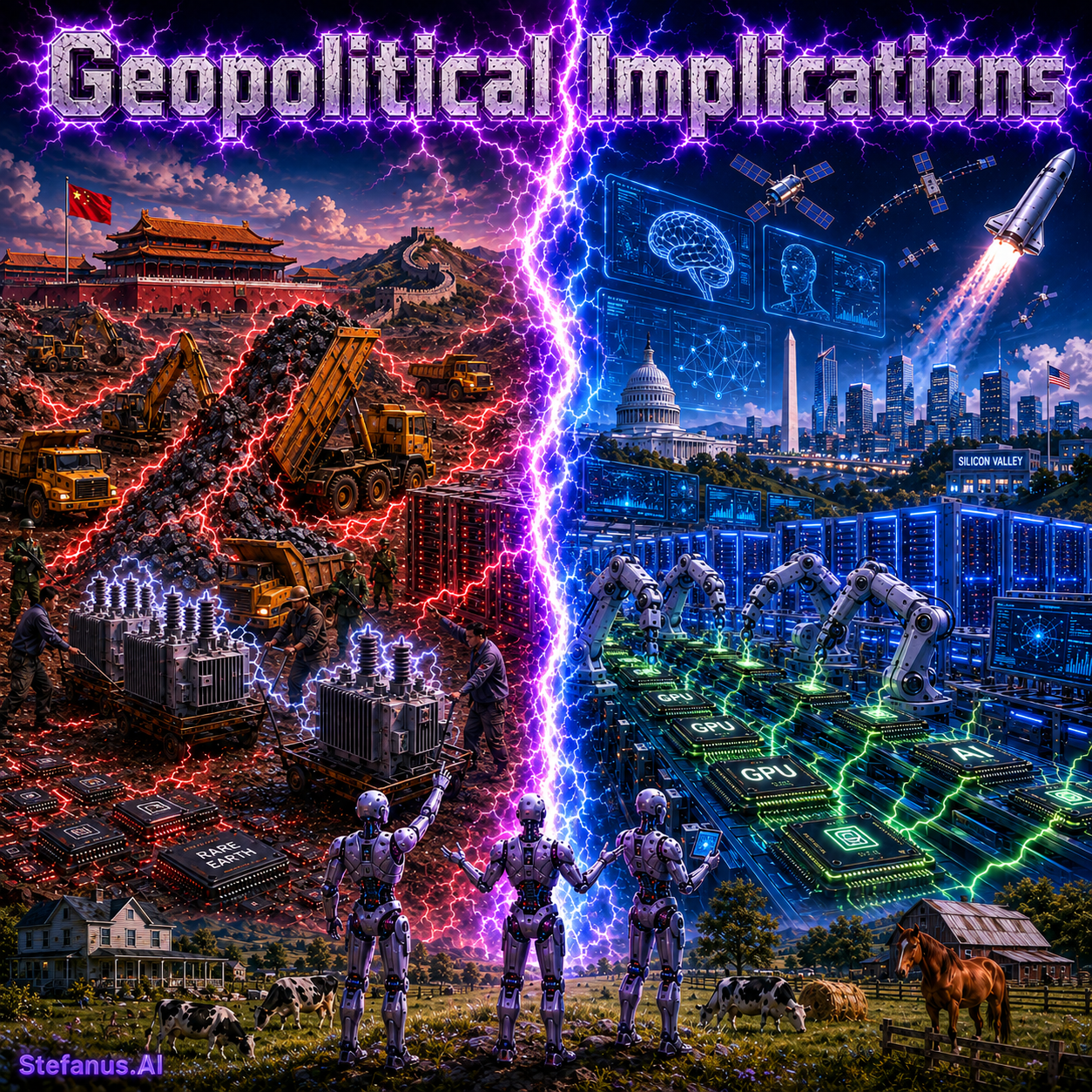
Geopolitical Implications: How the U.S.–China Bifurcation Is Reshaping the Five-Layer AI Economy — Energy Wars, Mineral Retaliation, Infrastructure Chokepoints, Model Borders, and the Contest for Agentic Power
Introduction: When Artificial Intelligence Acquired Borders The Datacenter That Possessed Everything Except Permission Somewhere in the American Sun Belt, a hyperscale datacenter stands nearly complete. The developer acquired the land two years ago after a bidding contest with three rival firms. Financing was approved by a consortium of banks and private-credit funds eager for exposure to artificial intelligence infrastructure. Tens of thousands of advanced accelerators have been ordered, invoiced, and in many cases already delivered to a bonded warehouse a few miles away. Construction crews have worked around the clock through two summers. The regional…
-
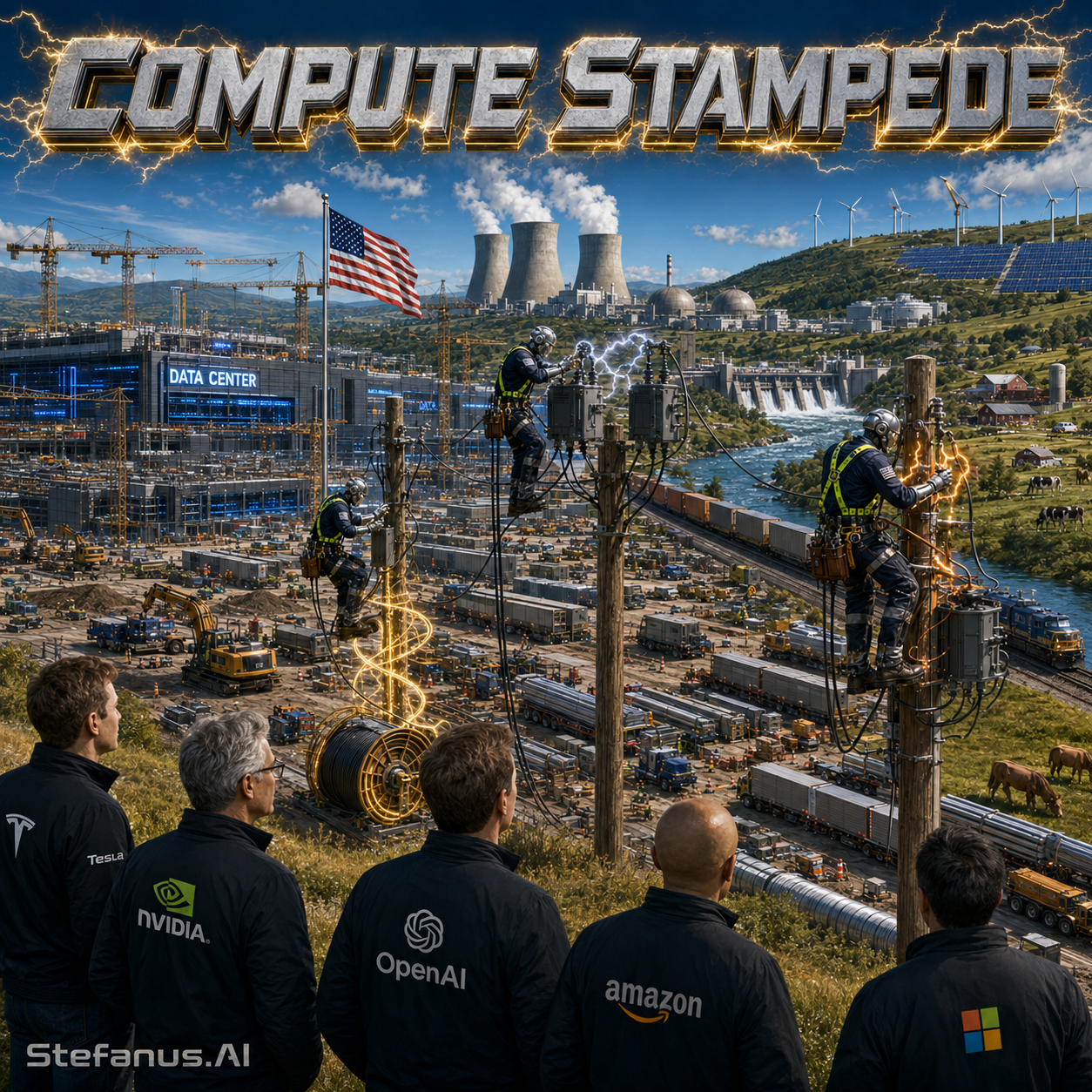
Compute Stampede: How Synchronized AI Datacenter Disconnections, Voltage Disturbances, and Machine-Load Rebounds Could Become the Next Systemic Risk to the Electric Grid
Introduction: The Morning the Lights Flickered from Chicago to Miami Just before eight o’clock on the morning of Wednesday, July 22, 2026, something strange happened to the electricity flowing through tens of millions of American homes. In kitchens outside Chicago, refrigerator compressors groaned and restarted. In office towers in Philadelphia, fluorescent lights dimmed, brightened, and dimmed again. In suburban basements from Boston to Miami, the small wall-plug sensors of a fire-prevention monitoring network — devices that sample household voltage millions of times per second — began recording something their operators had rarely seen at such…
-
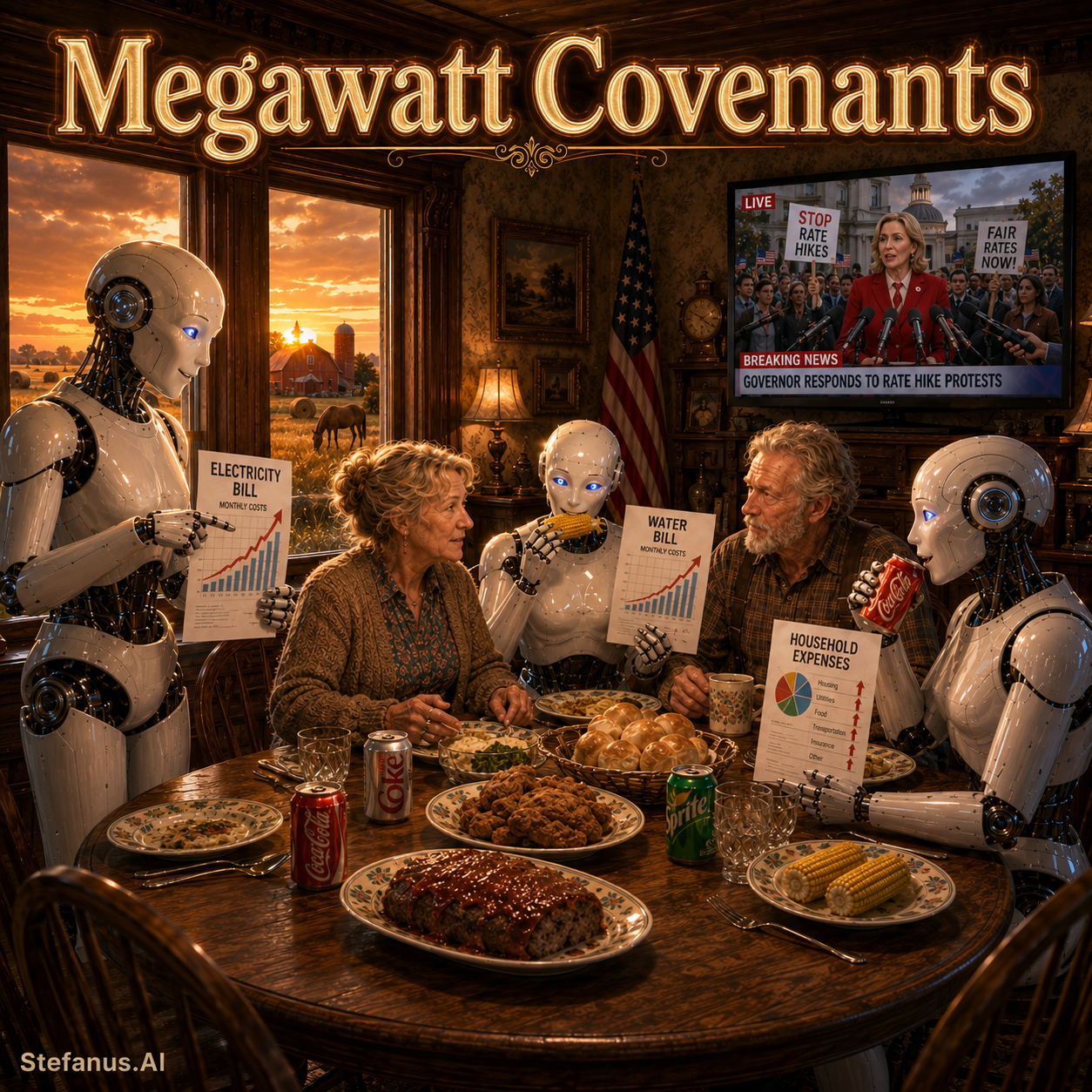
Megawatt Covenants: A Contractual Constitution for the Ratepayer Protection Pledge — Governing Who Pays, Who Curtails, and Who Profits from AI Power
Introduction: The Crisis of the AI Power Grid Begin with a light switch. In the winter of 2026, a retired schoolteacher in a small Ohio town — a town that had spent three years celebrating the arrival of a gleaming, windowless building at its edge — opened her January electricity bill and found it had risen again, the fourth increase in twenty-four months. She had never used a chatbot. She had never trained a model, rendered a video, or asked an algorithm to write a poem. Yet somewhere in the arithmetic of a regional capacity…
-
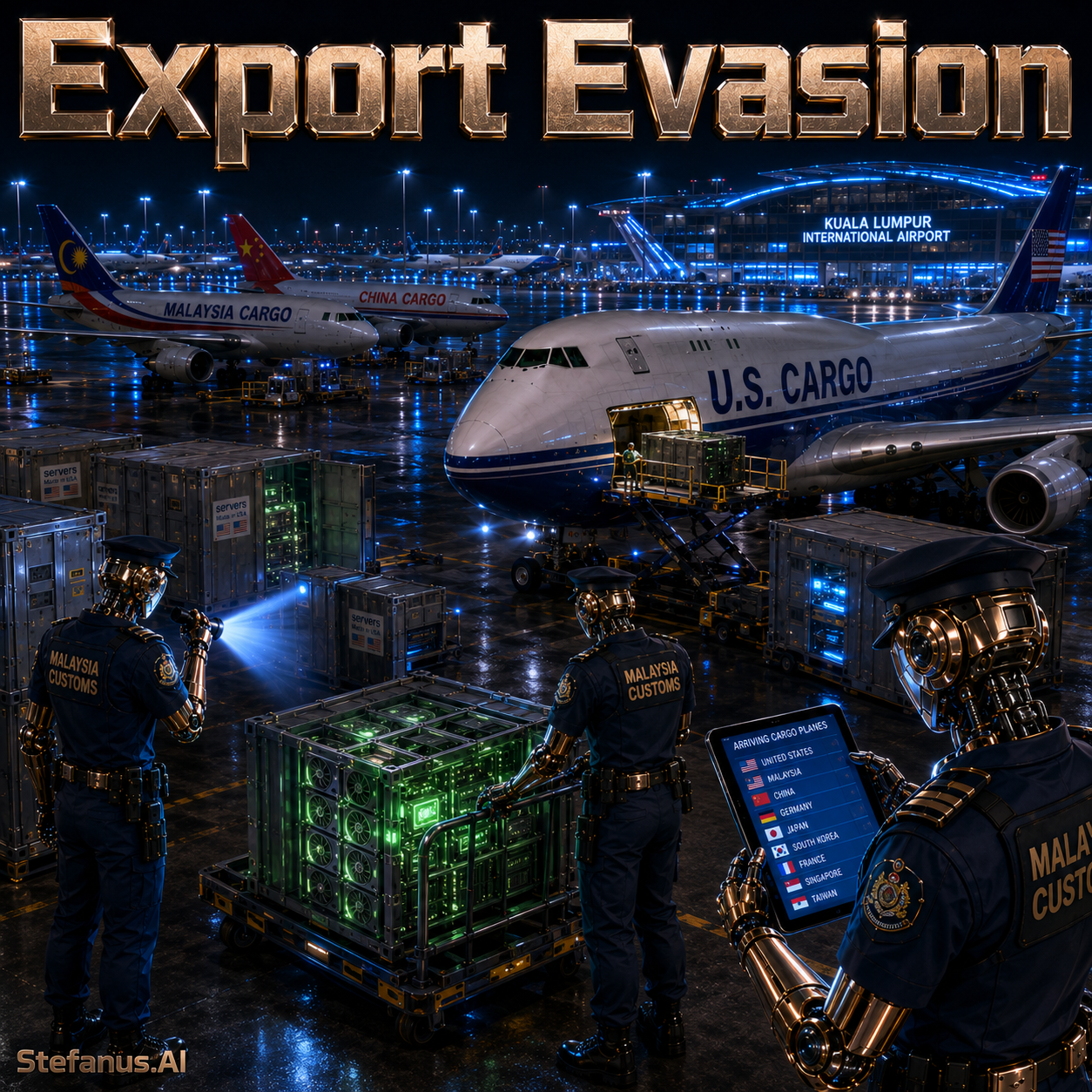
Export Evasion: Jurisdictional Decoupling, Cloud Workloads, and the New Architecture of Technology Controls in Multinational Ecosystems
Introduction: From Freight Tracking to Distributed Corporate Management Every export control regime in modern history has been, at bottom, a theory of geography. The Coordinating Committee for Multilateral Export Controls (CoCom) of the Cold War, the Wassenaar Arrangement that succeeded it in 1996, the Export Administration Regulations (EAR) administered by the U.S. Department of Commerce, and the International Traffic in Arms Regulations administered by the State Department all share a common architecture: a controlled item crosses a border toward a destination, and the license, the classification, and the enforcement action all attach to that crossing.…
-
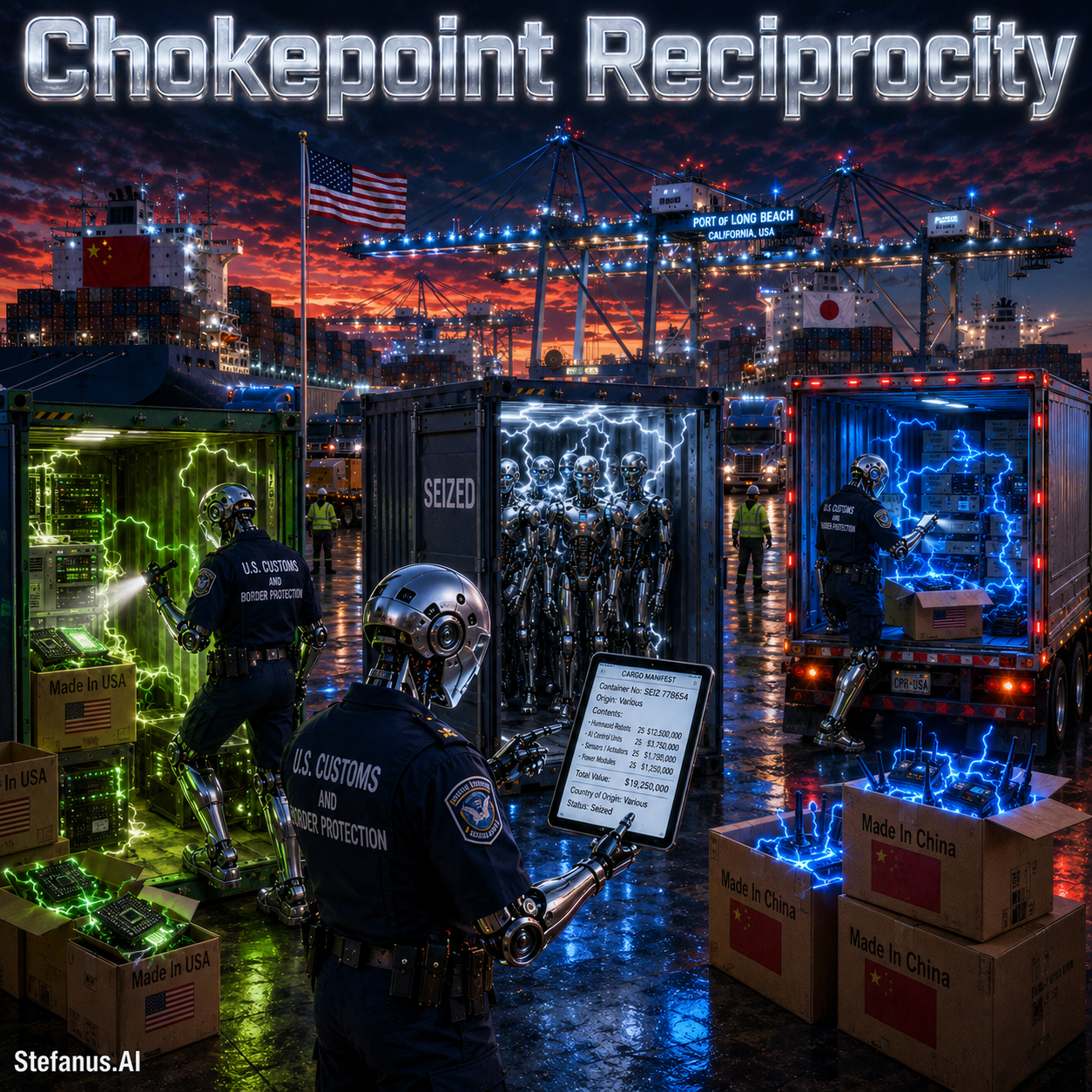
Chokepoint Reciprocity: How American Chip Restrictions and China’s Emerging Model, Data, Design, and Foundry Controls Are Creating a Two-Way Technology Conflict
Introduction: Two Hearings, One Week, and the End of an Era Consider a single week in July 2026, because it captures the entire argument of this paper in miniature. On Tuesday, July 14, Jeffrey Kessler, the U.S. Under Secretary of Commerce for Industry and Security, sat before the House Foreign Affairs Committee and confirmed that Nvidia had finally begun shipping its H200 artificial-intelligence processors to approved Chinese buyers — but only, in his words, “very few” of them, under a licensing regime so conditional, so contested, and so politically radioactive that four hundred thousand approved…
-
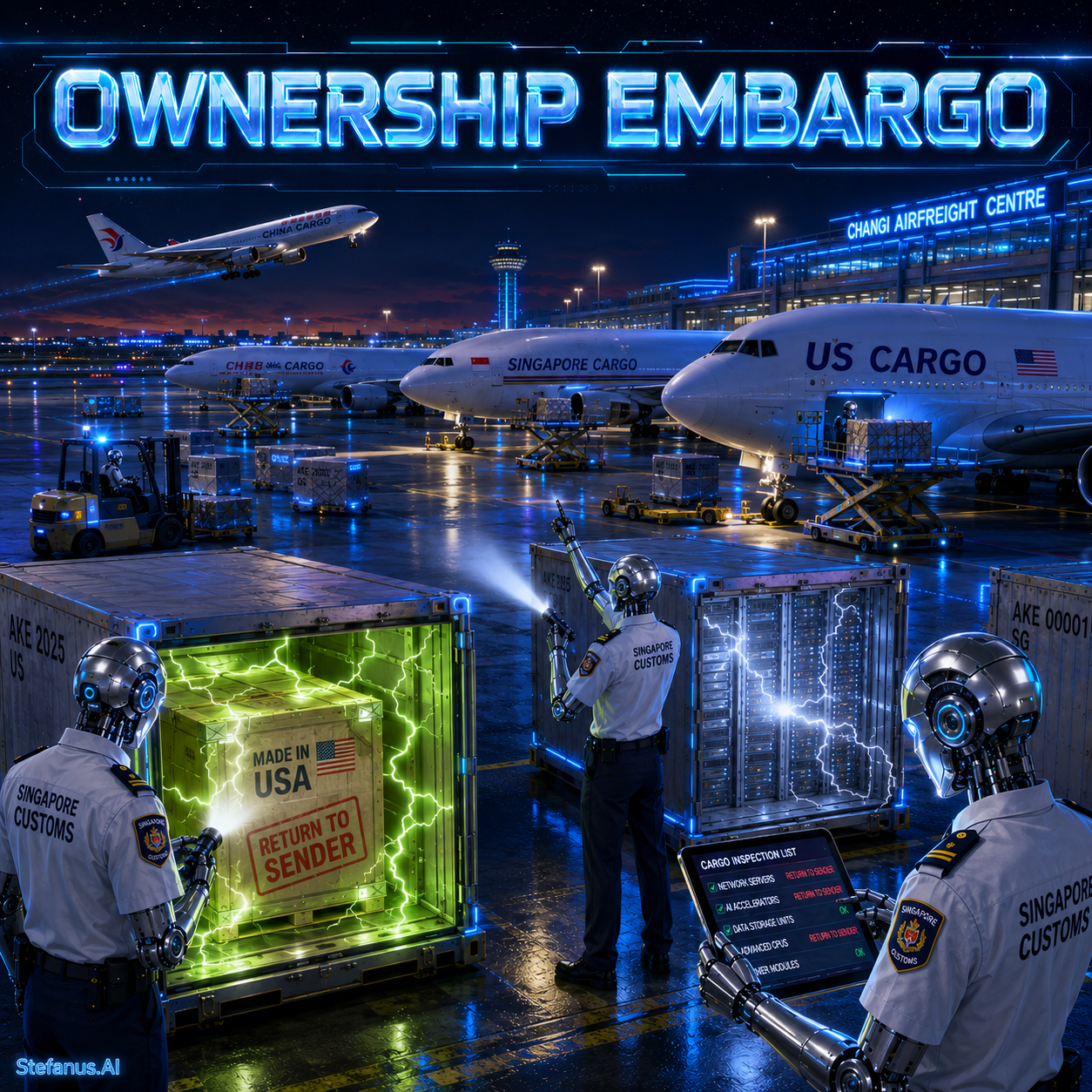
Ownership Embargo: How Governments Are Turning AI Acquisitions into Strategic Export-Control Events — The Five Transfer Rights, the Corporate Nationality Stack, and the Coming Age of Permissioned Ownership
Introduction: The Acquisition That Became an Export On April 27, 2026, a transaction that appeared to have already reached its conclusion became something else entirely. Meta had completed its acquisition of Manus, an artificial-intelligence company celebrated for building agents capable of executing complex, multistep digital tasks with minimal human input. The reported purchase price exceeded two billion dollars, making it one of the largest AI exits of the decade and, briefly, one of the most valuable exits in the history of Chinese-origin artificial intelligence.[1] Manus had done everything the conventional playbook of corporate migration prescribes.…
-
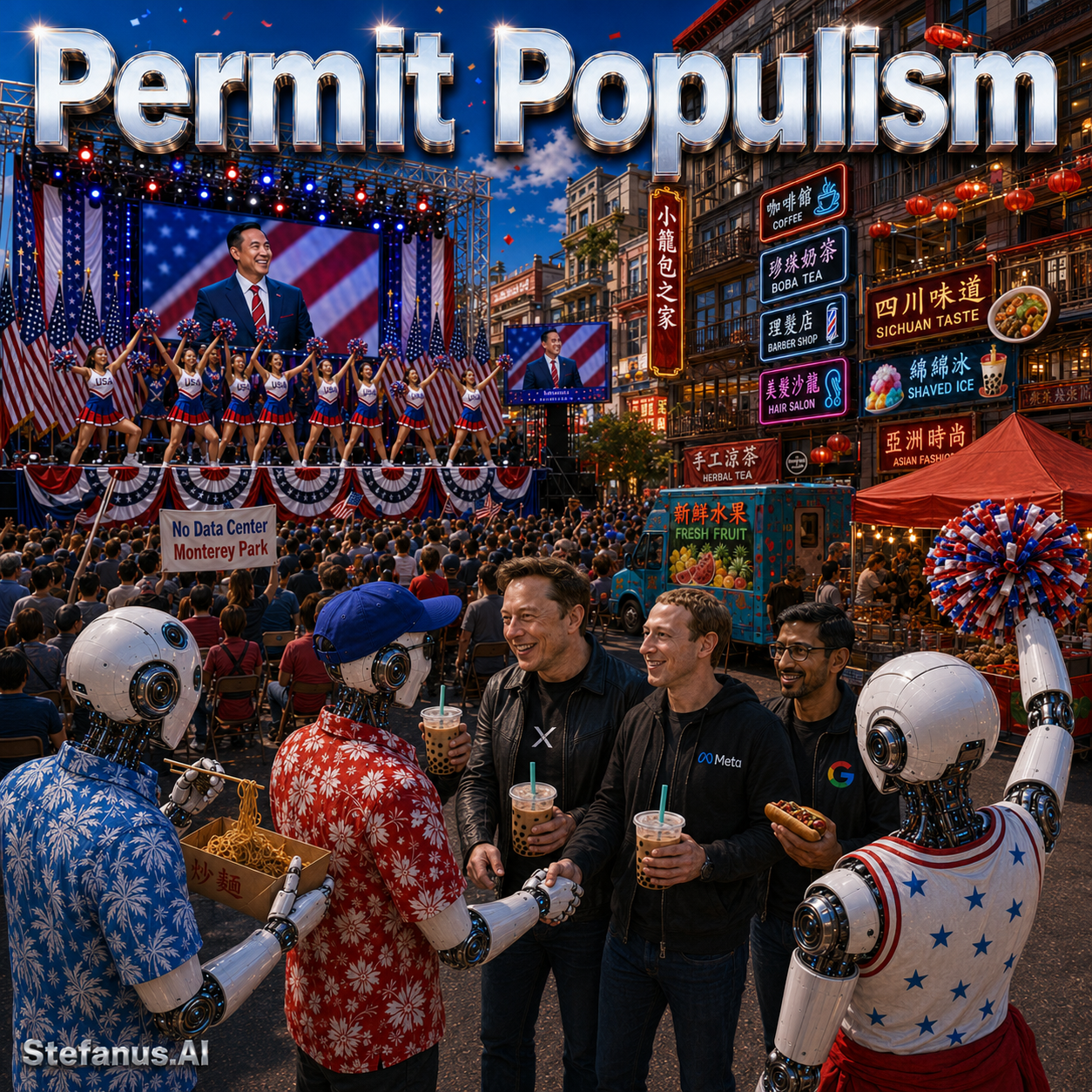
Permit Populism: Data Centers, Electricity Bills, and the New Political Geography of the 2026 Midterms — How Local Permits Became a National Referendum on AI Infrastructure
Introduction: The City Ballot That Became a National Referendum On the evening of June 2, 2026, in a modest mid-century city hall ten miles east of downtown Los Angeles, along the eastbound corridor of the I-10 freeway, the residents of Monterey Park did something that no American municipality had ever done before. By a margin of 10,321 votes to 1,362 — a landslide of 88.34 percent — they approved Measure NDC, a ballot initiative that permanently prohibits data centers within the city limits, amending the city’s General Plan so that the ban can only be…
-
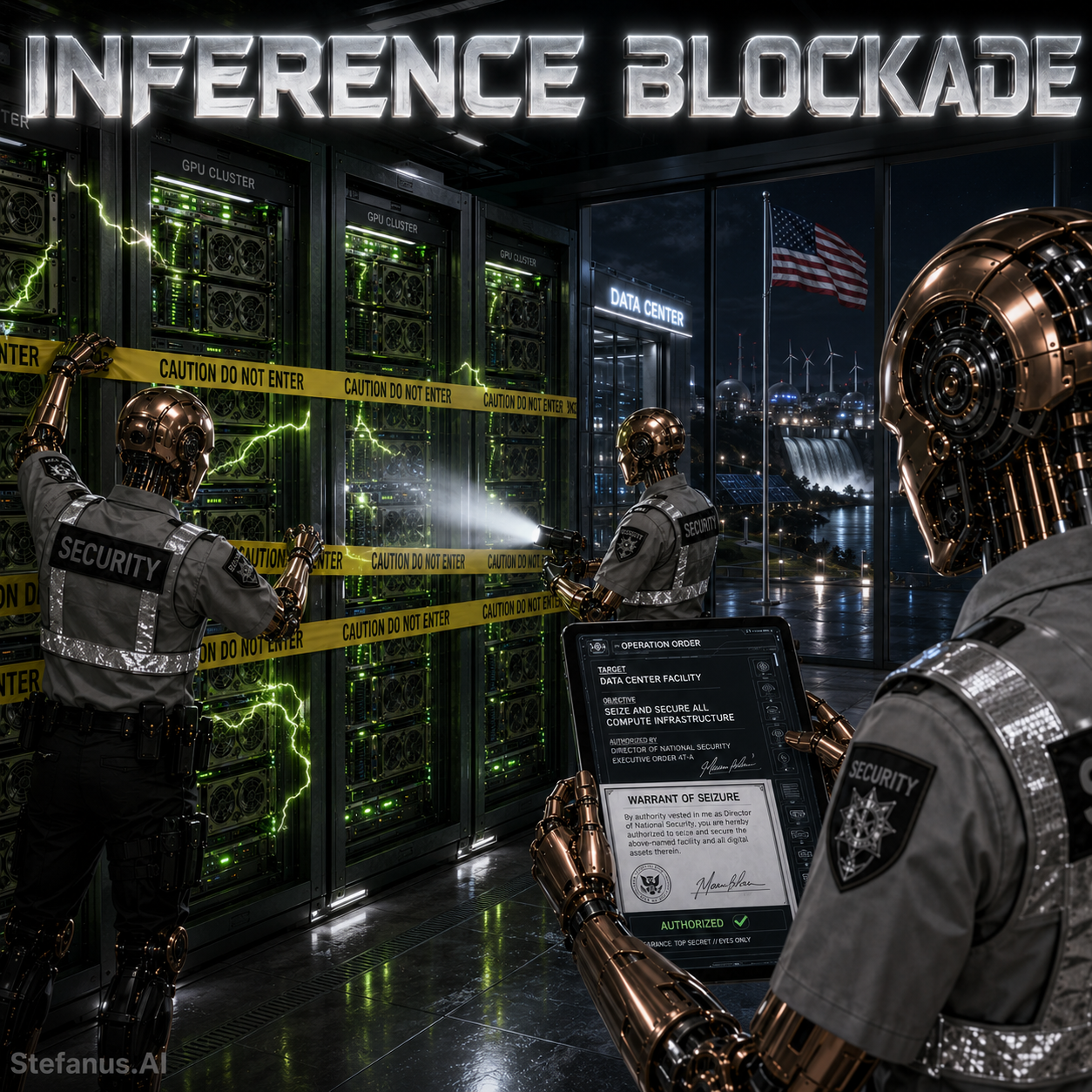
Inference Blockade: How the Post-Chip Sanctions Frontier Is Moving into Cloud Compute, Model Weights, APIs, and Autonomous Systems
Introduction: The Border That Became a Login Imagine a customs officer standing beside a sealed container at a major port. Inside are racks of advanced accelerators, high-bandwidth memory, networking equipment, and cooling components. The officer can inspect the manifest, identify the exporter and consignee, compare serial numbers, and determine whether the shipment requires a license. This is the familiar architecture of export control. It is physical, documentable, and territorial. A product leaves one jurisdiction and enters another. The law follows the movement of the item. Now imagine a different transaction. The accelerators never leave an…
-
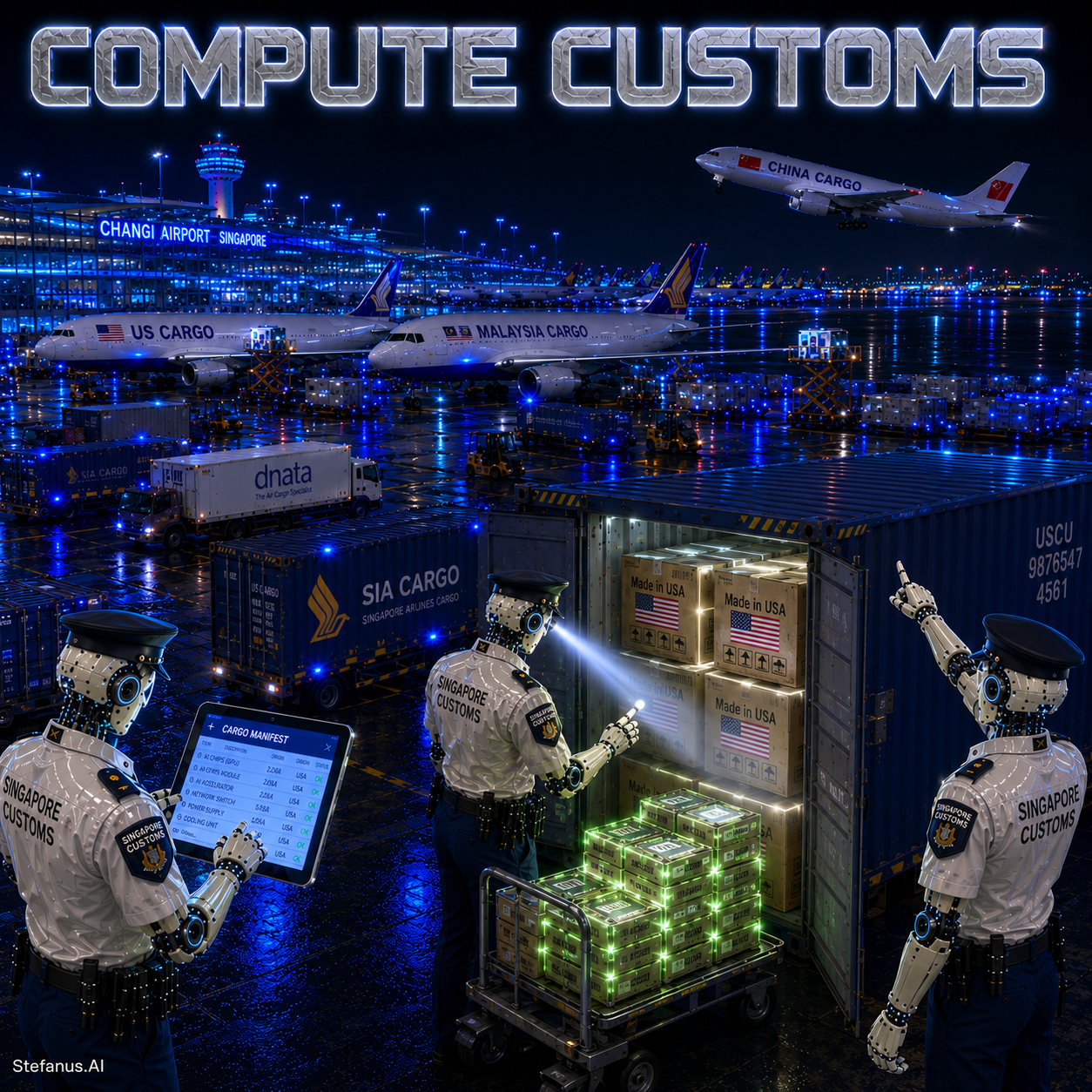
Compute Customs: Enforcing AI Export Controls Through Post-Distribution Hardware Tracking, Cloud-Cluster Auditing, and the Mapping of Corporate Diversion Networks
Introduction: The Day the Buyer List Was Cut in Half On July 14, 2026, Reuters carried a report, sourced to the Financial Times, that read like a quiet administrative notice but marked the arrival of a new era in technology governance: Nvidia, the world’s most valuable semiconductor company, had removed more than half of the Asian customers previously authorized to buy its advanced artificial-intelligence chips.[1] In their place stood a new internal “white list” of companies that had survived a dramatically tougher compliance regime — field inspections of customer data centers, contract verification, and interviews…
-
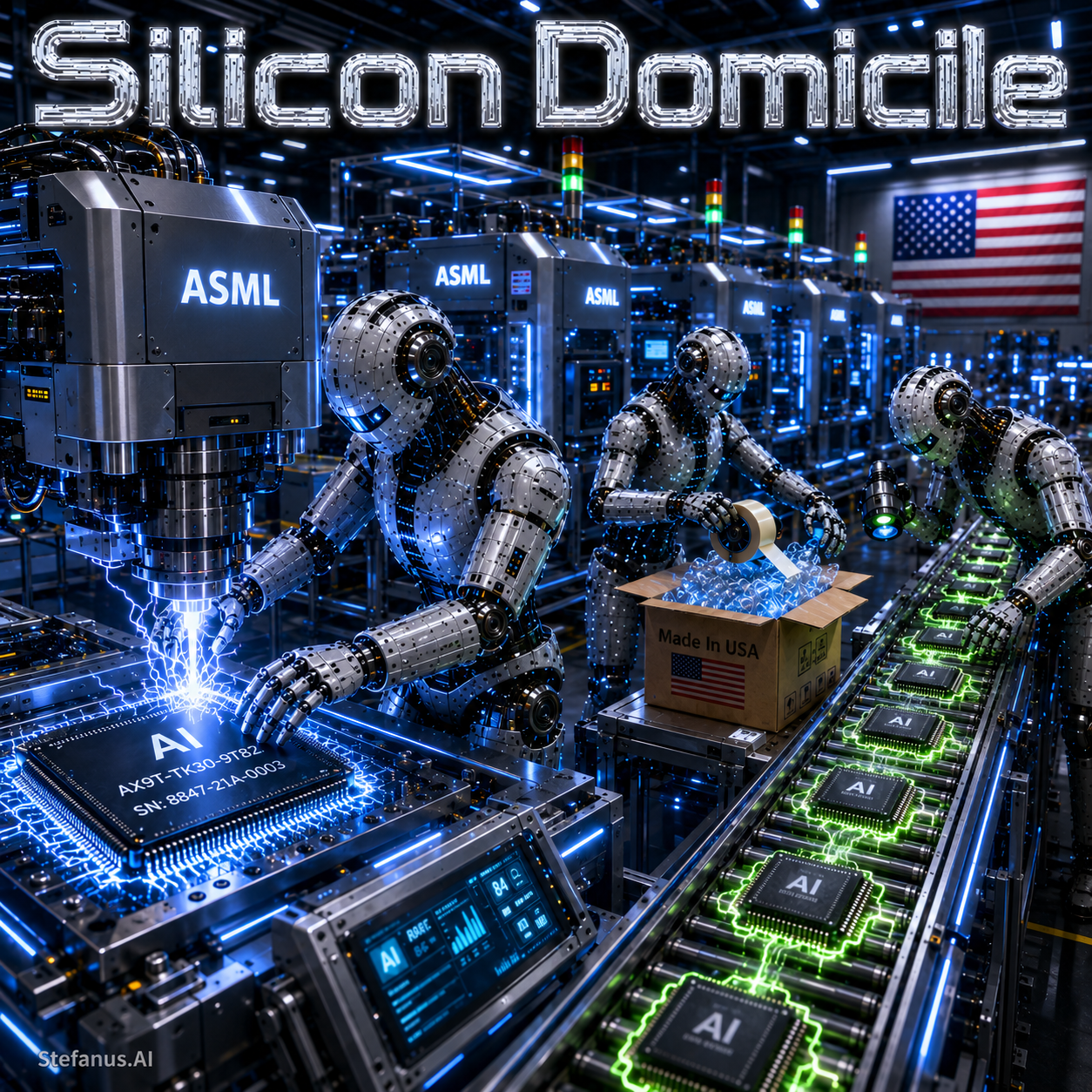
Silicon Domicile: Why Every Advanced Accelerator Will Need a Verifiable Home, Beneficial Owner, Operator, and Workload
Introduction: Seventy-Two Crates at Kuala Lumpur At approximately 4:30 in the afternoon on June 5, 2026, officers of the Royal Malaysian Customs Department’s KLIA Enforcement Division opened a warehouse inside the Free Commercial Zone of Kuala Lumpur International Airport and found seventy-two server units that were not supposed to exist there. The shipping paperwork described the cargo, blandly and falsely, as “computer components.” The reality inside the crates was RM52.9 million — nearly US$13 million — worth of servers containing advanced artificial intelligence chips, flown into the free trade zone and staged for re-export to…
-
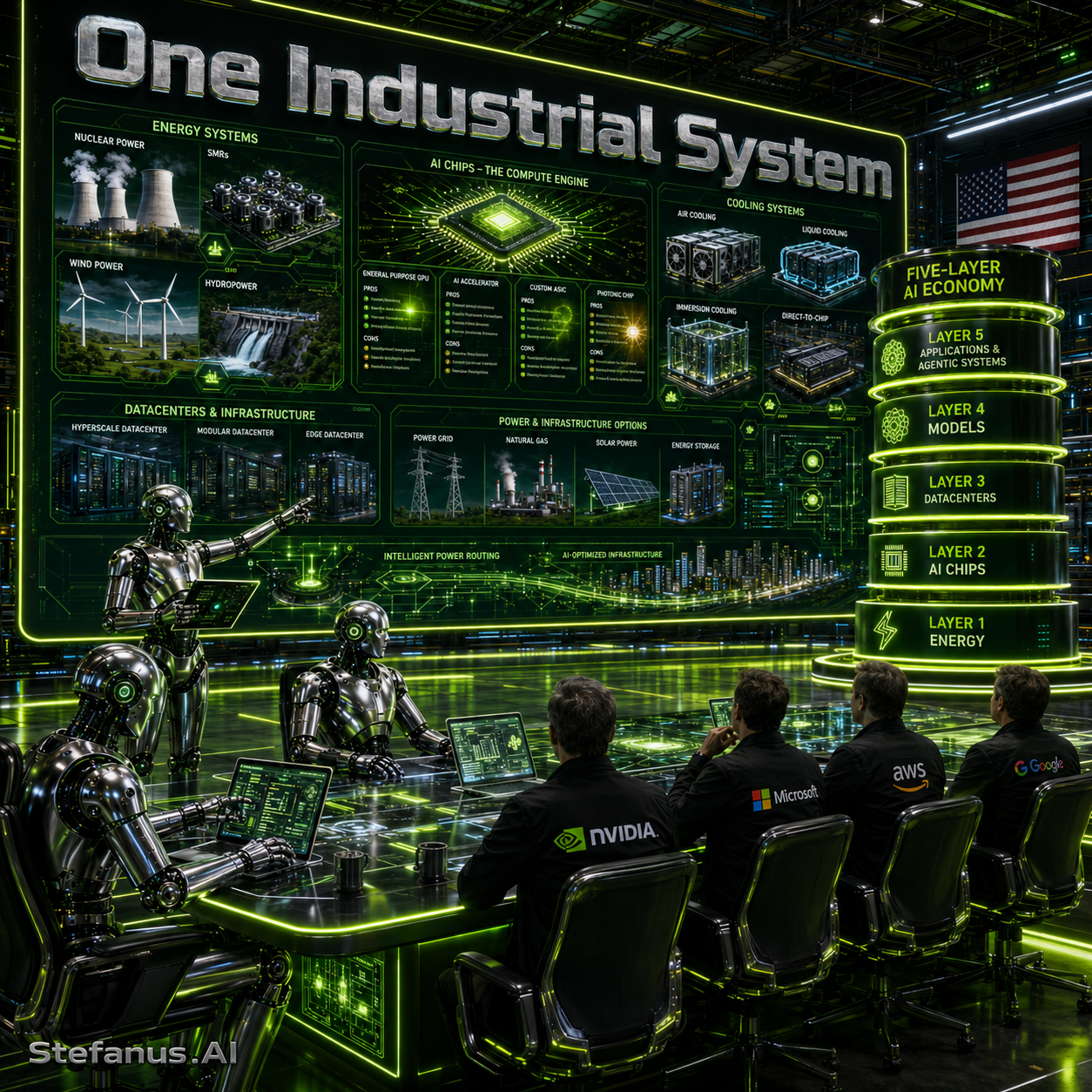
One Industrial System: The Five-Layer AI Economy, the Collapse of the Modular Tech Stack, and the Rise of the Vertically Integrated Intelligence Machine
Introduction: The Weaver’s Loom of the 21st Century In the early nineteenth century, the city of Lowell, Massachusetts, became the cradle of the American Industrial Revolution by introducing a radical concept: the integrated textile mill. Before Lowell, the manufacturing of cloth was a fractured, modular affair. One merchant bought raw cotton; another cleaned it; a separate cottage spinner spun it into yarn; a distant weaver turned it into fabric; and a final finishing shop dyed, pressed, and packaged the cloth. Each participant optimized his own narrow step, traded with the others across open markets, and…
-
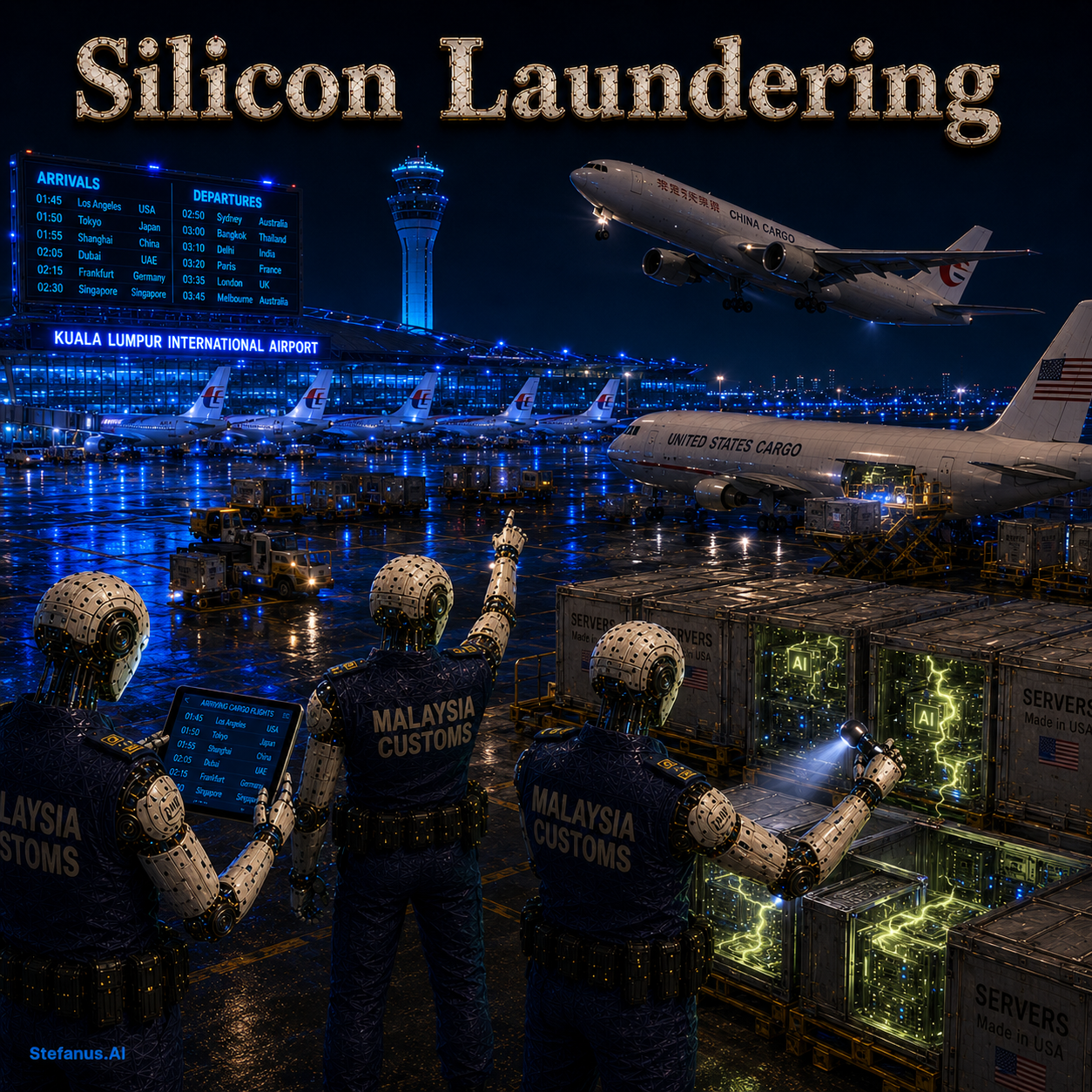
Silicon Laundering: How AI Chip Smuggling, Transit Jurisdictions, Hidden GPU Clusters, and the Race for Compute Provenance Are Rewriting Export Control
Introduction: A Customs Officer Opens a Box at Kuala Lumpur International Airport In early June 2026, long before most people finished their morning coffee in Kuala Lumpur, a shipment moved quietly through the Free Trade Zone of Malaysia’s main international airport. On paper, the cargo looked entirely ordinary: computer components, server equipment, electronics passing through one of Asia’s busiest logistics corridors. It did not arrive with the drama of a spy novel. There were no submarines, no diplomatic pouches, no secret meetings in hotel rooms. There were only pallets, invoices, airway bills, customs forms, and…
-
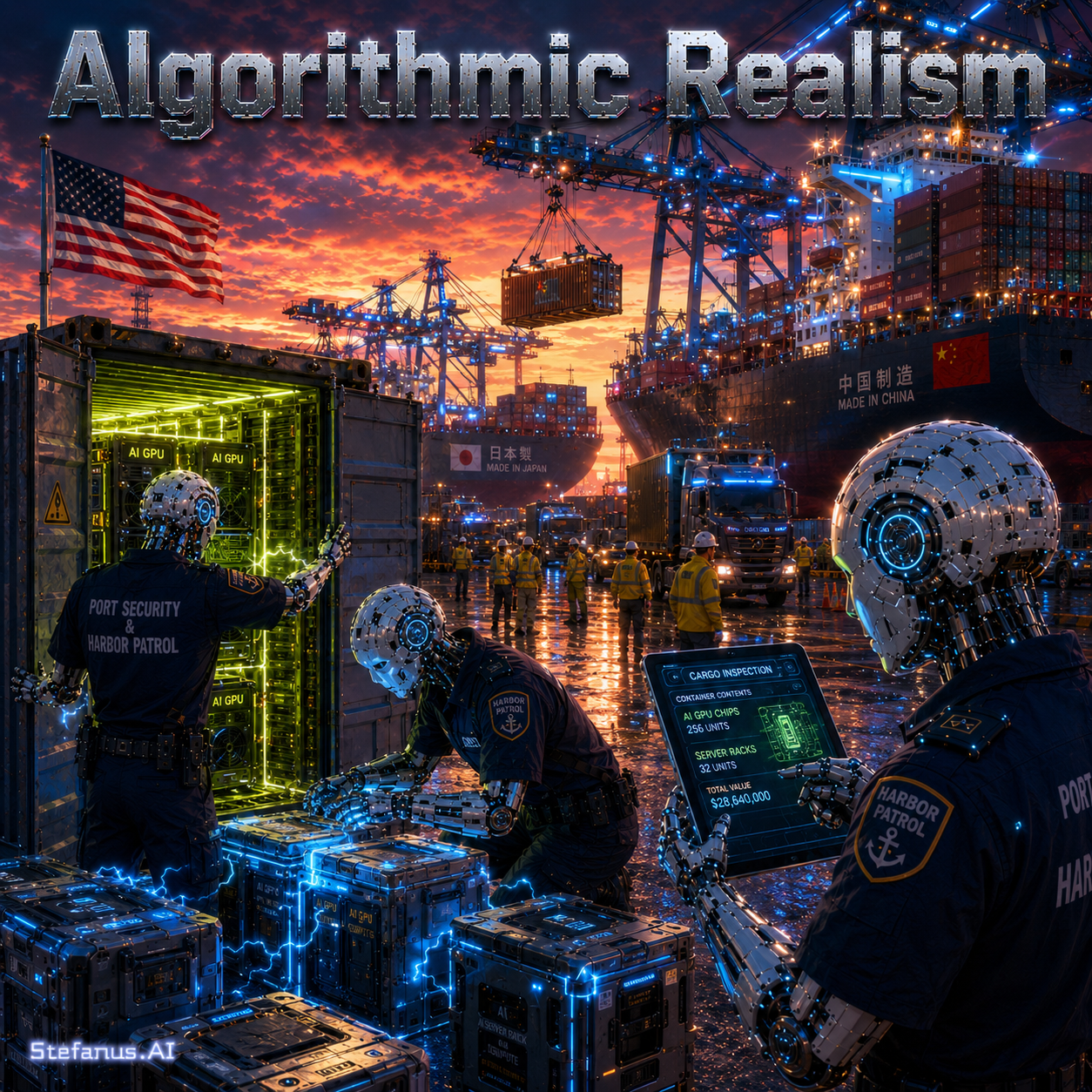
Algorithmic Realism: Strategic Autonomy, Export Controls, and the Fragmentation of the Digital Frontier — A Study in the Geopolitics of Artificial Intelligence, Compute Sovereignty, and the New Technological Order
Introduction: The Death of the Borderless Algorithm On May 28, 2025, buried in the routine language of a quarterly earnings release, NVIDIA — then, as now, the most valuable company ever built on the sale of arithmetic — disclosed a single accounting item that captured the end of an era. The company recorded a $4.5 billion charge for excess inventory and purchase obligations on its H20 processor, a chip that had been deliberately engineered downward, hobbled by design, to squeeze beneath the performance thresholds of American export controls so that it could still legally be…
-
AI Nationalism: How the Anthropic Export-Control Crisis Exposed America’s Doctrine of Sovereignty, Self-Reliance, and Technological Containment
Introduction: At 5:21 p.m. Eastern Time on Friday, June 12, 2026, a letter arrived at Anthropic’s San Francisco headquarters that would, within hours, sever hundreds of millions of people around the world from the most capable commercial artificial intelligence models ever released to the public [1][2]. The letter came from Commerce Secretary Howard Lutnick, addressed to Anthropic’s leadership, and it instructed the company to suspend, immediately and without exception, all access to Claude Fable 5 and its more capable sibling Claude Mythos 5 by any foreign national anywhere in the world, including foreign-born Anthropic employees…
-
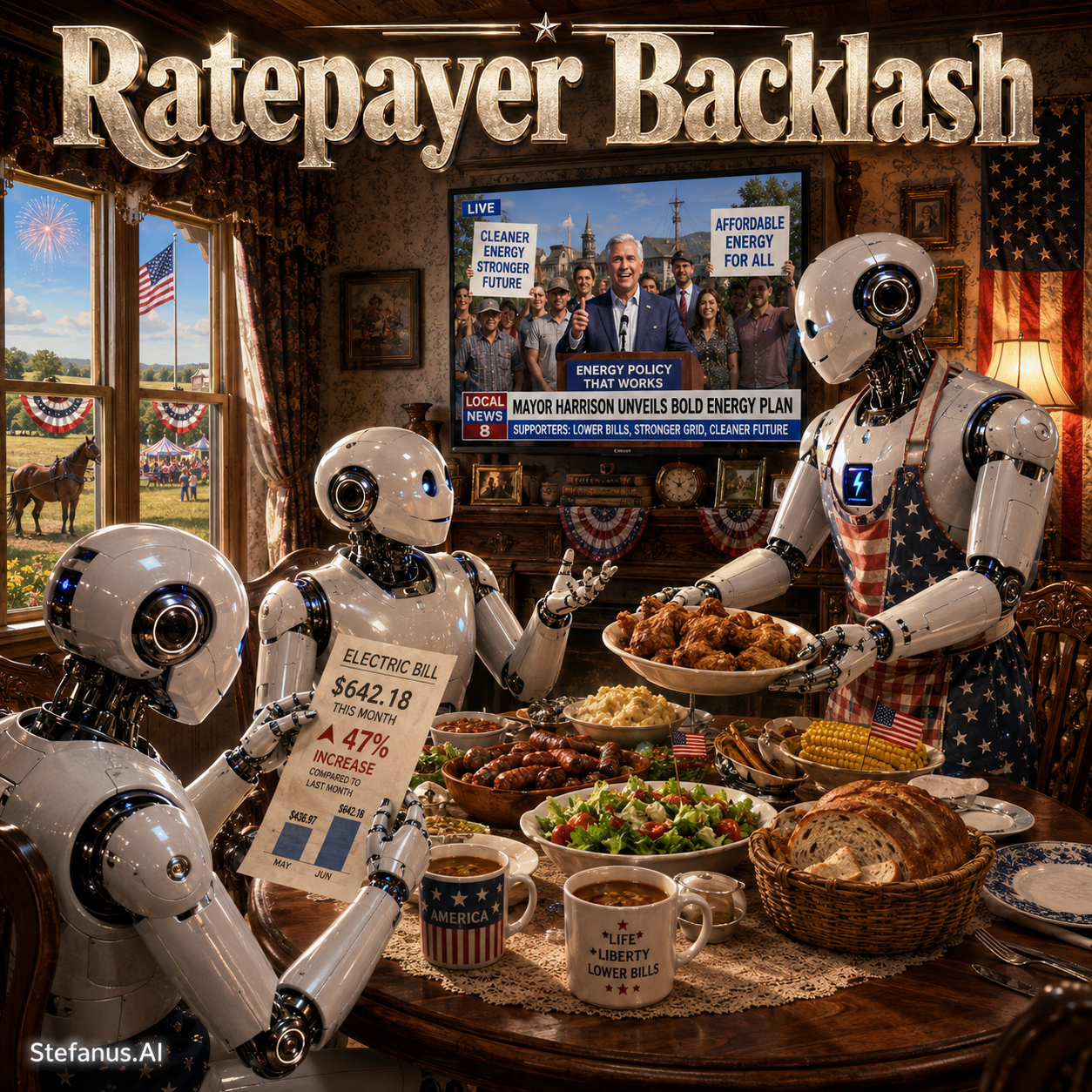
Ratepayer Backlash: How AI Data Centers Shift Grid Costs to Local Households — The New Political Economy of AI Infrastructure — Utility Bills, Tax Incentives, Power-Grid Readiness, and the Local Politics of Who Pays
Introduction: The Month the AI Bill Arrived On the last day of June 2026, a heat wave settled over the Mid-Atlantic and pushed electricity demand across the PJM Interconnection toward an all-time record. PJM, which coordinates the wholesale grid for sixty-seven million people across thirteen states and the District of Columbia, warned that peak load could surpass the 166,000-megawatt mark, eclipsing a record that had stood since 2006 [1]. As the heat intensified, wholesale power prices in Virginia’s Dominion zone, the heart of the nation’s data-center corridor, leapt past $1,500 per megawatt-hour, and average day-ahead…
-
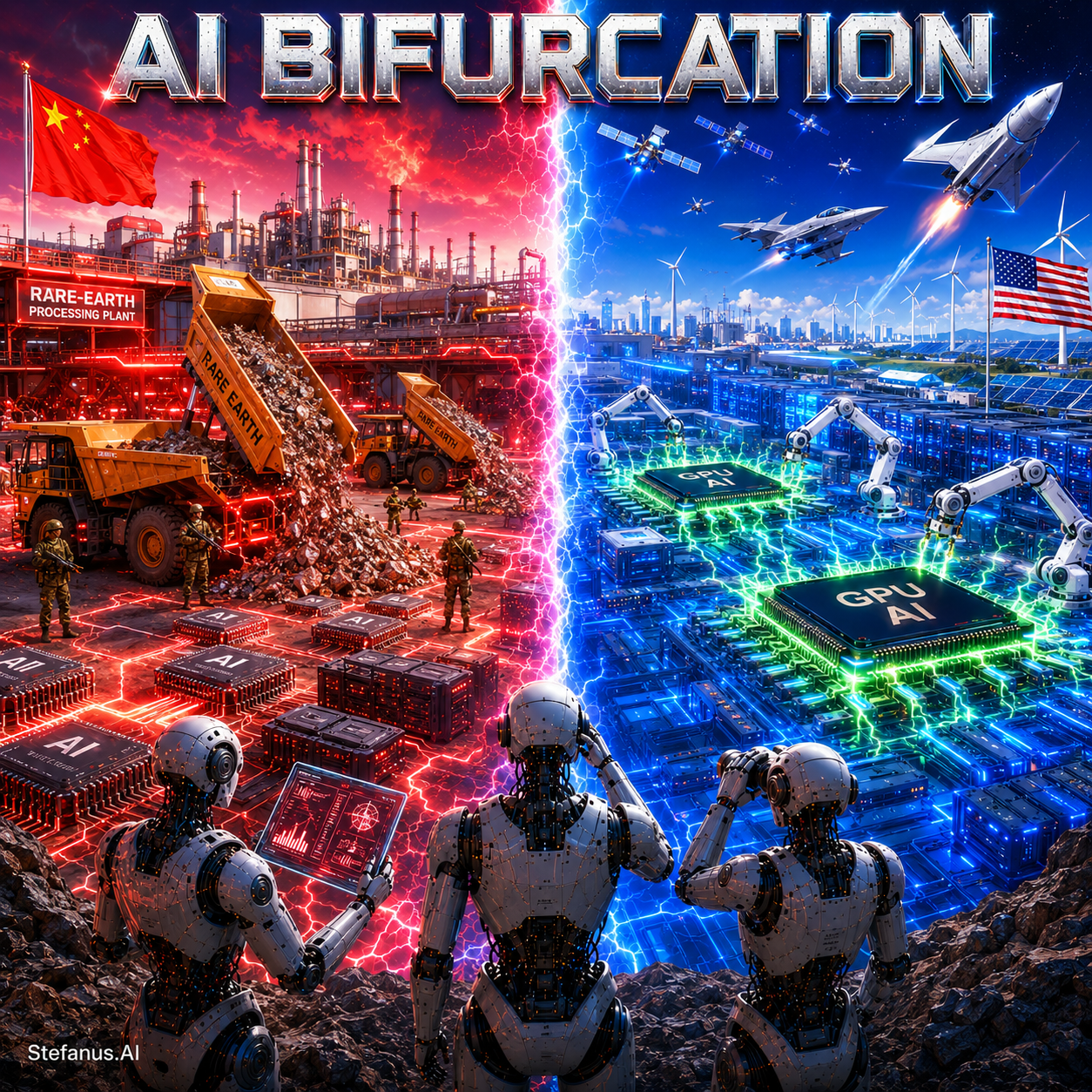
AI Bifurcation: The Geopolitical Split in Global Compute and Superpower Supremacy — Mapping the Asymmetric Bipolarity of a Fractured Digital Order — From the Silicon Layer to the Diplomatic Frontier
Introduction: The End of the Unified Machine “The digital frontier may serve as a new barrier to global convergence rather than a bridge.” — International Monetary Fund, Global Economic and Financial Implications of Artificial Intelligence (April 2026) For the better part of three decades, the digital revolution rested upon a single, rarely examined premise: that the world’s technology supply chain was fundamentally one organism. It was globalized, interdependent, and unified by an economic logic so powerful that it appeared immune to politics. An algorithm conceived in a Silicon Valley office was accelerated by a chip…
-
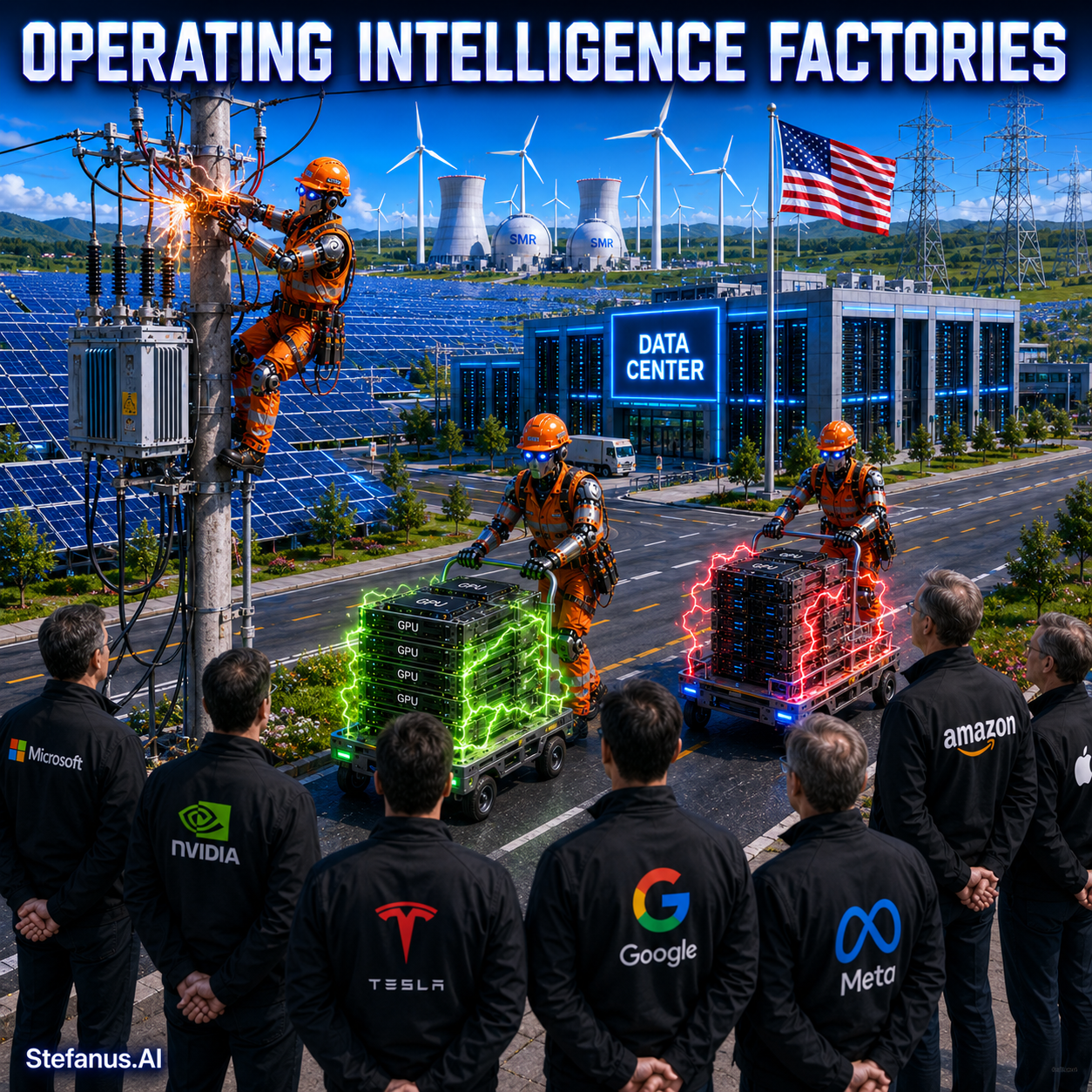
Operating Intelligence Factories: Managing the Unit Economics of Continuous AI Workloads — From the Research Laboratory to the Assembly Line — How Power, Specialized Silicon, and Algorithmic Efficiency Now Decide Who Survives the Age of Mass-Produced Intelligence
Introduction: The Factory Has Replaced the Laboratory There is a particular kind of building that defines every industrial age, and the building tells you almost everything about the economics of the era that produced it. The age of steam was defined by the textile mill, a structure organized around a single central shaft turning hundreds of looms. The age of oil was defined by the refinery, an immense lattice of distillation towers and pipe runs designed to crack crude into a hierarchy of useful fractions. The age of the automobile was defined by the assembly…
-
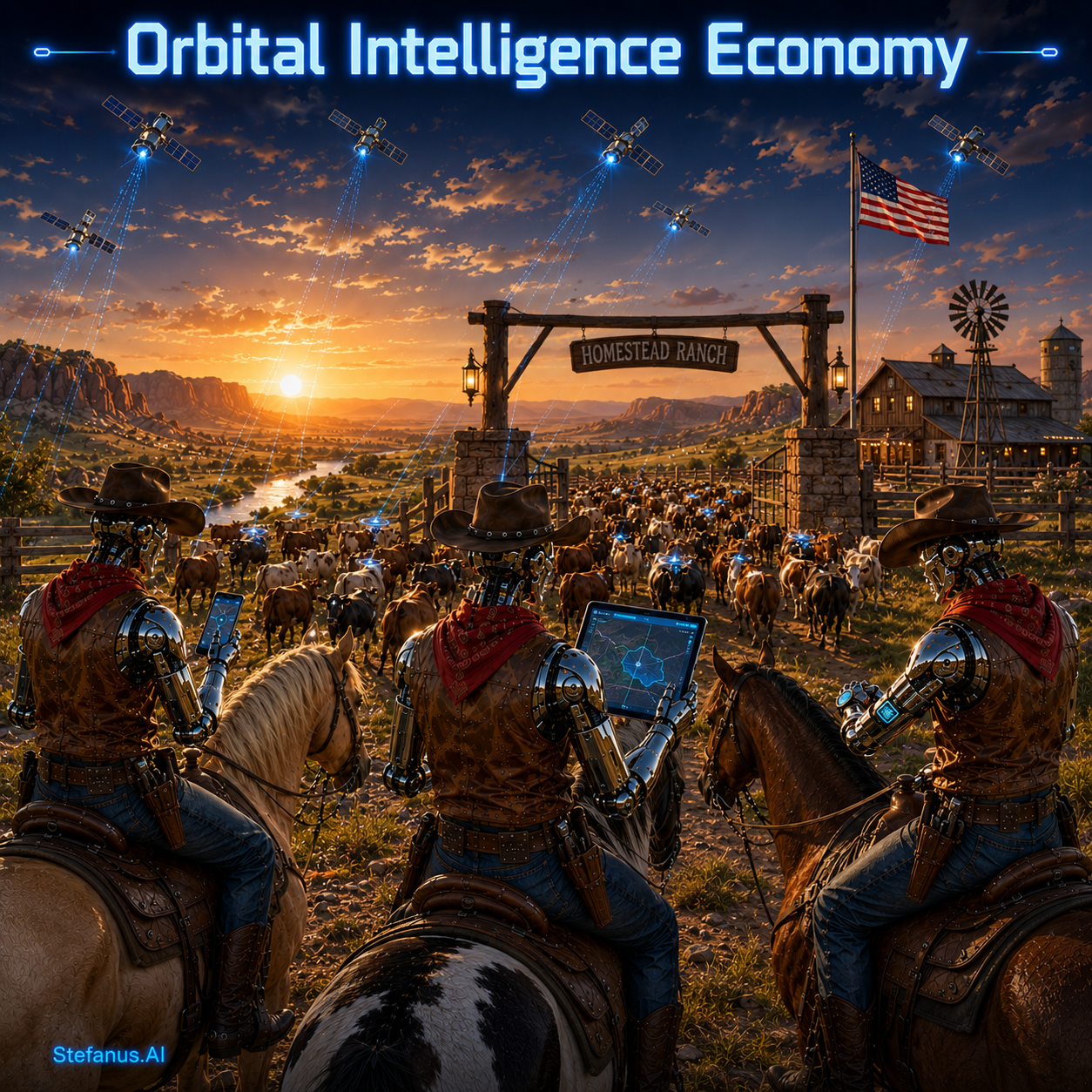
Orbital Intelligence Economy: Toward a Foundational Architecture for Global Infrastructure — Integrating Space-Based Satellites with Terrestrial Artificial Intelligence to Capture, Process, and Sell Intelligence Directly from Orbit
Introduction: From Cowboys on Horseback to Satellites in Orbit There is a particular image worth holding in mind before any of the technology, financing, or geopolitics in this paper can make sense. Picture a cowboy on horseback, riding for hours across rough, broken terrain, pushing cattle back toward a ranch before nightfall, worried the entire time that rustlers might slip a few head away in the confusion of dust and distance. This has been the basic shape of ranching for longer than anyone alive can remember: a human being, an animal, a fence, and the…
-
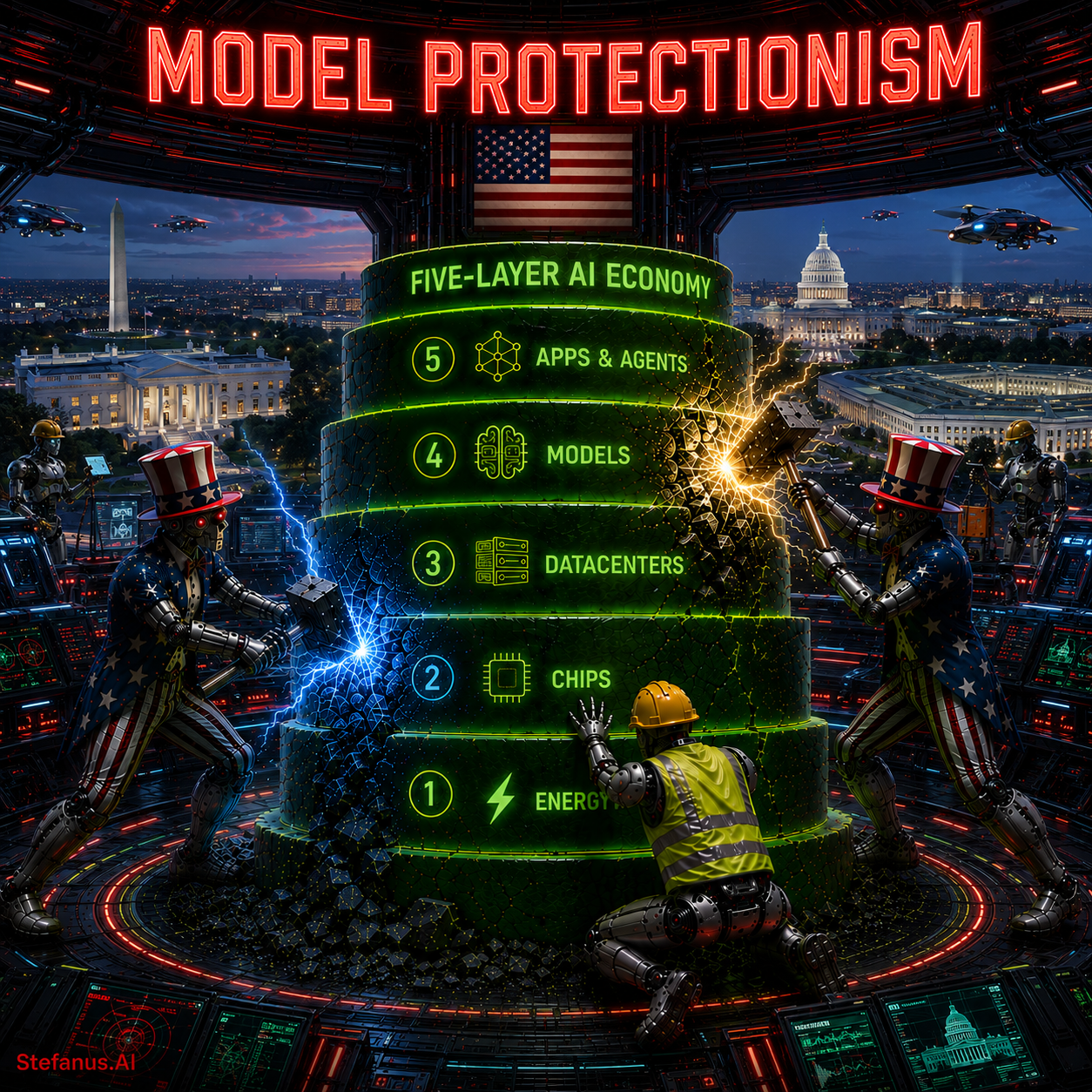
Model Protectionism: How the Anthropic Block Knocked Down the Second Layer of Jensen Huang’s Five-Layer AI Economy and Signals the Rise of the Algorithmic Iron Curtain
Introduction: A Cake Being Eaten from The Bottom Up On January 21, 2026, Jensen Huang took the Davos stage at the World Economic Forum alongside BlackRock CEO Larry Fink and delivered what would become the most referenced framework in AI policy discussions of the year. He described artificial intelligence not as software, not as a product, not as a service, but as a five-layer industrial economy — a “cake” whose layers, from bottom to top, are: Energy, Chips, Datacenters, Models, and Applications/Agentic Systems. Each layer, Huang explained, feeds the one above it. Energy powers chips.…
-
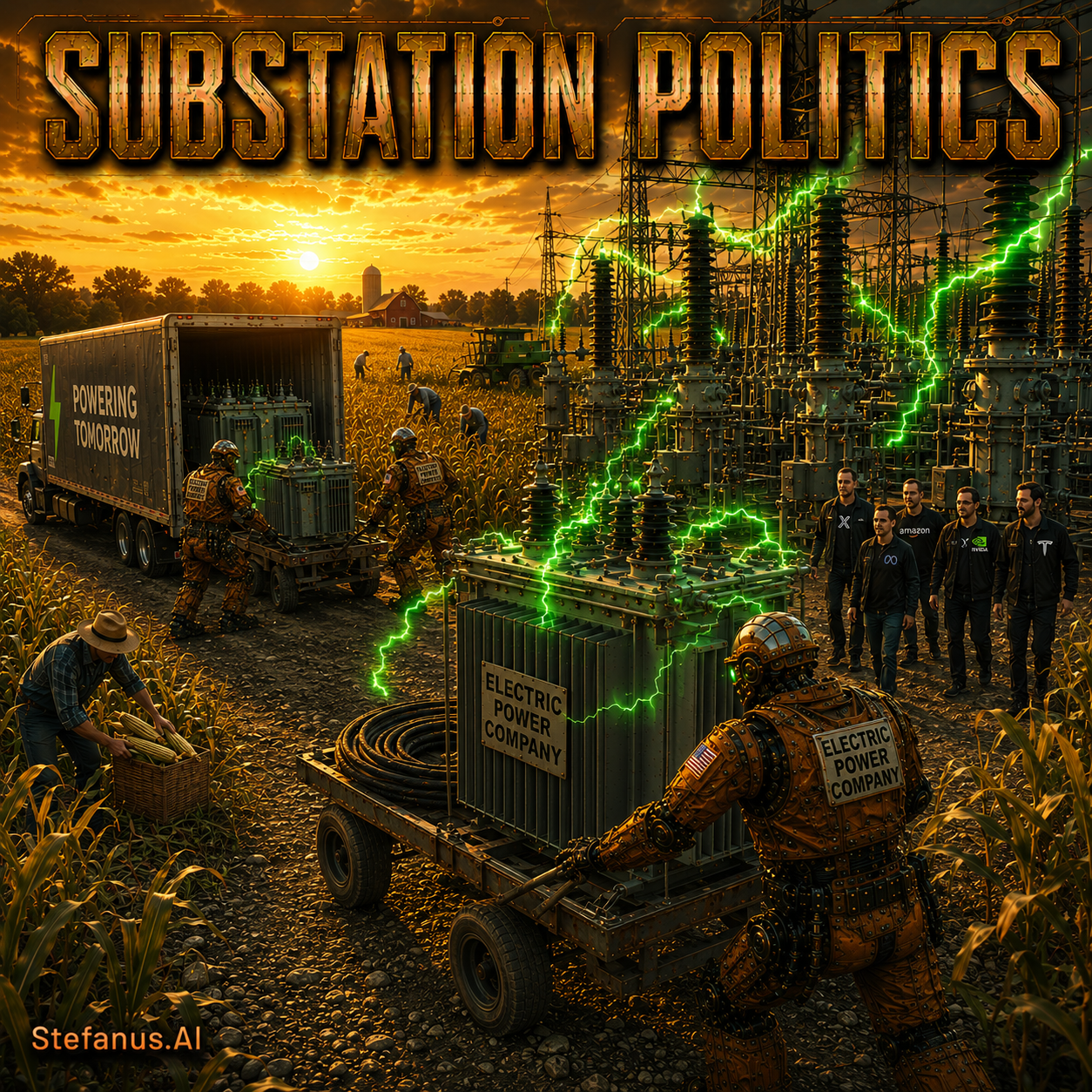
Substation Politics: How AI Data Centers, Power Bottlenecks, and Local Grid Nodes Are Rewriting the Geography of American Growth
Introduction: The Night the Future Stopped at a Transformer There is a moment in every technological revolution when the weight of ambition meets the resistance of physical reality. For the railroad era, it was the mountain range that forced engineers to dynamite through granite rather than route around it. For the electrification era, it was the thousand miles of copper wire that had to be strung from pole to pole across a continent that had never seen artificial light. For the nuclear era, it was the cooling tower, the containment vessel, the exclusion zone. For…
-
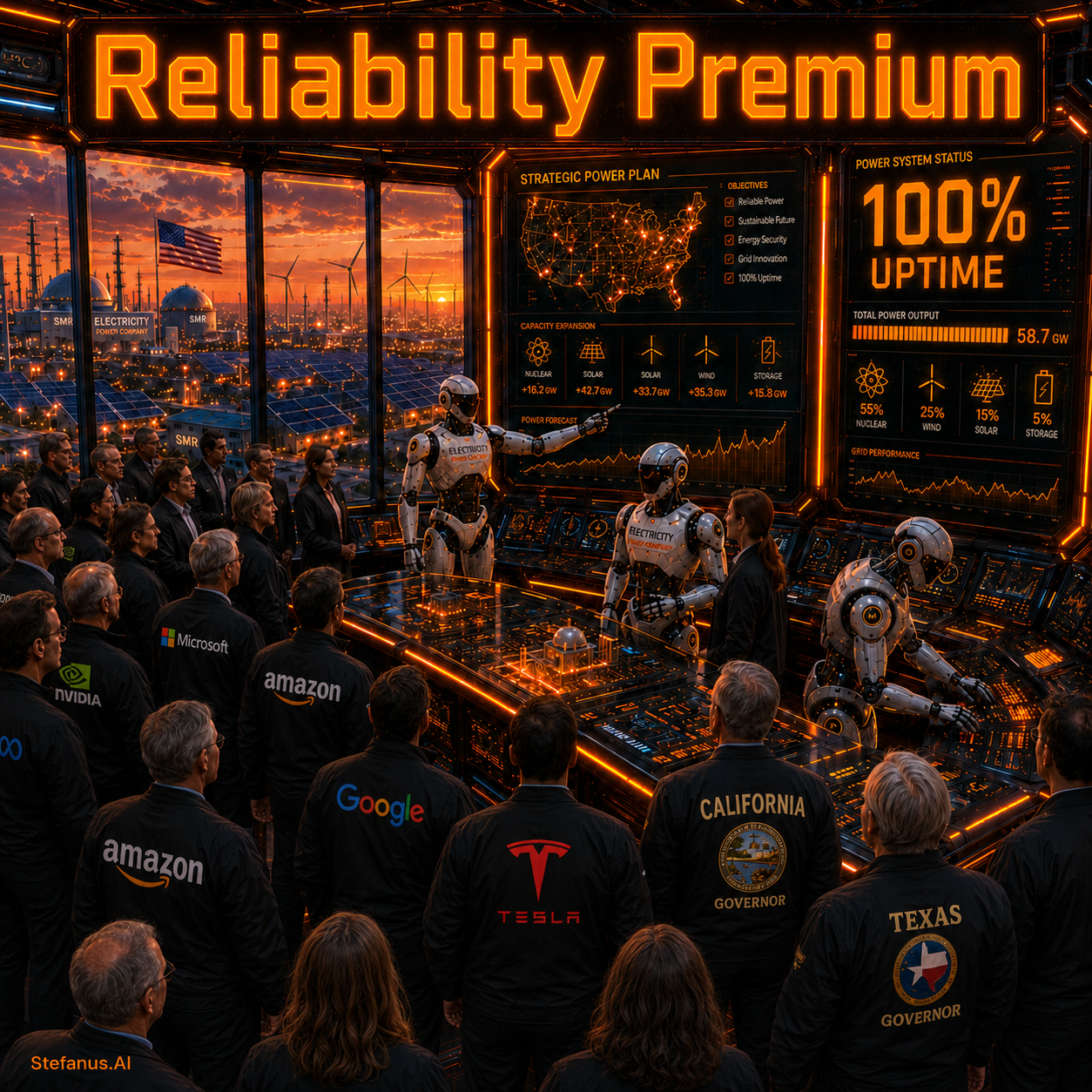
Reliability Premium: Why the AI Economy Will Pay More for Power That Never Fails
Introduction: The Night the Model Went Dark In the early years of this century, before the phrase “artificial intelligence” had entered the vocabulary of governors or utility commissioners, I worked for a web hosting company navigating the turbulence of the 2000–2001 California electricity crisis. Rolling blackouts swept through the state during summer heat waves, and our data center lost power multiple times. The support team fielded customer complaints while scrambling to explain why critical services were offline. Local news attributed the shortages to soaring demand, particularly from air conditioners. But in the data center business,…
-

Synthetic Geography: How Artificial Intelligence Rewires the Physical World — Energy, Chips, Data Centers, and the New Geography of Intelligence
Introduction: From Natural Geography to Synthetic Geography Before artificial intelligence, geography was organized around natural advantages. Saint Louis rose because the Mississippi River made trade, transport, settlement, and westward expansion not merely possible but historically inevitable. The river was the economic artery of the American interior, and every city that sat along it prospered precisely because geography — the shape of the land, the flow of the water, the contour of the valley — gave it a structural advantage that no amount of human capital or political ambition alone could replicate. Railroads later reorganized America…
-
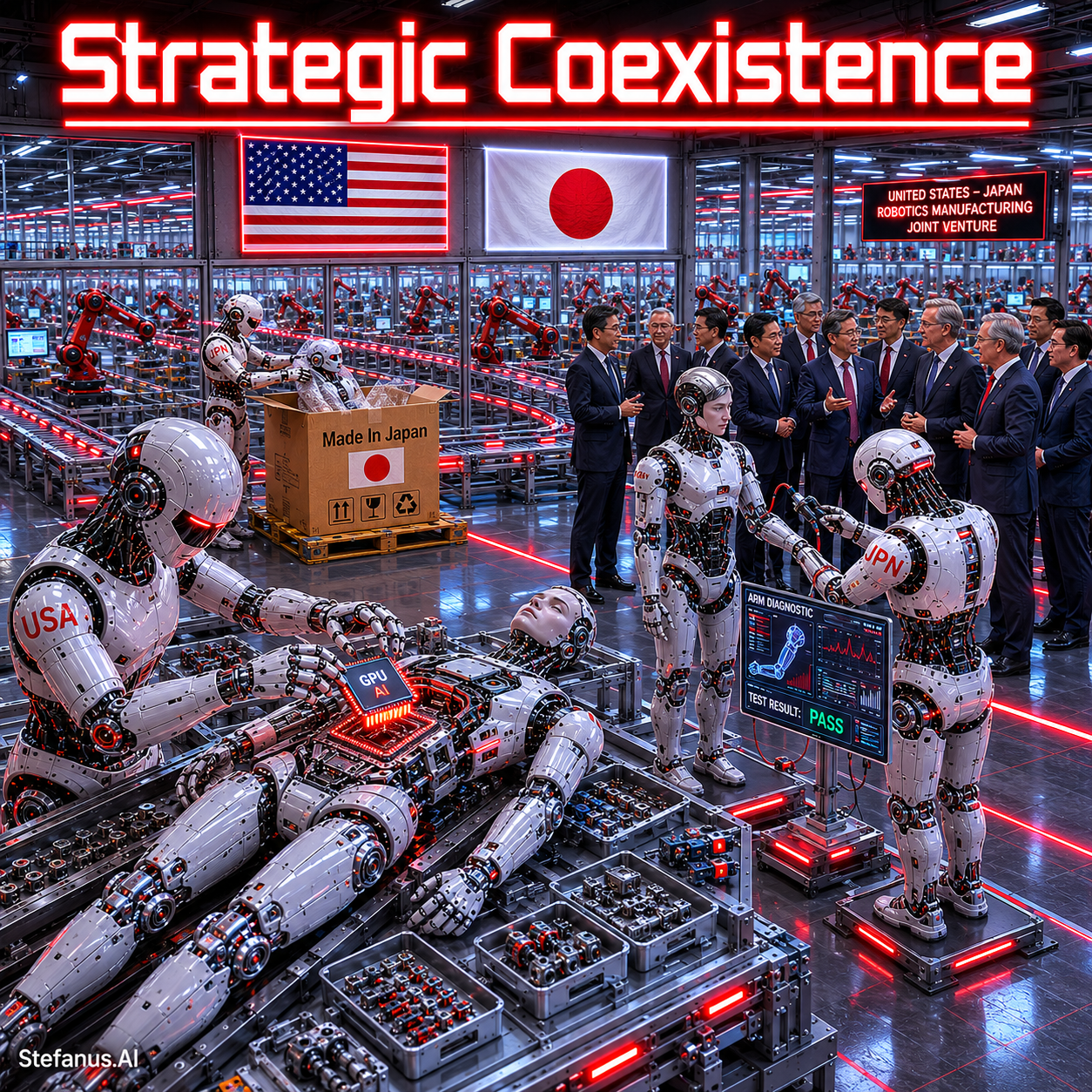
Strategic Coexistence: How Security Alignment and Geopolitical Dynamics Are Shaping Industrial Automation and Personal Robotics in the Age of Allied Technology Competition
Introduction: Much of the discourse surrounding the US-China bifurcation of the global intelligence economy has rightly focused on the contest between the two superpowers — on export controls, chip wars, data regulation, and the race to artificial general intelligence. What has received comparatively less attention, however, is the texture of the world that exists beyond this binary: the vast space of allied coexistence where the United States and its strategic partners have forged technology ecosystems that depend on one another precisely because they trust one another. It is in this space — between the adversarial…
-
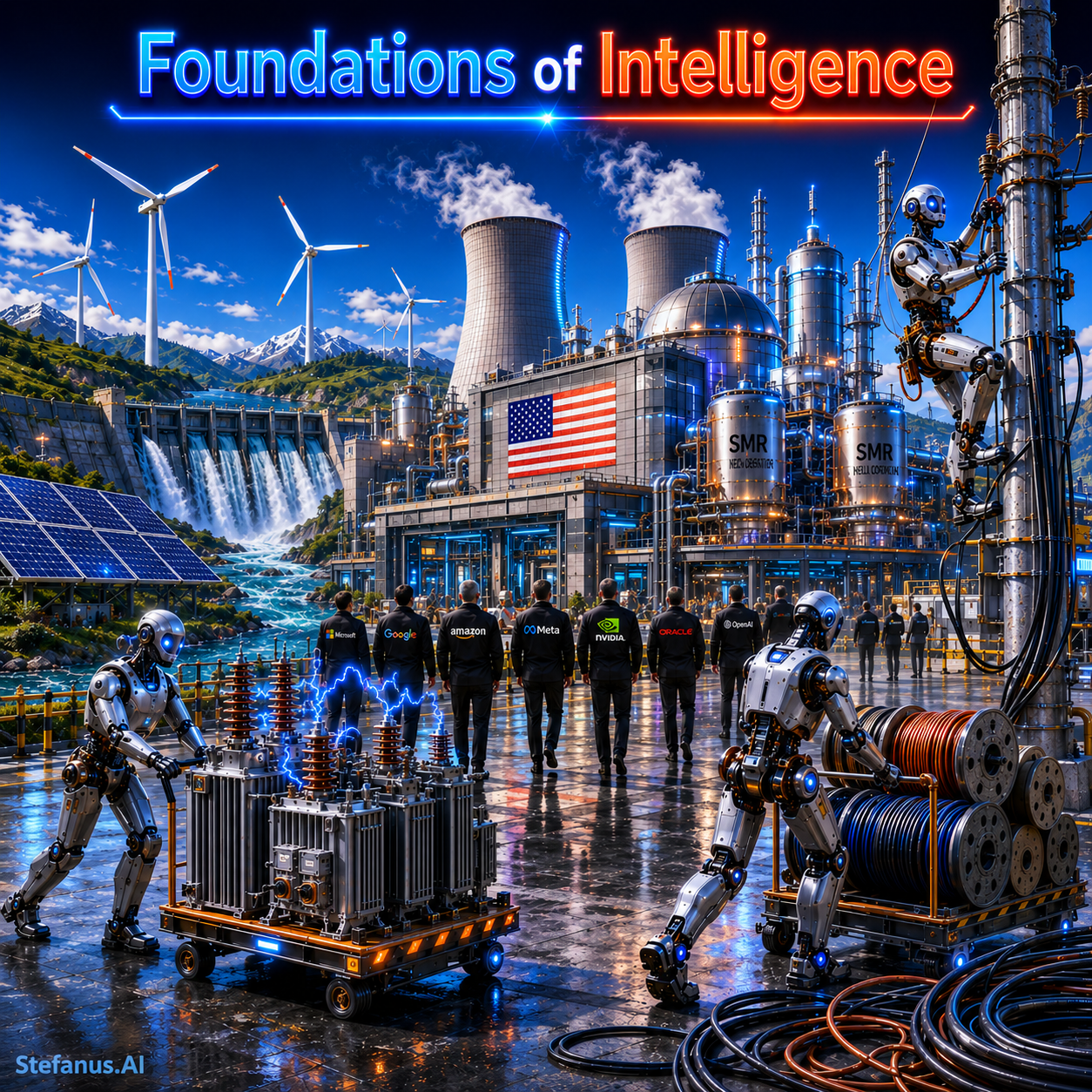
Foundations of Intelligence: Why Energy Is the Most Critical Layer of the Five-Layer AI Economy — Rebuilding the Bottom Layer of Computation Through Power Generation, Grid Infrastructure, and Strategic Energy Partnerships in a World Racing for Intelligence Supremacy
Introduction: The Forgotten Foundation of Artificial Intelligence There is a question that almost no one asks when they discuss artificial intelligence, yet it contains within it the entire logic of the AI era. Before the transformer architecture, before the GPU cluster, before the trillion-parameter model, before the autonomous agent that may one day reshape labor and capital — what was needed? The answer is not engineering talent, not venture capital, not geopolitical ambition, though all of these matter. The first requirement is electricity. Artificial intelligence does not begin with models. Artificial intelligence begins with electricity.…
