
Category: In Progress
In progress is about done and live
-
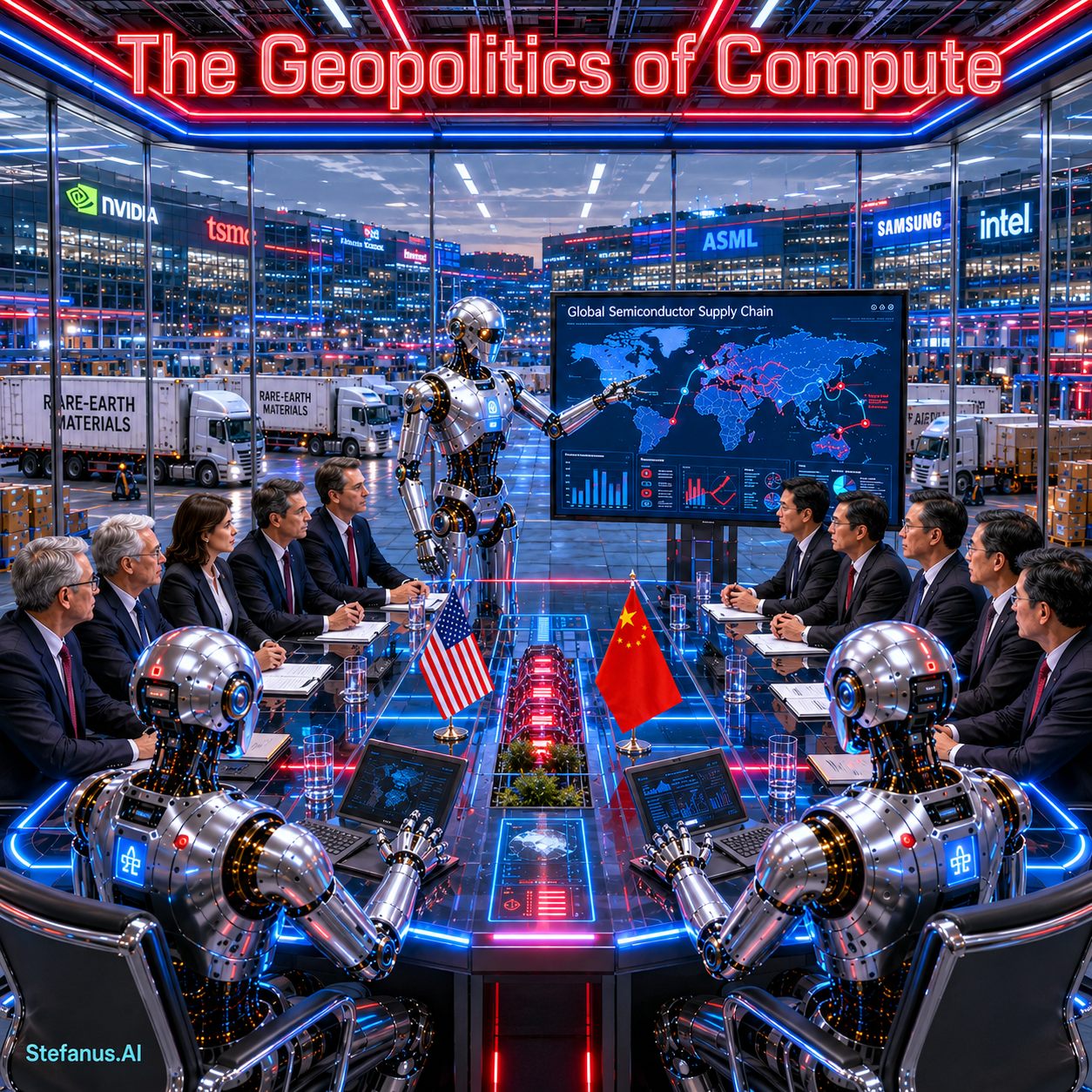
The Geopolitics of Compute: AI GPU Infrastructure, Robotics Supply Chains, and the US–China Bifurcation of the Intelligence Economy
Introduction: The Infrastructure of Intelligence We have entered an era in which the most consequential geopolitical competition on earth is not fought with missiles, not resolved through currency reserves, and not decided in election cycles. It is fought in fabs. It is decided in packaging lines, export control lists, rare-earth processing facilities, and the sprawling campuses of hyperscale data centers consuming electricity in quantities that would have strained the imaginations of twentieth-century grid planners. The central resource being contested is not oil, not food, not gold — it is compute. And the countries, companies, and…
-

Sleeping with the Frenemy: How Meta and Tesla Became Unlikely Partners in Powering the AI Machine — and What It Reveals About the New Economics of Tech Rivalry in the Age of Artificial Intelligence
Introduction: Why Companies Sometimes Sleep with the Frenemy The AI era is reshaping the foundational logic of corporate rivalry. For decades, the dominant grammar of business strategy was adversarial: outbuild, outspend, outmaneuver. Competition was not merely an operating condition — it was a corporate identity. Companies defined themselves against their adversaries. Gates versus Jobs. Google versus Microsoft. Facebook versus Twitter. The drama of technology capitalism was inseparable from its combat. But artificial intelligence has introduced a new and deeply inconvenient variable into that grammar: infrastructure costs have become so astronomically large that even the most…
-
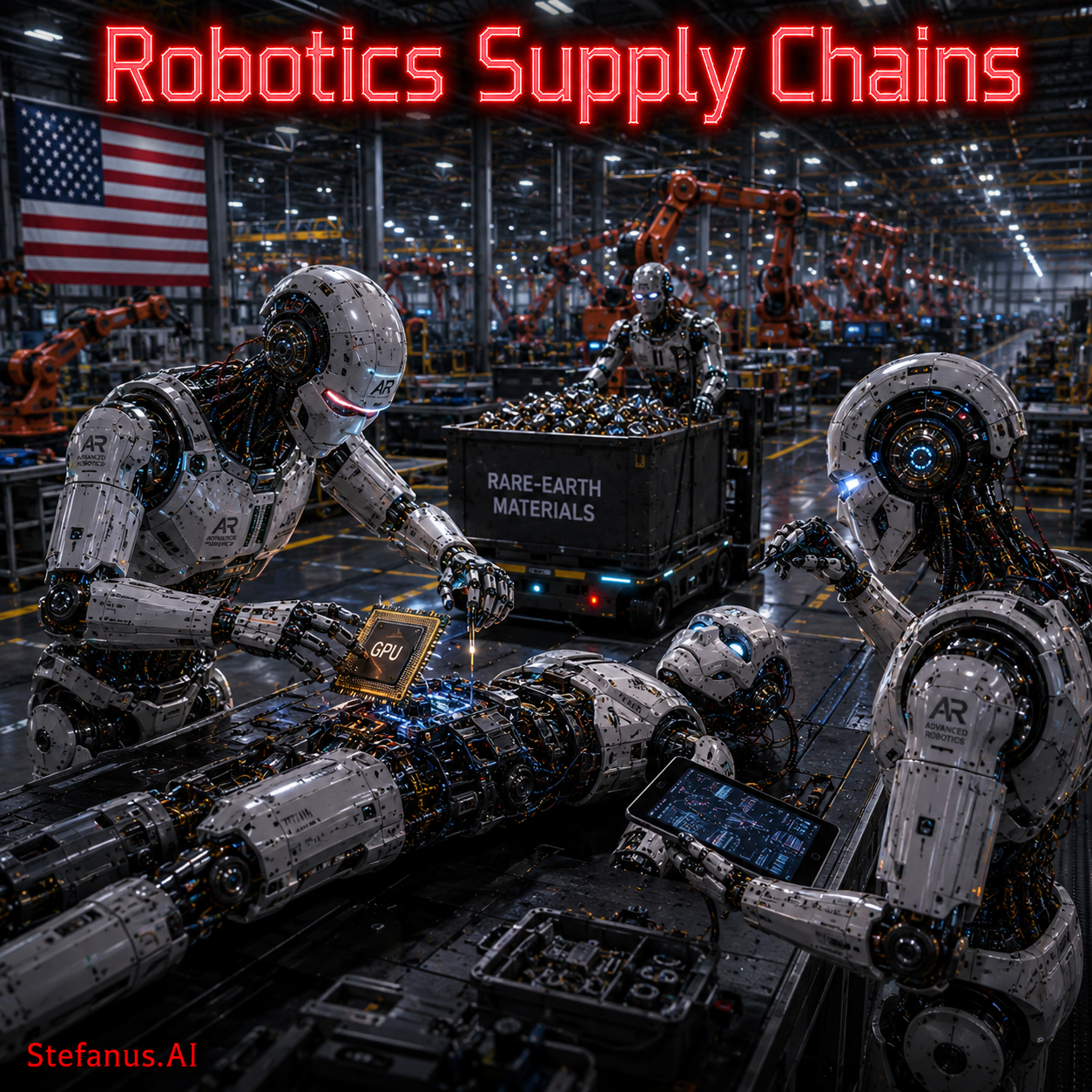
Robotics Supply Chains: How America’s Software Dominance Meets a Hardware Reckoning — A Strategic Analysis of the Global Robotics Industrial Complex, Critical Mineral Vulnerabilities, and the Race for Technological Sovereignty in the Era of US–China Geopolitical Bifurcation
Introduction: The Convergence of Intelligence and Metal We are living through what may be the most consequential industrial transformation in human history since the mechanization of agriculture. The rapid convergence of artificial intelligence with robotics has produced a new class of machine: not merely automated, but adaptive; not merely programmable, but perceptive; not merely precise, but — in the language of the industry’s most ambitious practitioners — embodied. Where earlier generations of industrial robots were elaborate servo-controlled fixtures executing the same arc of motion ten thousand times per shift without variation or judgment, today’s robotic…
-
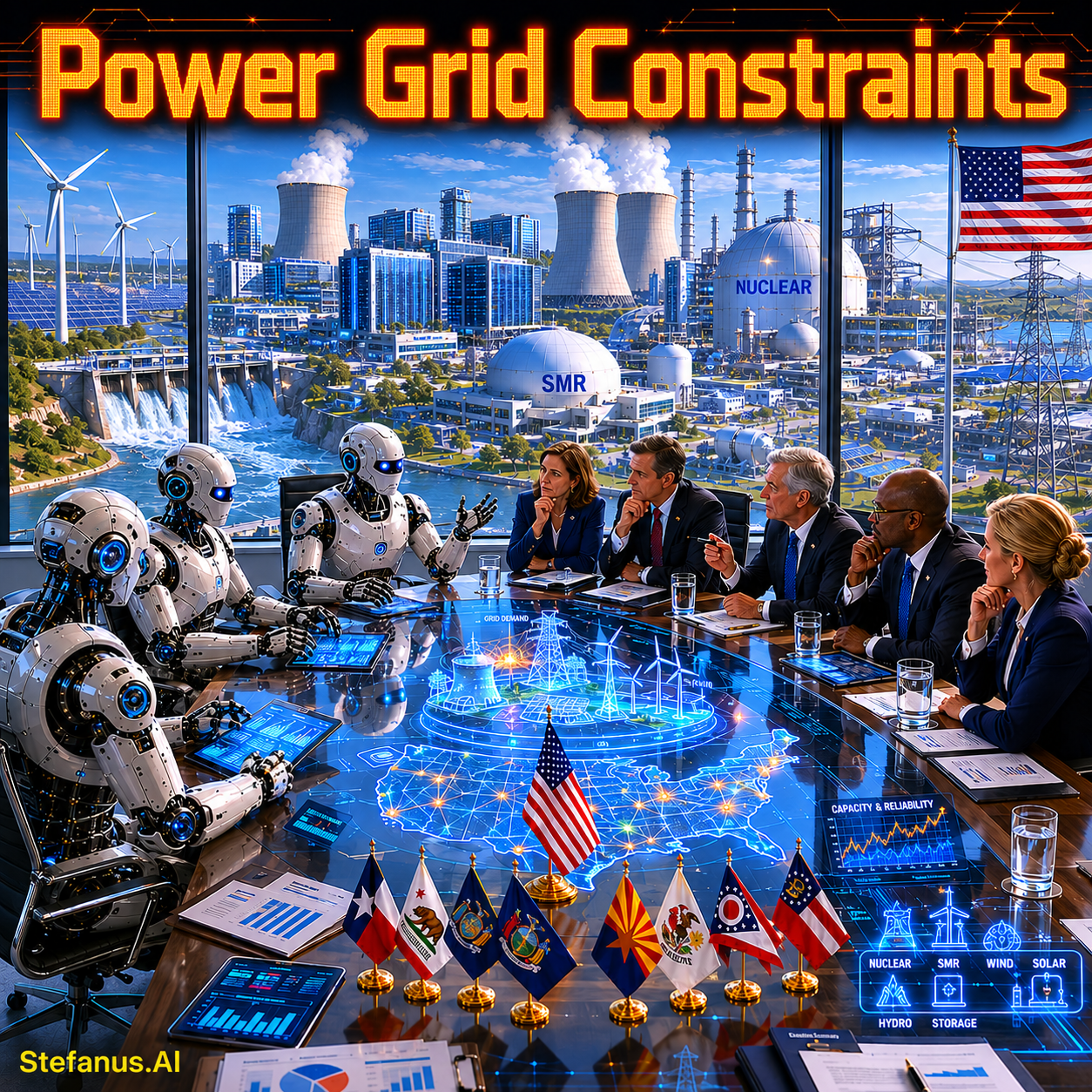
Power Grid Constraints: How Hyperscale Data Centers Locked in Cheap Power While American Households Inherited the Cost of Grid Expansion
Introduction: For decades, electricity in America was treated as invisible infrastructure. Cheap. Reliable. Politically boring. The lines running from the substation to the socket were background noise in the national conversation about growth, innovation, and prosperity. Households paid their utility bills without much scrutiny, and corporations negotiated favorable industrial rates with minimal public accountability. Electricity was a utility in the truest sense of the word: something everyone needed, something no one talked about, and something that was presumed, like gravity, to simply exist. That era is ending. The rise of artificial intelligence has done something…
-
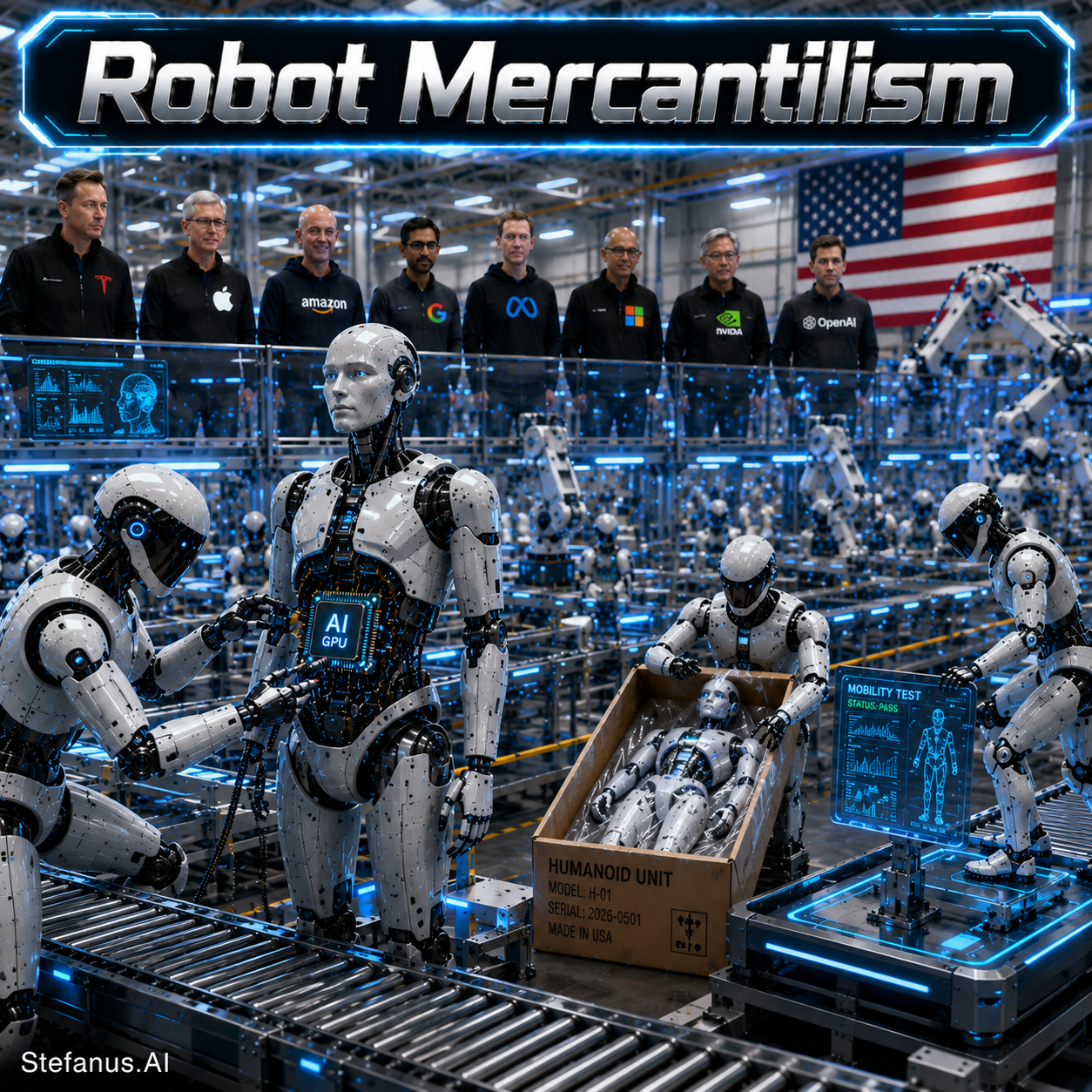
Robot Mercantilism: The Global Race for Embodied AI Manufacturing Dominance
Introduction: The Arrival of Embodied Intelligence For the past several years, the central conversation in artificial intelligence was dominated by invisible infrastructure. The debates that consumed global attention revolved around large language models, GPU shortages, hyperscale datacenters, electricity bottlenecks, chip export controls, and the extraordinary spectacle of trillion-dollar AI capital expenditure announcements. Intelligence, in this era, was understood as fundamentally disembodied — a phenomenon of servers, latency, and software weights. In 2026, AI began leaving the screen. It began walking. Tesla confirmed that its Optimus humanoid production line at Fremont, California — built directly on…
-

Do You Want Chips With That? — How Microprocessors Became America’s Ultimate Bargaining Tool in the U.S.–China AI Race
Introduction: The Fast-Food Joke That Accidentally Explains AI Geopolitics Picture the scene. It is October 20, 2024, and the forty-fifth—soon to be forty-seventh—President of the United States is standing inside a McDonald’s in Feasterville-Trevose, Pennsylvania, wearing a paper-thin apron over his suit jacket and holding a stainless-steel scoop normally reserved for teenagers earning minimum wage. The franchise has been closed to ordinary customers. Secret Service agents ring the perimeter. Cameras from every major network jostle for position. And the future leader of the free world leans out of the drive-thru window, hands a bag of…
-

Chip Smuggling: The Deceptive Supply Chains Feeding Restricted AI Markets in the New Semiconductor Cold War
Introduction: The Return of Smuggling in The Intelligence Age In earlier centuries, when valuable goods became difficult to obtain, scarcity rarely eliminated demand — it simply changed logistics. Gold crossed borders hidden in cargo containers, sewn into clothing, or routed through third countries where customs scrutiny was weaker. Oil under sanctions found its way through ghost fleets and opaque intermediaries. Luxury watches, pharmaceuticals, rare earth materials, narcotics, even antiquities all developed shadow economies whenever legal access became constrained enough to create irresistible arbitrage. The intelligence age has now added a new category to that long…
-
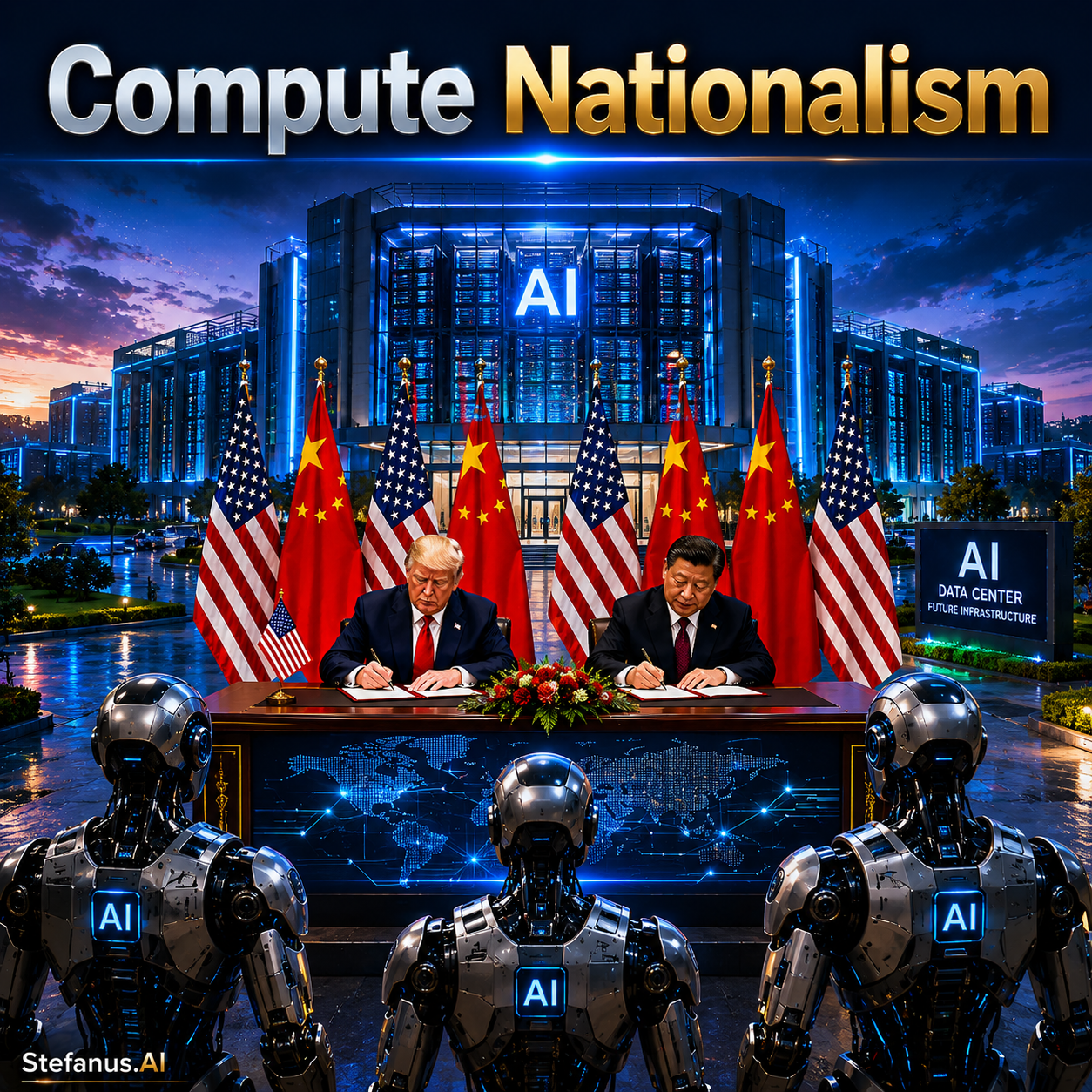
Compute Nationalism: The New Geopolitics of AI Infrastructure — Sovereignty, the Five-Layer AI Economy, and the U.S.–China War over Intelligence-Producing Infrastructure
Introduction: The Five-Layer AI Economy and the Rise of Compute Nationalism On the morning of May 13, 2026, President Donald Trump boards Air Force One for Beijing, accompanied by more than a dozen of America’s most powerful corporate executives: Elon Musk of Tesla, Tim Cook of Apple, Larry Fink of BlackRock, Kelly Ortberg of Boeing, David Solomon of Goldman Sachs, Stephen Schwarzman of Blackstone, Jane Fraser of Citigroup, Cristiano Amon of Qualcomm, Chuck Robbins of Cisco, and others. The summit agenda covers trade, Taiwan, the Iran war, and — above all else — artificial intelligence.…
-

Space Accelerationism: Technocapitalist Expansion of Space-Based Intelligence and the Hyperscaler Race to Dominate AI Beyond Earth
Artificial intelligence is beginning to outgrow the ordinary geography of computing. What once lived inside office campuses, server rooms, and cloud regions now presses against the limits of power grids, cooling systems, land markets, permitting regimes, and national infrastructure. The AI cloud is no longer an invisible layer above the economy; it is becoming a physical empire of energy, heat, chips, cables, satellites, and strategic territory. Microsoft’s Project Natick was one early sign of this transition. The experiment placed a sealed data center module under the sea, not as spectacle, but as an infrastructure question:…
-

Compute Feudalism: Lords of Infrastructure and the New Hierarchy of Artificial Intelligence
The mythology of modern technology is built on a simple premise: that innovation begins small. The canonical stories of Silicon Valley reinforce this belief. Larry Page and Sergey Brin developed early versions of Google within the academic environment of Stanford University. Michael Dell assembled computers in a dormitory at the University of Texas at Austin. Mark Zuckerberg launched Facebook from a student residence hall. These stories are not merely historical anecdotes—they define the ideological foundation of the American innovation model: low barriers to entry, rapid iteration, and meritocratic scaling. That model is now structurally broken.…
-
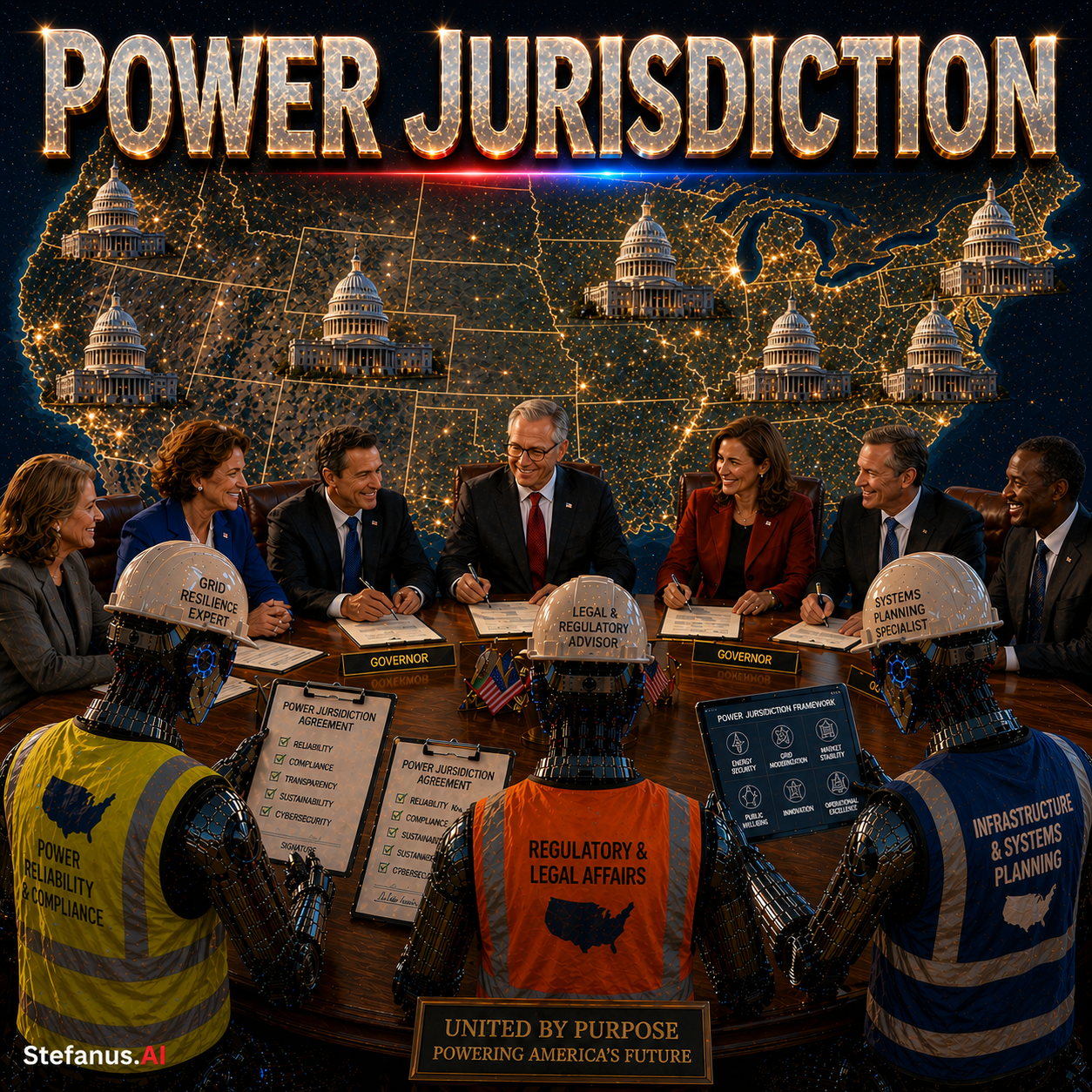
Power Jurisdiction: How Governors Became the Gatekeepers of AI Infrastructure — Nuclear Restarts, Coal Extensions, SMRs, Data Centers, and the State-Level Battle for the AI Power Grid
The modern discourse around artificial intelligence continues to be dominated by familiar abstractions—models, parameters, chips, and algorithms. Yet beneath these layers of technological sophistication lies a far more fundamental constraint, one that is older than computing itself but now increasingly decisive in shaping its trajectory: the production, allocation, and governance of electricity. Artificial intelligence, particularly in its current large-scale, hyperscale-driven form, is not merely a software phenomenon. It is an industrial system—one that consumes vast quantities of energy, requires continuous uptime, and depends on infrastructure that must be built, maintained, and regulated across physical space.…
-

Lobbying Intelligence: AI Firms Flock to Washington in Q1 2026 and the Rise of Policy-Driven Compute Power
In January 2025, a striking visual emerged from the inauguration of the new U.S. president: a front-row constellation of technology elites—founders, CEOs, and their spouses—representing the most powerful hyperscale companies in the world. Among them were leaders tied to Meta, Google, Amazon, Nvidia, and newer AI-native actors such as OpenAI and Anthropic. What appeared ceremonial was, in reality, structural. The convergence of political power and computational power had entered a new phase. Yet, beneath this continuity of influence, a divergence began to form. Reports in early 2026 revealed that two relative newcomers—OpenAI and Anthropic—had dramatically…
-
Gigarmageddon: The System That Cannot Guarantee Power in the Age of Exponential AI
Have you noticed something subtle, almost invisible, yet increasingly persistent? Every time you type a prompt into systems like OpenAI’s ChatGPT, Google’s Gemini, Microsoft’s Copilot, or Anthropic’s Claude, the responses feel slightly shorter, sometimes cut off, occasionally delayed—forcing you to wait those extra seconds as the system “thinks.” This is not accidental. This is not purely algorithmic. This is the earliest consumer-facing signal of a deeper structural constraint: energy scarcity in the age of artificial intelligence. We are still in 2026—not even 2030—yet the system already hints at limits. Now imagine a world just a…
-
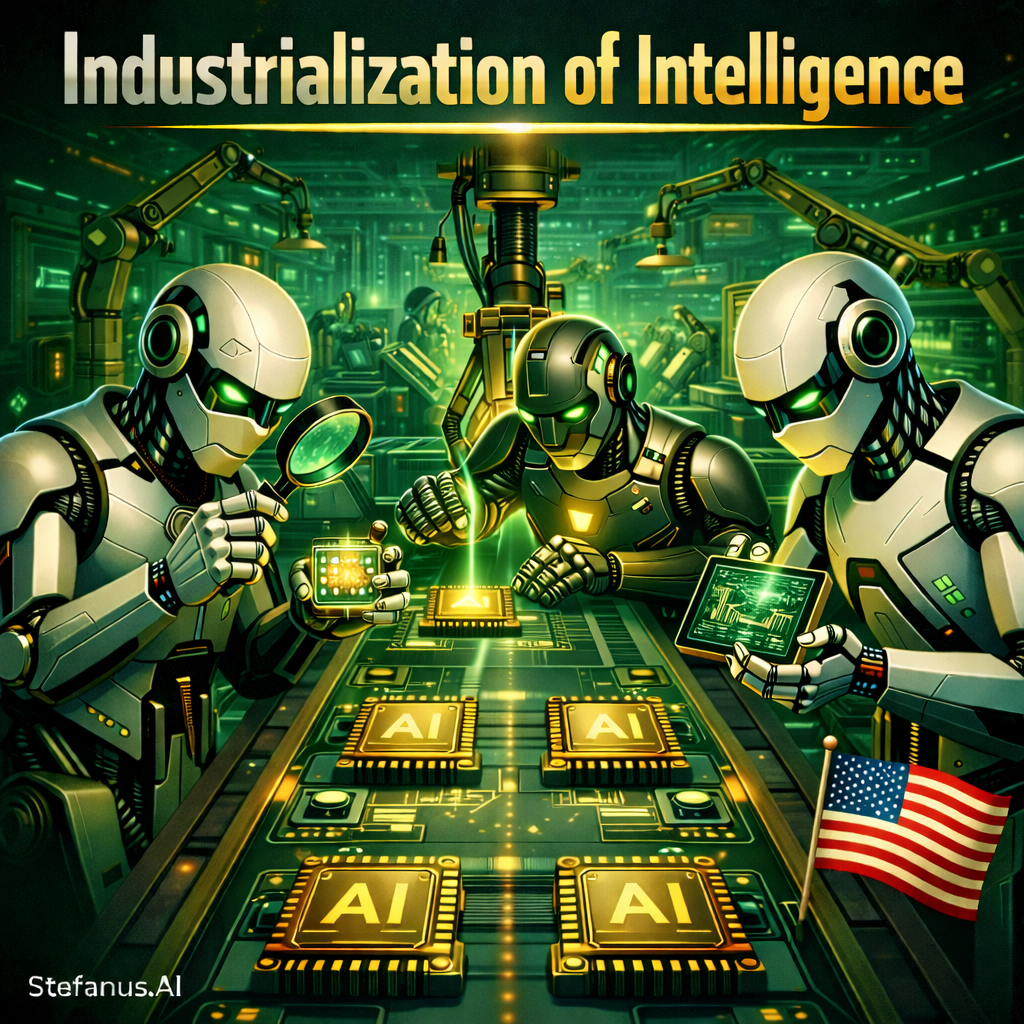
Industrialization of Intelligence: Building the Five-Layer AI Economy in the Race Toward a Trillion Lines of Code
On April 16, 2026, at the Stanford Graduate School of Business, Jensen Huang articulated what may ultimately be recognized as one of the defining frameworks of the modern era: intelligence is no longer merely engineered—it is being industrialized. He described five foundational layers—energy, chips, data centers, models, and applications—that together form the infrastructure of a new economic system. At first glance, this appears to be a technical stack. But embedded within his remarks—particularly around agentic systems, the evolution of work, and the importance of global talent—was something deeper: this system does not run on infrastructure…
-
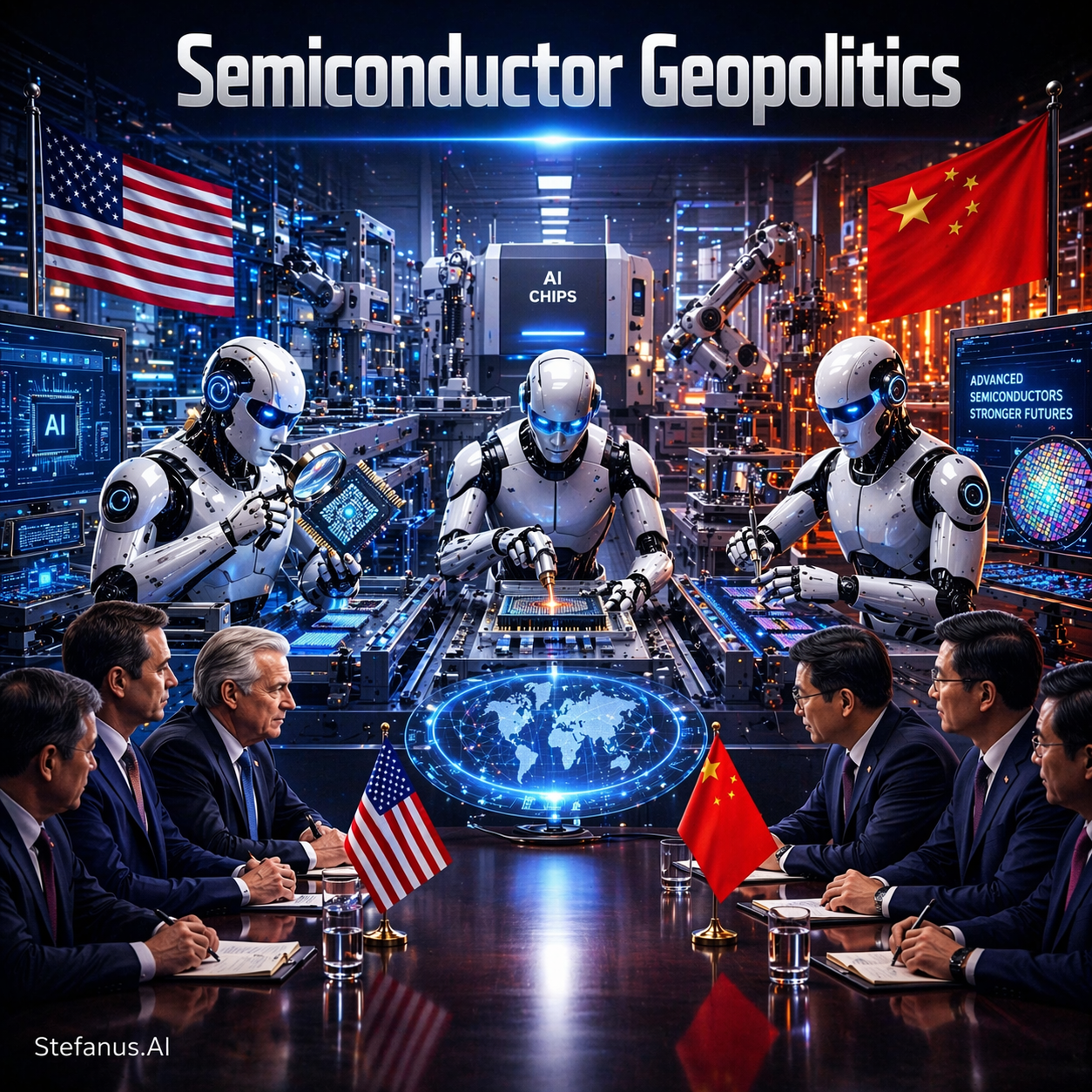
Semiconductor Geopolitics: The U.S.-China AI Chip War and the Race for Semiconductor Supremacy
Semiconductors are no longer merely industrial inputs embedded in smartphones and laptops—they are the foundational infrastructure of modern civilization. From artificial intelligence (AI) systems and autonomous vehicles to quantum computing, advanced military systems, financial networks, and global communications, semiconductors form the invisible backbone of the modern economy. In 2025, global semiconductor sales reached approximately $791.7 billion, growing at over 25% year-over-year, with projections approaching $1 trillion annually in the near term.¹ This is not cyclical growth—it is structural, driven by the rapid expansion of AI, electrification, and digital infrastructure at a planetary scale. What makes…
-
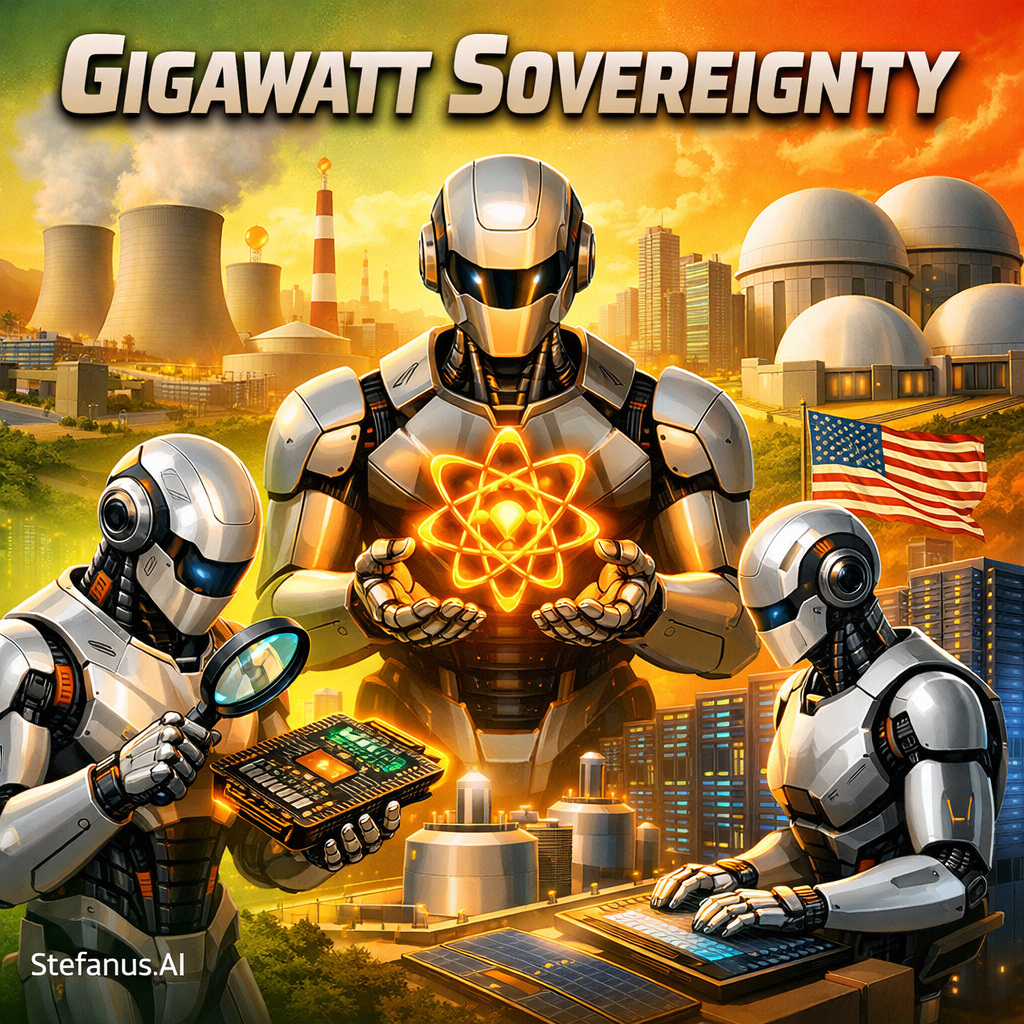
Gigawatt Sovereignty: Energy as the Ultimate Constraint in the Age of AI
The defining contest of the artificial intelligence era is no longer about who builds the most advanced models, but who can power them at scale. As AI systems expand into trillion-parameter architectures and hyperscale deployments, electricity demand has crossed a critical threshold: from megawatts to gigawatts. This transition marks a structural shift in the foundations of technological power. This paper introduces the concept of Gigawatt Sovereignty—a new framework that captures how control over gigawatt-scale energy infrastructure determines leadership in AI, industrial production, and global influence. Sovereignty in the 21st century is no longer defined solely…
-
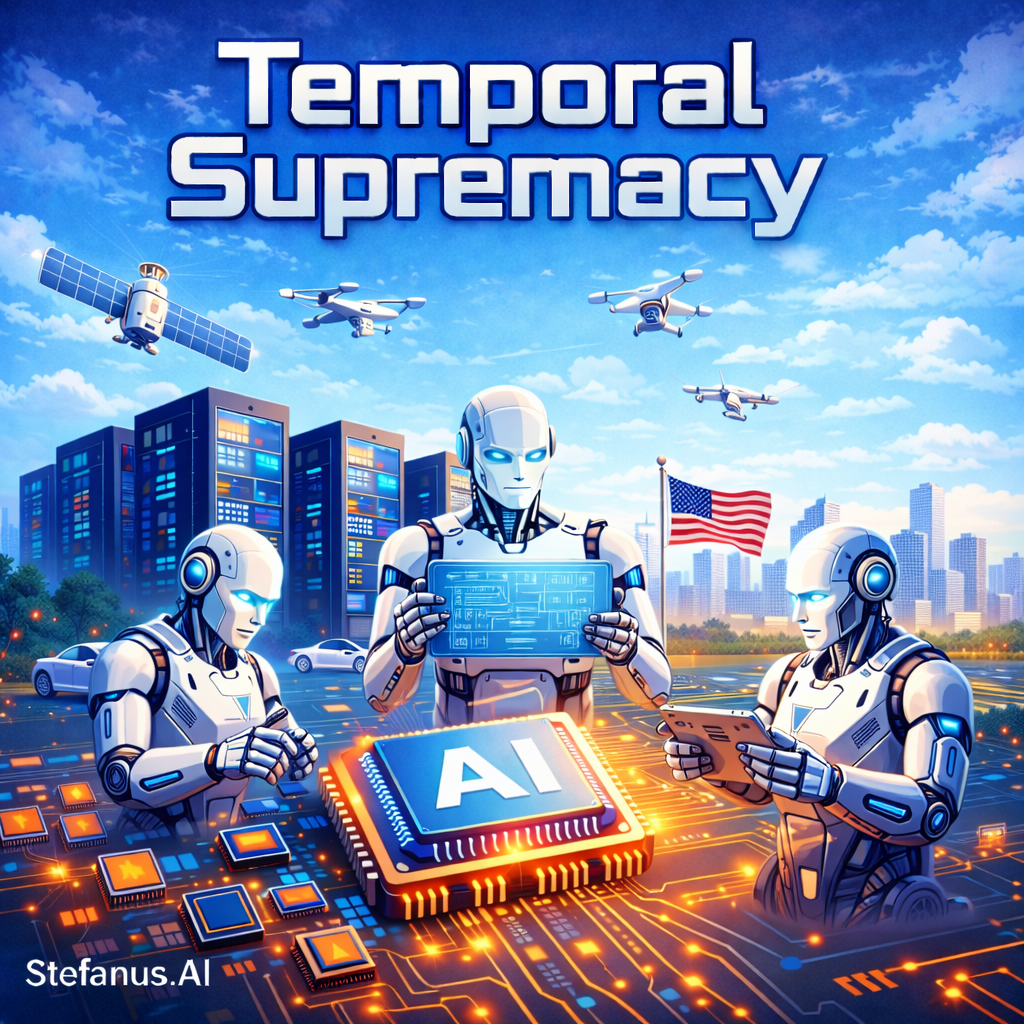
Temporal Supremacy: Power, Speed, and the Collapse of Human-Time Governance
The defining competition of the 21st century is no longer determined solely by territory, capital, or even technological capability. It is increasingly defined by time, specifically, the ability to operate, decide, and act faster than competing systems. The term “Temporal Supremacy” is therefore not metaphorical. It describes a structural shift in how power is acquired and exercised: those who dominate time dominate outcomes. Temporal Supremacy refers to the condition in which actors—whether corporations, states, or autonomous systems—gain decisive advantage by compressing the interval between signal, decision, and execution. Artificial intelligence is the first technology in…
-
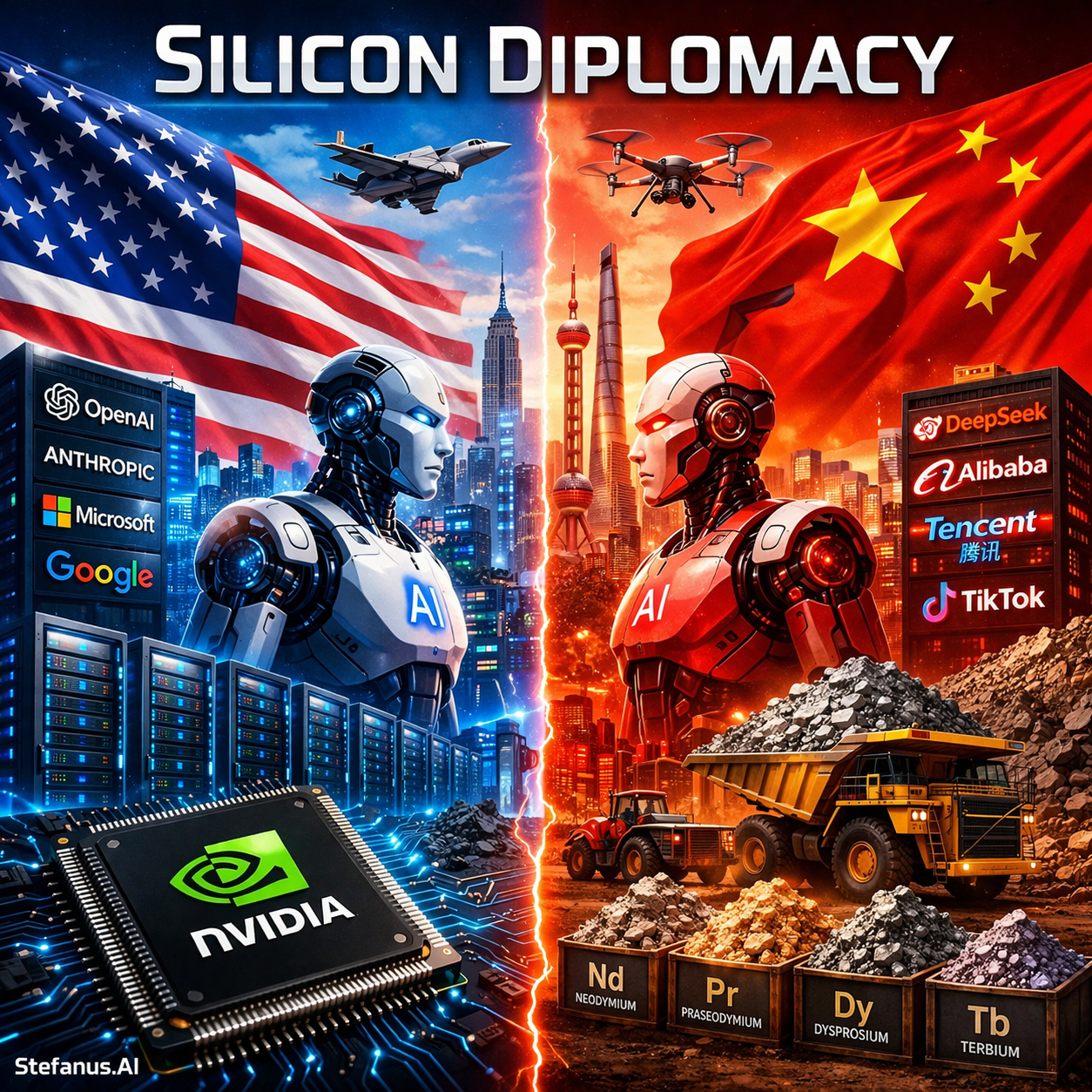
Silicon Diplomacy: Chips, Power, and the Rewiring of U.S.–China Relations
The dominant conflicts of the 21st century are not fought primarily with fighter jets, missiles, or territorial invasions. They are fought through infrastructure—specifically, the infrastructure that produces intelligence. Artificial intelligence has transformed semiconductors into the most strategic resource of the modern era. Unlike oil, which powered industrial economies, chips power cognition itself—the ability to model, predict, decide, and govern. As Christopher Miller argues: “The world economy runs on chips.” [1] (Wikipedia) This transformation has created a new form of geopolitical interaction: This paper defines that system as Silicon Diplomacy: A form of geopolitical competition in…
-
Energy Autarky: The Sovereign Stack of AI Power—Electricity, Compute, and the End of Digital Globalization
Artificial intelligence is often described as a breakthrough in software. That description is incomplete. What is unfolding is a transformation of infrastructure—one that shifts the foundation of intelligence from code to current, from models to megawatts. The defining constraint of this era is no longer algorithmic capability. It is electricity. Why This Term: “Energy Autarky” I deliberately chose the term Energy Autarky over the more commonly used “energy security.” Because the two are not the same. Energy security assumes: It belongs to the logic of globalization. Energy autarky, by contrast, represents something far more radical.…
-

“Para-States”: Parallel Power, AI Infrastructure, and the Redefinition of Government Authority
Artificial intelligence is often described as a technological breakthrough and a powerful economic force. While both are true, they do not fully capture the scale of what is changing. The deeper transformation lies in how artificial intelligence is reshaping the structure of power itself. This paper advances a central proposition: we are entering an era of parallel power, in which authority is no longer monopolized by nation-states but increasingly shared with a new class of actors—what we define as “para-states.” The term is deliberate and necessary. “Para-states” are not governments in a formal legal sense.…
-
The Rise of Machine-Speed Governance and the Collapse of Human-Speed Governance
Artificial intelligence is often framed as a technological breakthrough or, more recently, as an economic force comparable to electricity or the internet. While these comparisons capture its scale, they do not fully explain what is fundamentally changing. The deeper shift lies in time itself—artificial intelligence is redefining the speed, structure, and experience of decision-making, transforming not only what decisions are made, but when and how they occur. For most of human history, governance has operated within the boundaries of human time. Institutions—whether governments, legal systems, corporations, or markets—were built around the limits of human cognition,…
-

AI Beyond Earth: The Rise of Space-Based Intelligence Infrastructure—How Tech Giants Are Building the Next Layer of Intelligence
This paper begins with a deliberate premise: the future of artificial intelligence can no longer be fully understood within the boundaries of Earth. Much of today’s discussion around AI remains centered on models, applications, and software capabilities. While important, this perspective is increasingly incomplete. What is unfolding is not simply an advancement in intelligence, but a shift in the infrastructure required to produce it. Modern AI depends on large-scale physical system data centers, continuous energy supply, advanced semiconductors, and global connectivity. These are no longer supporting components; they are the primary constraints shaping how far…
-
The Collapse of National Advantage: When Intelligence Is Borderless, but Power Is Not
Across the last century, global influence has largely been shaped by control over tangible assets—land, energy, people, and the industrial systems that transform them into economic and military strength. Even as digital technologies emerged and expanded, the underlying structure did not fundamentally change: governments remained the central actors, and the reach of power was still largely defined by geographic boundaries. Artificial intelligence is now breaking that assumption. Unlike previous technologies, AI is not bound to factories, supply chains, or even physical infrastructure alone. It exists as computation, models, and network entities that can be distributed…
-

When Cities Lose Sight: The End of Local Enforcement in the Age of Invisible AI
Cities have always governed through visibility. The ability of local governments to maintain order—whether through policing, economic coordination, or social services—has depended not merely on authority, but on the capacity to observe patterns as they emerge, interpret signals before they escalate, and intervene with sufficient timing to prevent disorder from becoming systemic. Local enforcement, therefore, has never been about force alone; it has been about situational awareness, the continuous ability to see enough of reality to act effectively within it. This paper, “The End of Local Enforcement,” is not written as a critique of local…
