
Introduction: The Billion-Dollar Ghosts
In the spring of 2021, demolition crews brought down the last cooling tower of the Widows Creek Fossil Plant on the banks of the Tennessee River in Jackson County, Alabama, closing the book on six decades of coal combustion. To the untrained eye, what remained was a landscape of industrial wreckage — ash ponds under remediation orders, empty turbine halls, a scar of gray concrete against green Appalachian foothills — a liability whose environmental cleanup would consume millions of dollars before the land could plausibly be called useful again. Local officials braced for the familiar arithmetic of industrial death: lost payrolls, a shrinking tax base, young people leaving.
But to a very different class of buyer, the carcass of Widows Creek was a goldmine. Google had not come to Jackson County for the buildings, and it certainly had not come for the ash. It came because the Tennessee Valley Authority had spent the better part of a century radiating massive, high-voltage transmission lines out from that exact geographic point. The switchyards were already built. The water intakes on the Tennessee River were already permitted. The heavy rail spurs were intact, and the local workforce had been living beside turbines, steam, and 24/7 industrial operations for three generations. By converting the retired coal plant’s footprint into a hyperscale data center campus — operational since 2019 — Google inherited, essentially intact, an asset bundle that would have taken a decade and billions of dollars to assemble from scratch on virgin land.
Five years later, the wager has been settled beyond argument. In June 2026, Google announced an additional $1.5 billion expansion of the Jackson County campus across 2026 and 2027, bringing its cumulative investment in this single former coal site past $2 billion, committing to pay 100 percent of its own energy and grid-infrastructure costs, contracting to bring 300 megawatts of new generation capacity to the Tennessee Valley region — including up to 50 megawatts of advanced nuclear power through a partnership with Kairos Power and TVA — and funding a $2 million Energy Impact Fund for weatherization of local schools and income-qualified households.[1][2][3] Alabama’s Speaker of the House called it one of the largest announcements ever made in Jackson County.[4] Amanda Peterson Corio, Google’s global head of energy and power, distilled the entire thesis of this paper into a single sentence about the site’s backstory:
“Decades of investment didn’t go to waste just because the site had closed.” — Amanda Peterson Corio, Global Head of Energy and Power, Google [2]
This paper explores the Grid Afterlife of heavy industry — the title names the governing reality of the AI infrastructure boom. Computational capacity cannot simply materialize wherever capital wishes it to. It must clear a gauntlet of physical and administrative checkpoints — interconnection studies, transmission capacity rights, water permits, air permits, zoning approvals, environmental baselines, and community consent — before a single rack of accelerators draws its first watt. These checkpoints are few, they are congested, they are jealously administered, and the queue to pass through them is measured in years. In this framing, a retired industrial site is not a ruin. It is an inheritance already probated — a place where the accumulated approvals and physical position of the twentieth-century economy, stamped and grandfathered over decades, can be handed intact to the twenty-first.
When a nuclear station, aluminum smelter, steel mill, coal plant, or defense installation dies, its original economic purpose vanishes, but its skeletal infrastructure remains structurally intact and strategically invaluable. The true wealth of these locations is not the buildings above ground. It is the invisible web of interconnections, permits, corridors, and community familiarity that survives them — an inheritance that the market systematically mispriced for decades because no buyer existed who needed gigawatt-scale power, millions of gallons of daily cooling water, and industrial zoning all at once. Artificial intelligence created that buyer, seemingly overnight, and in doing so revealed that America’s rust belt had been sitting on some of the most valuable real estate in the modern economy without knowing it.
The argument proceeds in ten movements. Section 1 establishes why infrastructure outlives industry, and why replacing a generating plant is very often faster than creating a completely new grid connection. Section 2 develops the Site-Archaeology Framework — a layered method for excavating a location’s value through its power history, existing connections, water, land, permits, workforce, and community acceptance. Sections 3 and 4 examine the physical lifelines (water, rail, and gas) and the regulatory fortress (zoning, permits, and brownfield liability programs) that retired sites confer. Section 5 presents four conversion models now operating at scale in the United States: retired coal-to-compute, nuclear restart-to-compute, manufacturing-to-compute, and military/federal-site-to-compute. Section 6 turns to the human infrastructure of industrial communities. Section 7 quantifies the arbitrage of rebirth against the backdrop of hyperscaler capital expenditure through the first quarter of 2026. Sections 8 and 9 confront the two great objections — the environmental paradox and the enclave-development critique — honestly and at length. Section 10 distills the analysis into seven pillars of site valuation, and the conclusion offers a new blueprint for industrial real estate in the age of the grid afterlife.

Section 1: Infrastructure Outlives Industry — The Invisible Inheritance
Every analysis of the grid afterlife must begin with a truth so counterintuitive that it still surprises seasoned energy executives: in the United States of the mid-2020s, it is frequently faster to demolish a two-gigawatt power plant and build an entirely new one inside its old footprint than it is to obtain a brand-new connection to the electric grid on empty land ten miles away. The machine can be replaced in three or four years. The connection — the studied, permitted, contractually secured right to inject or withdraw power at a specific node on the high-voltage network — can take the better part of a decade to create from nothing. Steel and concrete are commodities; interconnection is a franchise.
The numbers behind this inversion are stark, and they have been documented with increasing rigor by Joseph Rand and his colleagues at Lawrence Berkeley National Laboratory, whose annual “Queued Up” studies have become the canonical measurement of America’s interconnection bottleneck. As of the end of 2025, more than 2,060 gigawatts of proposed generation and storage capacity — roughly 1,312 GW of generation and 749 GW of storage across some 8,200 projects — were actively waiting in U.S. interconnection queues, a volume that exceeds the entire installed capacity of the existing American power fleet. Of the capacity that entered those queues between 2000 and 2020, only 13 percent had reached commercial operation by the end of 2025; fully 75 percent had been withdrawn. For projects that actually reached completion in 2025, the median duration from interconnection request to commercial operation exceeded five years.[5] Reforms such as FERC Order 2023 are being implemented, but by Berkeley Lab’s own assessment it is too early to measure their full effect. The queue, in other words, is not a line at a ticket window. It is a filter that destroys most of what enters it and delays the remainder by half a decade.
While supply waits, demand has erupted. Utility five-year forecasts of summer peak demand growth compiled by Grid Strategies more than tripled in a single year, from 38 GW in 2023 to 128 GW in 2024, driven overwhelmingly by data centers.[6] By 2025, according to the International Energy Agency’s Global Energy Review, data centers absorbed roughly half of all new U.S. electricity demand growth — the single largest contributor to the country’s power appetite — and the IEA projects global data center electricity consumption will approximately double to 945 terawatt-hours by 2030.[7][8] The collision between a five-year interconnection queue and a demand curve bending upward at the steepest angle since the postwar electrification era has produced a genuinely strange market condition: the world’s most valuable companies are now constrained not by capital, chips, or customers, but by the administrative right to plug in. Microsoft has publicly acknowledged sitting on roughly $80 billion of unfulfilled Azure orders substantially because it cannot secure electricity fast enough to energize the GPUs it already owns, and lead times for large power transformers have stretched to 128 weeks.[8] Carson Kearl, the senior analyst for energy and AI at Enverus, captured the moment in a single line:
“Our grid isn’t short on opportunity — it’s short on time.” — Carson Kearl, Senior Analyst for Energy and AI, Enverus [9]
Against this backdrop, the retired industrial site reveals its first and greatest asset: the interconnection inheritance. A shuttered coal or nuclear station does not merely occupy land near transmission lines; it is the reason those transmission lines exist. Utilities spent decades — and, in the case of federal power systems like the Tennessee Valley Authority, the better part of a century — radiating 161 kV, 345 kV, and 500 kV corridors outward from these generation nodes, building switchyards, substations, transformers, and protection systems whose replacement cost today runs into the hundreds of millions of dollars per site. When the plant closes, the boilers go cold, but the switchyard does not evaporate. Neither, crucially, do the rights attached to it.
Three components of this invisible inheritance deserve separate emphasis, because each maps onto a distinct failure mode of greenfield development:
The interconnection queue bypass. A retired generator’s point of interconnection has already been studied, modeled, and physically constructed. Depending on the regional transmission organization and the transaction structure, a new project at the same node — whether a replacement gas plant, a nuclear restart, or a co-located data center — can inherit, transfer, or rapidly re-study the existing capacity rights rather than joining the back of a multi-year queue. The Homer City redevelopment in Pennsylvania, examined at length in Section 5, advertises precisely this: firm existing connections to both the PJM and NYISO grids, inherited from the demolished coal station, as the project’s foundational asset.[11] In June 2026, the Federal Energy Regulatory Commission approved Constellation’s transfer of 760 megawatts of Capacity Interconnection Rights from its retired Eddystone plant to the restarting Crane Clean Energy Center — a regulatory maneuver that is only possible because the rights already existed and merely needed to be moved.[22]
The sunk capital of switchyards. Existing substations, transformers, breakers, and switchyards represent enormous pre-installed capital at a moment when the global supply chain for exactly this equipment is the most congested in living memory. With high-voltage transformer lead times exceeding two years and grid-scale breakers on allocation, the ability to reuse — or even partially reuse — a retired plant’s electrical balance of system is not a marginal saving; it is often the difference between a 2027 energization date and a 2031 one.[8]
Thermal capacity and injection rights. Retired thermal sites frequently hold grandfathered injection rights (for generation) or established withdrawal capacity (for load) at their grid node, along with the historical system-impact studies that underpin them. These legal artifacts allow successor projects to bypass or dramatically shorten the grid-impact studies that consume years for greenfield entrants. In the language of this paper’s title, these rights are the estate the dead plant leaves behind; the successor merely takes possession under a new name.
The deeper lesson of Section 1 is that the American power grid, like any mature network, has become path-dependent. Its topology was fixed by the siting decisions of 1950–1990, and the cost of altering that topology now vastly exceeds the cost of reoccupying its existing nodes. Infrastructure outlives industry not by accident but by economic law: the network is always the longest-lived asset in any industrial system, and whoever controls its nodes controls the terms of entry for everything that comes after. The remainder of this paper is an extended meditation on what it means — economically, environmentally, and socially — that the nodes of the twentieth-century grid are being reoccupied by the twenty-first century’s most voracious industry.

Section 2: The Site-Archaeology Framework
If Section 1 established why retired industrial sites matter, this section proposes how to read them. Developers, utilities, and policymakers need a disciplined method for excavating the value buried in an industrial carcass, because that value is layered, uneven, and frequently invisible in conventional real estate appraisal. Borrowing its metaphor from field archaeology — where a site’s meaning emerges only when its strata are read in the correct order — this paper proposes a Site-Archaeology Framework: a seven-layer evaluation sequence in which each stratum conditions the value of the ones beneath it. The sequence is deliberately ordered. A site that fails at Layer 1 rarely deserves excavation of Layer 5; a site that shines at every layer is, in the current market, close to priceless.
The seven layers are: Power history → Existing connections → Water → Land → Permits → Workforce → Community acceptance.
Layer 1: Power history. The first question is genealogical: what did this site once generate, consume, or transmit, and at what scale? A site’s power history is the fossil record of utility investment. A two-gigawatt coal station implies 345 kV or 500 kV transmission radiating in multiple directions; an aluminum smelter implies a dedicated high-voltage service sized for one of the most electricity-intensive industrial processes ever commercialized; a uranium enrichment complex such as Paducah implies multi-gigawatt delivery capacity built to Cold War specifications.[13] Pacific Northwest National Laboratory’s analysis of coal plant redevelopment makes the point formally: retired and retiring coal plants “often have electrical, transportation, and water infrastructure and a nearby workforce” that can support a range of new uses as the energy system transitions.[10] Power history is destiny because it predicts everything below it.
Layer 2: Existing connections. History must then be verified against the present. Are the transmission lines energized or decommissioned? Are the switchyard and substation intact, cannibalized, or sold? Most importantly, what is the legal status of the site’s interconnection position — active, suspended, transferable, or extinguished? This layer is where fortunes are made and lost, because two visually identical ruins can differ by half a decade of queue time depending on whether their capacity rights survived retirement. The Berkeley Lab data reviewed in Section 1 supply the counterfactual: a site without inheritable connections faces the same five-plus-year median wait as any greenfield entrant.[5]
Layer 3: Water. Heavy thermal industry drinks at a scale modern permitting rarely allows anymore. Power plants and smelters hold historic surface-water withdrawal permits — often measured in tens of millions of gallons per day — originally granted for condenser cooling and process water. For data centers, whose cooling architectures range from evaporative systems to closed-loop liquid cooling, and for prospective hydrogen production, these grandfathered water rights are almost impossible to replicate: the Paducah federal site alone advertises the ability to supply 30 million gallons of water per day alongside up to 3 gigawatts of power.[13] Where water is contested — as in the American Southwest — this layer can invert a site’s ranking entirely.
Layer 4: Land. Only at the fourth layer does the framework ask the question conventional real estate asks first: how much land, of what geometry, with what geotechnical character? Hyperscale campuses want hundreds of contiguous acres with industrial-grade foundations; the Homer City parcel spans more than 3,200 acres, and the Idaho National Laboratory offering makes roughly 100,000 acres available.[12][13] Coal sites carry a complication unique to this layer — ash landfills and impoundments whose closure status determines how much of the acreage is buildable and when — which is why Layer 4 cannot be read without Layer 5.
Layer 5: Permits. The permit stratum contains the site’s regulatory DNA: air permits and their historical emissions baselines, water discharge permits under active or renewable status, solid-waste and remediation orders, and — decisive for the nuclear conversion model — any prior Nuclear Regulatory Commission characterization or licensing history. Section 4 treats this layer in full; here it suffices to note that a site with a live or recently lapsed permit portfolio enters every regulatory proceeding with precedent on its side, while a greenfield site enters with nothing.
Layer 6: Workforce. The sixth layer is human capital: the density, within commuting distance, of high-voltage electricians, pipefitters, boiler operators, control-room technicians, licensed reactor operators, and heavy-equipment crews. The U.S. Department of Energy’s coal-to-nuclear analysis found that nearly 80 percent of coal plant jobs are transferable to nuclear plants without new workforce licensing requirements[31] — a striking measure of how much latent capability an industrial region retains after its anchor employer closes. Section 6 develops this layer at length.
Layer 7: Community acceptance. The final and shallowest stratum — the one visible on the surface — is also the one most capable of burying everything beneath it. A community that hosted heavy industry for generations tends to regard steam plumes, substation hum, rail traffic, and shift-work as normal; a greenfield exurb regards them as an invasion. But acceptance is no longer automatic even in industrial towns: national skepticism toward data centers is rising, rate-impact politics are sharpening, and — as Section 9 documents — communities increasingly ask whether the new occupant will replace the jobs and taxes the old one provided. Community acceptance must therefore be earned and measured, not assumed from industrial DNA alone.
The framework can be summarized in tabular form:
| Layer | Question Asked | Key Evidence | Failure Mode if Absent |
| 1. Power history | What scale of energy once lived here? | Nameplate capacity, transmission maps, utility archives | Site is ordinary land; stop |
| 2. Existing connections | Do wires, switchyards, and rights survive? | Interconnection agreements, RTO records, physical inspection | Rejoin 5+ year queue [5] |
| 3. Water | Can historic withdrawals be inherited? | Permits, riparian/appropriation rights, intake condition | Cooling-constrained design; capacity cap |
| 4. Land | Is the acreage large, contiguous, buildable? | Surveys, geotech, ash/impoundment closure status | Phased or shrunken campus |
| 5. Permits | Does a regulatory baseline exist? | Air/water permits, remediation orders, NRC history | Full greenfield permitting timeline |
| 6. Workforce | Does industrial skill persist nearby? | Labor statistics, union halls, prior plant rosters | Imported labor; cost and friction |
| 7. Community acceptance | Will the town say yes — and stay yes? | Local government posture, rate politics, benefit agreements | Delay, litigation, reputational loss |
Read in order, the seven layers convert an industrial ruin from a liability entry on a balance sheet into a scored, comparable, and financeable asset. Read out of order — land first, connections last, community never — they produce the failed projects and local revolts that increasingly populate the trade press. The rest of this paper applies the framework: Sections 3 and 4 deepen Layers 3–5, Section 5 shows the framework operating inside four live conversion models, and Sections 6 and 9 return to Layers 6 and 7.

Section 3: Logistics and Physical Lifelines — Water, Rail, and Gas
Heavy industry was never merely a consumer of electricity; it was a gravitational body around which entire logistical systems formed. Coal plants required unit trains arriving daily, rivers or reservoirs for condenser cooling, and, in later decades, high-pressure gas laterals for co-firing and startup fuel. Smelters required ore deliveries by rail and barge. Steel mills required all of the above simultaneously. When these facilities die, the logistical corridors they anchored — corridors that are nearly impossible to permit from scratch under modern zoning, environmental review, and eminent-domain politics — remain etched into the landscape like Roman roads. The grid afterlife is therefore not only electrical. It is hydrological, ferroviary, and gaseous.
Water access rights. Begin with water, because compute is quietly one of the thirstiest industries ever to seek an American home. Evaporative cooling for a large campus can consume millions of gallons per day, and even efficient closed-loop designs require substantial makeup water and heat-rejection capacity. The historic water-draw permits attached to retired thermal plants — negotiated in an era when a utility could straightforwardly secure the right to withdraw from a river at industrial scale — constitute a class of asset that in many basins simply cannot be created anymore. Widows Creek sat on the Tennessee River for exactly this reason, and Google’s campus inherited the geography of that logic.[2] Homer City’s developers list water access alongside its dual-grid interconnection as core legacy infrastructure.[11][12] The federal sites opened by the Department of Energy make the point at national scale: Paducah’s 30-million-gallon-per-day water capability is advertised as prominently as its 3 gigawatts of deliverable power.[13] For prospective hydrogen production and for the hybrid cooling architectures now standard in AI-optimized facilities, inherited water rights convert directly into compute capacity — and where they are absent, capacity is capped no matter how much electricity is available.
Linear corridors: rail and rights-of-way. The second lifeline is the linear corridor. Active or dormant rail spurs into a retired plant permit the delivery of objects that the modern road network handles poorly or not at all: 400-ton transformers, turbine rotors, prefabricated modular data-hall sections, small modular reactor vessels. The DOE’s description of the Paducah site — 19 miles of internal roads and nine miles of railroad track, adjacent to a navigable river — reads like a logistics engineer’s wish list.[13] Beyond delivery, the rights-of-way themselves have option value: a rail corridor is a pre-assembled easement that can host fiber, water lines, or additional transmission, sparing the developer the parcel-by-parcel negotiation that kills linear infrastructure projects on greenfield routes. Under contemporary land-use law, assembling a new multi-mile industrial easement through private property is a multi-year, litigation-prone endeavor; inheriting one is a closing condition.
Co-located gas pipelines. The third lifeline is natural gas. Many late-era coal stations were served by high-pressure gas laterals for ignition and co-firing, and nearly all sit within economic reach of interstate transmission pipelines that once fed regional industry. In the current market, that proximity has acquired a new and double-edged significance. On-site gas generation — whether as permanent prime power, bridge power ahead of grid interconnection, or backup — has become a defining feature of AI campus design, and a retired site with an existing or easily extended lateral holds a decisive schedule advantage. Homer City again supplies the emblem: the campus sits atop the Marcellus Shale, secured a primary gas supply partnership with EQT Corporation, and received a $5 million state grant to build a five-mile interconnection to the Texas Eastern pipeline system — trivial infrastructure by historical standards, feasible precisely because the corridor context already existed.[17][19] The environmental implications of this gaseous inheritance are genuinely contested, and Section 8 confronts them directly rather than waving them away.
The unifying economics of this section deserve explicit statement. Electrical interconnection, water rights, and linear corridors share a common property: they are non-replicable under current institutions at any reasonable price. A developer with unlimited capital can buy land anywhere and order turbines from GE Vernova; what it cannot buy at any price is a 1960s-era water permit, a century-old rail easement, or a 500 kV switchyard whose system-impact studies were completed during the Johnson administration. Their existence transforms a real-estate parcel into a strategic regional logistical hub, and their scarcity — not the land, not the buildings — is what the smartest capital in the world is actually bidding on when it buys an industrial ruin.

Section 4: The Regulatory Fortress — Zoning, Permits, and the Federal Turn
Physical infrastructure explains only half the grid afterlife premium. The other half is legal and administrative, and it is best understood through a single asymmetry: securing greenfield land for heavy commercial use triggers years of local resistance, sequential environmental review, and bureaucratic red tape, while a retired industrial site arrives at the negotiating table already wearing the armor of its past. This section calls that armor the regulatory fortress, and it has three walls — with a fourth, federal wall added since 2025.
Wall one: pre-zoned industrial havens. Retired plant parcels are, almost by definition, zoned for heavy industrial use, and often have been for a century. This eliminates the municipal rezoning battle that has become the single most reliable killer of greenfield data center proposals: the public hearings, the moratoria, the ballot initiatives, the years of procedural delay during which capital costs compound and market windows close. A hyperscale campus proposed on farmland must persuade a community to change what the land is; a campus proposed inside a retired coal station’s fence line merely continues what the land has always been. In an era when data center skepticism is a rising national political force, the difference between those two conversations is frequently the difference between a project and a lawsuit.
Wall two: the environmental baseline advantage. Air and water discharge permits attached to industrial sites are either still active or carry historical precedents that streamline renewals and modifications. Regulators evaluating a new permit application at a former plant are not writing on a blank page; they are amending a file that may be decades thick, with established monitoring data, known receptor populations, and modeled dispersion baselines. The practical consequence is speed. Homer City’s chief executive, Corey Hessen, reported that the project received its air quality permit in six months — faster than expected — and drew the obvious moral for an audience of Pittsburgh technologists:
“Don’t let anyone tell you that you can’t build in Pennsylvania.” — Corey Hessen, CEO, Homer City Redevelopment [16]
Pennsylvania’s Department of Environmental Protection, for its part, maintains a running public docket of the Homer City site’s remediation and closure approvals — ash disposal closure certifications, groundwater monitoring cessations, permit boundary modifications — that shows the old plant’s environmental file being methodically converted, approval by approval, into the new campus’s regulatory foundation through the first half of 2026.[15] This is what path-dependency looks like in administrative practice: the paper trail of the old economy becoming the on-ramp of the new one.
Wall three: brownfield liability containment. The word “brownfield” was coined to describe contamination liability, and for decades that liability was the reason these sites sat idle. Federal and state programs have inverted the calculus. CERCLA bona fide prospective purchaser protections, state voluntary cleanup and land-recycling programs, and brownfield redevelopment tax incentives now allow a purchaser to acquire a contaminated industrial site with bounded, insurable, and often subsidized liability — converting the environmental discount embedded in the purchase price into an arbitrage rather than a risk. The remediation obligation remains real, and Section 8 will insist on that; but as a matter of transaction structure, the era in which contamination alone disqualified a site from institutional capital is over.
Wall four: the federal turn. Since mid-2025, the regulatory fortress has acquired a new outer rampart: the deliberate mobilization of federal land and federal permitting authority on behalf of compute. Acting under a suite of White House executive orders on accelerating federal permitting of data center infrastructure and deploying advanced nuclear technologies, the U.S. Department of Energy selected four of its legacy nuclear sites — Idaho National Laboratory, the Oak Ridge Reservation, the Paducah Gaseous Diffusion Plant, and the Savannah River Site — to host privately developed AI data centers and co-located generation.[13] Energy Secretary Chris Wright framed the initiative in language that consciously echoed the last time the federal government fused land, energy, and strategic technology at these very locations:
“…we are taking a bold step to accelerate the next Manhattan Project.” — Chris Wright, U.S. Secretary of Energy [13]
The federal sites concentrate every layer of the Site-Archaeology Framework in extreme form — Cold War transmission, enormous water allocations, existing security perimeters, deep nuclear workforces — and add a benefit no private site can match: development on DOE land can proceed under federal environmental review and leasing authority, insulated from state and local jurisdictional contests. Brian Smith, director of nuclear reactor development at Idaho National Laboratory, has noted that siting on federal land smooths and accelerates deployment for commercial industry, precisely because the department can shepherd permitting on its own ground.[14] Requests for proposals at all four sites were issued across late 2025 and early 2026, with Paducah’s closing in January 2026.[13]
The regulatory fortress, assembled, yields this section’s central proposition — the paper’s third pillar in embryo: it is faster to remediate and repurpose an environmentally challenged industrial site than to clear, zone, and permit a pristine greenfield location. That sentence would have sounded absurd to a 1990s developer. It is now the operating assumption of a trillion-dollar buildout.

Section 5: Four Conversion Models
Theory becomes convincing only when it survives contact with named places, signed contracts, and audited capital. This section examines the four conversion models through which the grid afterlife is being monetized in the United States as of mid-2026, each anchored in live case studies: retired coal-to-compute, nuclear restart-to-compute, manufacturing-to-compute, and military/federal-site-to-compute.
Model 1: Retired Coal-to-Compute
The coal-to-compute conversion is the archetype, and it now has two flagship specimens at opposite ends of the maturity curve.
Widows Creek / Jackson County, Alabama — the proven case. Google’s campus on the former TVA Widows Creek Fossil Plant, operational since 2019, demonstrated the full life cycle: coal plant retired in 2015, site acquired for its transmission and river access, data center campus built within the inherited infrastructure envelope, and — with the June 2026 announcement of a further $1.5 billion expansion through 2027 — a second investment cycle that carries cumulative spending past $2 billion, supports hundreds of full-time jobs, will bring more than 1,000 contract construction workers to the region, and is paired with commitments to fund 100 percent of the campus’s energy and infrastructure costs plus 300 MW of new regional generation, including the Kairos Power advanced nuclear partnership.[1][2][3][4] Widows Creek is the existence proof: the model works, compounds, and can be made politically durable through deliberate community investment.
Homer City, Pennsylvania — the maximal case. If Widows Creek proved the model, Homer City is stress-testing its upper bound. The former Homer City Generating Station — once Pennsylvania’s largest coal plant at roughly 2 GW — is being transformed by Homer City Redevelopment and Kiewit Power Constructors into a 3,200-acre energy and data center campus anchored by up to 4.5 GW of new on-site generation from seven GE Vernova 7HA.02 hydrogen-enabled gas turbines, which would make it the largest gas-fired power plant in the United States.[17][18] The initial capital investment is projected to exceed $10 billion for power infrastructure and site readiness alone — the largest such investment in Pennsylvania’s history — with data center development expected to inject billions more.[12][19] The project’s stated logic is a nearly verbatim recitation of this paper’s framework: the developers emphasize that most of the campus’s critical infrastructure was already in place from the legacy plant — firm transmission connections into both the PJM and NYISO grids, standing substations, and secured water access — before a single new foundation was poured.[12][18] Fuel comes from the Marcellus Shale beneath the site via an EQT supply partnership and a five-mile lateral to the Texas Eastern system.[11][19] Execution has been fast by any historical standard: cooling towers imploded in early 2025, air permit secured in six months, large-scale demolition and mass excavation completed ahead of schedule, first structural steel raised in March 2026 with roughly 1,200 construction workers on site and a projected peak of about 3,500, turbine deliveries beginning in 2026, and first power now expected in early 2028 with construction wrapping by 2029.[9][16][19] The new plant is projected to emit 60–65 percent less greenhouse gas per megawatt-hour than the coal station it replaces while also delivering electricity to thousands of homes on the local grid[12][17] — claims whose meaning Section 8 will interrogate.
The coal model’s broader pipeline extends well beyond these flagships: developers across Ohio, Indiana, Virginia, and Texas are quietly optioning retired and retiring coal sites for identical reasons, and — in the model’s nuclear-flavored variant — TerraPower is building its Natrium reactor beside the retiring Naughton coal plant in Kemmerer, Wyoming, in partnership with, among others, Sabey Data Centers.[9][28][30]
Model 2: Nuclear Restart-to-Compute
The second model is the most historically remarkable: the resurrection of retired nuclear plants — an act with no precedent in American regulatory history before 2025 — financed substantially by compute demand.
Palisades, Michigan — the first restart. Holtec International’s Palisades plant in Covert, Michigan — an 800 MW pressurized water reactor commissioned in 1971 and shut down in 2022 — became the first U.S. nuclear plant ever brought back from decommissioning status, returning to grid operation in the first quarter of 2026 and closing out its final major restart projects by July 2026.[24][25][26] The financing architecture is instructive: a U.S. Department of Energy Loan Programs Office facility, a $300 million grant from the State of Michigan, Holtec’s own capital, and 28-year power purchase agreements with regional electric cooperatives providing predictable revenue.[24] The site’s afterlife is already compounding into a second act: Holtec submitted Part 1 of a construction permit application to the NRC on New Year’s Eve 2025 for two SMR-300 small modular reactors — Pioneer 1 and 2 — at the same site, was selected in December 2025 for a $400 million DOE Tier 1 First Mover grant to accelerate the deployment, saw the NRC accept the application for review in February 2026, and targets the early 2030s for commissioning.[25][26][27] Michigan, in other words, expects Palisades not merely to return to production but to become a multi-reactor energy campus — Layer 1 of the Site-Archaeology Framework regenerating itself.
Three Mile Island / Crane Clean Energy Center, Pennsylvania — the compute-financed restart. Constellation Energy’s restart of Three Mile Island Unit 1 — rebranded the Crane Clean Energy Center — is the purest expression of compute as the financier of nuclear resurrection: a $1.6 billion project underwritten by a 20-year power purchase agreement with Microsoft, signed in September 2024, to supply roughly 835 MW of carbon-free power for the company’s AI data centers.[20][40] Constellation’s chief executive Joe Dominguez has been disarmingly candid about what the 2019 shutdown represented:
“We made a mistake in shutting down this plant…” — Joe Dominguez, President and CEO, Constellation Energy [20]
Execution has run ahead of schedule: staffing surged as former workers returned, major systems inspections completed, three new main power transformers ordered, PJM’s Reliable Resource Initiative expedited the interconnection, FERC approved the Eddystone capacity-rights transfer in June 2026, the NRC’s draft environmental assessment reached a preliminary finding of no significant impact the same month, and the plant now targets a 2027 return — a year ahead of the original 2028 plan — with a projected $16 billion contribution to Pennsylvania’s GDP and at least 650 permanent jobs.[20][21][22] Maria Korsnick, president of the Nuclear Energy Institute, marked the industry significance:
“…doing something that seemed impossible just a few years ago.” — Maria Korsnick, President and CEO, Nuclear Energy Institute [40]
Behind Palisades and Crane, Duane Arnold in Iowa targets a late-2028 restart, and the industry’s near-term growth is expected to come primarily from exactly this family of restarts and uprates rather than greenfield builds.[25][42]
Model 3: Manufacturing-to-Compute
The third model generalizes the logic from power plants to power consumers. Aluminum smelters, steel mills, paper complexes, and automotive plants were the grid’s great demand anchors, and their closures stranded exactly the assets compute now craves: dedicated high-voltage service originally sized for electrolytic or electric-arc loads, enormous flat industrial floorplates, rail service, water permits, and industrially zoned land. Former aluminum-smelting locations are particularly prized, because smelting is among the most electricity-intensive processes ever operated commercially — a legacy smelter’s electrical service can approach a gigawatt, delivered through infrastructure a data center can occupy with comparatively modest modification. Across Ohio, Indiana, Virginia, and Texas, shuttered manufacturing corridors are being systematically re-surveyed through precisely the Site-Archaeology lens of Section 2, and regional gas-and-transmission-rich sites that once made metal are being repriced as compute-ready grid anchors.[10][19] The Cottam example in the United Kingdom — where Holtec and EDF have signed a memorandum of understanding to build SMR-300s on a former coal station site — shows the same template exporting internationally.[27]
Model 4: Military and Federal-Site-to-Compute
The fourth model, detailed in Section 4, is the youngest and potentially the largest in per-site scale: the DOE’s four federal nuclear-legacy sites — Idaho National Laboratory, Oak Ridge, Paducah, and Savannah River — now under competitive solicitation for private AI data center and generation development.[13] These locations are the federal government’s own grid afterlife: Paducah enriched uranium from 1952 to 2013 and offers up to 3 GW of power delivery and 30 million gallons of daily water; Oak Ridge sits on 500 kV TVA transmission five miles from the proposed Clinch River SMR site; Idaho hosts four operational reactors and vast pre-characterized acreage.[13] Andrew Chien, professor of computer science at the University of Chicago and senior computer scientist at Argonne National Laboratory, points out that co-locating with the national laboratory complex offers developers access to a deep reservoir of federal innovation in data center design, cooling technology, and large-scale computing.[14] The model’s defining feature is jurisdictional: on federal land, the federal landlord can compress the permitting gauntlet in ways no private developer can replicate — the landlord, in this paper’s metaphor, administering its own estate and probating its own inheritance.
The Four Models Compared
| Model | Flagship Cases | Core Inherited Assets | Time-to-Power Advantage | Principal Risk |
| Coal-to-compute | Widows Creek (AL); Homer City (PA) | Transmission, switchyards, water, rail, gas laterals, 3,200+ acre parcels | First steel ~12 months after announcement; power in ~3 years [9][19] | Fossil lock-in; ash remediation; rate politics |
| Nuclear restart | Palisades (MI); Crane/TMI (PA); Duane Arnold (IA) | Licensed reactor, grid connection, trained workforce, NRC file | 800+ MW carbon-free in 2–3 years vs. 10+ for new build [20][24] | Regulatory novelty; single-asset execution |
| Manufacturing-to-compute | Smelter and mill corridors in OH, IN, VA, TX | GW-class electrical service, floorplates, rail, industrial zoning | Queue bypass via legacy service capacity [10][19] | Contamination scope; service-rights transferability |
| Federal-site-to-compute | INL, Oak Ridge, Paducah, Savannah River | Cold War transmission and water, security, federal permitting authority | Federal leasing and NEPA under single landlord [13][14] | Political continuity; cleanup coexistence |
Four models, one grammar: in every case, the transaction is not a purchase of land but an assignment of accumulated institutional position — the old economy’s grid afterlife signed over, intact, to the new.

Section 6: The Human Infrastructure — Skilled Labor and Community DNA
The most consistently undervalued stratum of the Site-Archaeology Framework is the one that never appears on a survey map: the people. Industrial towns are not merely populations that happen to live near infrastructure; they are populations shaped by infrastructure — repositories of tacit knowledge, credentialed skill, and cultural adaptation that took generations to accumulate and that no relocation package can synthesize. This section treats that human endowment as what it economically is: an asset class.
Vocational skill alignment. Consider what a two-gigawatt power station actually employed: high-voltage electricians who worked live 345 kV equipment, control-room operators trained on complex thermodynamic systems, pipefitters and boilermakers certified for high-pressure steam, instrument technicians, water chemists, heavy-equipment operators, and — at nuclear stations — federally licensed reactor operators whose credentials represent years of regulated training. When the plant closes, the paychecks stop, but the skills do not vanish; they disperse into semi-retirement, long commutes, and adjacent trades, remaining latent in the regional labor market for a decade or more. The Department of Energy’s coal-to-nuclear research quantified this latency: nearly 80 percent of coal plant jobs are transferable to nuclear plants with no new workforce licensing requirements, at wages typically 50 percent higher than other energy sectors, and a conversion could generate a net increase of more than 650 permanent regional jobs across the plant, supply chain, and community.[28][31] The Crane restart demonstrated the phenomenon in real time: Constellation reported that recommissioning hiring ran ahead of schedule because former plant workers came back — the human infrastructure re-assembling itself the moment demand reappeared, complete with a second class of reactor-operator trainees entering NRC licensing courses in early 2026.[20][22]
Industrial familiarity as social capital. The second human asset is cultural. Communities with what this paper calls industrial DNA — Jackson County, Indiana County, Covert Township, Dauphin County — possess a collective adaptation to the sensory and rhythmic realities of heavy industry: noise, steam, night lighting, shift work, rail traffic, the visual presence of stacks and towers on the horizon. In such places, a data hall’s substation hum and a gas plant’s plume register as continuity, not intrusion, and the reflexive opposition that greets industrial proposals in greenfield exurbs is dramatically attenuated. State Representative Tom Mehaffie’s recollection at the Crane announcement — that his father built a career and a life around Three Mile Island, and that the community’s fortunes visibly sagged when the plant closed — captures the deeper point: in industrial towns, the plant is not a land use; it is a lineage.[20] That said, the honest version of this argument must be stated carefully, and Section 9 will state it: industrial familiarity lowers the barrier to acceptance, but it does not constitute consent, and the assumption that legacy communities will absorb any successor use without scrutiny is both empirically false in 2026 — as rising data center skepticism in Pennsylvania itself shows[16] — and ethically corrosive.
Accelerated permitting trust. The third human asset is relational. Decades of plant operation build dense working relationships between facility management and the local regulatory ecosystem — county engineers, fire marshals, water authorities, state environmental field offices — relationships embodying mutual predictability that a newcomer cannot purchase. When a successor project inherits a site, it inherits standing: known points of contact, established inspection rhythms, institutional memory of what the site can safely do. Homer City’s six-month air permit is not only a story about environmental baselines; it is a story about a regulatory community that has been reviewing filings from that fence line since the 1960s.[15][16] Jenny Ding of the MIT Energy Initiative, surveying the conversion opportunity across the retiring coal fleet, put the affirmative case plainly:
“There is great potential to accommodate data centers…” — Jenny Ding, MIT Energy Initiative [32]
The synthesis of Section 6 is this: a community with industrial DNA is an economic asset in the fullest sense — human expertise and local political willingness are just as vital as steel and copper, and considerably harder to manufacture. But assets can be stewarded or strip-mined, and which of the two the compute industry chooses will determine whether the grid afterlife is remembered as regional rebirth or as extraction with better branding. That question is the subject of Section 9.

Section 7: The Arbitrage of Rebirth — Economic Comparisons in the Age of the $700 Billion Capex Year
Everything argued so far converges on a transaction: a developer, evaluating a retired site against a greenfield alternative, executes a massive capital and temporal arbitrage. This section quantifies that arbitrage and situates it inside the most extraordinary capital-spending cycle in corporate history.
The demand side: capital without precedent. Begin with the buyers. The five largest U.S. hyperscalers — Amazon, Microsoft, Alphabet, Meta, and Oracle — entered 2026 with combined capital expenditure commitments that estimates place between roughly $600 billion and $725 billion for the year, an increase on the order of 36 to 77 percent over 2025’s already record levels, with approximately three-quarters of the spending tied directly to AI infrastructure.[33][34][35] The Q1 2026 earnings season made the acceleration auditable: Amazon spent $44.2 billion of capex in the single quarter as AWS grew 28 percent; Alphabet spent $35.67 billion, more than doubling year over year, with Google Cloud’s backlog surging past $460 billion; Microsoft’s fiscal-quarter capex reached $30.88 billion, up 84 percent, with its AI business exceeding a $37 billion annual run rate; Meta raised full-year guidance to $125–145 billion; and Goldman Sachs lifted its 2025–2030 aggregate capex forecast for the four largest hyperscalers to $5.3 trillion.[35][36][47] Capex now consumes nearly 100 percent of these companies’ operating cash flows, against a ten-year average near 40 percent, and skeptics — led by Sequoia’s David Cahn — warn of a roughly $600 billion annual gap between AI infrastructure spending and AI ecosystem revenue.[8][37] Whatever one concludes about the eventual returns, the near-term implication for this paper is unambiguous: an unprecedented wall of capital is chasing energized sites, and the binding constraint on deploying it is power and time — the two things retired industrial sites uniquely compress.
Greenfield vs. brownfield: the cost arbitrage. On the cost axis, the evidence is consistent across independent methodologies. The Department of Energy’s landmark coal-to-nuclear study found that reusing a retired coal site’s transmission connection, switchyard, cooling infrastructure, land, and civil works reduces the overnight capital cost of a new nuclear plant by 15 to 35 percent versus a greenfield project[28][30][41]; the Bipartisan Policy Center’s follow-on analysis brackets the range at 17 percent for ancillary reuse up to 35 percent when steam-cycle and electrical systems can be adapted.[31] For pure interconnection assets, the arbitrage is steeper still: building a new high-voltage substation and securing miles of transmission rights-of-way from scratch can cost several times — in extreme corridor cases up to five times — the expense of retrofitting a retired facility’s existing plant, before assigning any monetary value to the years of queue time avoided. And the avoided queue is the dominant term. Recall the Berkeley Lab finding — a median exceeding five years from request to commercial operation, with 75 percent of historical queue entrants withdrawing[5] — and then hear how the market prices that time. Jesse Jenkins, the Princeton associate professor who leads the university’s ZERO Lab, put it with an engineer’s bluntness in connection with his lab’s late-2025 study of flexible interconnection:
“If you can connect your data center years earlier, that’s a lot of revenue…” — Jesse Jenkins, Associate Professor, Princeton University [38]
Time-to-market: the 36-to-48-month compression. Assembling the case-study evidence yields a consistent temporal arbitrage. Homer City progressed from announcement (April 2025) to first structural steel (March 2026) in under a year, with first power targeted for early 2028 — roughly three years announcement-to-energization at 4.5 GW scale, a schedule that presumes the inherited PJM/NYISO connections, water rights, and industrial zoning at every step.[9][17] Crane compressed a nuclear restart from a 2028 plan toward 2027.[21][22] Against a greenfield counterfactual burdened with a five-plus-year interconnection queue, multi-year rezoning, and de novo permitting, the reuse pathway routinely compresses project timelines by 36 to 48 months. In an industry where Microsoft alone reports $80 billion of demand it cannot serve for want of energized capacity[8], and where a single year of a frontier AI campus’s operation is worth billions in revenue and irreplaceable competitive position, that compression is not a line item. It is the whole thesis.
The flexibility multiplier. A final, newer term in the arbitrage deserves mention, because the 2025–2026 literature has converged on it: sites that pair inherited interconnection with operational flexibility extract even more value from the existing grid. Tyler Norris and colleagues at Duke University’s Nicholas Institute demonstrated in their widely cited “Rethinking Load Growth” study that if new large loads can curtail just 0.25 percent of annual consumption during peak stress hours, the existing U.S. power system could absorb roughly 76 GW of new load — about 10 percent of national peak demand — without major capacity expansion:[39][45]
“…existing U.S. power system capacity could accommodate significant load additions with modest flexibility measures.” — Tyler Norris, Duke University, Nicholas Institute for Energy, Environment & Sustainability [39]
Princeton’s ZERO Lab, with Camus Energy and encoord, extended the finding: data centers that back their grid connection with on-site generation or storage can cut interconnection waits by as much as five years.[38] A retired industrial site is the natural habitat for exactly this architecture — inherited grid connection plus room, fuel access, and permitting posture for on-site gas, batteries, or eventually SMRs — which is why the flagship projects all combine the two.
The arbitrage, tabulated.
| Dimension | Greenfield Development | Grid-Afterlife Reuse | Approximate Advantage |
| Interconnection | Join queue; 5+ yr median to operation; 75% historical withdrawal [5] | Inherit/transfer/re-study existing node and rights [10][22] | 3–5 years |
| Substation & switchyard | New build; 128-week transformer lead times [8] | Reuse or augment existing equipment | Tens to hundreds of $M; 1–3 years |
| Nuclear construction (C2N) | Full greenfield overnight cost | 15–35% overnight cost savings [28][31] | Up to 35% of capex |
| Water | New permits in contested basins | Grandfathered industrial withdrawals [11][13] | Often unobtainable otherwise |
| Zoning & permits | Rezoning battles; de novo review | Pre-zoned; baselined; 6-month air permit precedent [16] | 1–3 years |
| Workforce | Recruit and relocate | ~80% skill transferability in-region [31] | Cost, speed, retention |
| Total time-to-market | Baseline | Compressed | 36–48 months |
The fifth pillar of this paper follows directly: the financial value of a closing facility must be calculated by the replacement cost of its surviving utility connections — and now, explicitly, by the market price of the years those connections save — not by the depreciated book value of its buildings.

Section 8: The Environmental Paradox — Cleaner Rebirth or Fossil Resurrection?
No honest account of the grid afterlife can end at the arbitrage table, because the same inheritance that accelerates clean redevelopment also lowers the cost of reviving fossil infrastructure — and both are happening at once, sometimes on the same site. This section confronts the paradox directly: does industrial reuse accelerate cleaner redevelopment, or does it revive the very fossil-fuel system whose retirement created these sites in the first place? The evidence of 2020–2026 supports an uncomfortable answer: both, simultaneously, and the balance is a policy choice rather than a market inevitability.
The case for cleaner rebirth. On the affirmative side, the ledger is substantial. The nuclear restart model is delivering hundreds of megawatts of firm, carbon-free power that would otherwise not exist: Palisades’ 800 MW returned to the Michigan grid in 2026, Crane’s 835 MW is on track for 2027, and Duane Arnold follows[20][24][25] — while the DOE’s coal-to-nuclear analysis finds that roughly 80 percent of evaluated coal sites could host advanced reactors, representing some 265 GW of potential nuclear capacity, with regional greenhouse gas emissions falling by as much as 86 percent where nuclear replaces large coal plants.[28][30] Judi Greenwald of the Nuclear Innovation Alliance framed the coal-site opportunity as decarbonization and just transition in one motion:
“Repowering coal plants with advanced nuclear energy advances decarbonization…” — Judi Greenwald, Executive Director, Nuclear Innovation Alliance [29]
Even the gas-fired conversions claim a relative improvement: Homer City projects 60–65 percent lower CO2 per megawatt-hour than the coal plant it replaces, with hydrogen-enabled turbines held out as a future decarbonization pathway.[12][17] Reuse also avoids the land-disturbance, habitat, and sprawl costs of greenfield construction, channels remediation capital into sites that would otherwise decay indefinitely, and — through partnerships like Google–Kairos–TVA — is directly financing first-of-a-kind advanced nuclear deployment.[3][25]
The case for fossil resurrection. The negative ledger is equally real. The gas conversions are enormous absolute emitters regardless of their per-MWh improvement: a 4.5 GW combined-cycle campus running at high capacity factor emits millions of tons of CO2 annually for decades — infrastructure lock-in in its most literal form. The per-MWh comparison against coal, while true, is a comparison against a counterfactual that was already dead; the relevant comparison is against the zero-carbon alternatives competing for the same interconnection inheritance. Meanwhile, data center demand is actively delaying the fossil retirements the afterlife thesis presumes: at least 17 fossil generators originally scheduled for closure have postponed retirement, with Maryland’s Brandon Shores coal plant extended to 2029 and Michigan’s J.H. Campbell held past its closure date as “bridge power” for the AI boom — burdens that fall disproportionately on the disadvantaged communities already living beside these plants.[9][41] There is also a demand-integrity problem: speculative and duplicated interconnection requests inflate load forecasts, risking overbuilt gas capacity justified by phantom data centers.[37][41] And the corporate climate commitments meant to discipline all this are under visible strain — Andrew Chien’s assessment of the hyperscalers’ net-zero pledges is bracing:
“The companies mated themselves to these goals that I think are extremely difficult…” — Andrew Chien, Professor of Computer Science, University of Chicago; Senior Scientist, Argonne National Laboratory [14]
Resolving the paradox — three tests. The paradox cannot be resolved in the abstract, but it can be adjudicated site by site with three tests. First, the counterfactual test: what would this interconnection inheritance otherwise have carried? A gas campus occupying a node that credible zero-carbon projects were queued to use is a climate loss; a nuclear restart or renewables-plus-storage hub occupying a node that would otherwise idle is a gain. Second, the trajectory test: does the project embed a credible decarbonization path — hydrogen-capable turbines with contractual conversion milestones, SMR siting alongside interim gas, flexibility commitments that reduce system-wide fossil dispatch per the Duke and Princeton findings[38][39] — or is the “transition” language ornamental? Third, the burden test: who inhales the consequences? Delayed coal retirements and new gas plumes concentrated in already-burdened communities fail this test regardless of aggregate carbon math.[41] Applied honestly, the three tests suggest that the grid afterlife is neither inherently green nor inherently brown. It is a lever — and Section 10’s pillars will insist that environmental trajectory be priced into site valuation itself, not appended as a press release.

Section 9: Regional Economic Rebirth — or Enclave Development?
The final objection is the hardest, because it strikes at the moral core of the grid afterlife narrative: the promise that compute will replace what industry took with it when it left. Do AI campuses genuinely restore the employment and tax base of the plants and mills they succeed — or do they constitute enclave development: capital-intensive, labor-light installations that occupy a community’s land, power, and water while returning a fraction of what the old anchor employer provided? The 2024–2026 empirical literature has matured enough to answer with nuance rather than slogan, and the answer is: it depends on the deal — and the deals have historically been bad.
The skeptical evidence. Data centers are among the least labor-intensive structures in the modern economy. Large projects typically promise only dozens to a few hundred permanent positions; investigative reporting has found many facilities employing fewer than 125 permanent workers, and some as few as 25.[43][44] The construction phase is genuinely large — Homer City’s 10,000 construction jobs and Widows Creek’s 1,000+ contract workers are real[2][12] — but construction employment is temporary by definition and often draws on traveling regional labor rather than the host town. Economist Michael J. Hicks’s study of data center development in Texas found that apparent job gains at opening are often offset by losses in other sectors, yielding, in his summary, “no net job growth associated with data centers.”[44] The fiscal side is worse: Good Jobs First’s national accounting finds that 16 of 36 state data center subsidy programs require no job creation at all, that megadeal subsidies average $1.95 million per job, and that one New York facility received $1.4 billion in exchange for a promised 125 jobs — $11 million per position — while Virginia’s data-center sales-tax exemption alone cost an estimated $1.6 billion in fiscal 2025.[43][44][45] Layer onto this the ratepayer question — grid upgrades and capacity prices socialized across households while hyperscalers negotiate preferential rates — and the enclave critique is not rhetoric; it is arithmetic. PJM’s own leadership conceded the pressure after a record capacity auction:
“…data centers’ demand for electricity continues to far outstrip new supply.” — Stu Bresler, incoming CEO, PJM Interconnection [23]
The rigorous middle. The most careful recent evidence complicates both the boosters and the skeptics. A 2026 Brookings analysis built on a dataset of approximately 770 U.S. data centers finds that the facilities do create local jobs — but fewer than industry advocates claim, with naive estimates that ignore preexisting local growth trends overstating the employment effect by roughly a factor of three.[43] The honest synthesis is that a data center is a real but modest direct employer, a large temporary construction stimulus, and — critically — a potentially enormous fiscal asset whose realization depends entirely on whether its taxes are abated away before they reach the county ledger.
Why grid-afterlife sites are the strongest version of the model — and the weakest. The retired-site variant of the data center sharpens both edges of this debate. On one edge, the comparison baseline differs: Jackson County and Indiana County were not choosing between a data center and a thriving factory; they were choosing between a data center and a fenced ruin generating zero payroll and collapsing assessments. Against that counterfactual, hundreds of permanent positions, Google’s $2 billion cumulative investment with community energy and STEM funds, Homer City’s projected 1,000 permanent campus jobs, and Crane’s 650 returning plant jobs at premium wages represent genuine restoration.[1][12][20] The DOE’s conversion research adds that nuclear successors in particular can exceed the predecessor’s employment and wage levels.[28][31] On the other edge, the grid-afterlife transaction hands the developer the strongest bargaining position imaginable — a site whose value the town often does not fully perceive — which makes extractive deal-making easier, not harder. The policy conclusion writes itself, and the emerging literature converges on it: legacy communities should price their inheritance. That means subsidies conditioned on enforceable permanent-job and wage floors; payment-in-lieu-of-taxes structures that survive abatement expiry; ratepayer-protection tariffs that assign grid costs to the load that causes them; community benefit agreements with energy-affordability funds of the kind Google has begun modeling in Alabama[1][3]; and public disclosure of every abatement’s cost — because, as Good Jobs First’s two decades of subsidy research demonstrates, opacity is where enclave economics hides.[44][45]
Rebirth or enclave, then, is not a property of the technology. It is a property of the contract. The towns that treat their grid afterlife as the scarce, appreciating asset this paper has shown it to be will negotiate rebirth; the towns that treat it as salvage will get enclaves, and will discover too late that they gave away the most valuable thing they owned — their grid inheritance — for the price of a groundbreaking ceremony.

Section 10: What Have We Learned? The Seven Pillars of Site Valuation
The argument of this paper can now be compressed into seven pillars — an expansion of the five with which the research began, matured by the case evidence of 2025–2026 into a valuation doctrine for the grid afterlife era.
1. The Interconnection Pillar. Grid proximity is the supreme currency of the twenty-first-century economy. A site with a 500 kV substation and inheritable capacity rights is fundamentally a digital and energy fortress, regardless of what sat there before; against a queue holding 2,060 GW hostage for five-plus years[5], the interconnection inheritance is the asset from which all other value flows.
2. The Logistical Continuity Pillar. Physical assets like rail spurs, high-volume water intakes, and gas laterals cannot be feasibly permitted today; their existence transforms a real-estate parcel into a strategic regional logistical hub whose corridors carry option value far beyond their original purpose.
3. The Regulatory Path-Dependency Pillar. It is faster to remediate and repurpose an environmentally challenged industrial site than to clear, zone, and permit a pristine greenfield location — a proposition proven from Homer City’s six-month air permit[16] to the federal government’s decision to stage the AI buildout on its own nuclear-legacy lands.[13]
4. The Social Capital Pillar. A community with industrial DNA is an economic asset: transferable vocational skill (approaching 80 percent in coal-to-nuclear conversions[31]), regulatory trust, and cultural familiarity with heavy operations are just as vital as steel and copper — and, like any asset, they can be stewarded or squandered.
5. The Capital Arbitrage Pillar. The financial value of a closing facility must be calculated by the replacement cost of its surviving utility connections — 15 to 35 percent of overnight capital in nuclear conversions[28], multiples of that in avoided transmission and substation cost — never by the depreciated book value of its buildings.
6. The Temporal Compression Pillar. In the $700 billion capex era, time is the scarcest input of all: grid-afterlife reuse compresses time-to-market by 36 to 48 months, and when a single hyperscaler holds $80 billion of unserved demand for want of energized capacity[8], the market price of those months rivals the price of the physical assets themselves. Site valuation must therefore capitalize schedule, explicitly, as a distinct line item.
7. The Trajectory and Equity Pillar. A site’s long-term value now includes its environmental trajectory and its social contract: credible decarbonization pathways, flexibility architecture that adds headroom rather than strain[38][39], burden-shifting tests, and enforceable community benefit terms. Projects that fail this pillar are increasingly discovering — in rate cases, referenda, and legislatures — that the seventh layer of site archaeology can bury the other six.

Conclusion: The New Blueprint for Industrial Real Estate
The traditional view of industrial closure is one of economic mourning and rust — a narrative of subtraction in which a town loses its plant, its payroll, its tax base, and finally its story. This paper has argued for a fundamentally different accounting. A closing factory or power station is not an economic dead end; it is a massive capital handoff — the transfer, from one technological era to the next, of an accumulated position in the most congested administrative system in the American economy: the right to move energy, water, and heavy material at scale through a specific point on the map. In the framing this paper has carried from its title, these sites are living estates — grid afterlives whose value survives their original owners — and the evidence of 2020–2026 shows the market finally pricing them as such — from Google’s compounding billions at Widows Creek, to the $10 billion resurrection of Homer City, to the historically unprecedented restarts of Palisades and Three Mile Island, to the federal government opening the gates of the original Manhattan Project geography to the infrastructure of artificial intelligence.
As global demand for electricity skyrockets — driven by artificial intelligence, manufacturing reshoring, and the clean energy transition, with data centers already absorbing half of U.S. demand growth and global data center consumption headed toward a doubling by 2030[7][8] — the nation cannot afford to waste legacy assets, and neither can the communities that host them afford to give those assets away. The blueprint that emerges from this analysis is symmetrical. Developers and policymakers should treat these sites not as ruins to be cleared but as grid anchors to be reborn: scored through the Site-Archaeology Framework, matched to the conversion model their strata support, and financed on the understanding that connections and schedule — not buildings — are the collateral. Communities, for their part, should recognize that they are the sellers of the scarcest commodity in the industrial economy and negotiate accordingly: for permanent jobs with wage floors, for taxes that actually arrive, for energy bills that do not subsidize their new neighbor, and for a decarbonization trajectory written into contract rather than into marketing.
The future of the modern economy does not require us to build entirely anew. It requires us to see clearly what the last economy left behind — the switchyards humming in the weeds, the water rights sleeping in county files, the licensed operators waiting to come back, the towns that never stopped knowing how to live beside great machines — and to unlock the hidden value waiting in the grid afterlife. The ghosts, it turns out, were never liabilities. They were executors of an estate, holding the deeds and stamped papers of the twentieth century, waiting for the twenty-first to arrive and claim its inheritance.

Endnotes
[1] Google (Official Blog). “Our $1.5 billion investment in our Jackson County, Alabama data center campus.” June 15, 2026. https://blog.google/innovation-and-ai/infrastructure-and-cloud/global-network/alabama-investment-june-2026/
[2] Data Center Dynamics (quoting Amanda Peterson Corio, Google). “Google to spend $1.5bn expanding its data center campus in Jackson County, Alabama.” June 2026. https://www.datacenterdynamics.com/en/news/google-to-spend-15bn-expanding-its-data-center-campus-in-jackson-county-alabama/
[3] Chattanooga Times Free Press. “Google invests $1.5B to expand Alabama data center powered by TVA.” June 15, 2026. https://www.timesfreepress.com/news/2026/jun/15/google-invests-15b-to-expand-alabama-data-center/
[4] Yellowhammer News (quoting Speaker Nathaniel Ledbetter). “Google announces $1.5 billion Jackson County expansion.” June 2026. https://yellowhammernews.com/google-announces-1-5-billion-jackson-county-expansion-one-of-northeast-alabamas-largest-investments/
[5] Joseph Rand, Anna Cheyette, Chris Talley, Steven Zhang, Will Gorman, Ryan H. Wiser, Joachim Seel, et al., Lawrence Berkeley National Laboratory. “Queued Up: Characteristics of Power Plants Seeking Transmission Interconnection” (2026 Edition, data through year-end 2025). June 2026. https://emp.lbl.gov/queues
[6] Ian Goldsmith and Zach Byrum, World Resources Institute (citing Grid Strategies). “Powering the US Data Center Boom: The Challenge of Forecasting Electricity Needs.” September 2025. https://www.wri.org/insights/us-data-centers-electricity-demand
[7] MarketScale (reporting International Energy Agency, Global Energy Review). “Data centers drove half of U.S. electricity demand growth in 2025.” June 2026. https://www.marketscale.com/industries/energy/data-centers-drove-half-of-us-electricity-demand-growth-in-2025-and-opposition-is-mounting
[8] Introl Research. “Hyperscaler CapEx Hits $690B in 2026: Microsoft’s Azure Power Bottleneck.” February 2026. https://introl.com/blog/hyperscaler-capex-690-billion-microsoft-azure-power-bottleneck-2026
[9] Alena Botros, Fortune (quoting Carson Kearl, Enverus). “How the AI data center boom is breathing new life into dirty, old coal plants.” August 31, 2025. https://fortune.com/2025/08/31/ai-data-center-boom-old-coal-plants/
[10] Pacific Northwest National Laboratory. “Redeveloping Coal Power Plants: Data Centers” (PNNL-SA-201505). September 2024. https://www.pnnl.gov/sites/default/files/media/file/PNNL-SA-201505-CoaltoDataCenter.pdf
[11] Data Center Frontier. “Pennsylvania’s Homer City Energy Campus: A Brownfield Transformed for Data Center Innovation.” 2025. https://www.datacenterfrontier.com/site-selection/article/55281341/pennsylvanias-homer-city-energy-campus-a-brownfield-transformed-for-data-center-innovation
[12] Homer City Redevelopment. “Project Overview: Homer City Energy Campus.” April 2025 (updated). https://www.homercityredevelopment.com/project-overview
[13] U.S. Department of Energy (quoting Secretary Chris Wright). “DOE Announces Site Selection for AI Data Center and Energy Infrastructure Development on Federal Lands.” July 24, 2025. https://www.energy.gov/articles/doe-announces-site-selection-ai-data-center-and-energy-infrastructure-development-federal
[14] Kelly Livingston and Allison Mollenkamp, Roll Call (quoting Prof. Andrew Chien, University of Chicago/Argonne, and Brian Smith, INL). “DOE using its own land to help pair AI centers, nuclear reactors.” December 15, 2025. https://rollcall.com/2025/12/15/doe-using-its-own-land-to-help-pair-ai-centers-nuclear-reactors/
[15] Pennsylvania Department of Environmental Protection. “Homer City Generation Site Redevelopment” (permit and closure docket, updated July 1, 2026). https://www.pa.gov/agencies/dep/dep-regions/northwest-regional-office/homer-city-generation-redevelopment
[16] Axios Pittsburgh (quoting Corey Hessen, CEO, Homer City Redevelopment). “Homer City power plant to boost grid as data-center demand rises.” March 31, 2026. https://www.axios.com/local/pittsburgh/2026/03/31/homer-city-power-plant-grid-data-centers-pennsylvania
[17] Ethan Howland, Utility Dive. “Largest US gas-fired power plant planned for data centers in Pennsylvania.” April 3, 2025. https://www.utilitydive.com/news/homer-city-gas-fired-power-station-data-center-firstenergy/744332/
[18] GE Vernova (with Homer City Redevelopment and Kiewit). “Homer City Redevelopment and Kiewit announce country’s largest natural gas-powered data center campus.” April 2, 2025. https://www.gevernova.com/news/press-releases/homer-city-redevelopment-kiewit-announce-country-largest-natural-gas-powered-data-center-support-ai-hpc-demand
[19] Construction Review Online. “Former Homer City Plant to Become a $10 Billion AI Data Center Campus.” January 2026. https://constructionreviewonline.com/former-homer-city-plant-to-become-a-10-billion-ai-data-center-campus/
[20] Peter Hall, Pennsylvania Capital-Star (quoting Joe Dominguez, Constellation). “Microsoft describes Three Mile Island plant as a once-in-a-lifetime opportunity.” 2025–2026. https://penncapital-star.com/economy/microsoft-describes-three-mile-island-plant-as-a-once-in-a-lifetime-opportunity/
[21] World Nuclear News. “Three Mile Island restart project ‘ahead of schedule’.” February 2025. https://www.world-nuclear-news.org/articles/us-reactor-restart-project-ahead-of-schedule
[22] LegalClarity. “Is Three Mile Island Still Active? Restart Plans and Timeline” (FERC waiver of June 1, 2026; NRC draft environmental assessment of June 3, 2026). July 2026. https://legalclarity.org/is-three-mile-island-still-active-restart-plans-and-timeline/
[23] Peter Hall, Pennsylvania Capital-Star (quoting Stu Bresler, PJM). “US Energy Secretary says Three Mile Island restart delivers on Trump administration promises.” December 17, 2025. https://penncapital-star.com/economy/energy-secretary-christopher-wright-says-three-mile-island-restart-delivers-on-trump-administration-promises/
[24] Holtec Nuclear Corp. Form S-1 Registration Statement, U.S. Securities and Exchange Commission (Palisades restart financing, PPAs, SMR-300 program). FY2026. https://www.sec.gov/Archives/edgar/data/0002104277/000119312526301023/d40440ds1.htm
[25] Dan Yurman, Neutron Bytes. “Holtec Submits License Application to NRC for the Palisades Twin SMR-300s.” January 11, 2026. https://neutronbytes.com/2026/01/11/holtec-submits-license-application-to-nrc-for-the-palisades-twin-smr-300s/
[26] Holtec International. “Palisades’ Methodical March Toward Restart Reaches a Major Milestone.” July 2, 2026. https://holtecinternational.com/hh-41-10/
[27] American Nuclear Society, Nuclear Newswire. “Holtec hits milestones in Palisades restart, new reactor projects.” April 2, 2026. https://www.ans.org/news/2026-04-02/article-7901/holtec-hits-milestones-in-palisades-restart-new-reactor-projects/
[28] U.S. Department of Energy, Office of Nuclear Energy. “DOE Report Finds Hundreds of Retiring Coal Plant Sites Could Convert to Nuclear.” September 2022 (page updated 2026). https://www.energy.gov/ne/articles/doe-report-finds-hundreds-retiring-coal-plant-sites-could-convert-nuclear
[29] Elizabeth McCarthy / Ethan Howland, Utility Dive (quoting Judi Greenwald, Nuclear Innovation Alliance). “Coal plant sites could host 265 GW of advanced nuclear, costing 35% less than greenfield projects: DOE.” September 14, 2022. https://www.utilitydive.com/news/coal-plant-nuclear-c2n-doe-report/631817/
[30] World Nuclear News. “US study assesses potential for coal-to-nuclear conversion.” September 2022. https://world-nuclear-news.org/Articles/US-study-assesses-potential-for-coal-to-nuclear-co
[31] Bipartisan Policy Center. “Momentum Grows to Repower Retiring Coal Plants with Nuclear.” October 2025. https://bipartisanpolicy.org/article/momentum-grows-to-repower-retiring-coal-plants-with-nuclear/
[32] Data Center Knowledge (quoting Jenny Ding, MIT Energy Initiative). “Could Aging Coal Plants Be Transformed into Renewable Data Center Energy Storage?” June 2025. https://www.datacenterknowledge.com/energy-power-supply/could-aging-coal-plants-be-transformed-into-renewable-data-center-energy-storage-
[33] CreditSights (Fitch Solutions). “Technology: Hyperscaler Capex 2026 Estimates.” November 2025. https://know.creditsights.com/insights/technology-hyperscaler-capex-2026-estimates/
[34] Futurum Group. “AI Capex 2026: The $690B Infrastructure Sprint.” February 2026. https://futurumgroup.com/insights/ai-capex-2026-the-690b-infrastructure-sprint/
[35] Yahoo Finance. “Hyperscalers Hit $700 Billion in 2026 AI Spending Plans” (Q1 2026 earnings: Amazon $44.2B, Alphabet $35.67B, Microsoft $30.88B quarterly capex). May 1, 2026. https://finance.yahoo.com/sectors/technology/articles/hyperscalers-hit-700-billion-2026-111243744.html
[36] Om Malik. “What I Learned about Hyperscalers’ AI Spend.” April 30, 2026. https://om.co/2026/04/30/what-i-learned-about-hyperscalers-ai-spend/
[37] Jason Kirsch, Forbes (citing David Cahn, Sequoia Capital, and Allianz Research). “The AI Capex-to-Revenue Gap Is Widening — and Markets Are Starting to Notice.” June 2, 2026. https://www.forbes.com/sites/jasonkirsch/2026/06/02/the-ai-capex-to-revenue-gap-is-widening—and-markets-are-starting-to-notice/
[38] Josh Saul, Bloomberg, via Data Center Knowledge (quoting Prof. Jesse Jenkins, Princeton University ZERO Lab). “Flexible Power Accelerates Data Center Projects, Princeton Says.” December 4, 2025. https://www.datacenterknowledge.com/energy-power-supply/flexible-power-accelerates-data-center-projects-princeton-says
[39] American Public Power Association (quoting Tyler Norris, Duke University Nicholas Institute; study with Tim Profeta and Dalia Patiño-Echeverri). “Study Examines Potential for Integration of Large Flexible Loads in U.S. Power Systems.” February 2025. https://www.publicpower.org/periodical/article/study-examines-potential-integration-large-flexible-loads-us-power-systems
[40] Data Centre Magazine (quoting Maria Korsnick, Nuclear Energy Institute; citing UN Trade and Development AI market projection of $4.8 trillion by 2033). “Microsoft & Constellation’s Bid to Restart Three Mile Island.” June 2025. https://datacentremagazine.com/critical-environments/microsoft-constellation-restarting-a-nuclear-reactor
[41] Utility Dive (op-ed analysis citing Lawrence Berkeley National Laboratory demand projections). “Coal- and gas-fired power plants have a new best friend: data centers.” July 2025. https://www.utilitydive.com/news/fossil-fuel-gas-coal-climate-data-centers/753565/
[42] American Nuclear Society, Nuclear Newswire. “NN Asks: How can nuclear energy support the rising energy demand from data centers?” May 28, 2026. https://www.ans.org/news/2026-05-28/article-7958/how-can-nuclear-energy-support-the-rising-energy-demand-from-data-centers/
[43] The Brookings Institution. “New evidence on data center employment effects” (analysis of ~770 U.S. data centers). May 2026. https://www.brookings.edu/articles/new-evidence-on-data-center-employment-effects/
[44] Quartz (citing Prof. Michael J. Hicks, Ball State University, and Good Jobs First). “AI data centers employ very few people: What the numbers show.” May 2026. https://qz.com/data-center-jobs-employment-investment-economic-development-051326
[45] Good Jobs First. “Will data center job creation live up to hype? I have some concerns.” April 2026. https://goodjobsfirst.org/will-data-center-job-creation-live-up-to-hype-i-have-some-concerns/
[46] Lawrence Berkeley National Laboratory / Latitude Media. “The US grid may have over 100 GW of load to spare” (Duke Nicholas Institute headroom findings). February 2025. https://www.latitudemedia.com/news/the-us-grid-may-have-over-100-gw-of-load-to-spare/
[47] Brian Sozzi, Yahoo Finance (citing Goldman Sachs). “Meta, Microsoft, Amazon, and Alphabet are about to spend a shocking amount of money to dominate the AI era.” June 3, 2026. https://finance.yahoo.com/sectors/technology/article/meta-microsoft-amazon-and-alphabet-are-about-to-spend-a-shocking-amount-of-money-to-dominate-the-ai-era-115359575.html
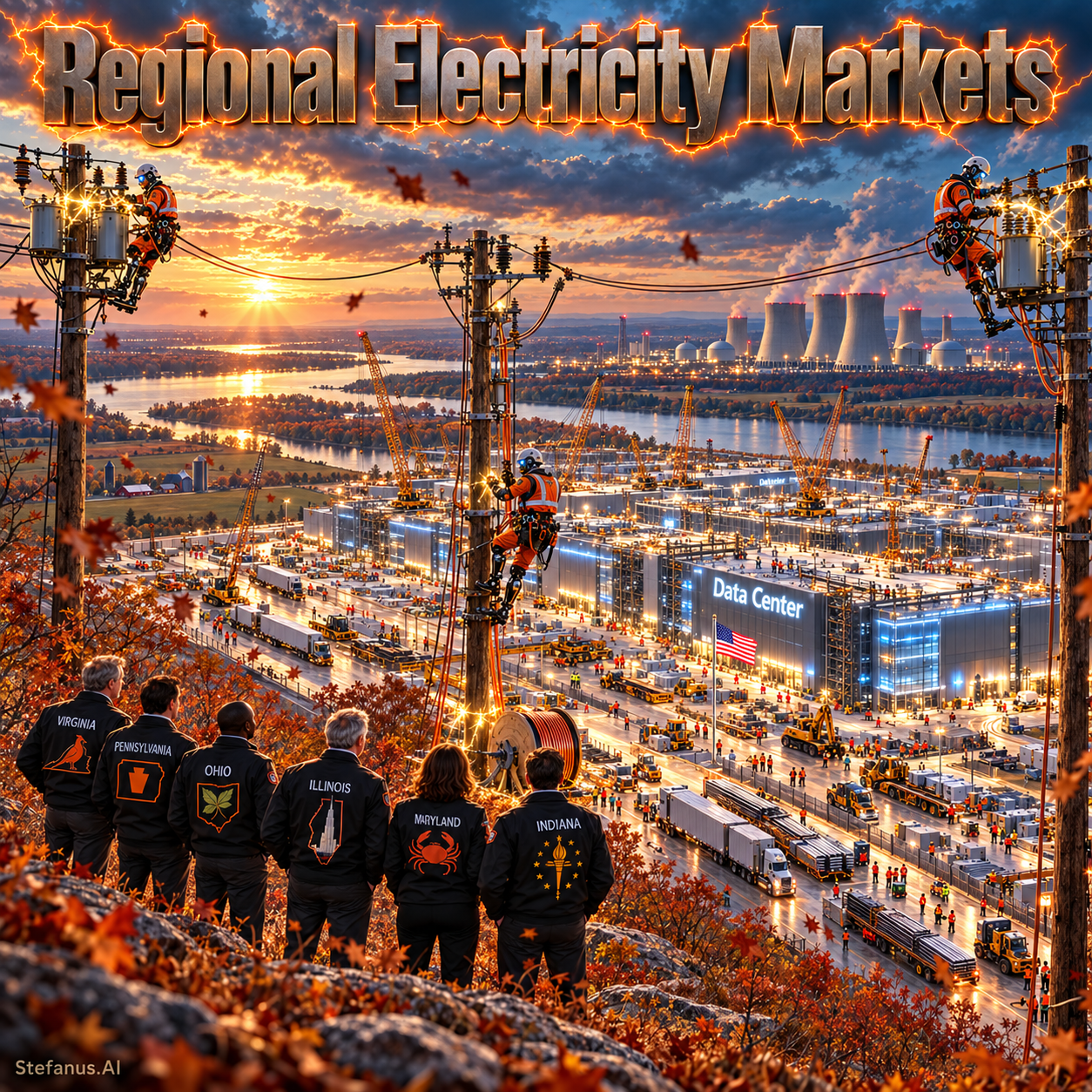
Comments
[…] second baseload technology is nuclear, deployed today almost entirely through dedicated power purchase agreements rather than on-site […]