-
World Model Capitalism: When Companies Stop Forecasting the Future and Start Simulating It — How Simulation-First Institutions Are Replacing Prediction with Rehearsal in the Physical-AI Economy
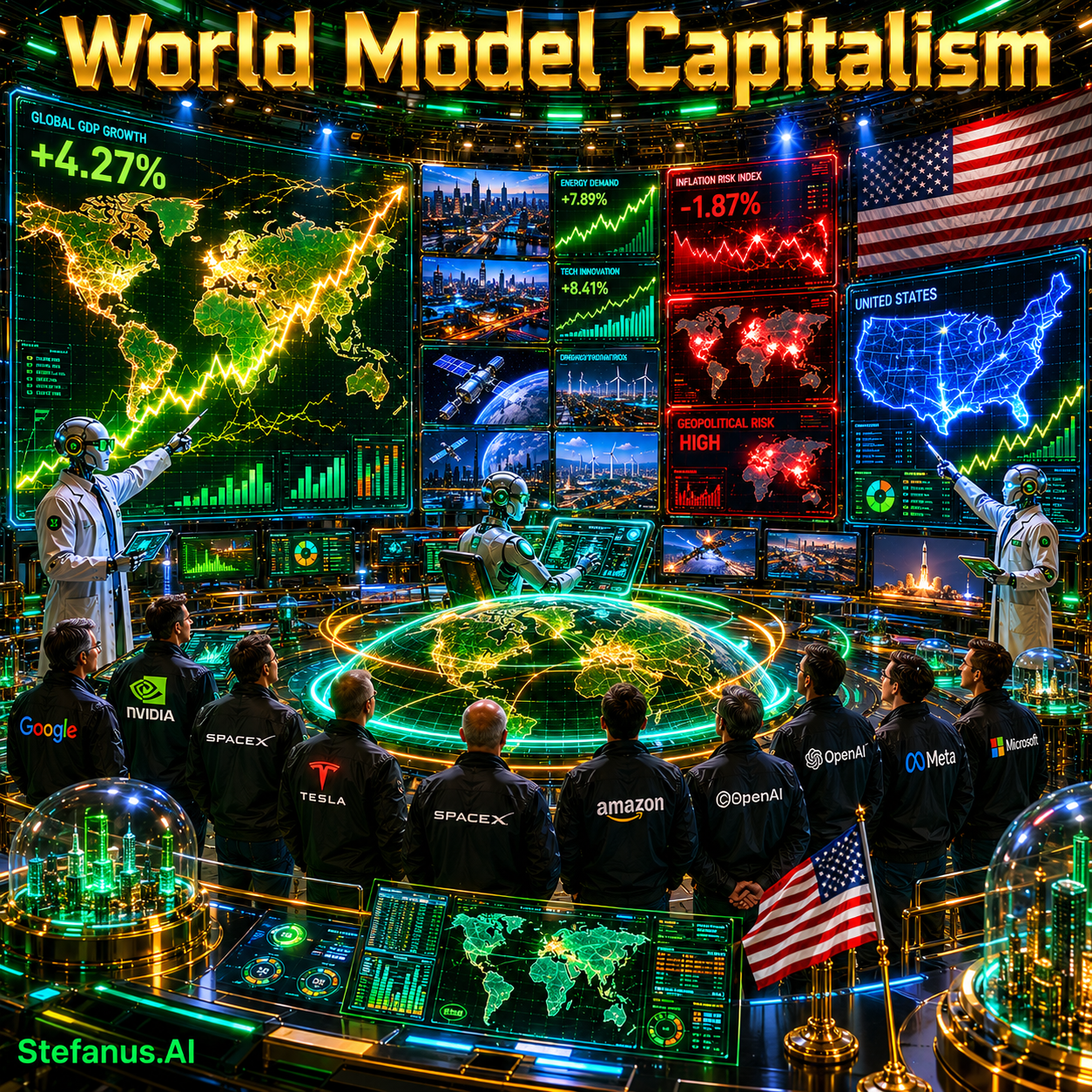
Introduction: From Forecasting to Simulation When I attended my graduate-school commencement at the University of Southern California many years ago, the university held a full rehearsal the day before the actual ceremony. The purpose of that rehearsal was to simulate every aspect of the event — where the speakers would stand, how each graduate would walk across the stage to receive a diploma, and even the precise moment when graduates would move the tassel from one side of the cap to the other. The rehearsal covered the sequence of opening remarks, the keynote address, the seating arrangements, and…
-
AI Bifurcation: The Geopolitical Split in Global Compute and Superpower Supremacy — Mapping the Asymmetric Bipolarity of a Fractured Digital Order — From the Silicon Layer to the Diplomatic Frontier
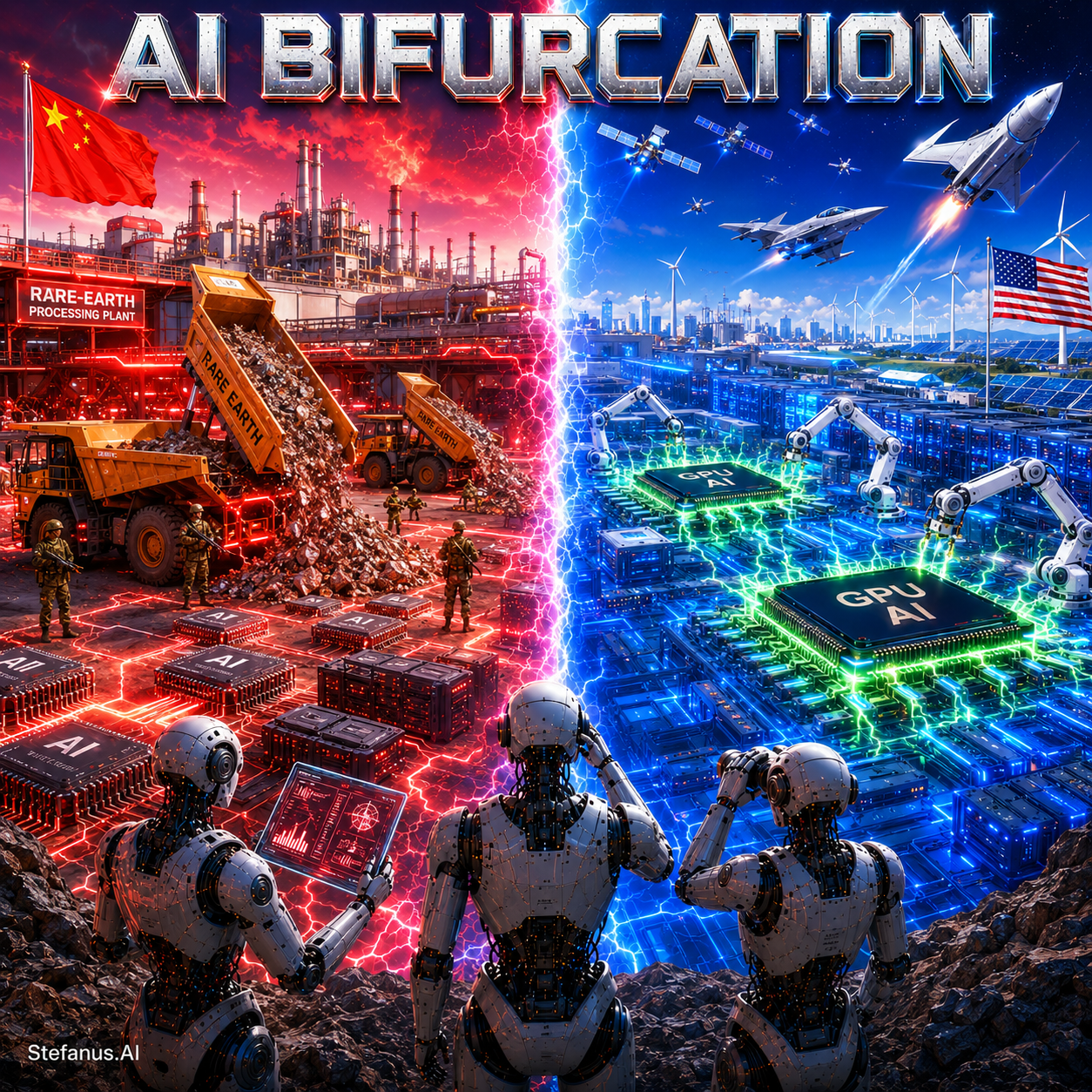
Introduction: The End of the Unified Machine “The digital frontier may serve as a new barrier to global convergence rather than a bridge.” — International Monetary Fund, Global Economic and Financial Implications of Artificial Intelligence (April 2026) For the better part of three decades, the digital revolution rested upon a single, rarely examined premise: that the world’s technology supply chain was fundamentally one organism. It was globalized, interdependent, and unified by an economic logic so powerful that it appeared immune to politics. An algorithm conceived in a Silicon Valley office was accelerated by a chip etched in a…
-
Operating Intelligence Factories: Managing the Unit Economics of Continuous AI Workloads — From the Research Laboratory to the Assembly Line — How Power, Specialized Silicon, and Algorithmic Efficiency Now Decide Who Survives the Age of Mass-Produced Intelligence
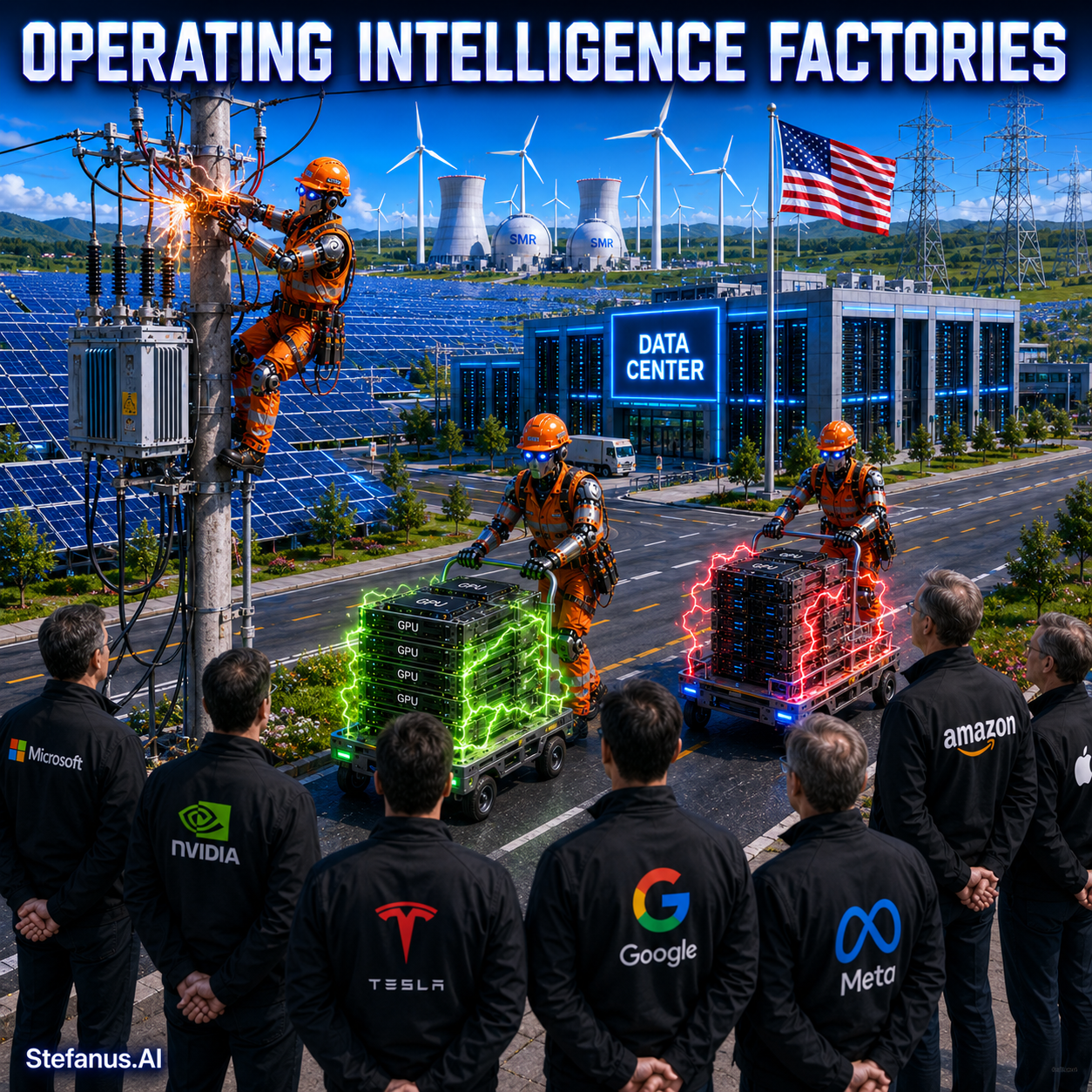
Introduction: The Factory Has Replaced the Laboratory There is a particular kind of building that defines every industrial age, and the building tells you almost everything about the economics of the era that produced it. The age of steam was defined by the textile mill, a structure organized around a single central shaft turning hundreds of looms. The age of oil was defined by the refinery, an immense lattice of distillation towers and pipe runs designed to crack crude into a hierarchy of useful fractions. The age of the automobile was defined by the assembly line, where Henry…
-
National AI Strategies: A Comparative Analysis of the US, China, and the EU — Sovereignty, Speed, and Safeguard — How Three Powers Are Building the Algorithmic Century
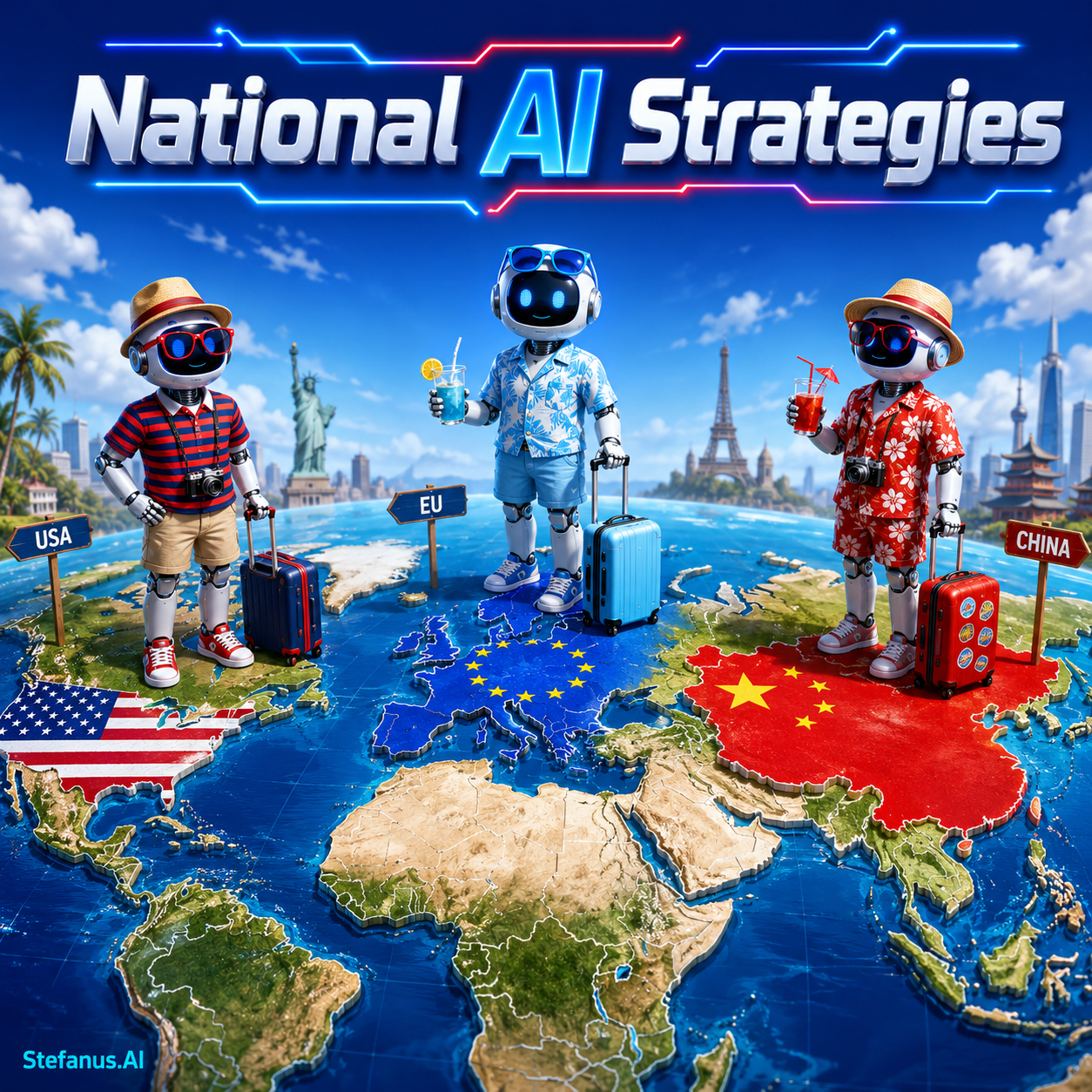
Introduction: Artificial intelligence has stopped behaving like an ordinary technology sector and has started behaving like a strategic resource, in the same register as oil in the twentieth century or the atom in 1945. What distinguishes the current moment is not merely the pace of capability gains — though that pace is genuine — but the fact that three of the world’s largest economic blocs have each concluded, independently and almost simultaneously, that the organization of AI development is now inseparable from the organization of national power. The United States has chosen to let its frontier laboratories run…
-
Orbital Intelligence Economy: Toward a Foundational Architecture for Global Infrastructure — Integrating Space-Based Satellites with Terrestrial Artificial Intelligence to Capture, Process, and Sell Intelligence Directly from Orbit
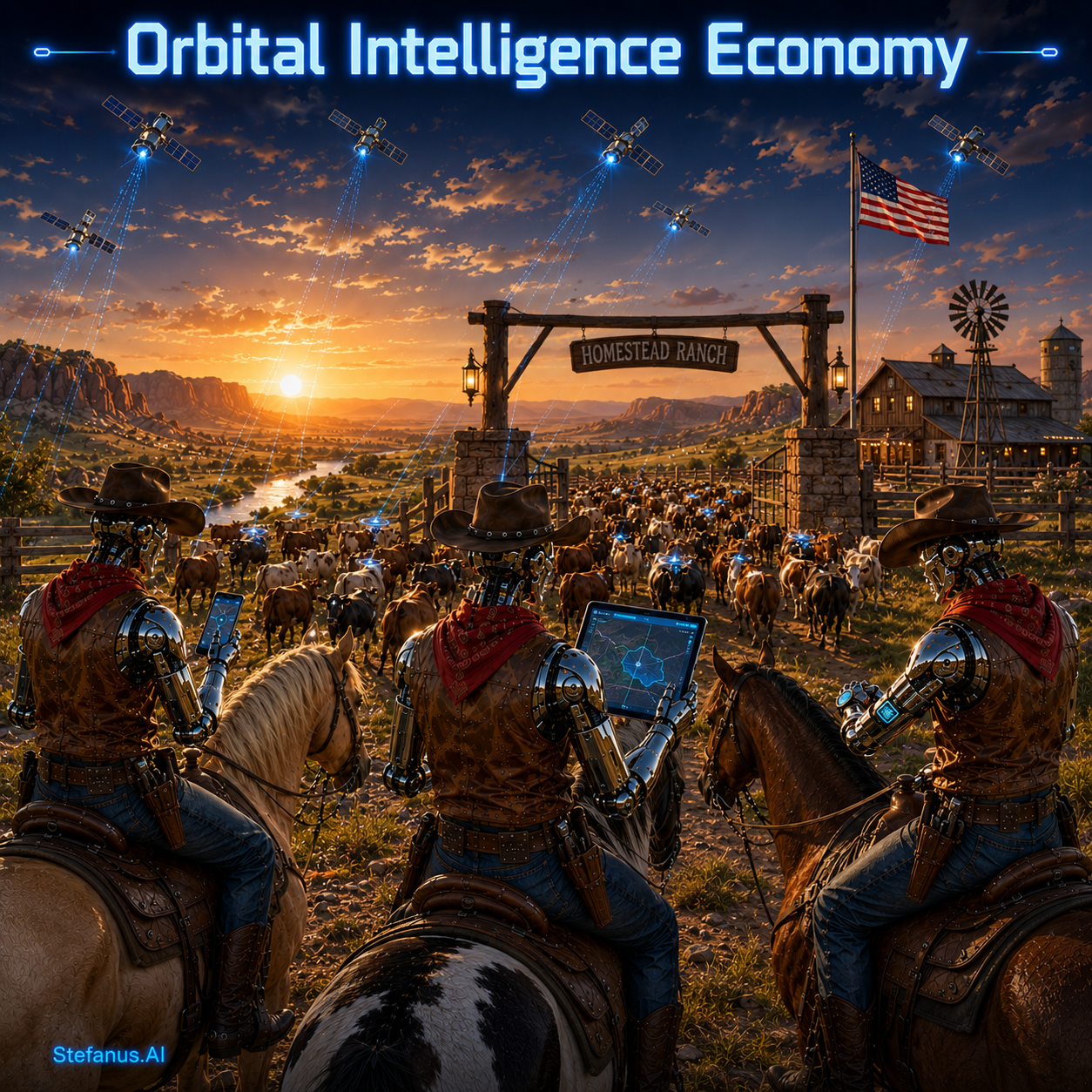
Introduction: From Cowboys on Horseback to Satellites in Orbit There is a particular image worth holding in mind before any of the technology, financing, or geopolitics in this paper can make sense. Picture a cowboy on horseback, riding for hours across rough, broken terrain, pushing cattle back toward a ranch before nightfall, worried the entire time that rustlers might slip a few head away in the confusion of dust and distance. This has been the basic shape of ranching for longer than anyone alive can remember: a human being, an animal, a fence, and the physical labor required…
-
Decentralized Agentic Systems: Orchestrating Trust, Coordination, and Autonomous Intelligence Across the Five-Layer AI Economy
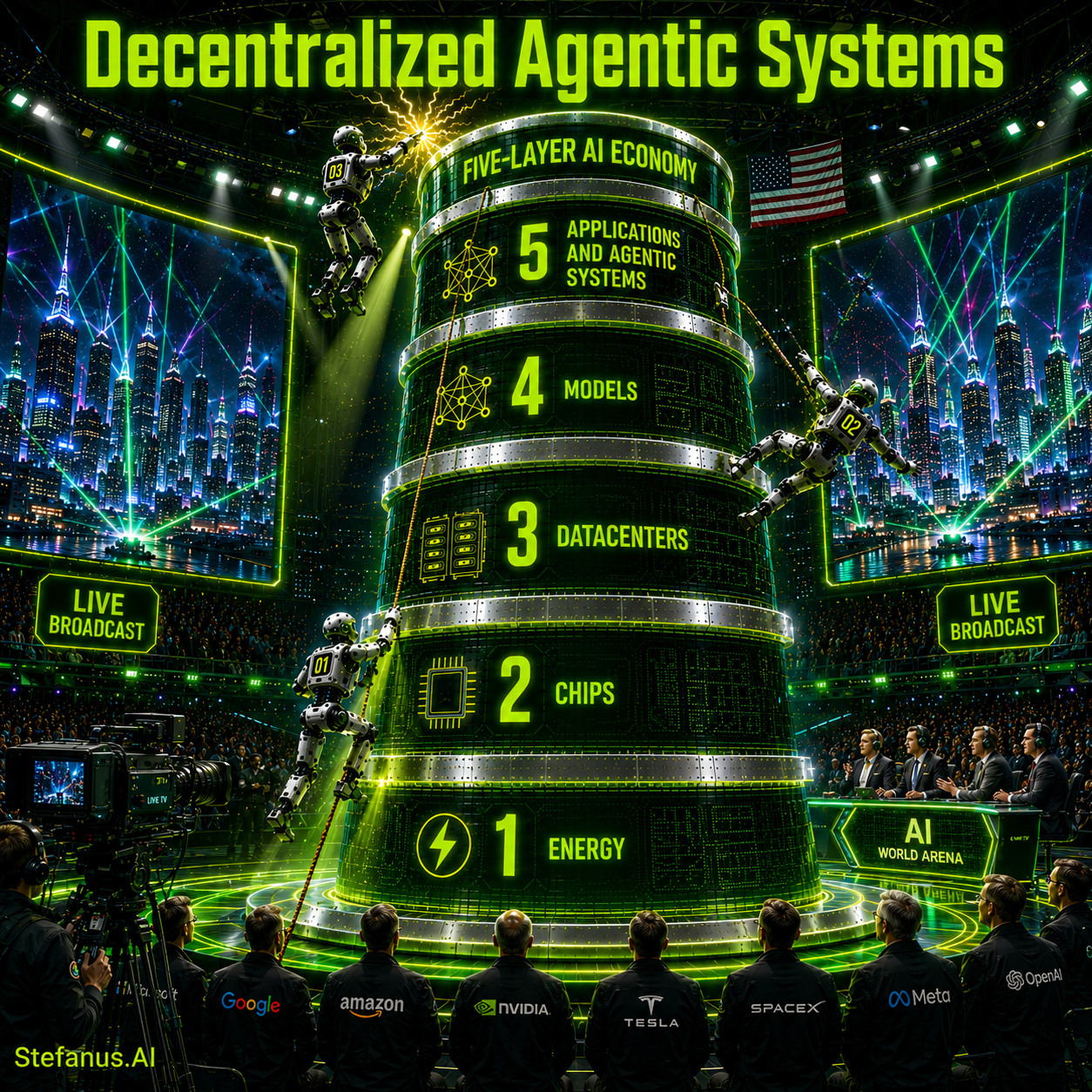
Introduction: The Emergence of Autonomous Civilizations of Software Imagine thousands of autonomous AI agents scattered across the Earth and its orbit, each one pursuing a narrow mandate inside a pattern far larger than any single agent can perceive. Some operate inside hyperscale datacenters in Northern Virginia, balancing thermal loads against electricity prices that change by the hour. Others sit inside utility control rooms in Texas, negotiating power purchase terms on behalf of a data center campus that did not exist eighteen months earlier. Along the corridor between the Port of Los Angeles, the Port of Long Beach, and…
-
Corporate Compute Integration: Driving Enterprise Efficiency through Superintelligence Workflows and Supercomputing Access
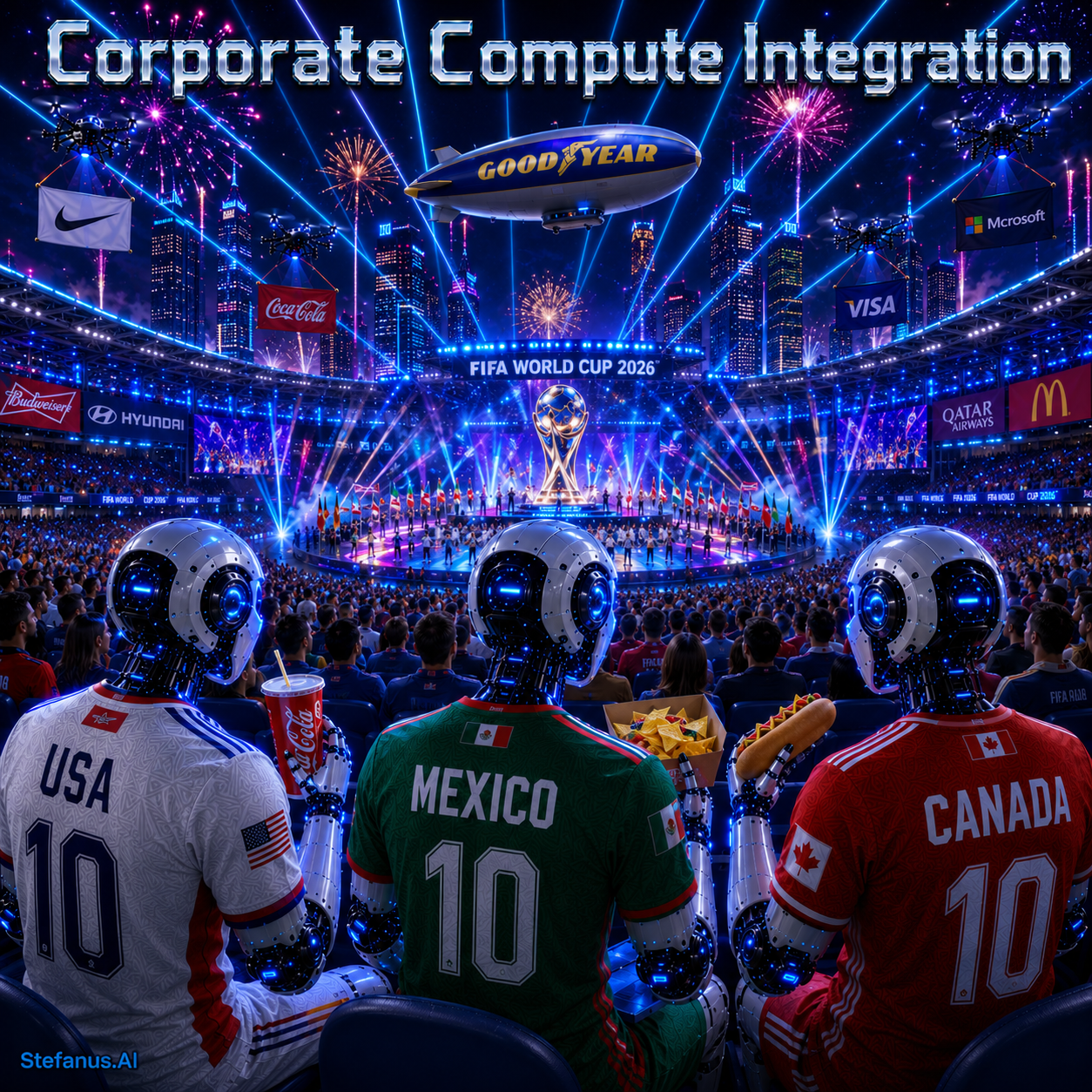
Introduction: The Strategic Shift The global technology ecosystem has entered what historians will likely call the era of AI industrialization — a period in which the old distinctions between physical infrastructure, software architecture, and machine intelligence have effectively dissolved. For nearly two decades, enterprise executives treated servers, cloud capacity, and application development as isolated budget lines, governed by separate procurement cycles, separate leadership mandates, and separate performance metrics. That era is ending. The forces dismantling it are not merely evolutionary upgrades in processor speed or model capability. They are structural, irreversible, and accelerating with a velocity that most…
-
Model Protectionism: How the Anthropic Block Knocked Down the Second Layer of Jensen Huang’s Five-Layer AI Economy and Signals the Rise of the Algorithmic Iron Curtain
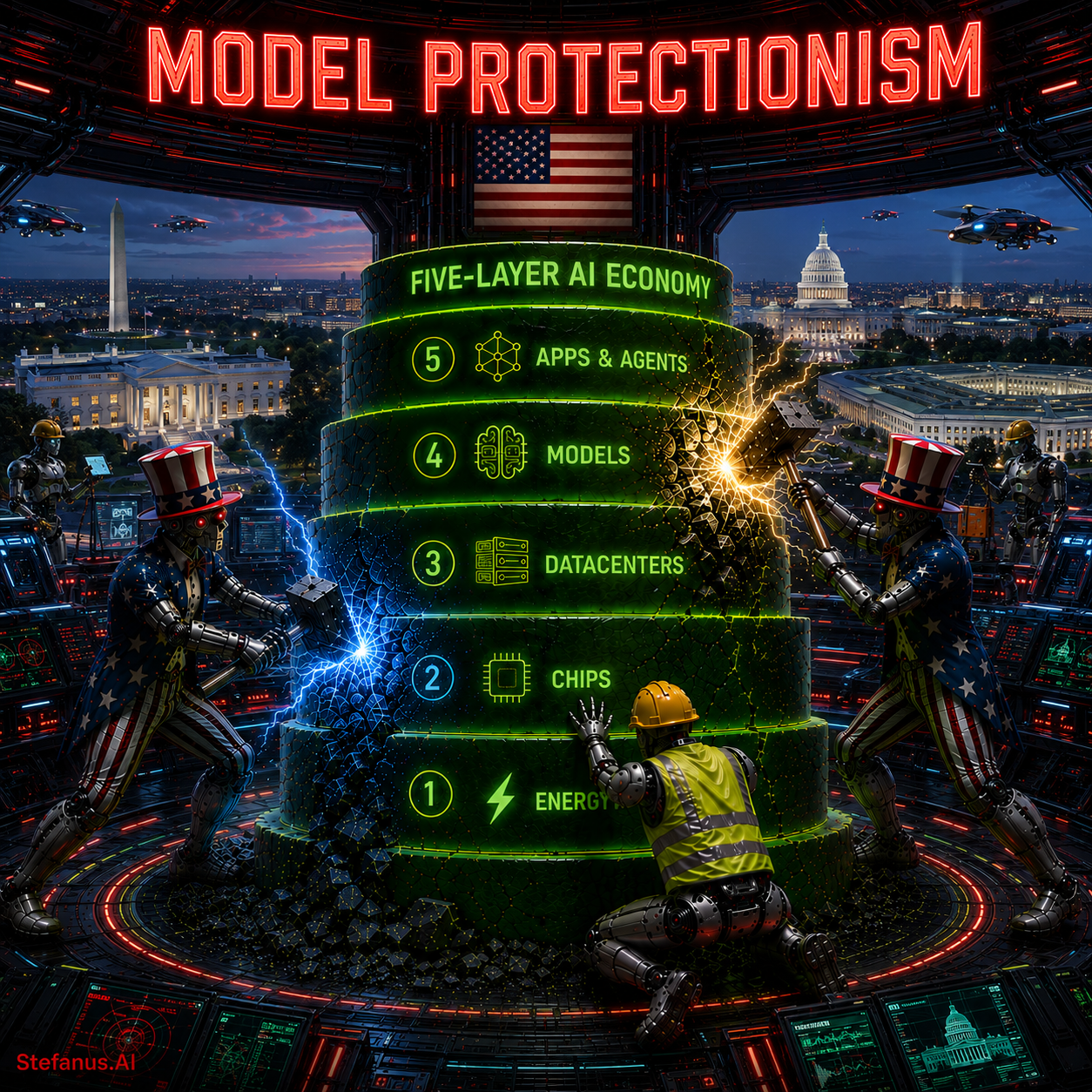
Introduction: A Cake Being Eaten from The Bottom Up On January 21, 2026, Jensen Huang took the Davos stage at the World Economic Forum alongside BlackRock CEO Larry Fink and delivered what would become the most referenced framework in AI policy discussions of the year. He described artificial intelligence not as software, not as a product, not as a service, but as a five-layer industrial economy — a “cake” whose layers, from bottom to top, are: Energy, Chips, Datacenters, Models, and Applications/Agentic Systems. Each layer, Huang explained, feeds the one above it. Energy powers chips. Chips power infrastructure.…
-
Orbital Intelligence Networks: Enabling Space-Based Intelligence Through Decentralized In-Orbit AI Compute
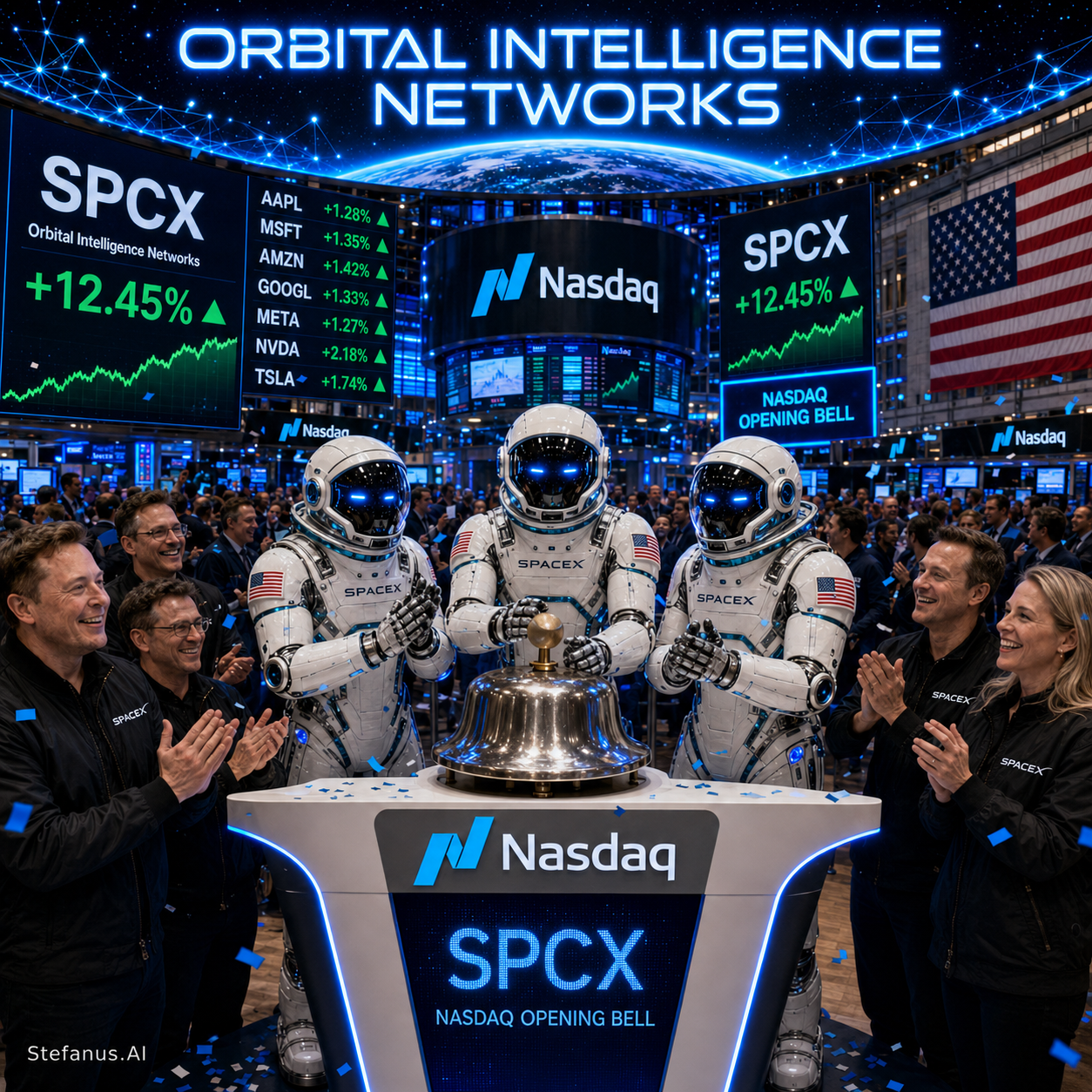
Introduction: The Dawn of Orbital Intelligence On June 12, 2026 — the very day this paper is published — SpaceX (NASDAQ: SPCX) made its historic debut on the Nasdaq stock exchange, raising $75 billion at a valuation that opened above $1.77 trillion and soared nearly thirty percent in intraday trading, making it the single largest initial public offering in the history of financial markets, surpassing Saudi Aramco’s record $29 billion raise in 2019. Elon Musk, whose combined stakes in SpaceX and Tesla now value his portfolio at approximately $1.147 trillion, became the world’s first verified trillionaire on the…
-
Superintelligence Workflows (SIWF): How Autonomous Agents, Memory, Reasoning, and Enterprise Orchestration Are Redefining the Future of Work
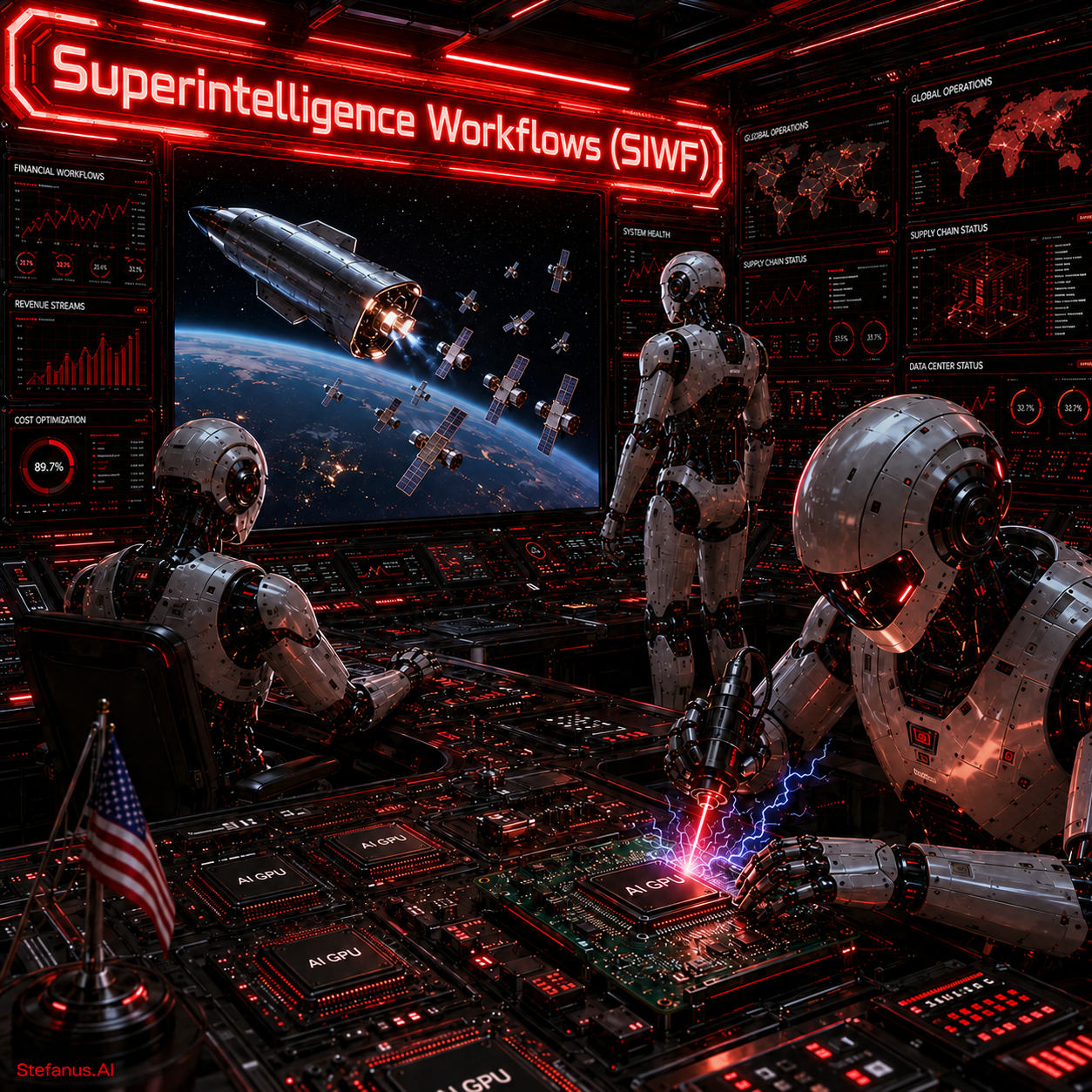
Introduction: From Automation to Autonomous Work For the better part of four decades, business automation was constructed around a single intellectual premise: that if a process could be mapped, it could be scripted. Workflow engines, robotic process automation platforms, and enterprise resource planning systems all shared this underlying assumption — that the value of software lay in its ability to faithfully execute a fixed sequence of instructions, without deviation, without interpretation, and without judgment. This model worked extraordinarily well for the predictable and the repetitive. Invoice routing moved from inbox to approval desk to general ledger on a…
-
Substation Politics: How AI Data Centers, Power Bottlenecks, and Local Grid Nodes Are Rewriting the Geography of American Growth
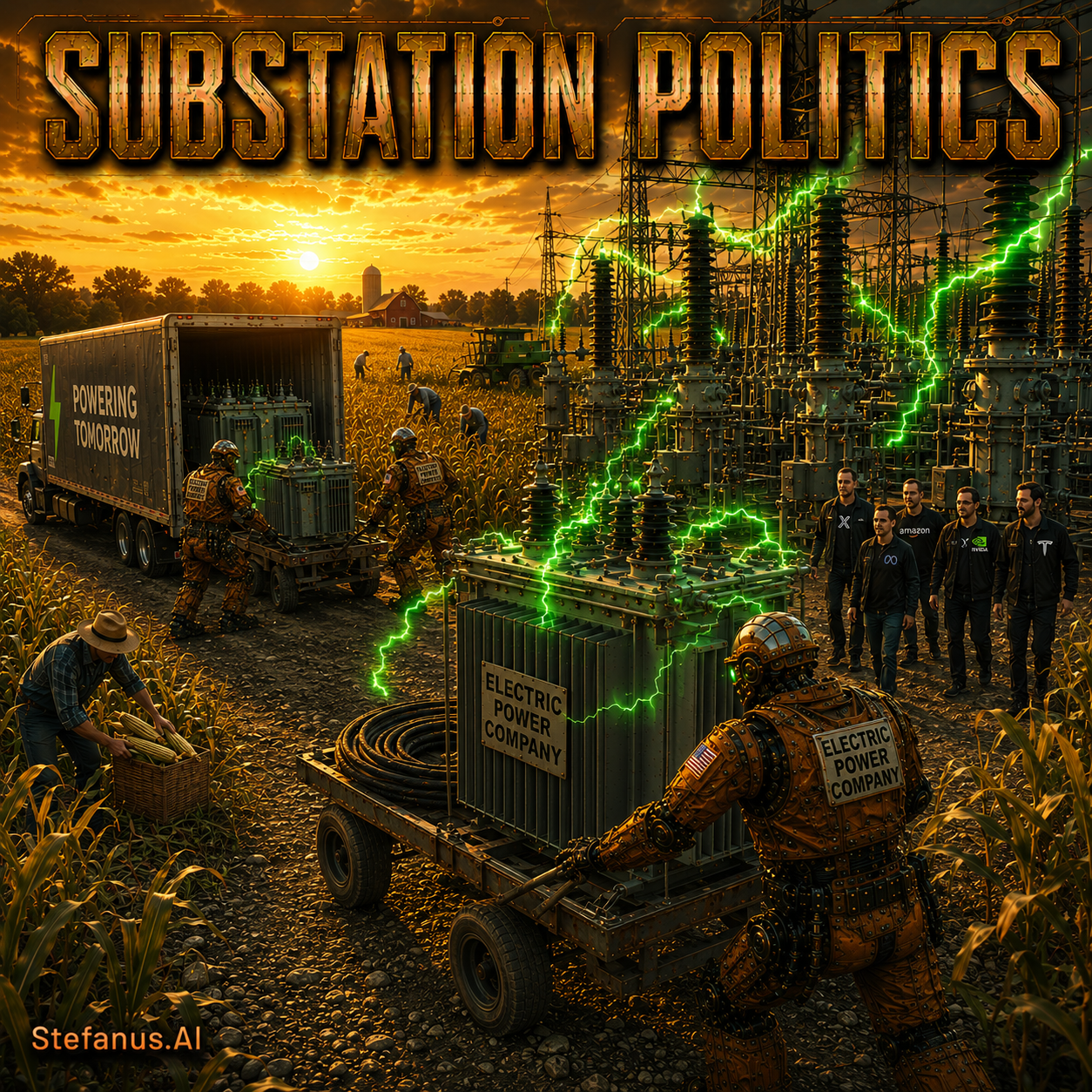
Introduction: The Night the Future Stopped at a Transformer There is a moment in every technological revolution when the weight of ambition meets the resistance of physical reality. For the railroad era, it was the mountain range that forced engineers to dynamite through granite rather than route around it. For the electrification era, it was the thousand miles of copper wire that had to be strung from pole to pole across a continent that had never seen artificial light. For the nuclear era, it was the cooling tower, the containment vessel, the exclusion zone. For the internet era,…
-
Reliability Premium: Why the AI Economy Will Pay More for Power That Never Fails
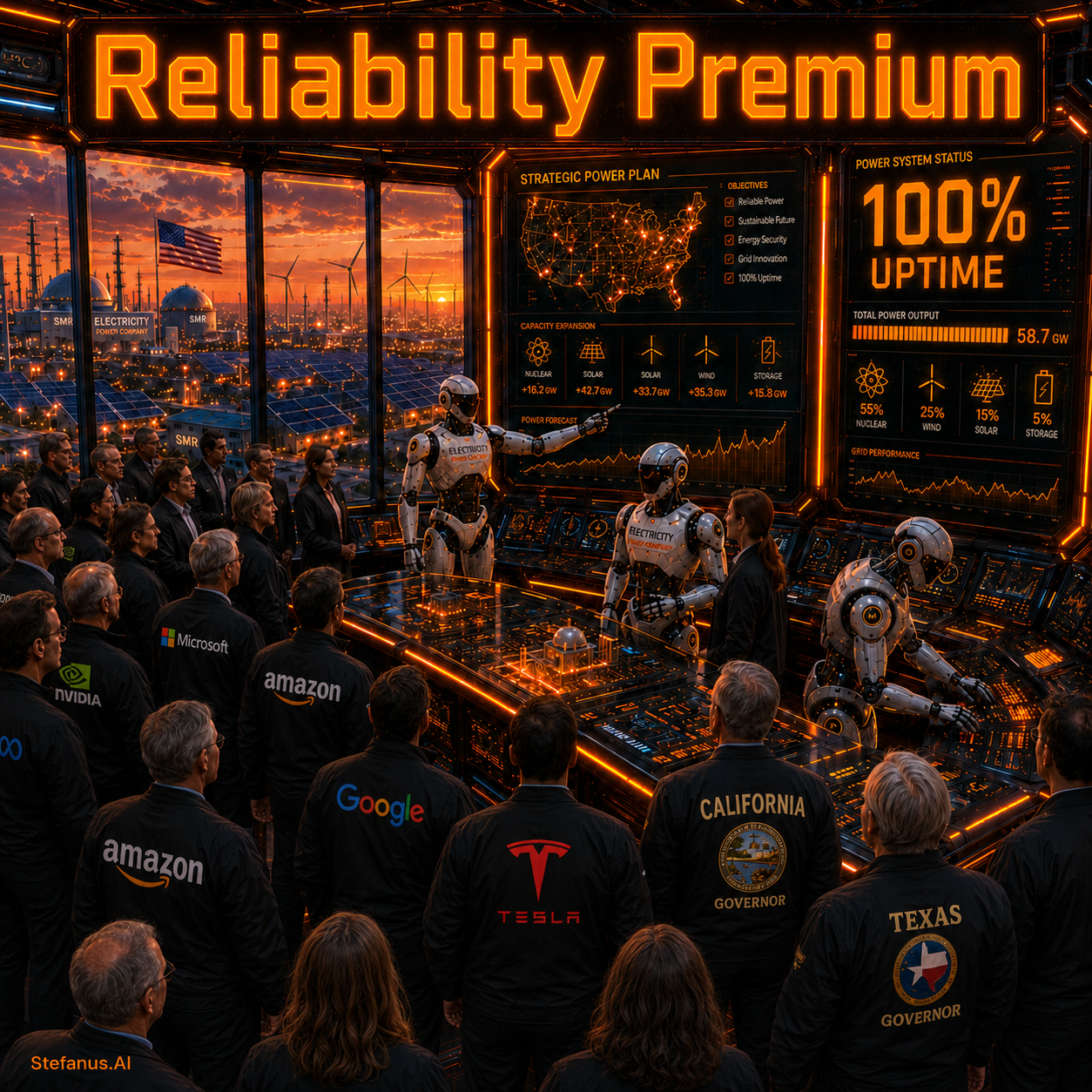
Introduction: The Night the Model Went Dark In the early years of this century, before the phrase “artificial intelligence” had entered the vocabulary of governors or utility commissioners, I worked for a web hosting company navigating the turbulence of the 2000–2001 California electricity crisis. Rolling blackouts swept through the state during summer heat waves, and our data center lost power multiple times. The support team fielded customer complaints while scrambling to explain why critical services were offline. Local news attributed the shortages to soaring demand, particularly from air conditioners. But in the data center business, the explanation mattered…
-
Technological Autonomy: Navigating the Intersection of Artificial Intelligence, Human Agency, Strategic Sovereignty, Global Alliances, and Innovation Ecosystems
Introduction: We are living through one of the most consequential transitions in the history of human civilization — a transition that is unfolding not in the chambers of governments or on the battlefields of wars, but in the invisible logic of algorithms, in the silicon pathways of data centers, and in the daily decisions we increasingly delegate to machines we do not fully understand. Our lives are becoming structurally dependent on artificial intelligence, and increasingly, the AI systems we interact with are not passive tools that merely respond to commands. They are agentic systems — capable of planning,…
-
Decision Compression: How Artificial Intelligence Collapses Time in War, Markets, Governance, and Corporate Power
Introduction: The Collapse of Time Imagine an Emperor of China seated at the apex of his vast dynasty. When he issues a proclamation, the imperial edict must travel by horseback across mountains, rivers, and provincial borders — a journey of days, weeks, sometimes months before the words of the sovereign reach the ears of a frontier garrison commander. The decision has been made. But the execution hangs suspended in time, hostage to geography and the stamina of a horse. Now travel forward to the First and Second World Wars. A general in Paris or London seeking to redirect…
-
Threesome GPU: Analyzing xAI’s Datacenter Partnerships with Anthropic and Google

Introduction: Three’s Company in The Cloud There is a word in the lexicon of business strategy — ‘coopetition’ — that has long described the awkward tango between companies that simultaneously cooperate and compete. The airline industry has code-sharing arrangements between rival carriers. Pharmaceutical giants co-fund clinical trials while racing to patent the same molecular pathways. Automotive manufacturers share platform architecture while their marketing departments savage each other in television commercials. But the scene that unfolded in Memphis, Tennessee in the spring of 2026 represents something altogether more concentrated, more consequential, and more intellectually fascinating than anything those older…
-
Synthetic Geography: How Artificial Intelligence Rewires the Physical World — Energy, Chips, Data Centers, and the New Geography of Intelligence

Introduction: From Natural Geography to Synthetic Geography Before artificial intelligence, geography was organized around natural advantages. Saint Louis rose because the Mississippi River made trade, transport, settlement, and westward expansion not merely possible but historically inevitable. The river was the economic artery of the American interior, and every city that sat along it prospered precisely because geography — the shape of the land, the flow of the water, the contour of the valley — gave it a structural advantage that no amount of human capital or political ambition alone could replicate. Railroads later reorganized America again, connecting the…
-
Geopolitical Implications of AI: The Rise of Cultural AI Sovereignty and the Five-Layer AI Economy
Introduction: Why “Geopolitical Implications of AI” The title of this paper was chosen with deliberate precision. The word “geopolitical” is not mere ornamentation; it captures the fundamental shift now underway in how nations organize their power, define their sovereignty, and imagine their futures. For most of the twentieth century, geopolitics was primarily understood through the prism of territory, military force, energy resources, and trade. In the twenty-first century, a new and profoundly significant dimension has been added: the control of artificial intelligence systems, the data upon which they train, the chips that power them, the energy that feeds…
-
Strategic Coexistence: How Security Alignment and Geopolitical Dynamics Are Shaping Industrial Automation and Personal Robotics in the Age of Allied Technology Competition
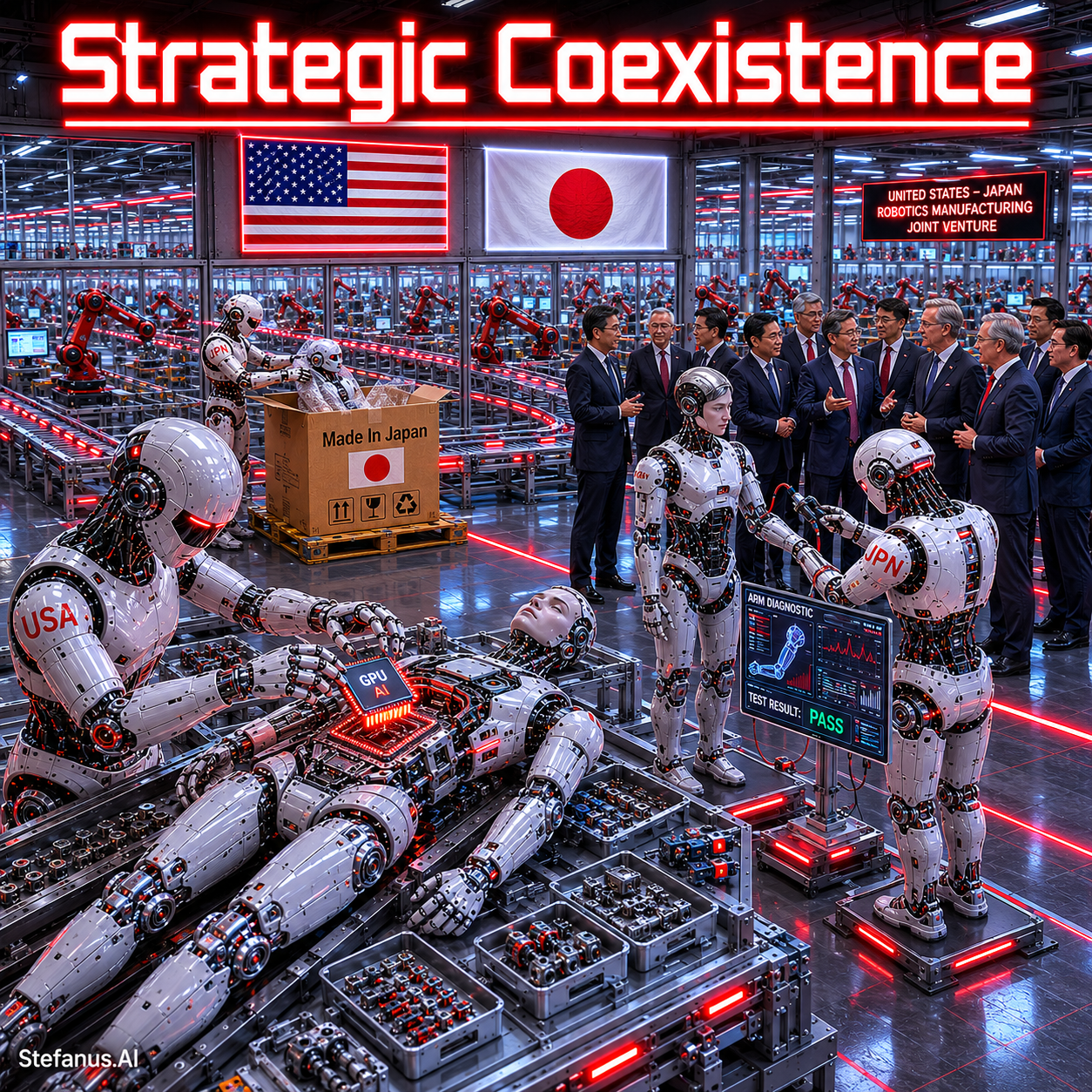
Introduction: Much of the discourse surrounding the US-China bifurcation of the global intelligence economy has rightly focused on the contest between the two superpowers — on export controls, chip wars, data regulation, and the race to artificial general intelligence. What has received comparatively less attention, however, is the texture of the world that exists beyond this binary: the vast space of allied coexistence where the United States and its strategic partners have forged technology ecosystems that depend on one another precisely because they trust one another. It is in this space — between the adversarial and the fully…
-
Capex Surge: The Trillion-Dollar AI Infrastructure Buildout and Its Reshaping of Investment-Grade Credit — A Bifurcated Credit Environment in the Age of Hyperscale Finance
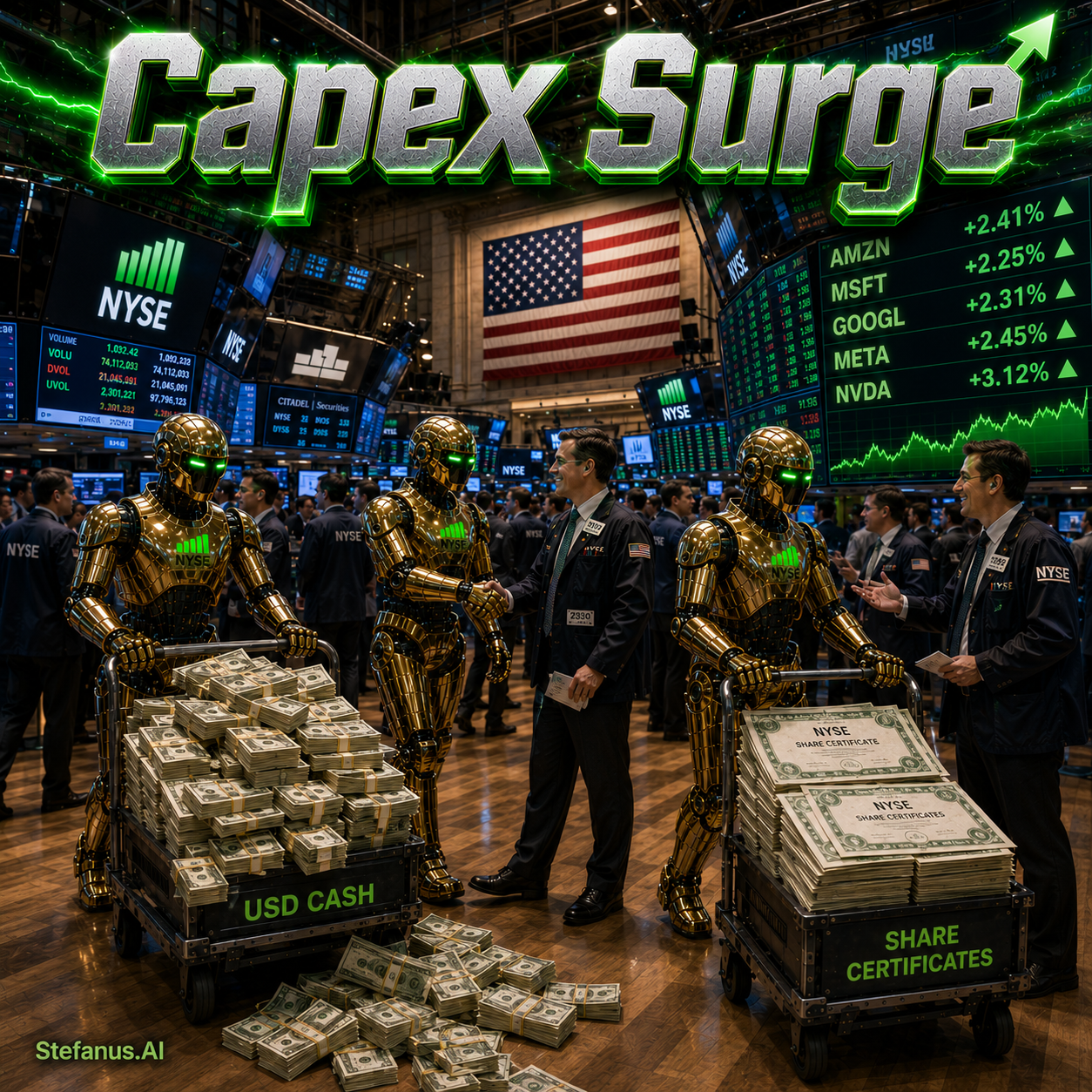
Introduction: The AI Capex Surge — Why This Moment Is Unlike Any Other There are moments in economic history when the sheer scale of capital commitment by private firms begins to rival that of sovereign infrastructure programs. The railroad booms of the nineteenth century were one such moment. The fiber-optic explosion of the late 1990s was another. We are living through a third, and it is faster, more concentrated, and more debt-financed than its predecessors. The numbers are staggering in their own right, but they become genuinely sobering when placed against historical context. According to first-quarter 2026 earnings…
-
Intelligence Corridors: How Regional Ecosystems Are Competing to Own the Five-Layer AI Economy — and Why the New Geography of Artificial Intelligence Will Determine the Winners of the Twenty-First Century
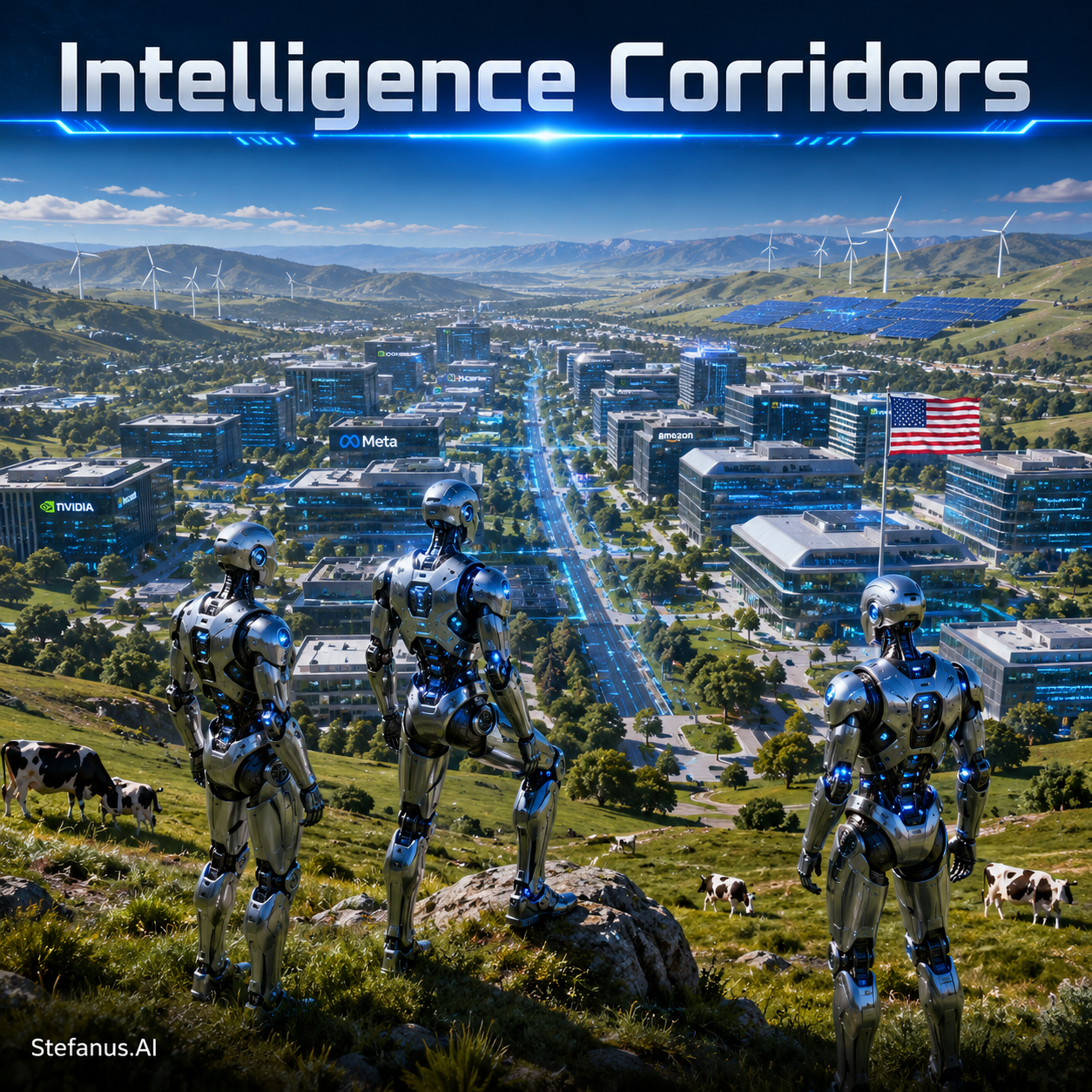
Introduction: The Deep Roots of Regional Technology Power The story of American high-technology economic power has never been a story of the nation as an undifferentiated whole. It has always been, first and foremost, a story of particular places. Silicon Valley, stretching from San Jose northward to San Francisco, became the world’s preeminent innovation ecosystem not by accident but through the convergence of Stanford University’s research culture, DARPA defense spending, Shockley’s semiconductor laboratory, and the open, collaborative organizational culture that AnnaLee Saxenian would later describe as the defining institutional difference between Silicon Valley and its eastern rival. Route…
-
Fear of Missing Out AI: Why Tech Giants Prioritize Infrastructure Overbuilding Over the Risk of Falling Behind — Capital, Compute, Energy, and the New Industrial Logic of the Intelligence Economy
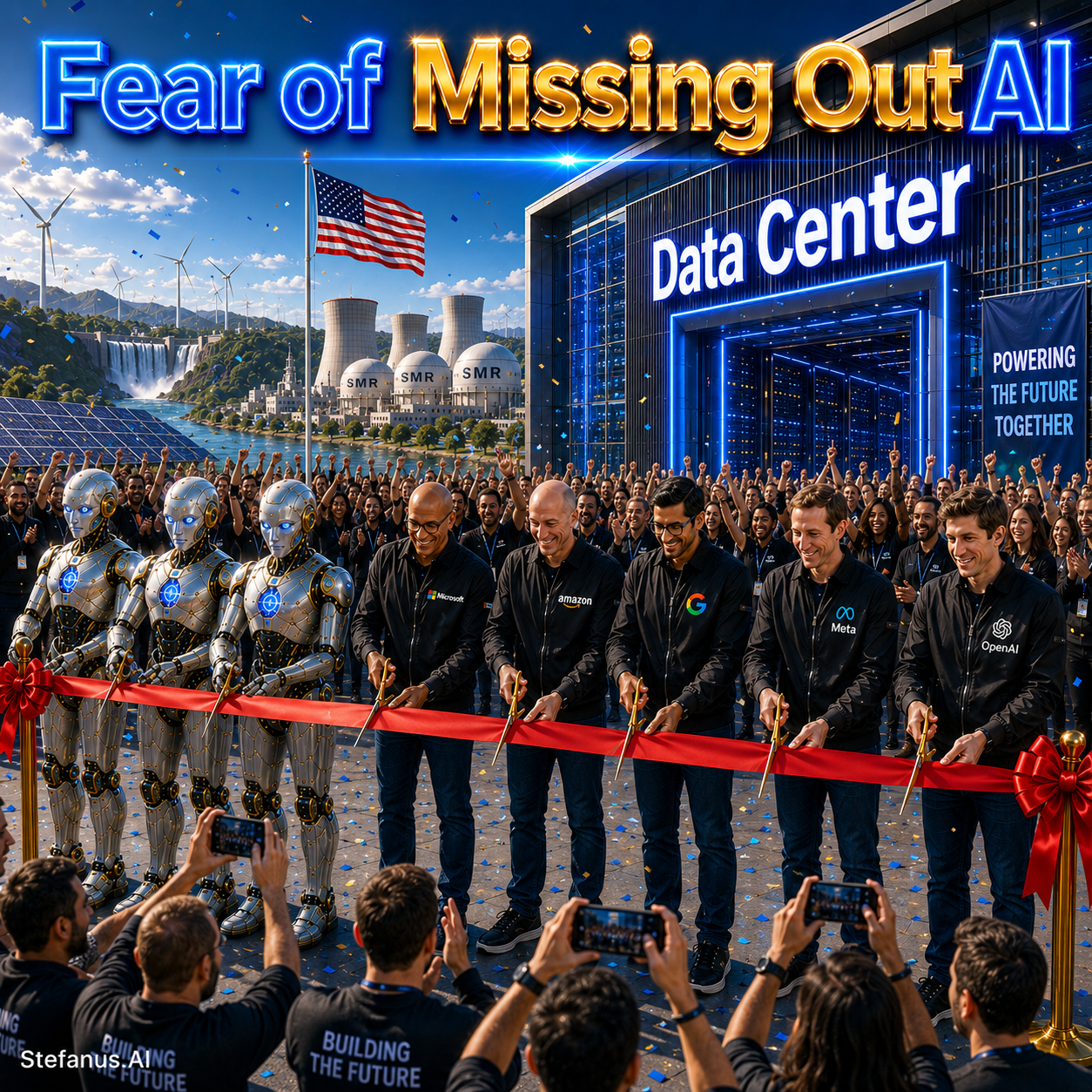
Introduction: The Irreversibility of Intelligence Technology companies are not primarily optimizing for efficiency. They are optimizing against the possibility of missing the next intelligence revolution. That is the central argument of this paper — and it is an argument that reshapes everything we thought we understood about rational corporate behavior, capital allocation, and the nature of strategic competition in the twenty-first century. For decades, the dominant framework of corporate finance rested on a relatively simple principle: deploy capital where it produces the highest risk-adjusted return. Firms that deviated from this principle — that spent ahead of demand, built…
-
Foundations of Intelligence: Why Energy Is the Most Critical Layer of the Five-Layer AI Economy — Rebuilding the Bottom Layer of Computation Through Power Generation, Grid Infrastructure, and Strategic Energy Partnerships in a World Racing for Intelligence Supremacy
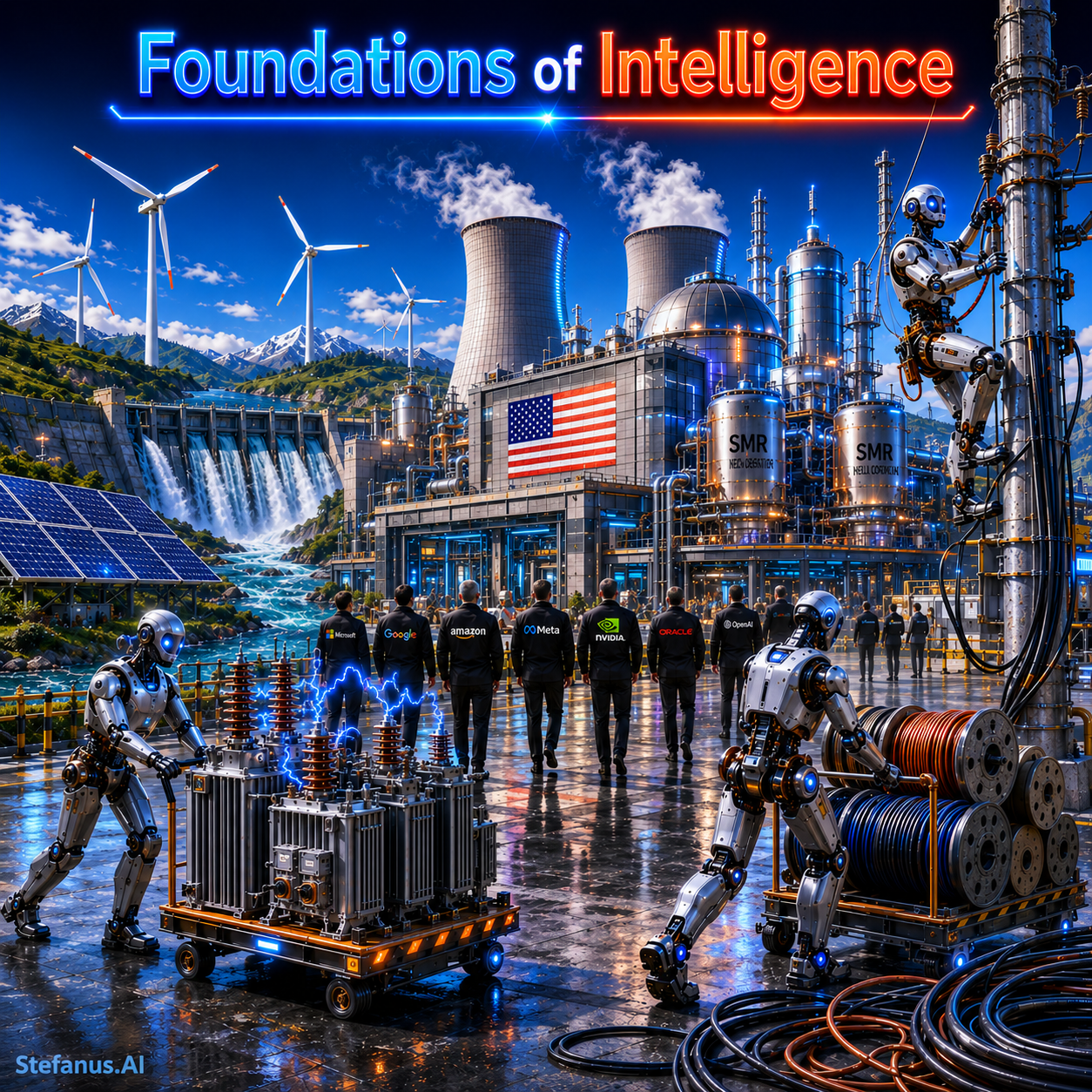
Introduction: The Forgotten Foundation of Artificial Intelligence There is a question that almost no one asks when they discuss artificial intelligence, yet it contains within it the entire logic of the AI era. Before the transformer architecture, before the GPU cluster, before the trillion-parameter model, before the autonomous agent that may one day reshape labor and capital — what was needed? The answer is not engineering talent, not venture capital, not geopolitical ambition, though all of these matter. The first requirement is electricity. Artificial intelligence does not begin with models. Artificial intelligence begins with electricity. The modern discourse…
-
The Geopolitics of Compute: AI GPU Infrastructure, Robotics Supply Chains, and the US–China Bifurcation of the Intelligence Economy
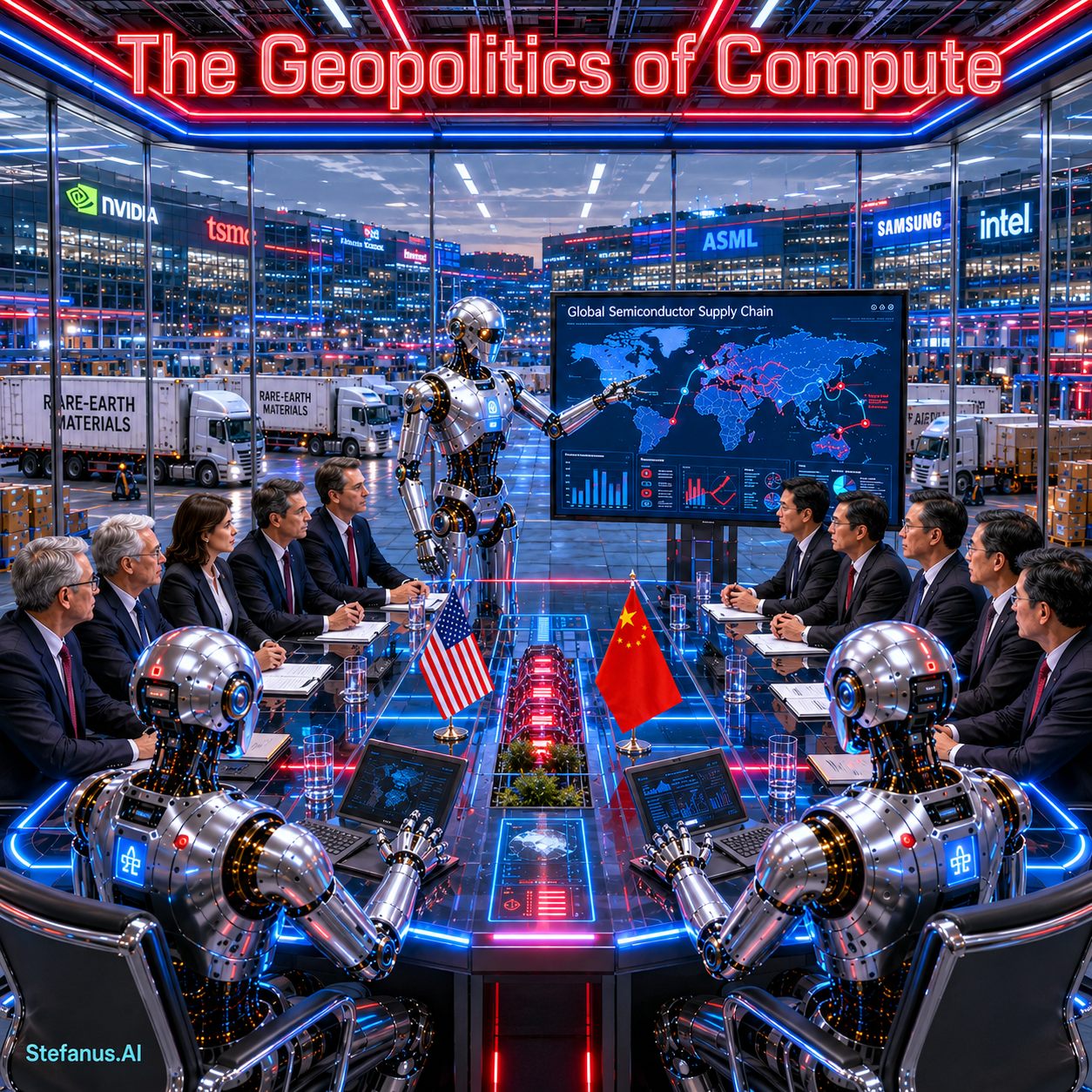
Introduction: The Infrastructure of Intelligence We have entered an era in which the most consequential geopolitical competition on earth is not fought with missiles, not resolved through currency reserves, and not decided in election cycles. It is fought in fabs. It is decided in packaging lines, export control lists, rare-earth processing facilities, and the sprawling campuses of hyperscale data centers consuming electricity in quantities that would have strained the imaginations of twentieth-century grid planners. The central resource being contested is not oil, not food, not gold — it is compute. And the countries, companies, and institutions that control…
-
Strategic Interdependence: Balancing Intellectual Property and Shared Innovation Among Tech Rivals in the Epicenter of the AI Revolution
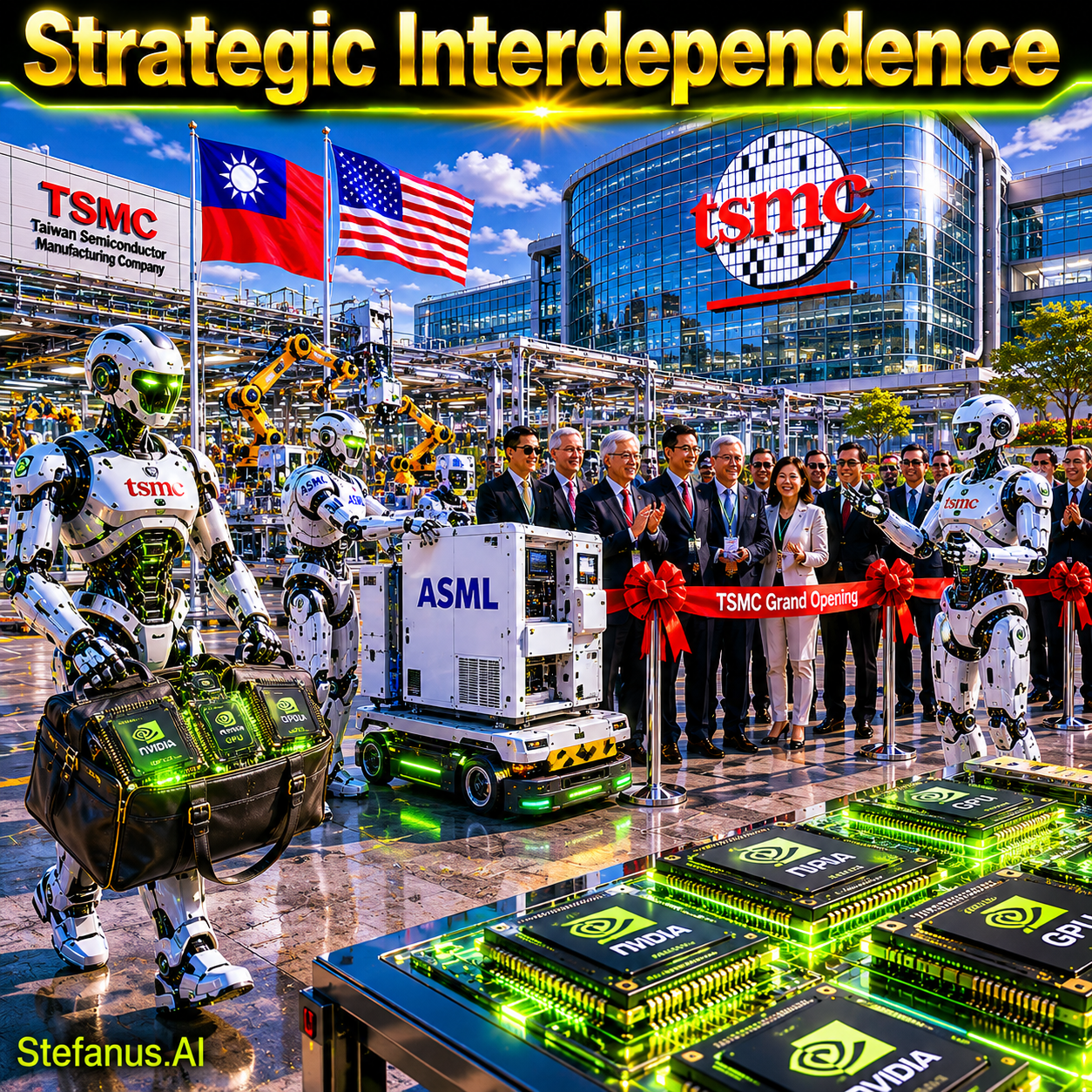
Introduction: The Designer and the Tailor Every year, when the Academy Awards unfold beneath the blazing lights of Hollywood, a particular ritual happens on the red carpet that has very little to do with film. Millions of viewers lean forward not merely to admire the famous faces, but to ask the enduring question: who are they wearing? The names that echo through living rooms around the world belong not to actors or directors, but to couturiers — Christian Dior, Giorgio Armani, Ralph Lauren. The designer receives the glory. Yet behind every immaculate gown and every perfectly fitted tuxedo…